

Startup Nation Central, a nonprofit promoting the Israeli innovation ecosystem globally, has released early numbers for its 2025 Annual Report, offering an early view into how Israel’s tech ecosystem evolved over the past year.
Based on known deals and estimates from Finder platform data as of Dec. 17, 2025, the report captures a year marked by a sharp return of capital, alongside a fundamental shift in how and where that capital is deployed. Figures may still change as additional data is finalized through Jan. 1, 2026.
According to Startup Nation Finder data, estimated private funding in 2025 reached $15.6 billion, signaling a decisive rebound after two volatile years. At the same time, deal volume declined to 717 rounds, the lowest in the last decade.

This divergence tells a clear story: investors are doing fewer deals, but committing significantly more capital to each one. The median private deal size reached a record $10 million, up 67% year over year, reflecting a market that has recalibrated toward scale, maturity and higher conviction.
“2025 was not about a return to business as usual; it was a pivot toward high-conviction maturity,” said Avi Hasson, CEO of Startup Nation Central. “When we see global giants like Nvidia doubling down on their physical and talent presence here, alongside a record $74.3 billion in M&A activity, it confirms that Israel isn't just a source of innovation, it is the global anchor for critical technologies like AI and cybersecurity.”
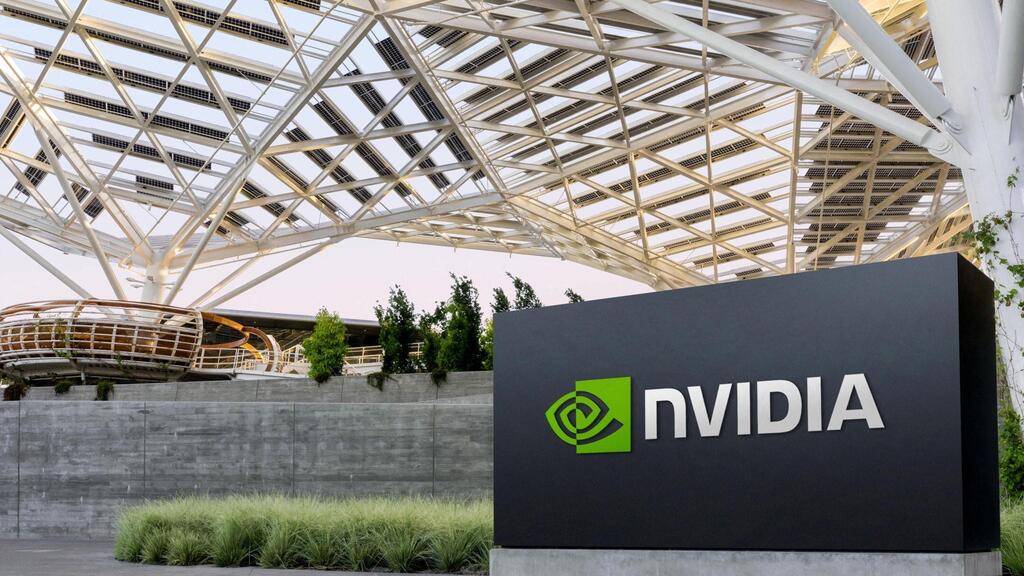
(Photo: Reuters)
That shift is visible across funding stages. Early-stage investment recovered to $3.9 billion, even as the number of rounds declined, indicating continued support for new company formation, but with higher thresholds. Mid-stage funding jumped to $5.2 billion, driven by larger B and C rounds, while late-stage funding moderated to $2.5 billion, reflecting a more selective approach at the top of the funnel. Mega-rounds accounted for ~50% of total private funding, underscoring the growing concentration of capital.
“We are seeing a growing gap between public sentiment and corporate behavior. While early-stage founders face tougher funding conditions, global corporations are moving decisively in the opposite direction,” said Yariv Lotan, VP of Product and Data at Startup Nation Central.
“The record M&A activity reflects a strategic push by multinationals, including first-time acquirers, to secure critical innovation. By moving past short-term market noise, these companies are effectively turning Israeli startups into their next generation of R&D engines, laying the groundwork for additional acquisitions. Where the market sees risk, strategic buyers see opportunities they cannot afford to miss.”
Mergers and acquisitions defined the year’s headlines. Total M&A value reached $74.3 across 150 transactions, driven by Google’s $32B acquisition of on, where the median deal size reached $20 million, double that of business software. Health tech posted the highest deal volume with 152 rounds, highlighting continued innovation depth even as capital concentrated elsewhere.

(Photo: Shutterstock)
Investor participation narrowed, with 592 active investors, yet global investors continued to represent 60% of the total, signaling ongoing international confidence.
Mergers and acquisitions defined the year’s headlines. Total M&A value reached $74.3 billion across 150 transactions, driven by Google’s $32 billion acquisition of Wiz and Palo Alto Networks’ $25 billion acquisition of CyberArk. Excluding those two deals, M&A value still rose 12% compared to 2024, pointing to sustained strategic demand for Israeli technology.

(Photo: ShU studio / Shutterstock, Shutterstock)
At the same time, total public company funding grew significantly and reached $10.3 billion, led by major U.S.-listed offerings including Navan, eToro, and Via, alongside strong activity in PIPEs and convertible bonds.
Taken together, the early release of Finder’s Annual Report 2025 sharpens a key insight: A significant share of this year’s largest deals is not an immediate reaction to recovery, but the result of long-term investment and acquisition processes that began months, and in some cases years, earlier, and reached maturity during a period of uncertainty.
The decision by investors and global corporations to close deals at unprecedented scale does not signal an absence of risk, but rather the depth of confidence in the technology, the teams, and the ability of Israeli companies to create value even under challenging conditions.