

The U.S. Central Intelligence Agency used a new secret device dubbed “Ghost Murmur” during the operation to locate a downed navigator in Iran, the New York Post reported. The device is said to track a person’s heartbeat from miles away.
However, in contrast to the Post, the scientific magazine Scientific American, which addressed the report’s impact Wednesday, said that according to leading physicists familiar with the field, the story is compelling but almost certainly incorrect.
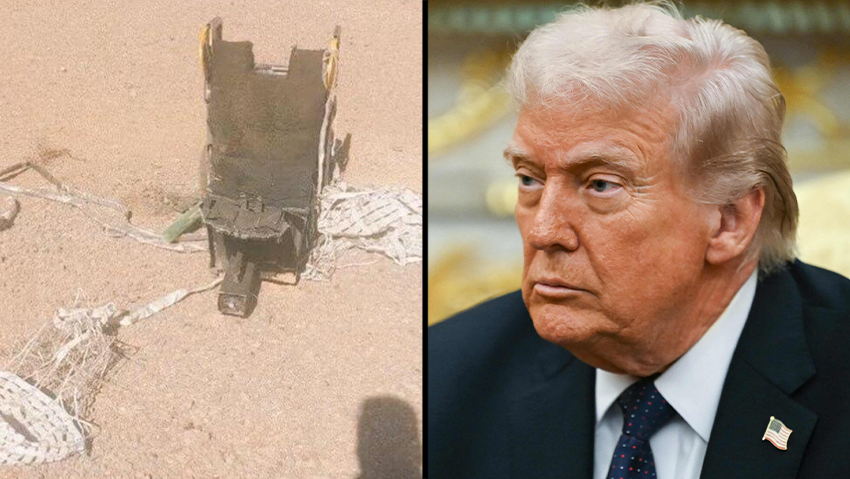
The wounded navigator hid in a mountain ravine after his F-15E was shot down last weekend. He survived for two days deep inside Iran as Iranian soldiers and civilians searched the area. Earlier this week, ynet revealed that the navigator had activated a special locator beacon for pilots, a Boeing-made device known as CSEL. Even so, his exact location remained unclear to search and rescue teams until a relatively late stage.
According to the new report, the decisive moment came when the “Ghost Murmur” device identified the navigator. The secret system, the newspaper said, citing “sources close to the matter,” allowed U.S. forces to detect from a distance the electromagnetic signature produced by the navigator’s heartbeat. The final location was determined only after data collected in the field was processed using advanced artificial intelligence software that filtered out background noise.
“It’s like listening for a single person’s voice in a stadium, except the ‘stadium’ here is a thousand square miles of desert,” one source told the newspaper. “Under the right conditions, if you’re missing and your heart is beating — we will find you.”
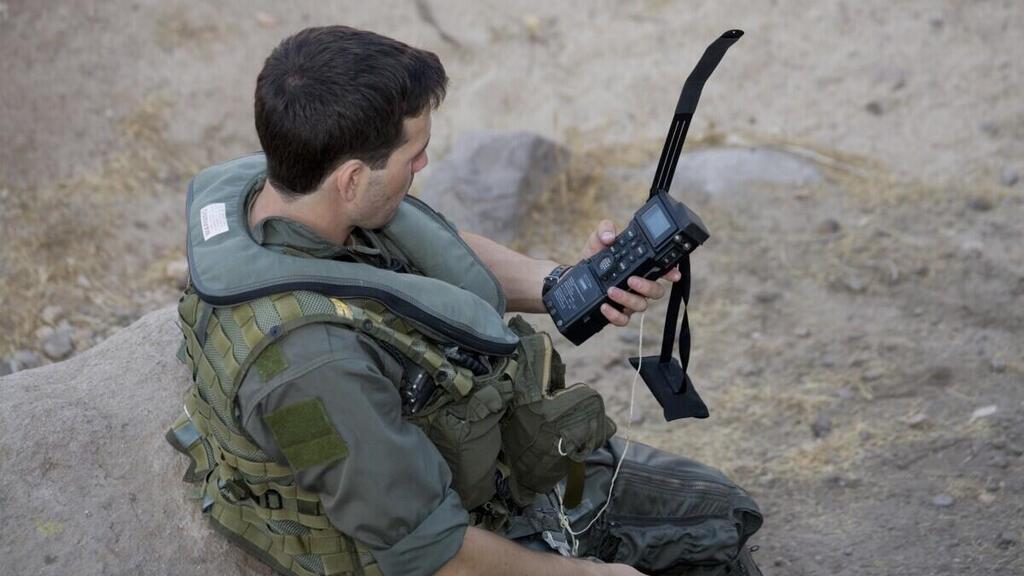
The CSEL device
(Photo: Boeing)
Diamond-based sensors
The technology behind the device is known as quantum magnetometry, which uses principles of quantum mechanics to detect extremely weak magnetic fields, enabled by diamond-based quantum sensors. It currently has applications in medicine, such as brain and cardiac imaging, as well as in geology and security. According to the Post, this would mark the first operational use of the tool in the field by an intelligence agency.
President Donald Trump and CIA Director John Ratcliffe appeared to hint at the device’s existence during a White House briefing Monday following the rescue operation. Ratcliffe said the CIA had achieved its primary objective by locating and confirming that the pilot was alive and hiding in a mountain ravine, undetected by the enemy.
Trump described the effort as akin to finding a needle in a haystack, crediting the CIA with pinpointing the location. He also suggested the technology involved was classified and joked that Ratcliffe could face consequences if he disclosed details.
According to the Post’s sources, the device was developed by Skunk Works, the advanced development division of aerospace giant Lockheed Martin. Founded in 1943, the unit traditionally focuses on cutting-edge, often highly classified technologies and is known for innovations such as the U-2 spy plane. The company declined to comment.

CIA Director John Ratcliffe
(Photo: REUTERS/Evan Vucci)
“Normally, this signal is so weak that it can only be measured in a hospital with sensors attached to the chest,” a source cited by the newspaper said. “I don’t think people even realize this technology is possible at such distances.” In this case, the source said, advances in quantum magnetometry combined with a relatively barren landscape enabled an ideal first operational use, with low electromagnetic interference and few competing human “signatures.”
According to the same source, despite its advanced nature, “Ghost Murmur” still has significant limitations: it works best in remote, sparsely populated environments and requires substantial processing time.
‘A great story, but not true’
Despite the widespread attention the report received, Scientific American cast doubt on it. According to leading physicists, “the story is great, but almost certainly not true, and it clashes with the fundamental limits of magnetic sensing.”
The magazine noted that quantum magnetometers are highly precise, for example in detecting heart rhythm disturbances by measuring magnetic fields generated by the heart muscle. However, they face a known limitation: even about 10 centimeters from the source, the magnetic field at the chest surface becomes nearly undetectable.

A US Air Force F-15E fighter jet
(Photo: X)
“Now,” said John Wikswo, a professor of biomedical engineering and physics at Vanderbilt University, “if instead of 10 centimeters you move even a meter away, the signal drops dramatically. At a kilometer, the signal shrinks to a trillionth of its original strength.”
According to the magazine, to detect a heartbeat from such distances, a quantum “Ghost Murmur” device would need to contend not only with Earth’s magnetic field and noise from natural and human-made electrical currents, but also with the heartbeats of sheep, dogs, rabbits and anything else moving in the area.
Bradley Roth, a physicist at Oakland University, said: “People have been measuring the heart’s magnetic field for 60 years, and it’s usually done in a shielded lab, just a few centimeters from the heart — and even then it’s barely detectable.”