

In a region where power is often opaque and succession is rarely transparent, a new kind of analysis is emerging — one powered not by spies or defectors, but by artificial intelligence.
Dr. Neal Tzur, CTO and Co-Founder of Askit, is working on technology that models not individuals, but entire audiences — revealing patterns of behavior inside groups that are otherwise impossible to access. In one striking experiment, his team used AI to simulate the thinking of senior commanders within Iran’s Islamic Revolutionary Guard Corps (IRGC), offering a rare window into how the regime’s inner circle may view the future of power in Tehran.
Studio interview with Dr. Neal Tzur
(Video: Lior Sharon)


“What we are doing is modeling aggregates — entire audiences,” Tzur told ynet Global. “If you give AI the correct fuel, it becomes an engine capable of simulating how groups think, decide and behave.”
From molecules to regimes
The idea behind Askit emerged when advances in artificial intelligence prompted Tzur and his co-founder to explore whether collective human behavior could be predicted.
To explain, Tzur draws on physics.
“Predicting a single molecule is chaotic and almost impossible,” he said. “But predicting the movement of a river is easier because patterns emerge from interactions. Society works the same way — individuals are unpredictable, but groups synchronize and create patterns we can model.”
This became the basis of synthetic audience modeling — aligning simulated populations with real-world groups to understand how decisions form collectively.
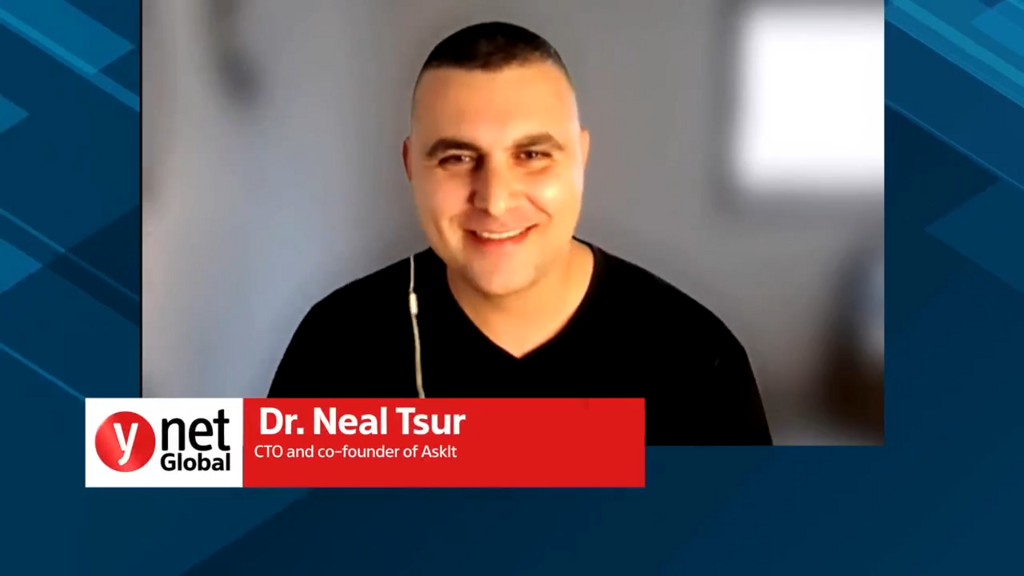
Interview with Dr. Neal Tzur
(Photo: Screenshot)
Iran through a synthetic lens
As part of a scientific demonstration rather than a commercial product, Askit modeled a synthetic audience representing 122 IRGC commanders and asked a critical question: who should succeed Supreme Leader Ali Khamenei.
The result was blunt.
Support for the traditional clerical succession path was almost nonexistent. Instead, the overwhelming preference pointed toward military leadership. Similar analyses have noted that roughly two-thirds of modeled commanders favored a military figure, with far fewer backing Khamenei’s son and almost none supporting a cleric.
“When we looked at the reasoning, the son symbolized continuity of the revolution,” Tzur explained. “But the generals prioritized capability — someone who can lead in crisis.”
That mindset, he said, reflects recent pressures inside Iran: unrest, internal instability and regional confrontation — conditions in which security elites historically gain influence.
Analysts have long suggested the Revolutionary Guard could play a decisive role in shaping succession and preserving power within the regime, particularly during periods of uncertainty.
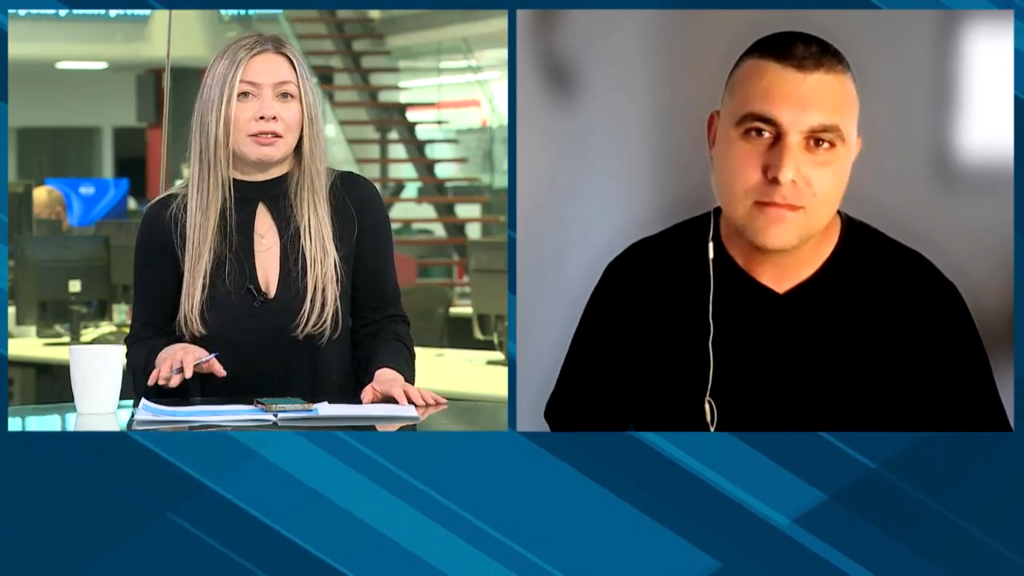
Interview with Dr. Neal Tzur
(Photo: Screenshot)
Not intelligence — but a new way to understand societies
Despite the geopolitical implications, Tzur emphasized that Askit’s commercial platform focuses on marketing optimization, not intelligence or political forecasting.
“The Iran modeling was science communication,” he said. “It demonstrates that entire audiences can now be modeled with unprecedented performance.”
Tzur, who comes from a background combining physics, international relations and military experience, says the technology is deeply relevant in Israel — where understanding societies, decision-making and conflict dynamics is not theoretical.
“This allows us to say something about people who cannot be interviewed,” he said. “It changes how organizations, campaigns and societies can be understood.”
The next intelligence revolution?
Could AI eventually anticipate leadership decisions better than traditional intelligence methods?
Tzur believes the potential exists — but the first challenge is simpler.
“We still don’t fully understand our own societies,” he said. “Understanding people — how they think, how they decide — is the real breakthrough.”
The world, he argues, is approaching a turning point.
“Ten years ago this sounded impossible,” Tzur said. “Ten years from now, it will feel inevitable.”
As artificial intelligence begins mapping the psychology of power itself, the question is no longer whether such tools will reshape political analysis — but how far into the corridors of hidden regimes they will reach.
First published: 10:47, 02.25.26