

OpenAI says it has dismantled a covert Russian influence operation that used ChatGPT to generate pro-Kremlin content, disguise the linguistic fingerprints of its operators and promote a think tank that describes itself as being based in Israel.
At the center of the operation was the International Burke Institute, or IBI, an organization that presented itself as an international expert community founded in 2025 and based in Israel.
OpenAI said it recently banned a cluster of ChatGPT accounts that originated in Russia and were used to promote the institute as part of a broader influence campaign. The accounts also generated posts for Telegram, X, Facebook, LinkedIn and other platforms.
The company said the campaign was uncovered after its security teams traced AI-generated social media content back to the accounts producing it.
The operators appeared to be working from Russia, where ChatGPT is not officially available. According to OpenAI, they used VPN services to conceal their location and bypass access restrictions.
Their prompts were not limited to asking ChatGPT to produce content favorable to Russia. They also instructed the model to remove linguistic clues that could expose the writers as Russian speakers, allowing posts to appear as though they had been written organically by people elsewhere.
The material largely promoted pro-Russian narratives while criticizing Ukraine, NATO, European governments and Western support for Kyiv.
One Telegram channel promoted through the operation, Lahme Ente, or Lame Duck, has about 20,000 subscribers and publishes content critical of the European Union, the German government and Western policy toward Ukraine, according to Der Spiegel. Recent headlines included “What Is NATO Hiding From Us?” and “Europe’s Inevitable Downfall.”
An institute that looked legitimate
The more sophisticated part of the operation was the infrastructure built around the propaganda.
Rather than relying only on anonymous accounts or obvious social media posts, the campaign promoted the International Burke Institute as a credible research organization, complete with academic-looking articles, expert profiles and its own international indices.
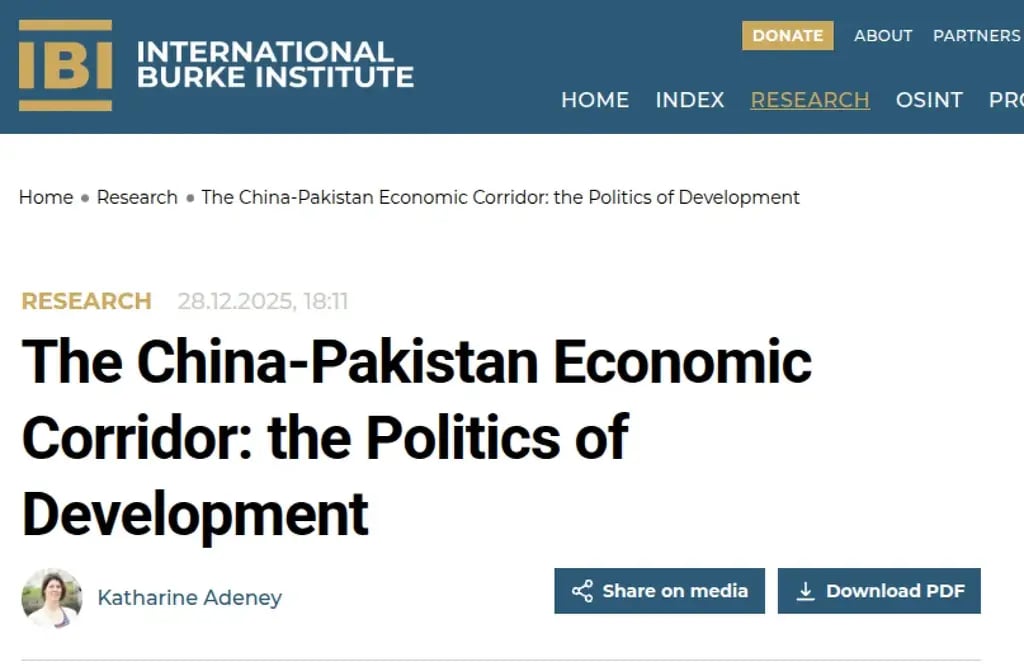
The fake website of the Russian influence network
(Photo: OpenAI)
The institute said it was based in Israel and listed prominent intellectuals including Francis Fukuyama and Noam Chomsky among experts associated with it.
But an examination of the site found that 34 of 36 sampled articles attributed to various academics and public figures had actually been copied from other sources and republished under misleading or false attribution.
In one case, an article about the China-Pakistan Economic Corridor was copied from Cambridge University Press and presented under a different attribution.
The site also published a “sovereignty index” that portrayed Russia in a particularly favorable light while giving lower scores to Western countries including the United States, Germany and France, as well as the European Union.
The result was a system designed to give political messaging the appearance of independent academic authority.
Instead of sharing an openly pro-Kremlin post, users could point to a “study,” index or analysis published by an institution with an international name, professional-looking website and roster of supposed experts.
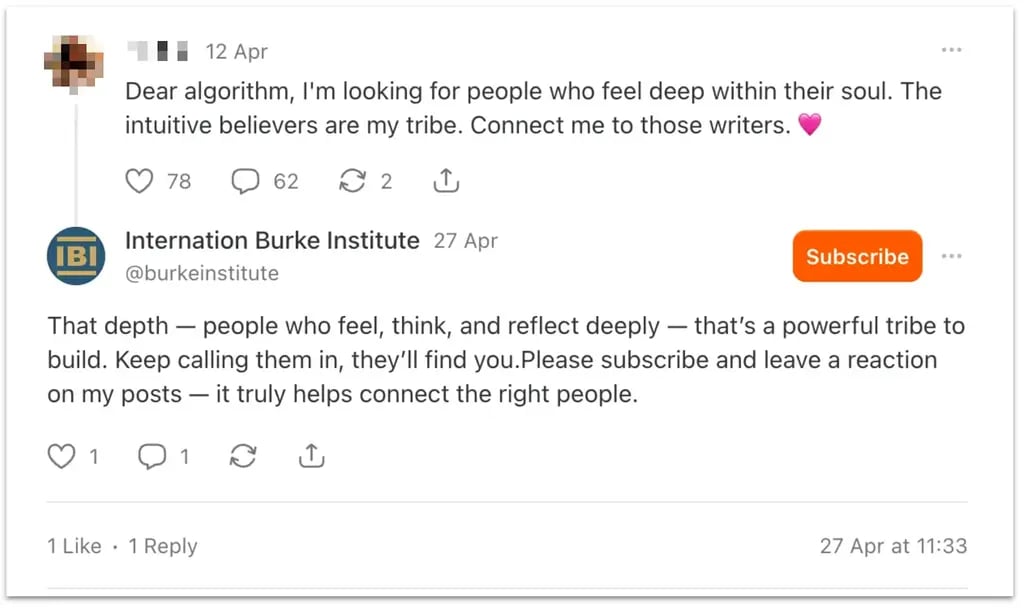
Example of the Russian influence network’s activity on social media
(Photo: OpenAI)
OpenAI said the immediate reach of the operation appears to have been limited. But the company identified the surrounding infrastructure as the more significant concern, because artificial intelligence can make it far cheaper and faster to build such influence networks at scale.
Israel connection under scrutiny
Der Spiegel reported that online evidence links the International Burke Institute to Dor Moriah, a charity run by Israelis with Russian and Ukrainian backgrounds that has alleged ties to the Russian Foreign Ministry.
Neither the International Burke Institute nor Dor Moriah responded to requests for comment, according to the report.
OpenAI itself was more cautious about attribution. The company said the ChatGPT accounts very likely originated in Russia and were used to promote the institute, but did not establish that every person or organization associated with IBI was knowingly part of the Russian operation.
That distinction is important: the evidence points to a Russia-based influence campaign using and promoting an institute that presents itself as Israel-based, rather than conclusively proving that the entire organization was created and controlled by Moscow.
AI as a tool for influence
OpenAI said the case illustrates how influence operators are using generative AI not only to produce large volumes of content, but also to create a veneer of credibility around it.
The operators used ChatGPT to draft comments and articles, maintain consistent messaging and rewrite material in ways intended to conceal their Russian origins.
Those posts could then direct readers toward what appeared to be an independent research institute publishing expert analysis, giving the broader campaign an additional layer of legitimacy.
OpenAI said the operation demonstrates how AI can be used to create authority, hide the origins of favored narratives and build assets that can later be expanded.
At the same time, the company noted that using AI can leave detectable patterns that may help platforms identify and disrupt such operations.
Part of a broader Russian pattern
The campaign is not the first pro-Russian influence operation OpenAI has disrupted.
Earlier this year, the company blocked accounts linked to Rybar, a pro-Russian media operation that the British government has described as coordinating with Moscow, receiving funding from the state-controlled defense conglomerate Rostec and maintaining ties with Russian intelligence services.
Other technology companies and researchers have reported similar trends.
Google has documented increased use of AI by pro-Russian actors for research, planning and content generation, while research firm Graphika has identified AI-generated content used by both Russian and Chinese influence operations.
Social media platforms are also trying to respond to the growing volume of synthetic content. YouTube, LinkedIn, Snapchat and others have introduced various measures to label, report or reduce the reach of AI-generated material, particularly when it is linked to misinformation.
Israeli disinformation watchdog FakeReporter warned that the threat is becoming increasingly relevant as Israel approaches an election.
“Political actors can now use artificial intelligence to create the appearance of authority and authenticity, manufacture public support and disrupt public opinion,” the organization said.
The group warned that Israel is entering what it described as its first national election campaign of the AI era, in which political messaging can be produced and tailored to different audiences at unprecedented speed and scale.
It said the regulatory systems meant to protect democratic discourse, including platform oversight and tools for detecting manipulated content, are still struggling to keep pace with the technology.