

The battle over artificial intelligence is no longer just about chips. It is increasingly about who is extracting knowledge from whom.

In a post on its official blog and on X, the company alleged that through those accounts, the firms sent more than 16 million queries to Claude to extract data and train and improve their own models.
The claims do not stand alone. According to The Wall Street Journal, OpenAI sent a memo to members of the U.S. House of Representatives earlier this month accusing DeepSeek of using a similar tactic known as “distillation” to mimic its products.
Distillation is a common AI technique used to build smaller versions of a company’s own models. But Anthropic warned that the same method can be used to develop competing products “at a fraction of the time and cost.”
Anthropic said the scale of activity differed among the firms. DeepSeek allegedly made about 150,000 queries to Claude, Moonshot more than 3.4 million, and MiniMax nearly 13 million.
The allegations come as MiniMax and Moonshot recently released new models touting improved reasoning and coding capabilities. DeepSeek, which shook the AI industry in early 2025 with the launch of its powerful V3 model, is also expected to unveil its next-generation system soon, fueling concern among U.S. AI companies.
When DeepSeek launched V3, it raised alarm in Washington and Silicon Valley that China was rapidly closing the AI gap even without access to advanced U.S. chips. At the time, questions also surfaced about whether the company had used distillation in training its model.
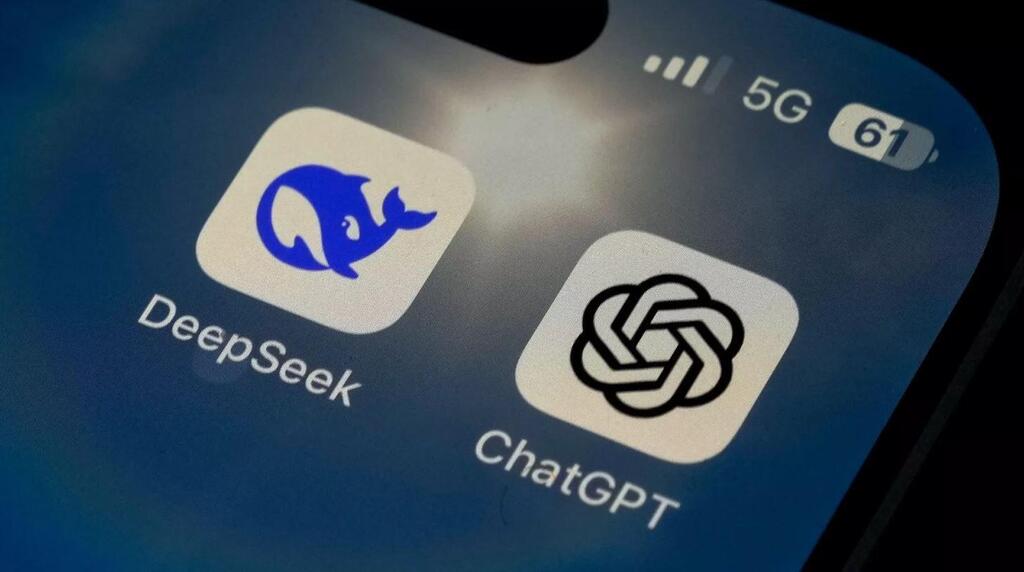
Did DeepSeek copy ChatGPT?
(Photo: AP)
In a scientific paper published in September, DeepSeek said it trained V3 using only standard web pages and digital books, without incorporating synthetic data. However, it acknowledged that some of the web pages used for training included “a significant amount of answers generated by OpenAI models,” meaning its system may have indirectly absorbed knowledge from more advanced models.
Synthetic data — content generated by AI systems themselves for training purposes — has become increasingly common as high-quality human-created data online becomes scarcer. Instead of relying solely on human-written texts, models are increasingly trained on outputs generated by other models.
Anthropic argues that the issue extends beyond business competition to national security and geopolitics.
“Foreign companies that distill American models may use these capabilities for military systems, intelligence applications and civilian surveillance,” the company said.
Anthropic is not only a major player in commercial AI but also works with the U.S. government. It supplies Claude to federal and defense entities, including the Pentagon, and has expanded its participation in government tenders and projects aimed at integrating advanced language models into decision-support systems, intelligence analysis and automation.
That means Claude is not just a consumer or enterprise product, but technology tied to sensitive U.S. infrastructure. Against that backdrop, allegations that Chinese firms are distilling its capabilities carry clear geopolitical weight.
If adopted formally by the U.S. administration, the claims could escalate beyond the technology sector and become another flashpoint in already strained relations between Washington and Beijing. The technological contest over AI models is increasingly emerging as another front in the broader U.S.-China rivalry.