

After a few hours at this year’s IFA technology show, it was hard not to conclude that appliance makers had collectively decided they were tired of letting us run our own homes. The vacuum is no longer supposed to just vacuum. The refrigerator is no longer content with keeping food cold. Even the cat’s litter box and the aquarium suddenly have ambitions of becoming part of one big AI system.
And, of course, those two letters that have become almost impossible to escape in recent years, AI, were plastered across seemingly every other product. In some cases, artificial intelligence was genuinely being put to interesting use. In others, it felt as though somebody in marketing had simply decided that “smart” was no longer smart enough in 2026. But once you filter out the noise, the direction in which the industry is moving is difficult to ignore.

On paper, of course, we have been living in “smart homes” for years. In practice, that intelligence has often amounted to replacing the act of pressing a switch on the wall with opening an app, waiting for it to connect to the cloud and then pressing essentially the same switch.
The smarter our homes became, the more apps, accounts, passwords and notifications we were expected to manage.
Now the industry is trying to change that equation. Not by adding another device with Wi-Fi or a touchscreen, but by putting an AI layer above all those devices, one that is supposed to understand what is happening in the home and manage them for us. In other words, after years of promising us a smart home, the industry now wants to give it an actual brain.
The end of the smart home
The idea of a home that manages itself is hardly new. Technology companies have been promising it for nearly two decades: lights that switch on when we walk in, air conditioners that know when we are heading home, blinds that react to sunlight and washing machines that finish their cycles just as we return from work.
Some of those things are already possible. The problem is that to make them work together, someone still has to tell the house exactly what to do. Want the lights to turn off at a certain time every evening? Set up an automation. Want the air conditioner to switch on when you are nearing home? Create a routine.
Bought a product from another manufacturer? Congratulations, there is a good chance you now need another app. The voice assistants that were supposed to solve this problem have not really done so either. Alexa, Siri and Google Assistant allowed us to replace our fingers with our voices, but for years they were essentially remote controls we could talk to.
“Turn on the living room light” was easy enough. “I’m going to bed, take care of the house” was a much tougher test. And that is exactly the gap the current generation of AI-powered homes is supposed to close.

Everyone wants to run our homes
(Photo: IFA)
It all started with the robot roaming the floor
If there is one product that neatly illustrates the evolution of the smart home, it is the robot vacuum. The first generations were, by today’s standards, fairly dumb. They drove around the house, bumped into furniture, turned in another direction and hoped that eventually they would cover most of the floor.
Then came better sensors, maps and laser-based navigation. Later came cameras, object recognition and docking stations capable of emptying dust, washing and drying mop pads and refilling water with almost no human intervention.
At IFA 2026, it was clear that this race had moved into another phase. Instead of merely knowing where they are in the home, the latest robots are supposed to understand what they are seeing and analyze that information.
Narwal, for example, presented systems that use cameras and AI to identify hundreds of different objects and obstacles and adjust their navigation accordingly.
Roborock again showed its Saros Z70, a robot vacuum and mop equipped with a mechanical arm that emerges from inside the device and can pick up and move small objects left on the floor. At the same time, the company has expanded beyond indoor floor cleaning into smart robots for swimming pools and gardens.
ECOVACS, one of the pioneers that helped turn robot vacuums into a huge consumer business, no longer wants to be seen simply as a vacuum company either. Alongside its DEEBOT line, it is now active in window cleaning, lawn mowing and pool cleaning, and at IFA it spoke extensively about using AI in systems designed to make more decisions on their own.
From the ECOVACS display at IFA 2026
(Video: Daniela Ginzburg)


Dreame has taken the same idea even further. Alongside its robots and vacuum cleaners, the company displayed an automatic cat litter box and a smart aquarium, as well as products across a growing number of categories inside and outside the home.
That may have been one of the clearest developments in Berlin this year: the home robot has finally risen off the floor. Companies we once associated with a round disc rolling around the living room now want to clean the windows and pool, look after the garden, help with laundry and take over more and more household jobs.
Then the robot got arms and legs
IFA itself placed heavy emphasis this year on what the industry calls Physical AI, artificial intelligence that can operate in the physical world. After several years in which most of us encountered the AI revolution through a chat window on a computer or smartphone, it is beginning to acquire wheels, arms, cameras and motors.
Hovering above all of this is the much bigger promise of humanoid robots. For years, a home robot was a machine designed to perform one very specific task.
Now, numerous companies are developing humanlike robots that are eventually supposed to perform many different jobs in the same home: picking up and organizing objects, carrying things from room to room, loading and unloading appliances and handling chores that until now required a pair of human hands.
Robots like these were visible at IFA this year as well, although for now most remain far from becoming the household assistant that folds your laundry while you are at work.
The challenge is far greater than teaching a vacuum cleaner to recognize a sock. Such a robot has to understand a constantly changing home environment, manipulate objects it may never have encountered before and do all of it safely around children, pets and people.

Robots are impressive, but there is still a long way to go before they truly become part of our homes
(Photo: IFA)
So who will become the brain of the home?
LG offered one of the clearest examples this year with ThinQ Claw, an AI agent presented as part of the next generation of its smart-home platform. The idea is not simply to add another chatbot to the refrigerator.
ThinQ Claw is supposed to understand the user’s context, remember preferences and connect the different appliances and services throughout the home. In one example presented by the company, the system uses information about groceries that have been purchased to suggest what to prepare for dinner, then coordinates between the refrigerator and the oven.
In other words, rather than making us manage every appliance separately, LG wants one system to manage them all and coordinate between them.
And LG is far from alone. TCL, Hisense and Haier arrived in Berlin with their own versions of the same idea: a home in which appliances no longer operate as a collection of separate products, but as part of a system that knows the user and tries to handle things in the background.
Even Ugreen, which most consumers know primarily for chargers, cables and accessories, presented HomeAgent this year, a platform combining local storage, artificial intelligence and control of different household devices.
There is plenty of room to debate how much of this is ready for everyday use and how much remains at the stage where the demonstration video works better than the actual home. But the fact that so many companies arrived at the same show with variations on the same idea is no coincidence.

From LG’s display at IFA 2026
(Photo: LG)
First, make them talk to each other
Before any of this can work, the industry has to solve a much less glamorous problem: household devices still do not always know how to communicate with one another. For years, every manufacturer built its own little island.
Buy a vacuum from one company, lighting from another and a camera from a third, and each wants you to create an account, download an app and manage the product through its system.
That is where Matter comes in. The smart-home standard was created to begin breaking down those walls. Apple, Google, Amazon, Samsung and hundreds of other companies support it, with the goal of creating a common language that allows devices from different manufacturers to work together inside larger ecosystems.
The path remains far from perfect. Matter support has expanded significantly since the standard launched in 2022, but not every product category is supported equally, not every manufacturer implements every feature, and the promise of simplicity still starts to fray as soon as users mix products and ecosystems.
But this is precisely where AI could change the story. Matter tries to solve the smart-home problem from the bottom up by making all devices speak the same language. Artificial intelligence is trying to solve it from the top down by making sure we no longer need to know which language they are speaking.
If that combination works, users should no longer need to think about whether the smart light is made by Govee or Philips, the vacuum by Roborock or the washing machine by Bosch. As far as the user is concerned, there will simply be a light, a lock and a vacuum, and the assistant running the home will be expected to understand how to make them work together.
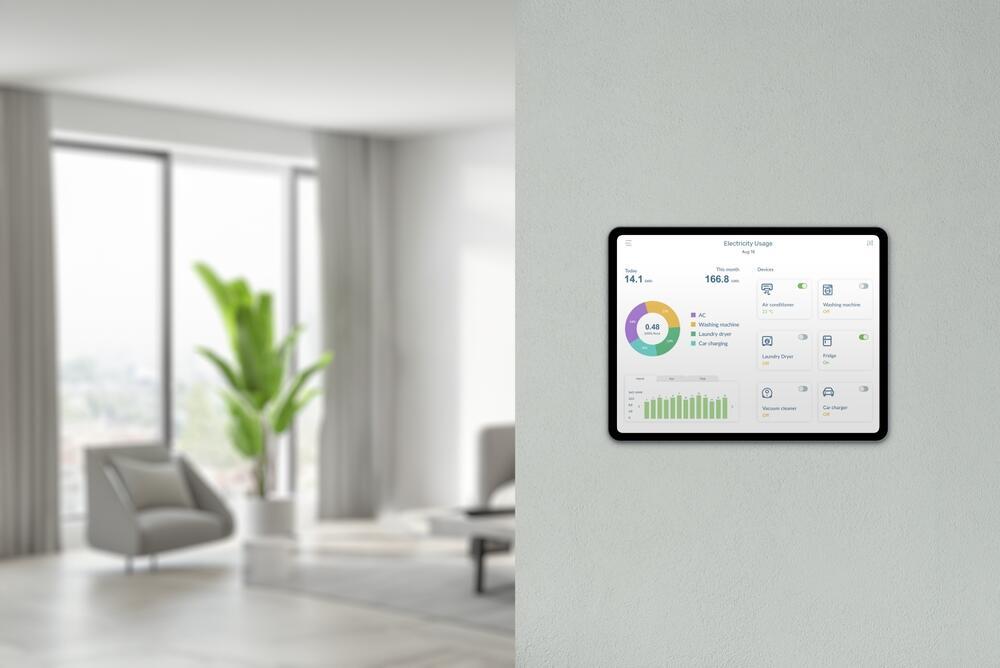
Smart home
(Photo: Shutterstock )
Everyone wants to be the assistant running your home
The technology giants understand perfectly well where this is heading. Google, for example, has already begun shifting its smart-home platform into the AI era with Gemini for Home, with the goal of gradually replacing Google Assistant with a system that understands natural language and context much more effectively.
Instead of remembering exactly what you named a particular lamp inside an app, you are supposed to simply explain what you want. Even creating an automation could go from manually selecting triggers and actions to describing the desired result in ordinary language.
Amazon is pursuing something similar with Alexa+. Instead of the familiar voice assistant, Amazon wants Alexa to become an AI agent capable not only of answering questions but also of carrying out tasks and managing different devices and services.
Samsung wants to pursue the same goal through SmartThings, which already connects the vast number of appliances it puts into consumers’ homes. Apple, according to reports, is moving its own AI-powered Siri in a similar direction.
These companies would certainly prefer consumers to buy as many of their products as possible. But ultimately, all of them want to become the place we turn to whenever we want something done in our homes.
It is easy to understand why. Whoever becomes the brain of the home also gains business power that is difficult to overstate. If an AI assistant knows when the refrigerator is running out of milk, which cleaning product is nearly finished, when a technician needs to be called and which appliances we use at every hour of the day, it can also become the gateway through which we buy products and order services.
Whoever becomes the brain of the home will gain enormous business power: If the AI assistant knows what is missing, it can also become the gateway through which we buy it
Instead of opening a website or an app and making the choice ourselves, we may simply tell the house, “Order more,” and let the system decide where to buy it, from whom and at what price. That is a very different kind of control. The company that controls the assistant would not merely manage our appliances. It would sit at the point where information about life inside the home meets our purchasing decisions.
Behind the promise of a home that simply works, then, is also a battle over one of the most valuable positions in technology: who gets to stand between us and everything we consume inside our homes.
Instead of five apps, one sentence
Imagine, for example, that you are leaving for a weekend away. In today’s smart home, you can turn off the lights and air conditioners, start the vacuum, close the blinds and switch the cameras into security mode, even after you have already left. The problem is that we are still the ones who have to do it, or at least the ones who need to create an automation in advance.
In the home the industry is now trying to build, we are supposed to simply tell our AI assistant, “We’re going away for the weekend, bye,” and let it figure out the rest. An actual household manager. For now, that is still more vision than reality, but it is no longer entirely theoretical.
LG, for example, demonstrated a ThinQ Claw scenario in which the system recognizes a planned trip in the calendar and suggests turning off lights and the television and suspending automations that will not be needed while nobody is home. After all, there is little point in turning on the air conditioner at 10 a.m. if the house is empty.
Notifications themselves are already beginning to change. AI-powered systems can analyze footage from security cameras and describe what actually happened instead of merely sending a generic alert such as “Motion detected in yard.”
That is really the larger shift: away from devices that we have to learn how to manage, and toward a home that is supposed to understand what we want on its own.

(Photo: Shutterstock )
The price of a home that knows us
There is, of course, one problem with this convenient vision. For the home to understand us, it has to know us. A home that knows the children have returned from school, the cat is alone, a stranger has entered the yard or we have already gone to sleep needs information.
Cameras, microphones, motion and presence sensors, our location and our patterns of appliance use all become part of the picture from which AI learns about us. Put simply, the more autonomous the system becomes, the more it needs to know.
Some manufacturers are trying to address that problem through local processing, so that not every image or piece of information has to pass through a remote server. Matter is also designed so that a significant amount of communication between devices can take place inside the home network.
But that does not solve everything. When a chatbot invents an answer, it can be annoying. When an AI system makes the wrong decision about a lock, a security camera, an oven or another appliance, the consequences can be very different.
A single system capable both of understanding what is happening inside a home and of taking action naturally becomes a much more attractive target for attackers. And then there is the broader question of privacy and how much information consumers are actually willing to hand over.
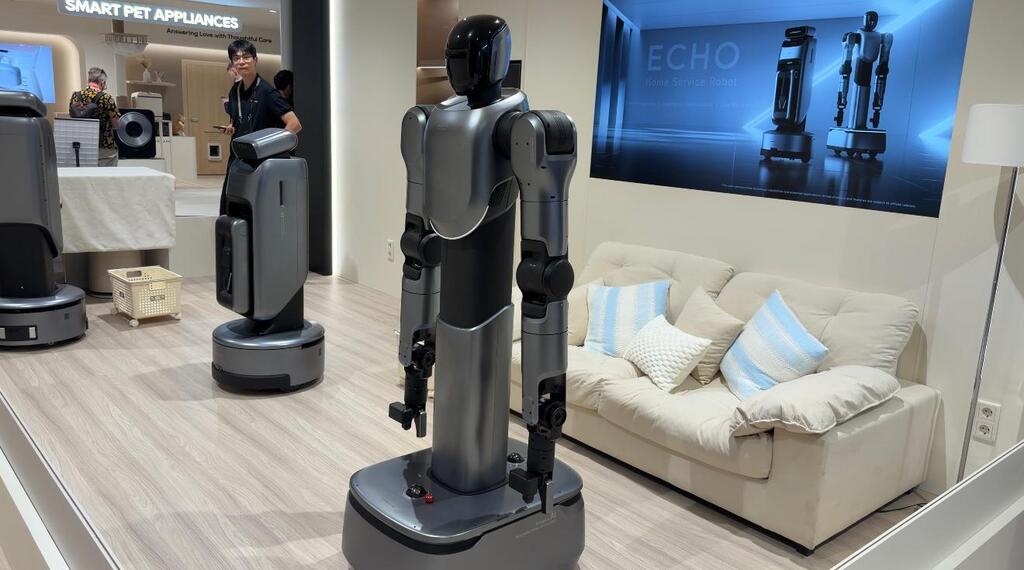
A home that knows us and runs itself sounds great, but at what price?
(Photo: Daniela Ginzburg)
There is still a long way to go
Despite what walking around the booths at IFA 2026 might suggest, we are not yet living in a home capable of running itself.
Matter still has not solved every compatibility problem, and AI assistants still make mistakes. Devices from different manufacturers do not always cooperate as smoothly as we would like, and in many products proudly marketed as AI-powered today, the “AI” is simply an algorithm performing one narrowly defined task rather than some intelligence sitting in the living room managing everything.
And yes, in some cases it is difficult to escape the feeling that artificial intelligence has become the industry’s latest sticker, something manufacturers simply attach to whatever product they happen to be selling.
But after a week in which nearly every major manufacturer in Berlin tried to demonstrate how its devices are learning to see, understand, decide and communicate with the rest of the home, it is equally difficult to dismiss all of this as another buzzword that will disappear in two years.
What IFA 2026 showed most clearly is that the different pieces of the 2026 smart-home puzzle are beginning to come together: robots, sensors, appliances, standards that allow them to communicate and, above all, AI assistants competing to sit above all of them and run the show.
Now we have to see whether the industry can actually connect all those pieces, or whether, a few years from now, we will simply find ourselves with seven different apps and seven different AI assistants arguing over which one gets to turn on the living room light.