

The dealers at the Venetian hotel, formerly owned by the family of the late casino magnate Sheldon Adelson and his wife, Dr. Miriam Adelson, stood beside the empty roulette and blackjack tables, watching expectantly as crowds streamed past. No one stopped.
The roughly 20,000 people from around the world who had arrived at the hotel's convention center were far more interested in developments in artificial intelligence than in sitting down at gambling tables where they might lose hundreds or thousands of dollars to the casino.
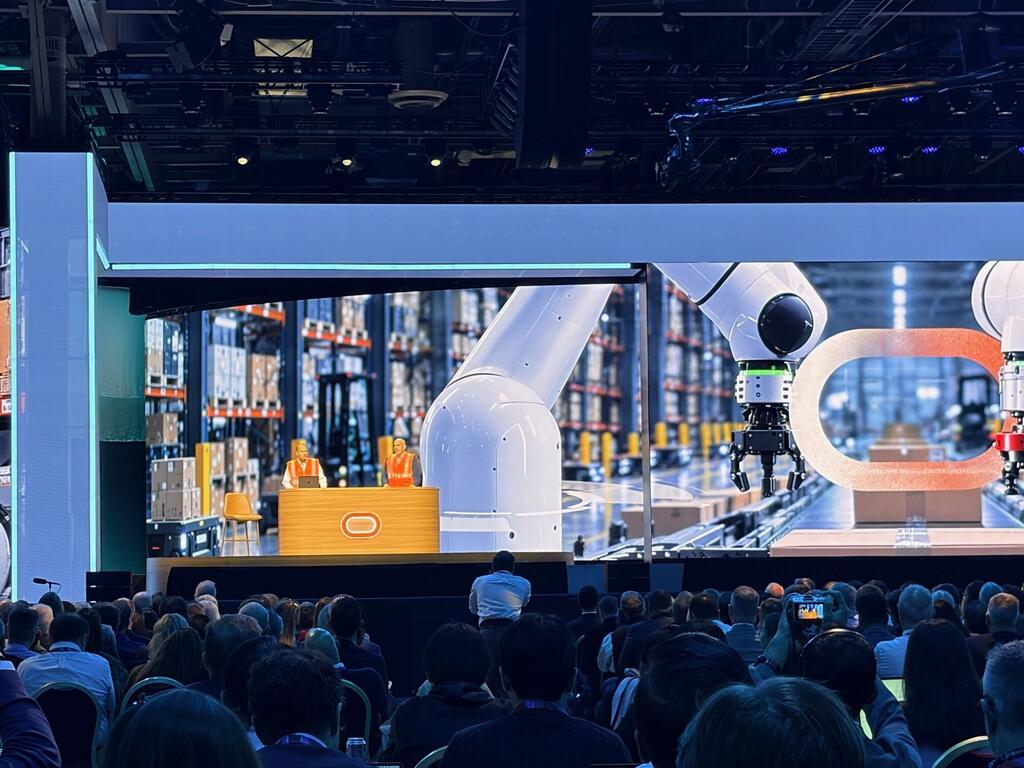
Artificial intelligence for people
Oracle co-CEO Mike Sicilia opened the conference onstage in the massive auditorium, unveiling new AI capabilities in Oracle Fusion Cloud applications. His central message was that technology should not only improve organizational performance but also give employees more time to think, be creative and connect with others
One of the major innovations he introduced was Oracle Fusion's new Agentic Applications, powered by Fusion Claw. These applications are designed to help organizations carry out complex tasks in finance, human resources, supply chain management, sales and customer service while reducing costs and improving efficiency.
Unlike traditional software, which displays information and waits for user instructions, the new applications focus on achieving results. Employees define the objectives and limits of authority, and the system coordinates the processes needed to achieve them while maintaining the organization's oversight and control mechanisms.
Oracle currently offers 25 AI applications powered by Fusion Claw, integrated into its enterprise cloud systems for enterprise resource planning (ERP), human capital management (HCM), supply chain management (SCM) and customer experience (CX). They are designed to analyze data, identify problems and recommend actions, subject to human oversight and approval.
Among the uses demonstrated by the company were analyzing accounting anomalies and accelerating financial close processes, planning staffing levels based on demand and costs, identifying irregularities in procurement spending and finding opportunities for savings. Other applications assist with planning the allocation of materials and production resources, analyzing payroll data and improving customer service.
"AI is no longer limited to telling you what's happening in your business. It actually is now telling you what can happen next," Sicilia said. "Work is sometimes organized around the software itself. People need to know which application to open, where to find the information, steps to follow, and who needs to do what next. In fact, AI should allow you to barely think about the software."
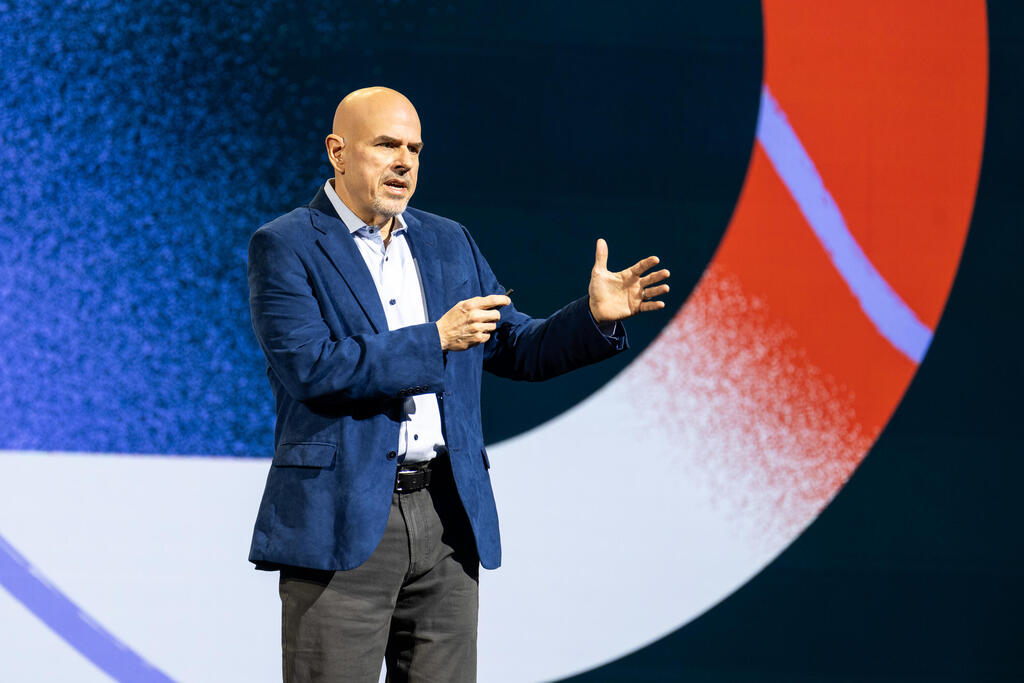
Oracle CEO Mike Sicilia
(Photo: Oracle)
Identifying new opportunities
To illustrate the system's capabilities, Oracle presented an example involving a shipping company where data analysis identified the potential to save $58,000 in transportation costs. In other words, the system identified a possible opportunity to reduce expenses, not necessarily savings that had already been realized.
Sicilia also cited an example from the medical field. A doctor who began using the system said he had more time to talk with his patients. One patient even remarked that he had only recently noticed the color of the doctor's eyes. For Sicilia, the story illustrated how technology can also free up time for human connection.
"We are giving people more time to be human, and that's the ambition we have for AI; not simply more capable people, people that have more time to think, create, to solve problems and care for one another," he added.
Sam Altman: 'AI is uncovering security vulnerabilities at a staggering pace'
One of the conference's most prominent guests was OpenAI CEO Sam Altman, who joined Oracle co-CEO Clay Magouyrk for an onstage discussion. During the conversation, the companies announced an expansion of their partnership that will integrate ChatGPT and the Codex coding tool into Oracle's business applications and cloud infrastructure.
Altman addressed the rapid pace of AI development, acknowledging that even he had been surprised by the capabilities that have emerged over the past six months. One of them is the ability to identify security vulnerabilities at an unprecedented rate.
"But I find myself shocked at just how many vulnerabilities these AI systems are finding and what it's going to take, just the incredible, the Herculean effort that it's going to take to get ahead of this," he said.
According to Altman, AI did not create the vulnerabilities but is exposing weaknesses that have accumulated in computer systems over decades. He also suggested that fixing each vulnerability individually would not be enough and that new solutions would be needed to continuously monitor network traffic and prevent the exploitation of weaknesses.
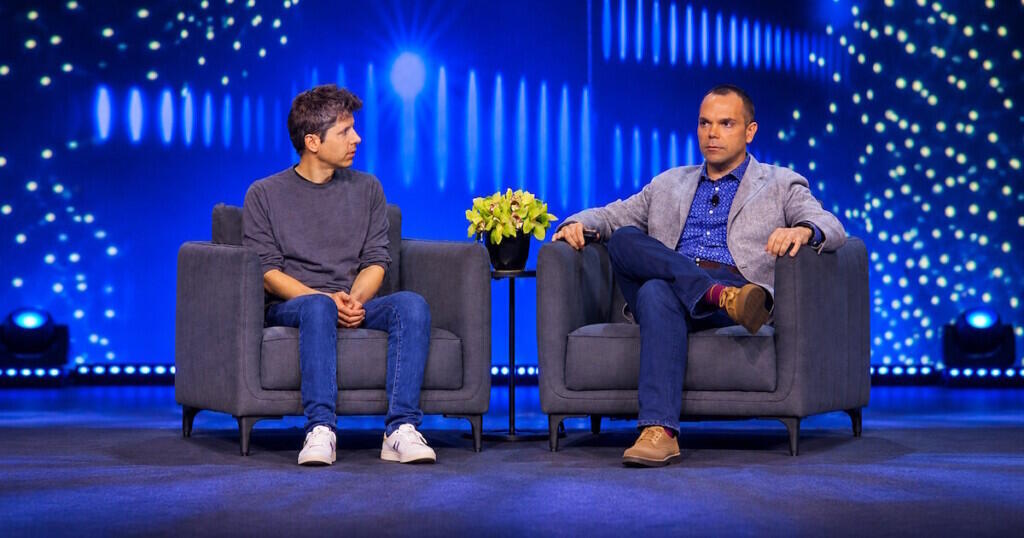
Sam Altman and Clay Magouyrk
(Photo: Oracle)
Against this backdrop, Oracle unveiled Oracle AI Security Mesh, a new security system powered by OpenAI's artificial intelligence models. The system is designed to identify vulnerabilities in enterprise applications and infrastructure, analyze risks and recommend ways to address them, whether the systems operate in the cloud or on local servers.
However, Oracle emphasized that any changes would require human approval and that AI agents would operate with restricted permissions and under continuous supervision.
Altman also offered a glimpse into the future. He said that in certain areas, such as mathematical reasoning, AI systems are already demonstrating capabilities that surpass those of humans.
He noted that OpenAI is expanding its investments in computing infrastructure, chips and robotics, but clarified that the company is still unable to release its most advanced models to the public for autonomous operation.
Alongside his enthusiasm for the new capabilities, he stressed the need to prepare for the security risks associated with the technology.
From Las Vegas to the fields near the Gaza border
Alongside the business innovations, one of the more interesting topics discussed at the conference was the use of artificial intelligence to strengthen agriculture and food security in Israel.
Oracle is collaborating with ReGrow Israel on a project aimed at helping restore Israeli agriculture, which was damaged by the October 7 attack and the ensuing war, particularly in communities near the Gaza border and in northern Israel.
Using Oracle's cloud infrastructure, satellite data and AI tools, the project can analyze field conditions, identify problems and help farmers make informed decisions about irrigation, crops and harvest planning.
The initiative illustrates how technology can contribute not only to business efficiency but also to rebuilding communities and strengthening food security.
Ahead of the conference, Oracle announced that it would invest $1 billion over the next four years to strengthen its network of business partners and meet growing demand for AI-powered solutions and services.
The investment will help partners develop new solutions and expand their expertise in advanced technologies through training and certification, technical support, assistance with migration to cloud services, product development and joint marketing.
- The writer attended Oracle's annual conference in Las Vegas as a guest of the company.