

Just before Apple's first foldable iPhone reaches stores, the company has revealed its battery capacity for the first time. And it turns out that despite its foldable design, the iPhone Duo's battery is not particularly small. Meanwhile, ahead of the start of sales in Israel this Friday, reports of production difficulties and device shortages are raising concerns about delivery delays.
Apple generally does not disclose the battery capacities of its iPhones in official specifications, preferring to provide figures for hours of use and video playback. However, since June 2025, new European Union regulations have required smartphone manufacturers to publish detailed information about batteries, energy efficiency and device durability.
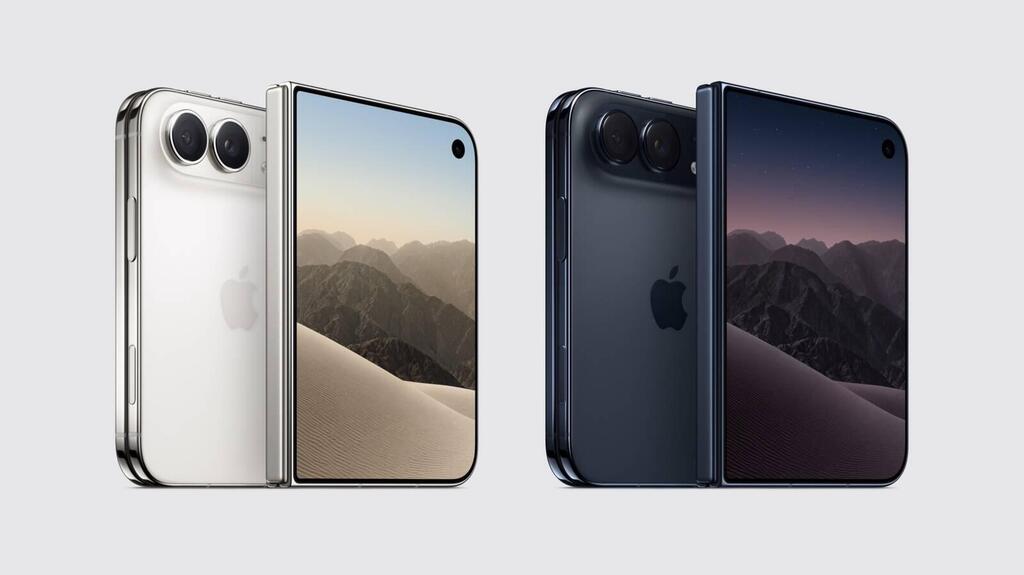
Thanks to that requirement, it has now emerged that the iPhone Duo has a 4,883mAh battery, according to a regulatory document published by Apple in Europe and reported by MacRumors.
The figure also supports an earlier leak suggesting that Apple incorporated two separate batteries into the device, one on each side, with capacities of 2,962mAh and 1,921mAh.
For comparison, the iPhone 18 Pro has a 4,056mAh battery, while the iPhone 18 Pro Max has a 5,391mAh battery in versions equipped with a physical SIM card tray. In the US versions, which support eSIM only, the capacities are slightly higher, at 4,288mAh and 5,567mAh, respectively.
The iPhone Duo, by contrast, supports only eSIM worldwide, so its battery capacity is identical across all markets.
According to Apple's official figures, the device can deliver up to 44 hours of video playback using the external display, compared with 31 hours on the internal display. That represents a 13-hour difference between the two displays in Apple's testing, although the gap cannot necessarily be attributed solely to screen size.
In any case, these are Apple's laboratory figures. Independent testing will be needed to determine how long the battery actually lasts in everyday use, including switching between displays, taking photos, browsing and using different applications.
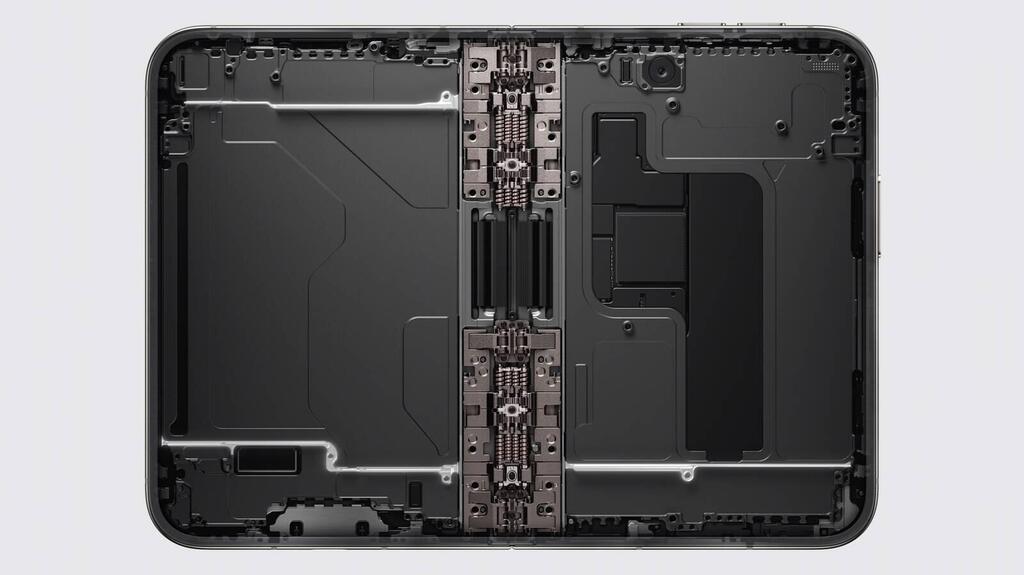
Apple apparently incorporated two separate batteries into the iPhone Duo
(Photo: Apple)
Preorders already pushed into 2027
Meanwhile, Apple appears to be facing a considerable headache ahead of the device's launch. Preorders for the iPhone Duo opened in the United States last Friday, and within less than an hour, estimated delivery dates had already slipped to late January 2027. That means some customers ordering the device will have to wait more than three months to receive it.
Apple attributes the delays to exceptionally strong demand. In a statement to the Financial Times, the company said demand for the device had been extraordinary and that it was working to fulfill orders as quickly as possible.
However, various reports also point to manufacturing difficulties and supply chain problems. According to a report by Chinese news outlet Jiemian News, Apple is encountering problems manufacturing the foldable displays and hinge components. Supply chain sources claimed that in mid-September, the assembly process had a yield rate of just over 60%, potentially limiting the number of devices Apple could produce. Apple has not confirmed those figures.
Bloomberg's Mark Gurman, known for his reliable connections with sources inside Apple and the technology industry, also reported that the company was aware of the manufacturing difficulties and expected shortages but decided not to postpone the opening of preorders.
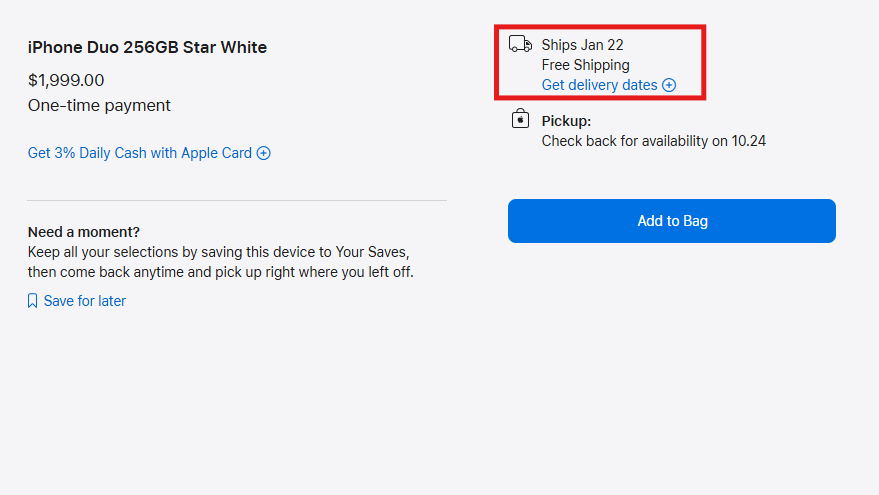
Shipments of Apple's first foldable iPhone have already been pushed back to January 2027
And the problem may not be limited to online orders. According to MacRumors, some employees at Apple stores in the United States have been instructed to warn customers who did not preorder that they might be unable to purchase the device in stores on launch day. Apple itself has not officially announced that stores will be out of stock.
What about Israel?
Official sales of the iPhone Duo in Israel are expected to begin this Friday, October 23, alongside the US launch. The device is already available for preorder through local retailers, with prices starting at 8,199 shekels for the 256GB version. In the United States, prices start at $1,999 before local taxes.
At this stage, it remains unclear how many devices have been allocated to Israel and whether the delivery delays in the United States will affect the local market.
So far, there have been no verified reports of significant stock shortages in Israel. But given the production difficulties and high demand, it is possible that the device will also be difficult to obtain here during the first days, or even weeks, after its launch.