

After years of largely leaving the smart home market to Google and Amazon, Apple is making an aggressive push into the sector. The company announced Tuesday the HomeView, a new smart display that recognizes household members, allows users to control home appliances and features the new AI-powered version of Siri. Apple also unveiled a new Apple TV 4K streaming device, an upgraded HomePod mini speaker and a range of smart accessories, including security cameras, locks and thermostats developed in partnership with LG.
For years, Apple's involvement in the smart home market was largely limited to its HomeKit platform and Home app, which allowed users to control smart products made by other manufacturers. Now, the company is trying to close the gap with its competitors, relying on two major advantages: its large iPhone user base and the next-generation Siri designed to make controlling the home significantly easier.
The display that recognizes who's standing in front of it
At the center of Apple's announcement is HomeView, a 7-inch smart display designed to serve as the home's control hub. The device marks Apple's entry into a new product category, competing directly with smart displays from Amazon and Google while emphasizing deeper integration with Apple's ecosystem.
The device comes in two versions: a tabletop model with built-in speakers and a hinge that allows users to adjust the screen's angle, and a wall-mounted version. The tabletop model's design is somewhat reminiscent of Apple's iconic iMac G4, with a screen positioned above a circular base.
One of HomeView's standout features is facial recognition. Using a built-in camera, the device can identify up to six different users and customize the information displayed for each one. For example, when a family member approaches the screen, they can see their personal calendar, reminders, messages and other relevant information.
At the heart of the device is Siri AI, the new version of Apple's voice assistant powered by Apple Intelligence. Users can, for example, ask Siri to find a recipe they received by email, add its ingredients to a shopping list or check when a particular meeting is scheduled on their calendar. Some of these personalized features require a connection to an iPhone or iPad that supports Apple Intelligence.
Beyond controlling the home, HomeView is also designed for entertainment and communication. It includes a camera for FaceTime calls with Center Stage support, which keeps users centered in the frame even as they move around the room. The device can also be used to listen to music, watch content and make calls.
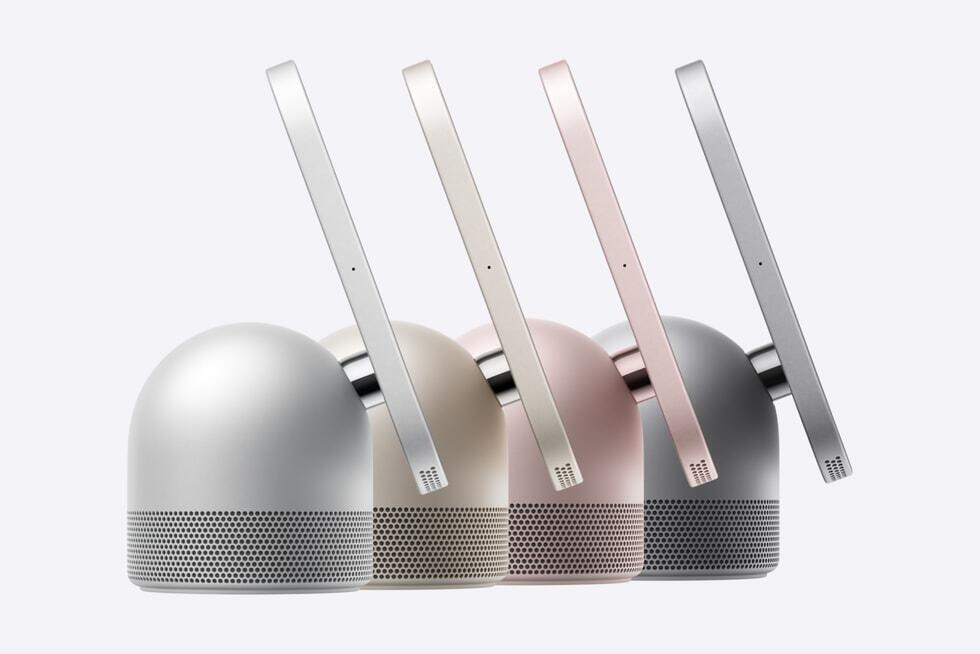
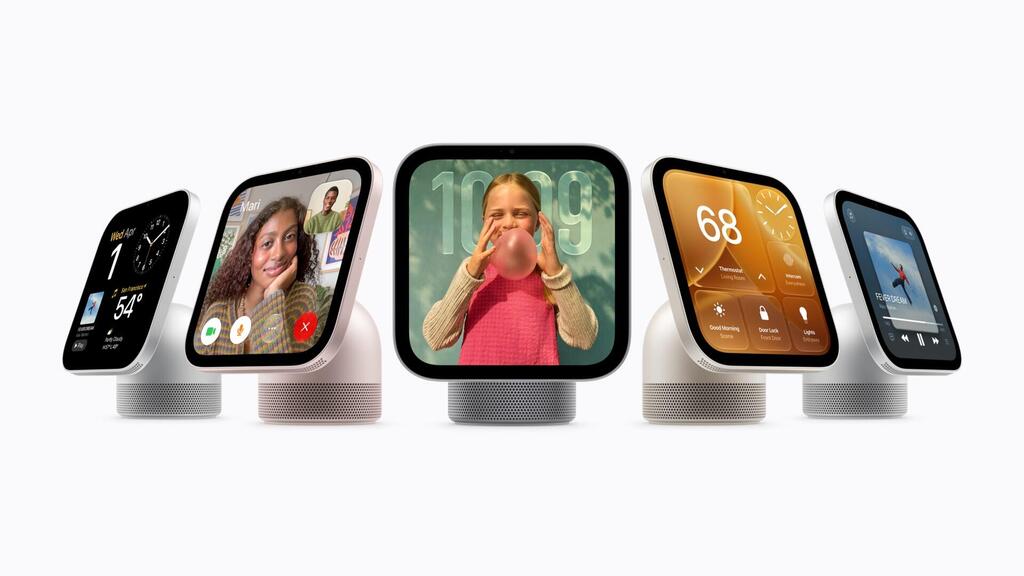
HomeView
(Photo: Apple)
The device is powered by Apple's A18 chip and features a Liquid Retina display and a built-in audio system. The interface adjusts based on how far the user is from the screen, displaying larger, simplified information from a distance and more details as the user moves closer.
HomeView's primary role, however, is managing the smart home. It allows users to view up to nine live security camera feeds simultaneously, control the lights, adjust temperatures, lock doors and automate various tasks. It can also detect alarm sounds and send alerts to household members' personal devices.
HomeView will be priced starting at $299 and will be available in select countries beginning November 13. Wall-mounting accessories manufactured by Schneider Electric will be sold separately, starting at $59.95.
Siri makes its way to Apple TV
Alongside the smart display, Apple introduced a new generation of Apple TV 4K, its streaming device, with improved performance and artificial intelligence capabilities. The device is powered by the A19 chip, which Apple says delivers up to 50% faster processing speeds and twice the graphics performance of the previous generation. It also includes a dedicated AV1 decoder designed to enable high-quality video streaming while using bandwidth more efficiently.
The most significant upgrade, however, is the integration of Siri AI. Instead of relying on basic voice commands, users will be able to have conversations with their television, search for movies and TV shows by asking more complex questions and receive recommendations tailored to their preferences.
For example, users will be able to ask which shows won Emmy Awards this year, request recommendations for award-winning comedies or find out where a particular series was filmed. During playback, Siri's answers will appear in a small window without obscuring the content being viewed.
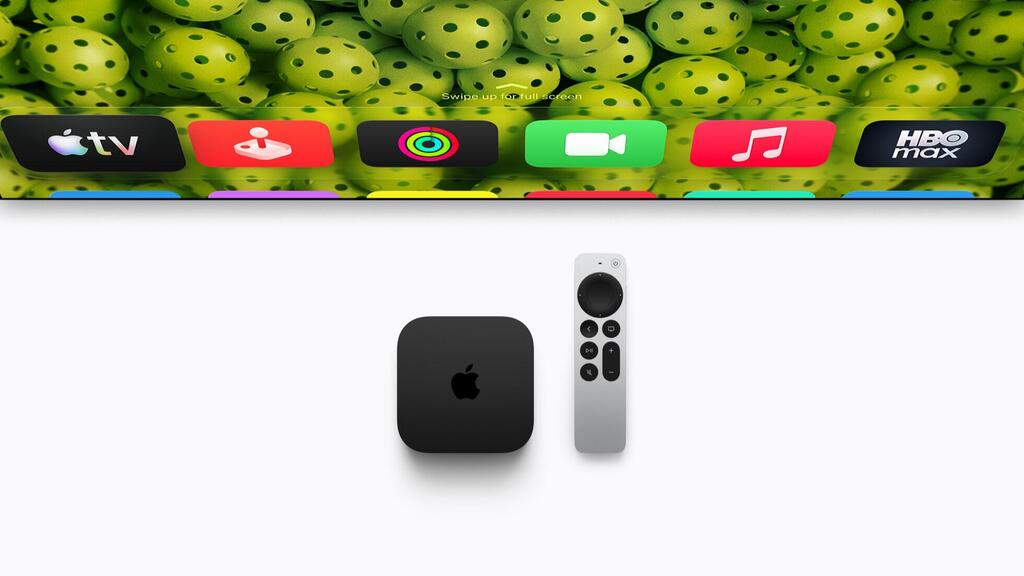
Apple TV 4K
(Photo: Apple)
Another new feature is a set of three microphones capable of picking up voice commands from across the room, even when the TV is on. This means users will no longer need to pick up the remote to speak to Siri.
The remote has also been upgraded with precise location tracking through Find My and a feature that lets users play a sound to help find it when it gets lost between the couch cushions.
The new streaming device also supports connecting four compatible HomePod speakers to create a surround sound system. The speakers detect their positions in the room and automatically adjust volume levels and timing. The setup requires four compatible speakers, with a matching pair in front and another matching pair in the rear.
As a smart home hub, Apple TV 4K also allows users to see who's ringing the doorbell directly on their television, speak to visitors and even unlock the smart lock to let them in.
The device will cost $299 in the United States and arrive in stores November 13. However, some of the new Siri features will also be available in beta on second-generation Apple TV 4K devices and later models.
HomePod mini 2: Smaller, more colorful and smarter
Apple's compact speaker is also getting an upgrade. The new HomePod mini 2 features the S10 chip, enabling real-time audio processing and sound adjustments based on the content being played and the volume level.
The speaker offers 360-degree sound and can be used on its own, as part of a stereo pair or in a multiroom audio system. For the first time, four compatible speakers can also be connected to the new Apple TV 4K to create a surround sound system.
Another new feature is Sound Glow, which turns the top of the speaker into a colorful light display that responds to music in real time. The lighting changes according to the rhythm, bass and treble, and can also match the colors of the album artwork being played.
The speaker can also serve as the default audio output for compatible Mac computers, including for video calls, gaming and watching movies.
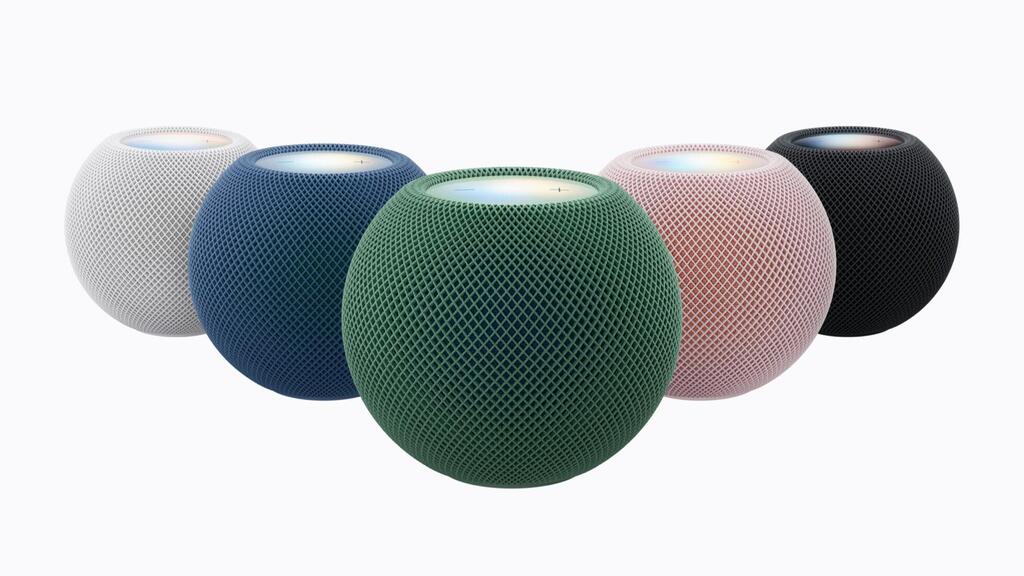
HomePod mini 2
(Photo: Apple)
Here, too, artificial intelligence is expected to deliver the biggest improvement. Siri AI will be able to recognize up to six different users by their voices, hold more natural conversations and provide personalized answers using information from their devices.
However, the new Siri will not be available on HomePod mini 2 immediately at launch. The new Siri will not be available on HomePod mini 2 at launch but will be added in a later software update. Initially, the updated version of Siri will be available only in English and in a limited number of countries.
Once the update is released, users will be able to access some of Siri's conversational and general knowledge features even if their iPhone or iPad doesn't support Apple Intelligence. However, features that use personal information from a user's devices will still require a compatible iPhone or iPad.
HomePod mini 2 will be available in five colors — pink, green, blue, white and black — for $149. It will arrive in stores October 30.
A new generation of smart home gadgets
In addition to its own products, Apple announced the Apple Home Collection, a series of smart accessories developed in partnership with LG and Schneider Electric.
The lineup includes indoor and outdoor security cameras, a video doorbell, a smart lock, thermostats and sensors that measure temperature and humidity. All the products are designed to work together through Apple's Home app, without requiring users to install additional applications.
LG's security camera lineup includes four products: an indoor camera, an outdoor camera, a floodlight camera and a smart doorbell. They offer video recording at resolutions of up to 2.5K, along with the ability to detect people, familiar faces, pets, vehicles and packages left at the front door.
The smart doorbell, for example, has two cameras. One records visitors at the door in 2.5K resolution, while the other points downward and records in Full HD so users can also see packages left on the doorstep.
The outdoor camera offers color night vision, while the indoor camera can tilt its lens downward to stop monitoring the room when a household member returns home.
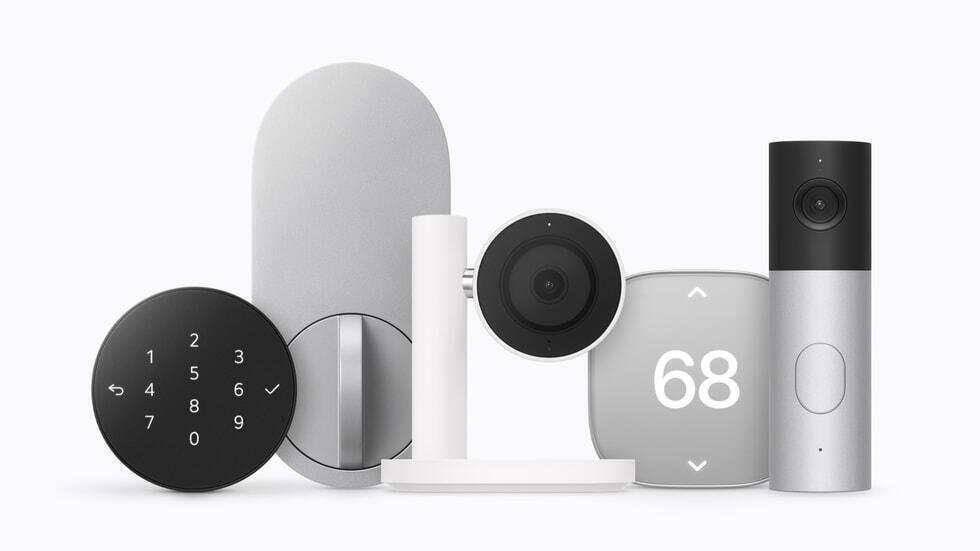
Apple's smart home product lineup developed in partnership with LG
(Photo: Apple)
Using Apple Intelligence, users with an eligible iCloud+ subscription will be able to receive automatic descriptions of events captured in videos and search their recording history using natural language.
The cameras support 10 days of event history storage through iCloud+, without requiring a separate subscription from the camera manufacturer. However, the number of supported cameras depends on the user's storage plan, and advanced AI features also require setup using an iPhone or iPad that supports Apple Intelligence.
Another product in the collection is LG's Smart Deadbolt Lock, which uses Ultra Wideband technology, or UWB, to detect a user's location and when they are approaching the door.
In practice, this means owners of compatible iPhones or Apple Watches will be able to approach their front door and have it unlock automatically, without taking their phone out of their pocket or touching the lock.
Users who prefer other methods will also be able to unlock the door by tapping their iPhone or watch, entering a code on a built-in keypad or using a physical backup key.
The lock also includes sensors that detect whether the door is open or closed and whether someone has attempted to tamper with it. Through the Home app, users will be able to grant access to guests and family members and integrate the lock with the doorbell to see who's at the entrance and unlock the door remotely.
The lock also supports Matter and Aliro, two standards designed to allow different smart home systems to work together. According to Apple, basic unlocking functions work without an internet connection, allowing users to continue accessing their homes even when they're offline.

Smart Deadbolt Lock
(Photo: Apple)
Alongside its security products, Apple also introduced two smart thermostats, one made by LG and the other by Schneider Electric, as well as sensors for measuring temperature and humidity in different rooms.
The thermostats use a feature called Adaptive Temperature, which allows the system to automatically adjust the home's temperature according to users' habits.
For example, when household members leave for work, the system can reduce heating or cooling to save energy. As they prepare to return, it can begin readjusting the temperature so the home is comfortable when they arrive.
The system can also adjust temperatures during nighttime hours without requiring users to set schedules manually.
What about privacy?
One of the central issues surrounding Apple's announcements is user privacy, particularly when it comes to a system that includes cameras and microphones inside the home, recognizes family members and can access personal information.
Apple emphasizes that sensitive information is protected through security mechanisms and local processing. In the new Apple TV 4K, for example, the company uses a security mechanism called Secure Exclaves, designed to isolate the processing of microphone data from the rest of the system.
In addition, Siri requests can be processed locally or through Apple's secure cloud computing system, Private Cloud Compute. According to Apple, information processed in the cloud through this system is neither stored nor accessible to the company.
Security camera footage stored in iCloud is protected by end-to-end encryption, and Apple says even the company itself cannot view the recordings.
For Apple, however, this is about much more than launching a few new gadgets. The company wants to bring the home into its ecosystem, just as it has done with smartphones, computers and smartwatches.
This time, however, Apple is entering a market where its competitors have been operating for years, with products that carry relatively high price tags.
Will the strategy work? That remains to be seen once the products begin reaching the market.