

For years, quantum computing was viewed as a distant promise confined largely to academia and research laboratories. Yet over the past year, a growing number of signals suggest that the technology is entering a new phase one in which the question is no longer whether it is possible, but how quickly it can become commercially viable and scalable.
One of the clearest signs came recently from the United States, where the federal government began allocating approximately 550 million dollars in grants to companies operating in the quantum sector. This is far more than a traditional research and development initiative. It is a strategic effort designed to accelerate technological advancement and shorten the path from laboratory innovation to commercial deployment.

At the same time, technology giants have long moved beyond experimentation. Google, Microsoft, Amazon, and NVIDIA have established dedicated quantum teams, invested heavily in quantum infrastructure, and begun integrating emerging capabilities into their cloud platforms. In other words, quantum computing is no longer a theoretical discussion it is increasingly becoming a commercial and technological race.
Unlike traditional computers, which rely on binary bits valued at either 0 or 1, quantum computers use qubits, enabling calculations at a scale and complexity that classical systems cannot achieve. The result is not simply a faster computer, but an entirely new approach to solving problems.
The economic potential is substantial. In pharmaceuticals, quantum computing could significantly accelerate drug discovery by simulating molecular interactions with unprecedented precision. In energy and materials science, it may enable the development of new materials with enhanced properties. In finance and logistics, it could optimize highly complex scenarios on a scale previously impossible. The cybersecurity industry is also preparing for a future in which quantum systems challenge many of today’s encryption standards.

NVIDIA launches open AI models for quantum computing
(Illustration: Nvidia)
Last week, I attended SuperReturn Berlin, one of the world’s leading gatherings of institutional investors. Across discussions with fund managers and allocators from around the globe, one message stood out clearly: the definition of infrastructure is changing. While infrastructure once meant roads, ports, and utilities, a growing number of sophisticated investors now view data centers, advanced computing capabilities, and quantum technologies as essential components of the economic foundation of the future.
Quantum computing is also unlikely to replace artificial intelligence. Instead, the two technologies are expected to reinforce one another. While AI excels at analyzing data, identifying patterns, and generating insights, quantum systems may help solve highly complex computational challenges that remain beyond the reach of conventional methods. In fact, AI is already being used to improve quantum error-correction processes, highlighting the growing convergence between the two fields.
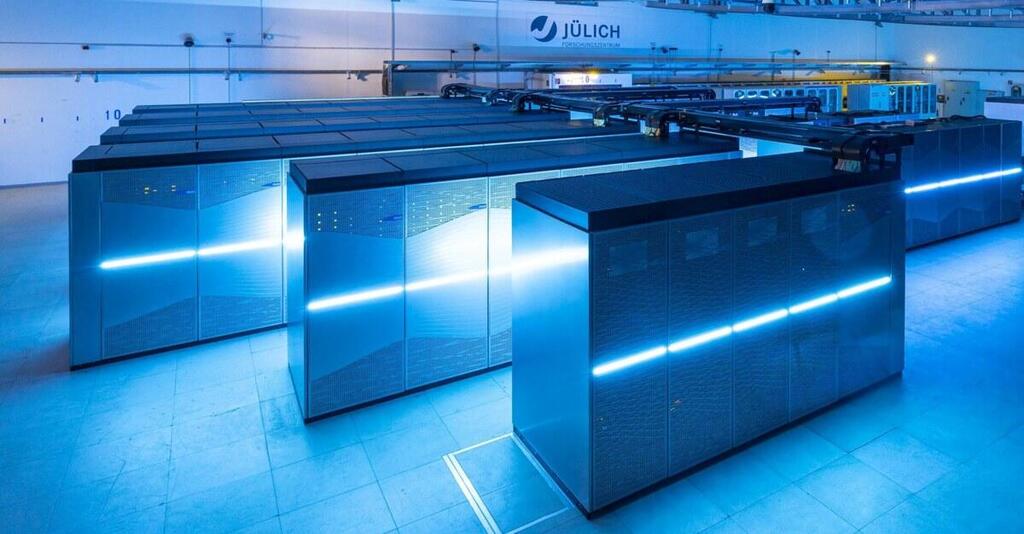
Germany's supercomputer JUWELS. They use qubits, enabling calculations at a scale and complexity that classical systems cannot achieve
(Photo: Forschungszentrum Jülich / Sascha Kreklau)
Israel has a genuine opportunity to play a meaningful role in this emerging ecosystem. The country’s advantage extends beyond the number of startups operating in the field. Decades of expertise in cybersecurity, cryptography, intelligence, and advanced algorithmic problem-solving have created a strong foundation that aligns naturally with quantum technologies.
Moreover, Israel’s well-established model of transforming defense-driven innovation into commercial applications may prove particularly valuable in the quantum era. Many quantum breakthroughs are expected to originate in government and defense environments before expanding into broader enterprise and civilian markets.
As we witnessed with artificial intelligence, transformative technologies often develop quietly and largely outside the public spotlight until they suddenly become impossible to ignore. For technology companies, investors, and policymakers, the question is no longer whether quantum computing will influence the global economy, but who will position themselves effectively before its impact becomes obvious to everyone.
Bar Clara Mendez McConnon is CEO and Managing Partner of Value Gateway Capital Partners and a former executive at Meta EMEA