

Unlike many companies in the tech sector, Amdocs does not talk about artificial intelligence as just another tool. Instead, it treats AI as fitness: something that must be trained, maintained and continuously measured. The company calls this approach AI Fitness, an organizational concept aimed at turning AI from a one-time advantage into a basic requirement for employees and managers alike.
It is hard to separate this discussion from the broader reality of the high-tech industry, and from Amdocs itself. Just last August, reports said that alongside the creation of a dedicated AI implementation division, the company was preparing for another round of layoffs involving hundreds of employees in Israel and worldwide.
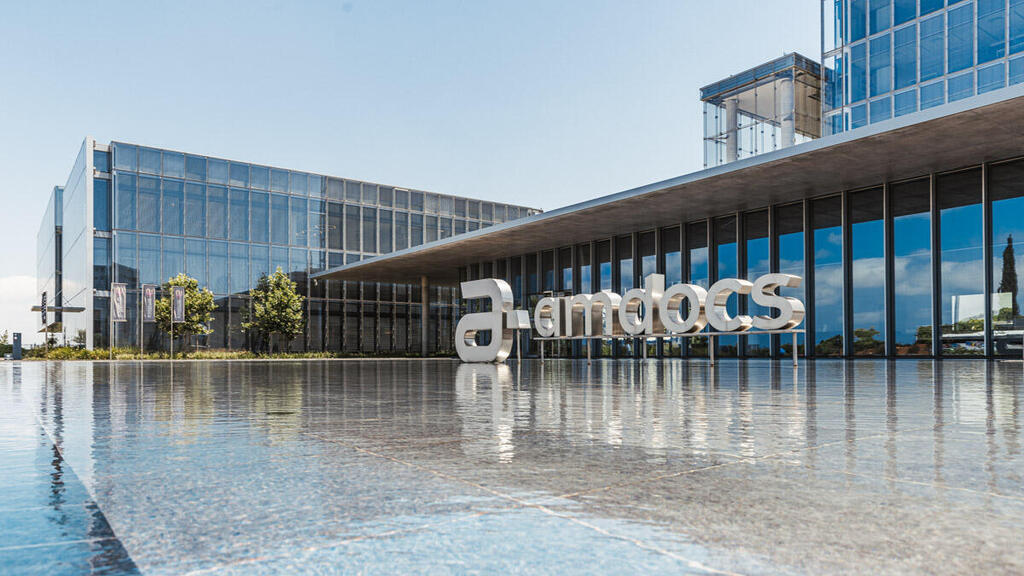
In other words, not everyone will make it through the “training.” That tension between investing in employees and cutting headcount hangs over every discussion about AI and the labor market, and over this interview as well.
A deep shift in expectations
Gil Rosen, president of Amdocs’ marketing division, describes the company’s AI Fitness vision not as a training program but as a fundamental change in how organizations expect people to work in the new era.
For Rosen, this is a mindset shift. It distinguishes between knowing how to use a tool and being truly fit to work in an environment where technological change moves too fast for anyone to fall behind.
“This is a global-scale event,” he told ynet. “The AI world is moving so fast that there are new developments every day. It doesn’t matter if you work in development, finance, marketing or any other field.”
“Today, if you want to stay relevant, you have to be constantly up to date with new technologies and tools,” Rosen said. “It’s no longer enough to take a course once a year. This is something employees have to do all the time.”
That is where the fitness analogy comes in. “Fitness isn’t a one-time event. You don’t go to the gym once and you’re done. If you stop, you lose fitness. AI is exactly the same. It’s a way of life and a lot of personal responsibility. There’s no finish line. The learning never ends.”
No ‘immune’ roles
At Amdocs, which employs about 30,000 people worldwide, the concept has been turned into a concrete work framework. Employees are required to choose three AI-related courses a year, tailored to their role and career goals.
Through an internal Career Hub, employees define where they want to go professionally, and the system recommends the skills and courses that will help them get there. The courses are not limited to a person’s current department. Marketing employees, for example, can study product management, and vice versa.

(Photo: Micha Loubaton)
Asked how the company ensures the concept actually reaches employees and does not remain a slogan, Rosen said the expectation is built into the system itself.
“This isn’t an HR program with a nice tagline,” he said. “It’s a deep, comprehensive program where expectations are clear: you’re expected to do more, because you’ve gained new capabilities. At the same time, the company’s commitment is just as clear: to provide the tools, courses, guidance and environment for continuous learning.”
In the AI era, Rosen said, employees are no longer viewed as a single unit. “You’re a small team: you and your intelligent agents. The expectations change accordingly. Someone who can’t keep up with this pace can’t work at Amdocs. That’s just the reality.”
Rosen said he struggles to think of roles in tech where AI Fitness is not relevant. “In marketing, for example, almost every area can use AI, from content creation and editing to video and campaign analysis. Anyone who refuses to use these tools simply can’t work at a technology company.”
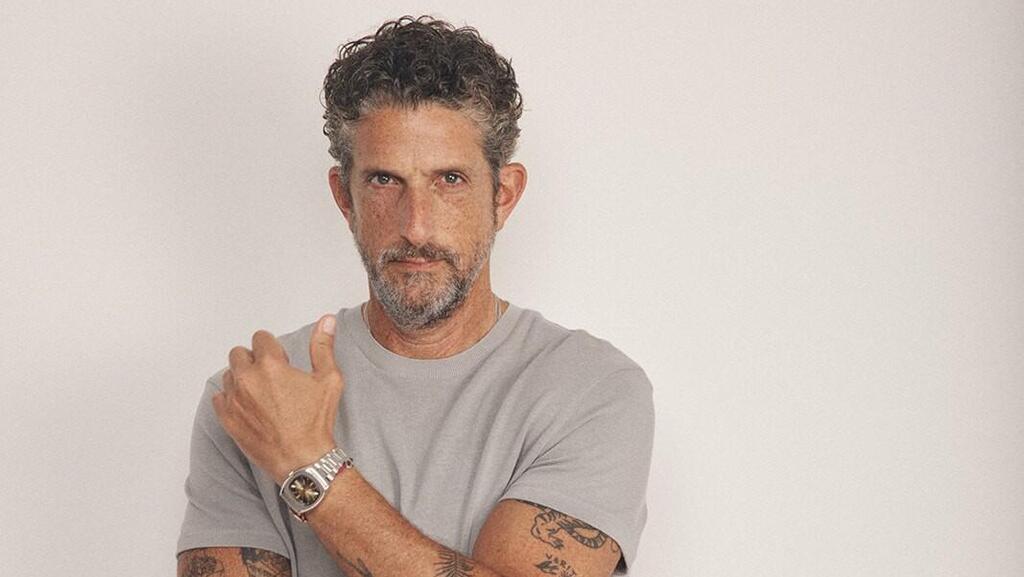
Gil Rosen, president of Amdocs’ marketing division
(Photo: Adi Orni)
He compared it to a designer who refuses to use Photoshop. “They might be a brilliant artist, but they won’t work at Amdocs. Not because they lack talent, but because the tool is part of the profession.”
“If in the past we told people who couldn’t use a computer not to come to work, today it’s the same with AI,” he said. “The difference is that we don’t leave employees alone. We give them the tools.”
Managers are not exempt
Rosen stressed that managers, especially senior ones, are not exempt from these expectations. “You can’t have employees trained in AI while their managers don’t understand the tools. A manager who doesn’t understand AI can’t evaluate work properly or lead teams.”
Rosen said he uses AI tools constantly himself. “Things I used to delegate, I now do on my own, so my teams can focus on higher-value work.”
In the end, Rosen returned to what he called the core issue. “In an era where everything is moving fast and people are afraid AI is taking over, we need to return to basics: trust, transparency and a real relationship between employees and their organization.”
“My responsibility is to make sure our employees stay relevant, not just for Amdocs but for the job market as a whole,” he said. “And employees are responsible for continuous learning. That’s the essence of AI Fitness. There is no end point.”
Still, against the backdrop of layoffs across the tech sector, including at Amdocs, one question remains open: to what extent AI Fitness is a safety net, and to what extent it is also a filtering mechanism, in a reality where not all employees will be able to keep up.