

If this happens or already has, know that it is no coincidence. It is a forced business strategy. The underlying reason is that operating AI is too expensive to be sustainable under a traditional subscription model. According to many analysts, it is not sustainable even with subscriptions priced at double the current rates or combined with additional revenue sources.
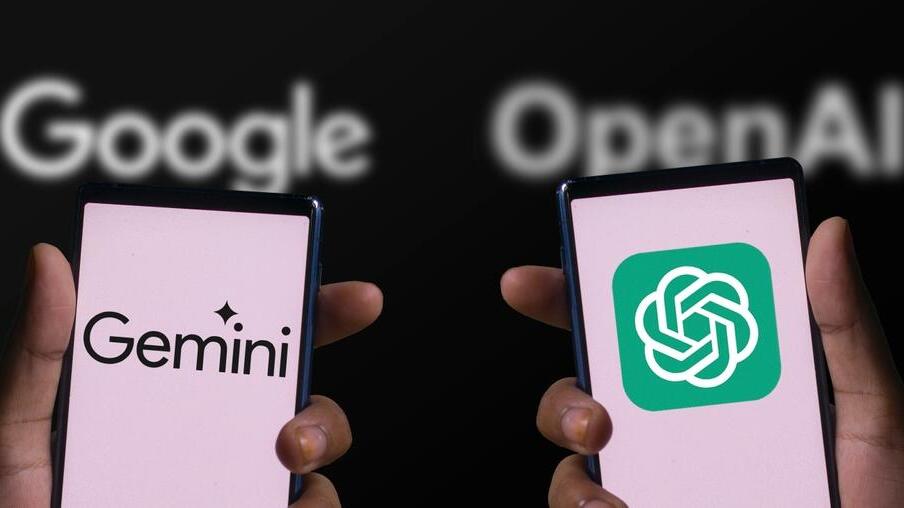
Heavy financial burden
To understand why advertising will likely become unavoidable, you have to consider the financial weight carried by the major tech companies. Building a powerful and advanced AI model, such as GPT5 or Gemini 3, requires enormous capital.
This includes hundreds of billions of dollars invested in specialized hardware, mainly Nvidia chips, needed for the initial training stage. But the real expense is day-to-day use. Every question you ask and every summary you request is an expensive computational process that costs several times more than an ordinary web search.
The numbers are not public, but industry estimates put the cost of generating an answer to a single prompt at roughly 40 agorot. If one of your chat sessions includes dozens of prompts, a monthly subscription of 20 dollars simply cannot cover the energy and compute costs involved. Advertising revenue, therefore, becomes the most readily available financial lifeline for AI companies.

Each of your prompts costs money
(Photo: Aileenchik/Shutterstock)
The pressure to recover these massive investments is pushing the tech giants toward aggressive economic behavior aimed at monetizing every user interaction. According to reports, OpenAI, for example, has been exploring the possibility of placing ads inside the chat feed and in third-party apps that use its API.
The company rushed to deny this even after users shared screenshots showing an ad for a Target app. A senior executive dismissed it entirely and said, in phrasing reminiscent of political spin, that it was not an ad but “a kind of recommendation.”
Growing tech debt
In practice, it means that if you use an app or business service built on the ChatGPT engine, you may see ads integrated directly into your AI experience. Google has faced similar reports, which it quickly denied, claiming it is not testing the inclusion of ads inside Gemini.
Even if the denials are accurate for now, the reports reflect the immense pressure inside these companies to find new revenue streams that can cover their growing technological debt.

Sam Altman and Sundar Pichai
(Photo: Evan Vucci / AP)
This is nothing short of a fundamental breach of trust. You pay for a premium service that is supposed to be free of such distractions, yet you receive results influenced by economic incentives. You become the product even when you are already paying. In other words, the business model of the internet that took hold 30 years ago, where paying meant no ads, no longer applies to the business model of the AI era.
But that does not mean there are no alternative solutions. Smaller companies that cannot compete for global advertising budgets are developing more focused business models designed to charge higher prices in other ways.
One common method is shifting to a pay-per-use model instead of a fixed monthly subscription. In practice, you pay according to the number of tokens you consume, the number of questions you ask or the amount of processing you require.
This model may appear fair, but it transfers the financial risk of fluctuating compute costs directly to you. If an AI tool becomes central to your work, you may discover at the end of the month a bloated bill without advance warning.
In addition, many companies are turning to outcome-based pricing. For example, Israeli firms in finance or healthcare charge only if their AI achieves a proven result, such as a percentage of money saved or a fee for every medical report successfully summarized.
This approach creates ambiguity in pricing and requires clients to reveal sensitive data in order to measure “success” and calculate payment. In data monetization models, cyber companies, for instance, sell you security services, but at the same time, the anonymized data on threats you encounter becomes “global threat intelligence” that is sold to other entities. You pay for the service, and your usage data becomes an additional profit engine for the company.
These business models, whether ads from tech giants or sophisticated consumption-based models from startups, show that there is no escaping the economic agenda. The operating cost of generative AI is so high that companies are compelled to find creative but sometimes controversial ways to maximize revenue.
This dilemma requires users to be vigilant, not rely solely on a low advertised price and always examine the hidden costs and the ways their data is being monetized.