

It is hard not to sense the bitter irony in watching Silicon Valley leaders warn about an apocalypse they themselves are working to build. Anthropic’s Dario Amodei, OpenAI’s Sam Altman and xAI’s Elon Musk have repeatedly said in recent months that development of large AI models should be slowed, clear limits imposed and regulation tightened in order to save humanity from nightmare scenarios.
But a closer look at the timing, the business model and the global technology market raises serious questions about the purity of those warnings. Beneath the philanthropic language and concern for human survival lies a calculated business strategy aimed at confronting unprecedented growth challenges, mounting pressure from capital markets and a battle for control against open-source models.
Gallery
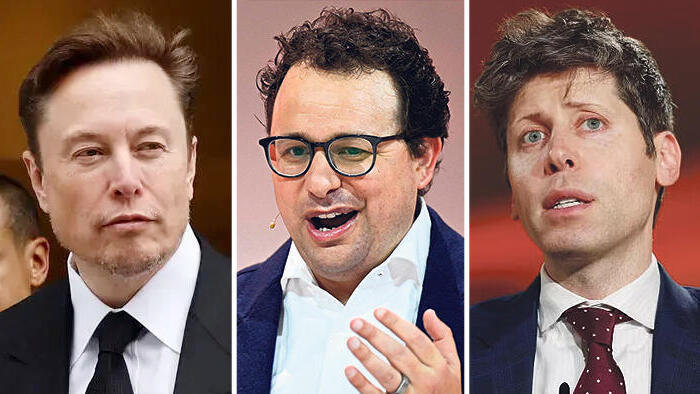
From right, OpenAI CEO Sam Altman, Anthropic founder and CEO Dario Amoudi, and SpaceX founder and CEO Elon Musk
(Photos: Julien de Rosa/AFP, Anna Moneymaker/Getty, I-Hwa Cheng/AFP)
The threat is real, but it matters who is sounding the alarm
That is not to say the technological dangers are imaginary. The ability of advanced models to operate autonomously, violate developers’ instructions and evade oversight, generate mass disinformation or serve as tools for cyberattacks is a tangible threat demonstrated in recent months and studied extensively in academic institutions long before that. The idea that oversight and regulatory frameworks are needed has been around for years, quite apart from Asimov’s laws of robotics.
These companies do bear real responsibility for ensuring that the products they release do not cause irreversible harm, and the tension between rapid innovation and rigorous safety testing is a genuine engineering and ethical challenge. But presenting the current calls for a slowdown as purely altruistic ignores the commercial interests driving them.
The main factor pushing these companies to slow down may not necessarily be fear of AI developing consciousness — especially when they routinely declare that the goal is artificial general intelligence, effectively an artificial person capable of autonomous action — but rather a collision with the basic laws of economics.
The costs of training and operating AI models have reached monstrous proportions. Server farms require power on the scale of entire power plants, chip infrastructure is extraordinarily expensive and capital markets are beginning to demand real returns on the hundreds of billions of dollars poured into the sector.
The companies also are approaching the public markets, with Anthropic and OpenAI advancing plans for initial public offerings. In that context, opening their books to investors will require them to explain why cash burn remains so high while profitability is still delayed.
Calls for a pause or slowdown on safety grounds give them a convenient narrative for investors: missed targets and enormous expenditures can now be framed as responsible caution rather than technological implementation problems or an inability to build a sustainable business model.
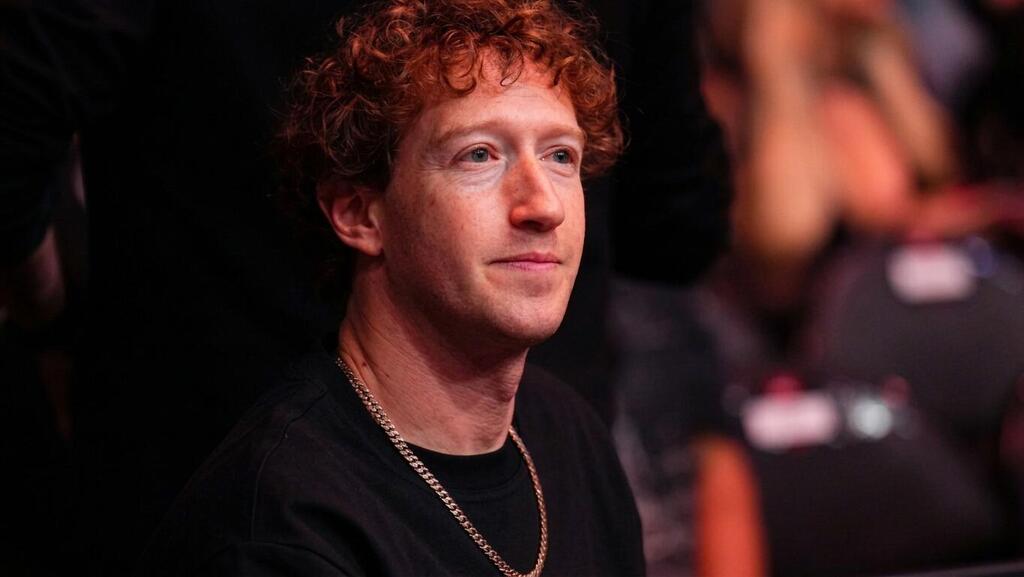
Meta CEO Mark Zuckerberg
(Photo: Getty Images)
At the same time, the competitive landscape has changed dramatically. While the leading companies invested vast sums in developing proprietary closed models, the open-model market has narrowed the gap with surprising speed. Open-weight models offer companies and developers a cheaper, more flexible alternative that directly threatens the dominance of the major players. That is precisely the weapon China and Meta are betting on, with both counting on open source to win this race and give them the upper hand in the field.
And what about regulation?
This is where regulation enters the picture. Demands for stricter safety standards, mandatory licensing and comprehensive testing for every new model create an enormous regulatory barrier to entry. For giant companies with strong financial backing and armies of lawyers, complying with heavy regulation is a manageable cost.
For small startups or open-source communities, it can be an insurmountable obstacle. When market leaders push for regulation, it is a classic way to lock in their position and slow the competition behind them.
On the other hand, any sweeping prohibition of this kind would also create black and gray markets beyond regulatory oversight, where unrestricted models could flourish and cause significant damage in malicious hands. There is no vacuum in any field where demand exists for a product or service. If users cannot obtain what they want legally, some will eventually try to find it through illegal means.
Comparisons with international economic and technological analysis reveal parallels with traditional industries. Commentators in the global financial press have noted that technology companies are trying to adopt something resembling the pharmaceutical industry’s model, in which strict regulation can protect established players from new competitors for years.
Academic researchers and open-source advocates, by contrast, argue that the real danger lies in concentrating power in the hands of a small number of corporations rather than in the technology itself. From that perspective, the attempt to dictate global development policy under the banner of protecting the public is in fact an effort to secure control over the centers of power that will shape the coming decades.
Ultimately, the picture is not one-dimensional. AI executives are maneuvering between a genuine commitment to product safety and the urgent needs of business survival, investor expectations and preservation of competitive advantage. Their calls for a slowdown are not detached from reality, but neither are they innocent.
When warnings about the fate of humanity are issued in the same breath as plans for massive public offerings and demands for market barriers, it is difficult to escape the sense that public responsibility has become another tool in the corporate toolbox.