

After years of urging employees to use artificial intelligence almost everywhere they could, Microsoft is confronting the other side of the AI boom: the bill.
Recently surfaced internal data show that some employees are reporting monthly AI usage costs ranging from hundreds to thousands of dollars, while one particularly extreme case reached about $28,000 in just 28 days.
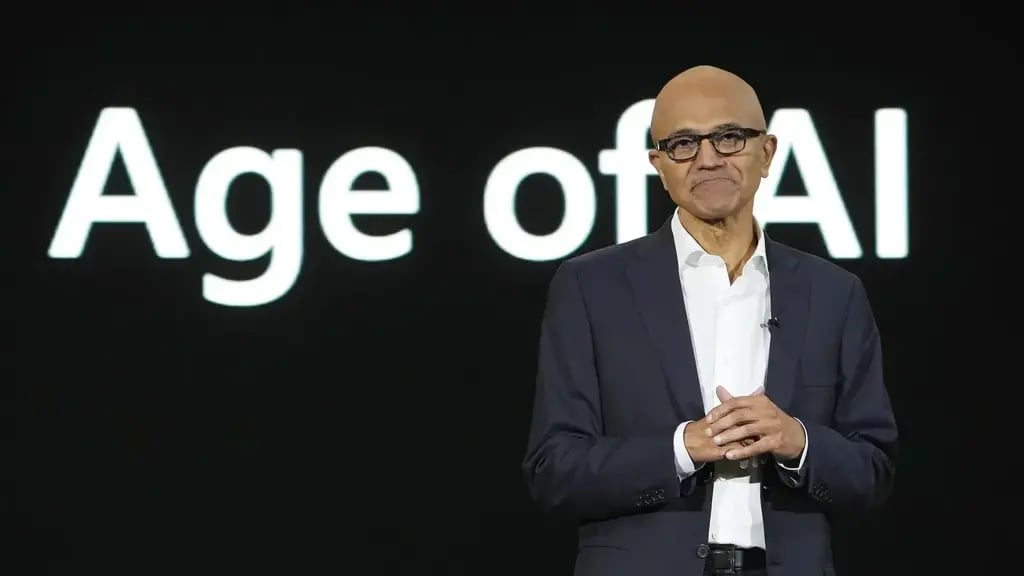
The figures come from an internal spreadsheet in which Microsoft employees share information about compensation and working conditions. During 2026, a new column was added labeled “AI $ Usage Per Month,” allowing employees to report how much money they were spending on artificial intelligence tools.
About 350 US-based employees filled in the field, out of more than 223,000 Microsoft workers worldwide. That means the data are not an official company accounting and do not represent a statistically representative sample. They are voluntary reports from a small share of Microsoft employees.
Even so, they offer a glimpse into just how expensive intensive AI use can become inside one of the world’s largest technology companies.
Everyone loves AI until the bill arrives
Among the roughly 350 employees who reported their usage, the median cost was about $300 for each 28-day period. In some divisions, however, the numbers were far higher.
At CoreAI, the division at the center of Microsoft’s artificial intelligence operations, the median stood at about $975. In the security division, it was around $526. Microsoft AI reported a median of about $490, while Cloud AI stood at roughly $325.
Those median figures, however, tell only part of the story. In several departments, individual employees reported AI costs exceeding $10,000 over a 28-day period. At the extreme end was an employee in Customer and Partner Solutions who reported spending around $28,000.
When tokens become a competition
Not all of those tokens were necessarily being used productively. According to reports, a phenomenon known internally as “tokenmaxxing” has recently emerged at Microsoft, with some employees deliberately increasing their token consumption, sometimes through low-value or pointless prompts, in order to display higher usage figures in the company’s internal systems.
The reason is straightforward. Copilot dashboards made individual AI usage visible, and what began as a way to track adoption apparently turned into something resembling a leaderboard for some employees, with workers trying to accumulate as many tokens as possible.
(Photo: Getty Images)
The practice appears to have attracted attention from senior management. In early August, Jay Parikh, executive vice president of CoreAI, sent an internal memo warning employees that token consumption itself was not the goal.
“Tokenmaxxing is not what we are trying to maximize,” Parikh wrote. “I want all of us focused on maximizing outcomes that create real change for our customers and our company.”
Microsoft is not known to have imposed a hard usage ceiling on individual engineers. But after years of encouraging employees to embrace AI more aggressively, the company now appears increasingly interested in two questions: how much that usage is costing, and what it is actually producing in return.
The shift is not limited to monitoring costs. As part of an effort to extract more value from AI spending, Microsoft has reportedly shifted some internal workloads to OpenAI’s GPT-5.6 Sol, which became the default model in GitHub Copilot and other company workflows.
According to a Yahoo Finance report cited in the original reporting, the reasoning was that the model offered “higher value for the token investment.” The broader trend resembles what happened earlier in cloud computing.
During the first years of the cloud boom, companies often allowed employees to spin up more computing resources with relatively few restrictions. Eventually, soaring bills created a new discipline known as FinOps, focused on tracking, optimizing and controlling cloud spending.
Now the same logic is beginning to reach artificial intelligence. Microsoft succeeded in getting its employees to use AI almost everywhere. The next challenge is making sure all those tokens are actually worth the money.