

After decades in which premium gaming experiences were largely reserved for Israelis traveling abroad—visiting chains like MediaMarkt in Europe or Best Buy and Micro Center in the U.S.—Israelis now have access to a similar experience at home.
This week, Mahsanei Hashmal unveiled the largest gaming space in Israel, located in the heart of Tel Aviv’s Azrieli Mall. For the first time, an electronics retailer in Israel is dedicating a large area—half the store, or 500 square meters—exclusively to gaming. The space showcases flagship products from the world’s leading tech manufacturers.
Mahsanei Hashmal's massive gaming space in Tel Aviv's Azrieli Mall


The impact is clear: gamers can finally see, touch, test and play with the latest hardware on the market, rather than just reading about it online or seeing promotional images. Now, you can experience firsthand what a 45-inch curved OLED monitor looks like—and decide whether it will fit on your desk.
A sharp rise in gaming product sales
Until now, many premium models from major companies like Sony, Meta, Razer, ASUS, Acer and others were rarely available for hands-on experience in Israel. That’s changing. The flagship products of these global brands are becoming far more accessible to local consumers in a move aimed at making gaming more mainstream.
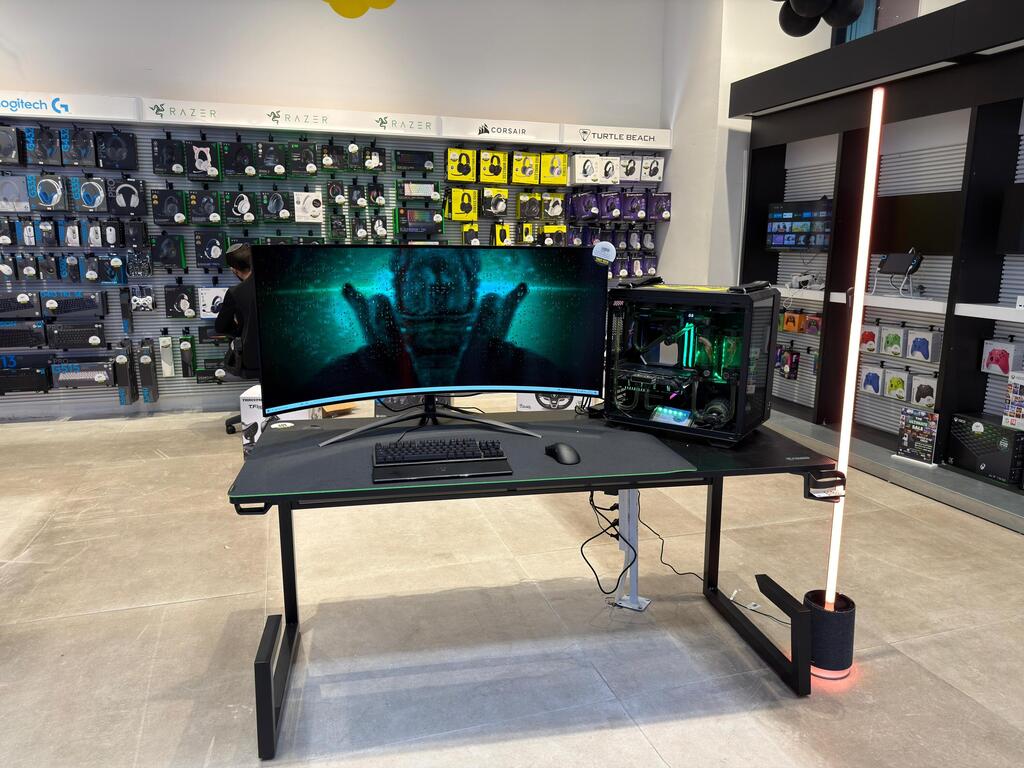
According to Liron Katz, Mahsanei Hashmal’s vice president of business development, the launch follows a surge in gaming-related sales across the chain. “Gaming has grown by roughly 150% annually over the past three years and has become the chain’s main growth engine,” he said.
Beyond the product displays, the store offers a notable service: professional consultation and custom PC building, including assembly. Visitors can sit with an expert to build a gaming setup from scratch, select components or order online and receive a pre-built machine delivered to their home “within 72 hours,” according to the company.
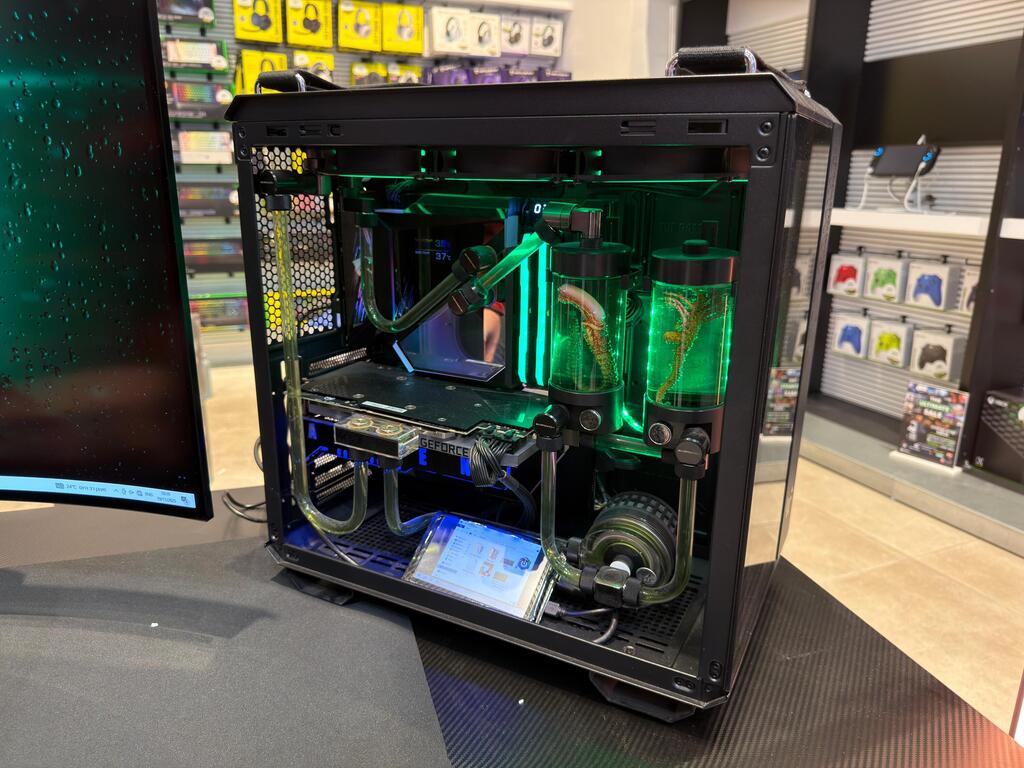
An especially alien-looking gaming PC
(Photo: Daniela Ginzburg)
The new space is also set to become a hub for community activity. The company says it plans to host meetups with popular YouTubers and gamers, product launch events, live demos of new technologies and even early-stage gadgets like robots and AR/VR accessories arriving soon in Israel.
As Katz put it, “The complex is a space for innovation and experience.” But behind that slogan is a simple truth: Israeli electronics retailers have come to recognize that gaming is no longer a niche market. Demand is soaring, and gamers want to test the gear themselves. This time, they’ve been given plenty of room to do just that.
'Someone had to be first'
You said that global manufacturers often asked why there’s no real gaming retail in Israel. Why hasn’t there been until now?
“Because until a few years ago, gaming was a niche. It made up maybe 2% of sales. That didn’t justify dedicating store space just for it. But that’s changed quickly, and in the last two or three years, the sector has grown to become nearly a tenth of the tech market. At that point, it became a serious business worth investing in.”
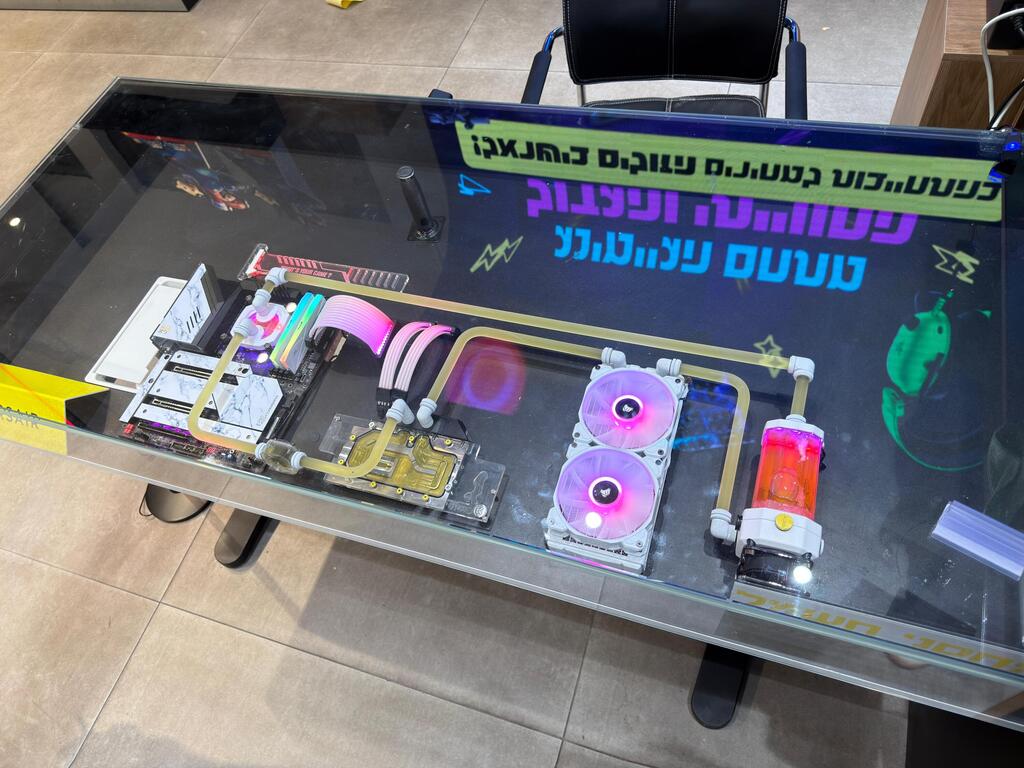
A gaming PC built into a desk — we admit, we liked it
(Photo: Daniela Ginzburg)
Still—500 square meters in Azrieli Mall is a very costly move. What pushed you to take that risk?
“Mainly the gap I felt myself as a consumer. There’s nowhere in Israel where you can actually play, test out headphones, see screens up close or try out computers. There are small displays, sure, but not a full experience. We realized someone had to be the first.”
One of the big complaints about electronics chains is the lack of real expertise. How are you making sure your staff understands hardware and isn’t just trying to sell it?
“For PC and gaming sales, we’re hiring gamers—people who live in this world. They go through training and product demos directly from the suppliers. These aren’t people trying to ‘sell’ a product without understanding what it does or whether it’s compatible with the rest of a setup.”
You know, gamers ask tough questions when building a PC. Intel vs. AMD processors, Nvidia’s 4000 vs. 5000 series, clock speeds, cooling systems. Do your advisers really know how to handle that?
“Yes, but most people don’t go that deep. For those who do, we go over benchmarks together. Everything is transparent. If someone needs detailed performance comparisons, they’ll get them right there during the consultation.”
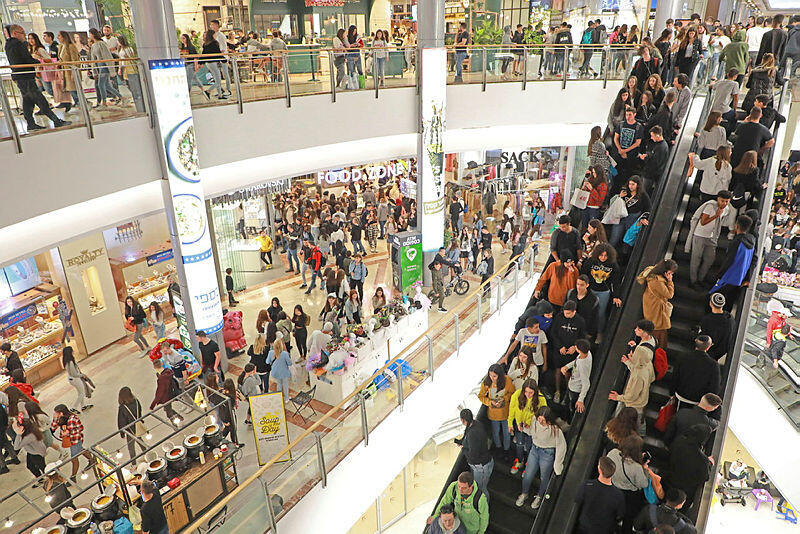
Azrieli Mall Tel Aviv
(Photo: Dana Kopel)
Still, it sounds like that top 5% of gamers who build their PCs at home and know exactly what parts they want—they’re not your audience.
“Correct. Those people usually know how to research and order the parts themselves.”
So who is your target audience?
“Mainly families. Kids and teens who come in with their parents and say, ‘I play Fortnite and Roblox and want a computer that will run GTA 6 too.’ Most of them just want a good PC without getting bogged down in technical specs.”
How did the market respond to this move?
“Everyone said we were crazy. Taking 500 square meters in one of the most expensive malls? ‘It’ll never pay off,’ they told us. And maybe they’re right. But someone had to build a real gaming complex in Israel—not just a table with four computers. So we said we’ll be the first.”
Why specifically Azrieli Tel Aviv?
“The answer is accessibility. Azrieli is at a major transportation hub and draws people from all over the country, with tens of thousands of visitors each day. If you’re going to do something like this, it has to be in a place people actually go to.”
You’ve said gaming sales have grown 150% annually. What’s behind that number? Isn’t it just rising prices?
“Not at all. It’s mainly about the level of computers people are buying. Three years ago, the best-selling PC was a basic i3. Today, that’s almost disappeared. People are realizing that for a few hundred shekels more, they can get a machine that works well and lets them play games too. It’s a shift in habits, not just in price.”
Ultimately, the new complex sets a new bar for electronics retail in Israel. But its success won’t be measured only by screen sizes or brand names on display. The bigger questions will be whether the equipment is actually in stock, whether the prices are competitive and whether the technical guidance holds up under scrutiny from one of the most demanding communities in the market. If it does, Israel might finally deliver the kind of gaming retail experience many locals have only known abroad.