

When the last survivor is gone, who will safeguard the memory? Today, artificial intelligence already knows how to reconstruct a voice, bring a photograph to life and fill in gaps in a story that was never fully documented. That is precisely why it is the most frightening thing to happen to Holocaust memory in decades.
“My grandmother died four years ago at age 92. She managed to tell her story countless times — to us, to schoolchildren, to anyone who wanted to listen. Now, in the age of artificial intelligence, I can make her tell her story again and again.
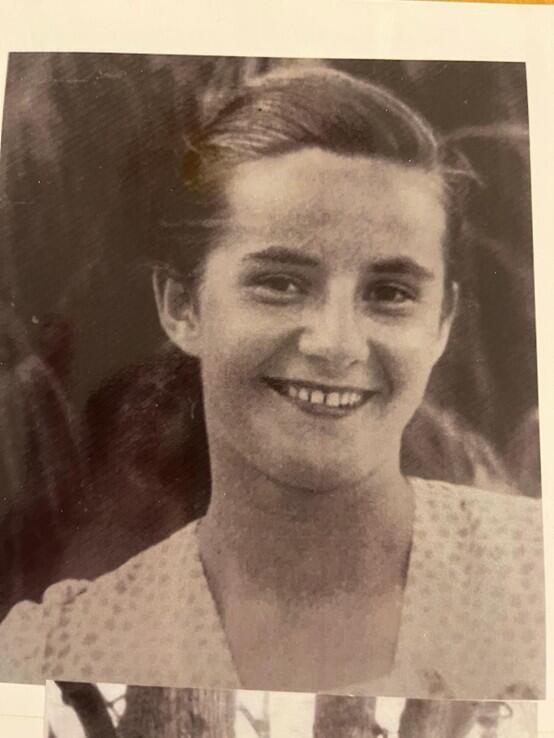
“At the same time, I can also make her tell a story that never happened, and that is where the problem begins,” Dr. Tehilla Schwartz Altshuler, an expert in law, media and technology and a senior fellow at the Israel Democracy Institute, told ynet.
The 13-year-old girl with the cross and the forged papers “My grandmother, Irene (Judith) Rimshtein, was born in 1929 in the town of Dunajská Streda in Slovakia, near the Hungarian border. She was the fourth of six children in a well-to-do family that owned a printing press. It was a small but complete world, where a girl knew where she was and to whom she belonged.
“In 1942, at age 13, she was sent alone to Budapest to survive, with a cross around her neck, forged papers and a small suitcase. Two years later, in 1944, she got off the train at Auschwitz together with the Jews of Slovakia and Hungary, lost her parents, her younger brother, her older sister and her nieces and nephews, and clung with difficulty to what remained of her world.
“Together with her three surviving sisters, she immigrated to Israel at age 17 on the immigrant ship Biriya and was taken to the detention camp at Atlit. There she met my grandfather, Yehuda Klein, himself a survivor of Mauthausen. She built a family with him, planted an orchard and established a magnificent farm in the moshav of Kfar Ahim. In 2021, as noted, she left us at a ripe old age, 92.”
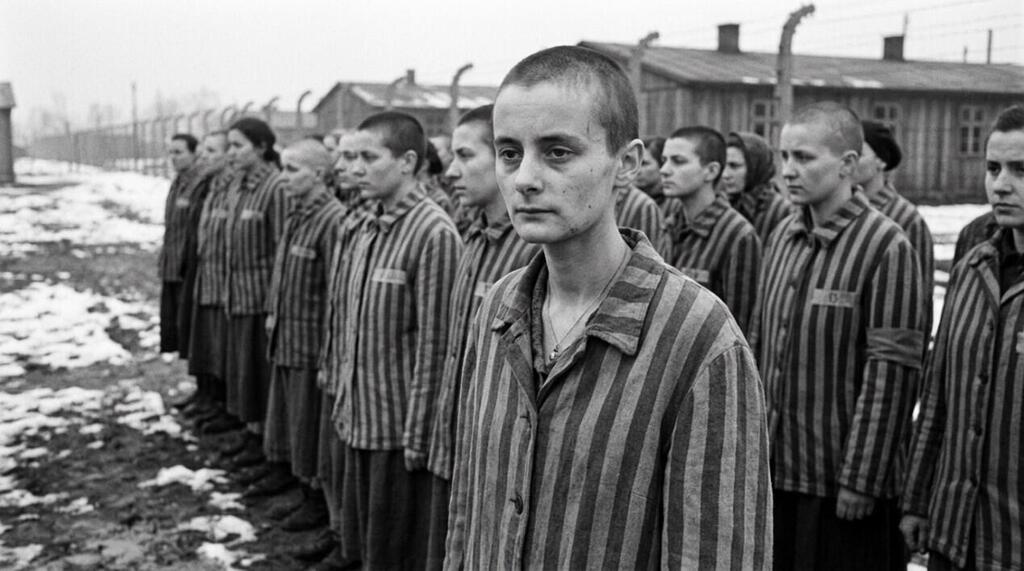
AI-generated image of Irene in Auschwitz
(Credit: Dr. Tehilla Schwartz Altshuler)
Are we moving toward a world in which AI becomes the central witness to the Holocaust?
“My grandmother told the story of the Holocaust countless times. It was very important to her to preserve the memory of the home where she grew up and to speak about what she went through in the death camps, and that was difficult, because she had only a handful of photographs. Still, we have recorded testimony of stories told around the kitchen table,” Schwartz Altshuler said.
“But my grandmother is no longer here to tell her story herself, like the vast majority of her generation. What remains of her, and of them, are our memories and their recordings. We are entering an era that could be called the ‘post-testimony era,’ in which the task of preserving Holocaust memory and passing it on to future generations shifts to us, and we have to do it without the survivors themselves.
“That is where technology comes in. We are all already familiar with generative AI tools: You can take an old photograph and turn it into a live video, produce a voice that sounds exactly like the voice that was lost, reconstruct an accent, an expression, a presence. You can create a memory that appears more complete than the real one.”
Is the creation of new AI-based ‘testimonies’ a legitimate educational tool or a moral danger? Where is the line between commemoration through AI and rewriting Holocaust memory?
“The temptation to use artificial intelligence to commemorate the Holocaust in a world of post-testimony is great — not in order to lie, but in order to get closer. Not in order to distort, but to repair what is missing, to fill in the gaps, to continue the memory.
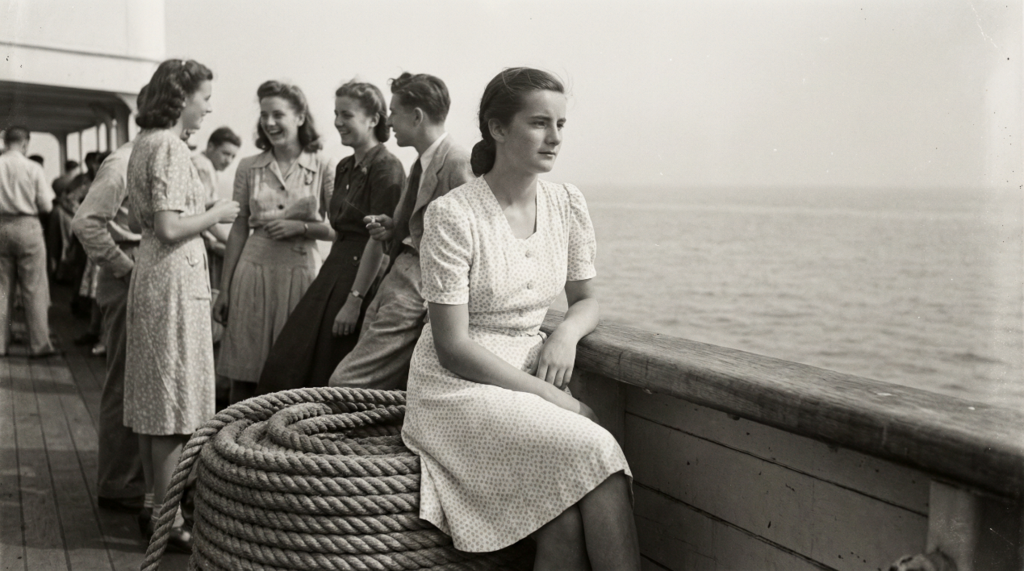
AI-generated image of Irene on an immigrant ship to Israel
(Credit: Dr. Tehilla Schwartz Altshuler)
“But the problem is that if the story can be completed, it can also be rewritten. If it is possible to generate scenes of my grandmother in Auschwitz that were never documented, it is also possible to generate a completely different life story — for example, one in which there was no Holocaust, in which my grandmother was not sent away alone with a cross around her neck, did not get off the train at Auschwitz and did not lose her family.
“Imagine that it is actually possible to create an alternative life story, one in which there was no Holocaust at all, and she continued her life peacefully in the town where she was born. Such a story could look no less credible, coherent and persuasive.
“I am currently in the middle of such a project, creating a ‘sliding doors’ video about my grandmother’s life. In the first part of the video there is her real story, in which I use real photographs and fill in gaps using artificial intelligence.
“In the second part, I tell the story that could have been, but was not. I use the same artificial intelligence, and it is just as convincing. I call it ‘from post-testimony to post-truth.’ On social media, for example, the story in which the Holocaust never happened would attract far more attention.
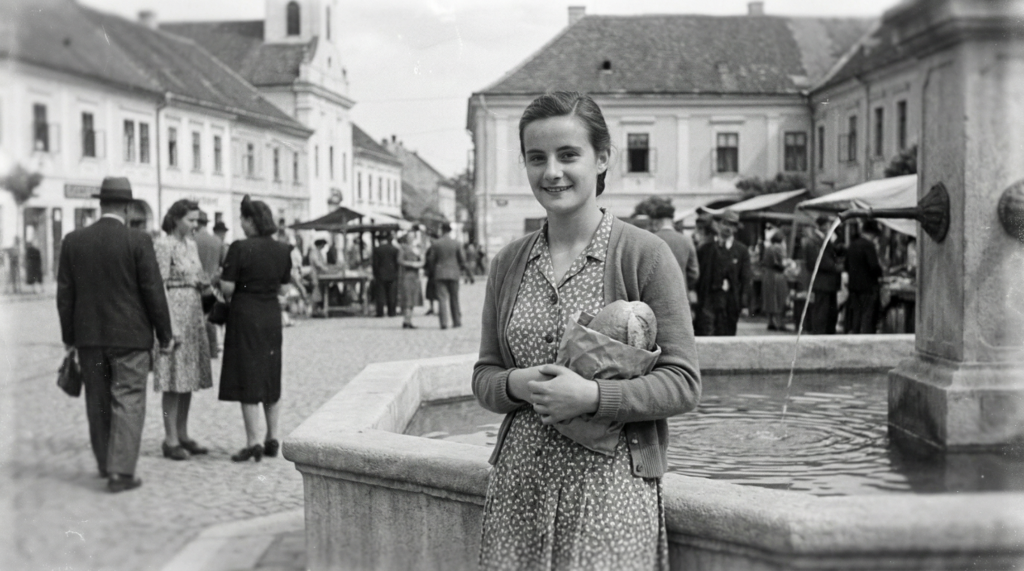
AI-generated image of Irene in her hometown
(Credit: Dr. Tehilla Schwartz Altshuler)
“Even today, there are those who deny the Holocaust and claim the Jews exaggerated the scale of the event, its horrific cruelty and even the number of those murdered and victimized. It is easy to see how fictitious videos about ‘the Holocaust that never happened’ would get hashtags and go viral.”
So how will it even be possible in the future to distinguish between authentic testimony and a fake?
“We are used to thinking about Holocaust Remembrance Day in terms of passing on memory. At first it was the survivors, and today members of the second generation tell their parents’ stories. But on Holocaust Remembrance Day 2026, we need to ask ourselves what Holocaust memory will look like in an era in which the ability to distinguish between testimony and its artificial creation is being undermined.
“Historical memory exists first and foremost through the ability to distinguish between truth and fiction. When that ability erodes, memory itself becomes vulnerable. Not only because the witnesses are no longer with us, but because in a world where every image can be precise to the point of perfection, every voice can be reconstructed and every story can be reassembled, the truth loses its advantage and becomes just one possibility among many.
“In my new book, Protection in the Age of Artificial Intelligence, I try to explain what the ‘tiebreakers’ are in the age of AI, compared with what came before. The first and most important is that already today it is not always possible to distinguish between authentic content and content created by a machine.
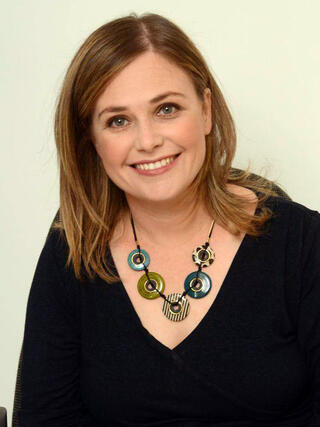 Dr. Tehilla Schwartz Altshuler
“Once, we told ourselves we would always know how to tell the difference — the teeth in the picture are too white, there are six fingers, the voice sounds a little distorted — but those things are disappearing, the machine is improving by the day, and the distinction is becoming impossible.
“That is why we must now create very clear and understandable ways to label AI content, learn not to trust appearances and look for supporting sources for everything. As humanity, we need to reorganize and be ready for this technological world that is changing right before our eyes. As Jews, as second-, third- and fourth-generation descendants of Holocaust survivors, this of course confronts us, and will confront us, much sooner.”
So you are saying that the very memory of the Holocaust has changed?
“I think that this year we understand very clearly that Holocaust memory is not being decided in memorial institutions, at state ceremonies at Yad Vashem or in Zikaron BaSalon,” an Israeli initiative in which people host Holocaust remembrance gatherings in their homes, “but elsewhere: in the laboratories where AI systems are being developed, in the companies designing the technological tools through which we perceive and understand the world, and in regulatory debates in different countries.
“I am deeply occupied with the question of whether, in the age of artificial intelligence, we will have the right to factual security, cognitive security and perceptual security — in other words, the ability to rely on a reality that cannot be edited.
“If those rights are eroded, our collective memory will not endure, and unfortunately that will have a direct effect on Holocaust memory. Instead of ‘Never forget,’ we will get ‘Never know.’”