

The explosive global artificial intelligence revolution is running on borrowed time, and its biggest bottleneck isn’t software or chips, it’s the physical power grid. As tech titans rapidly construct massive data center campuses to support millions of AI workloads, surging electricity demand is pushing regional power grids to the brink of collapse.
To keep the cloud running during grid disruptions, data center operators have historically relied on a dirty, noisy safety net: industrial diesel generators. In Virginia alone, the undisputed data center capital of the world, more than 10,500 diesel generators are currently attached to data centers, generating intense regulatory pushback and public health concerns from local communities.
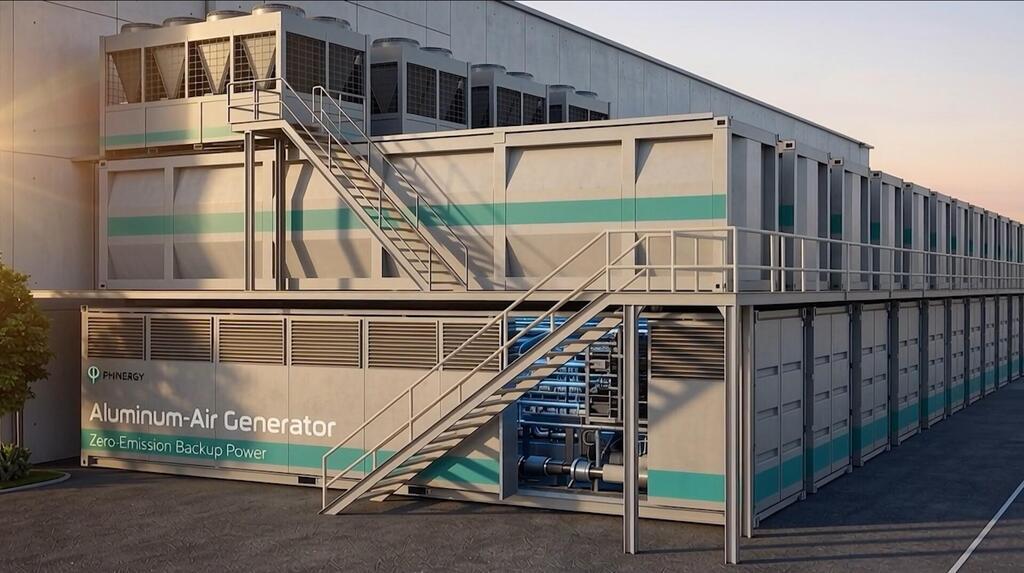
Faced with environmental protests that threaten to freeze billions of dollars in new AI infrastructure, the tech industry is shifting toward lower-emission resiliency architectures. This urgent search for clean, scalable alternatives took center stage this week at the Datacloud Global Congress in Cannes, where Israeli energy-tech firm Phinergy presented a practical alternative to eliminate diesel entirely: Aluminum-Air technology.
The announcement gained significant industry traction as Phinergy’s CEO, Emmanuel Levy, shared the stage in Cannes during a high-profile panel discussion alongside senior executives from Google and Microsoft. The joint appearance highlighted a growing consensus among tech giants that material science must play a key role in solving the AI power crisis.
Phinergy’s system generates electricity through a controlled electrochemical reaction between aluminum plates and oxygen drawn from the surrounding air. "Data center operators are looking for solutions that provide the exact same level of reliability and instant response as diesel-based systems, but without the environmental scars and lengthy permitting processes," Levy explains.
The way the system operates addresses the exact technical challenges of the digital infrastructure market, beginning with its unique ability to offer infinite standby time with zero self-discharge. During standby, the liquid electrolyte is stored separately, leaving the aluminum cells completely dry. When an outage occurs, the fluid injects into the system, activating it in a similar rapid response time of traditional diesel setups.
Furthermore, aluminum functions as an efficient energy carrier. A single modular containerized power unit can deliver continuous power for 48 hours, and if an outage lasts for days the system supports mechanical hot-swaps of the aluminum plates, keeping the generation online without interrupting power delivery.
The tech industry's engagement with the company is part of a structured rollout. Last year, Phinergy’s solution was selected from over 70 global submissions by the Net Zero Innovation Hub, a consortium led by Google and Microsoft alongside infrastructure leaders like Danfoss, Data4, Vertiv and Schneider Electric. Following that selection, Phinergy is currently executing a funded project to install a 500 kW system with a 10 MWh energy capacity at a validation site selected by the hub members, with Net Zero financing the validation activity while Phinergy retains full ownership of its intellectual property.
Independent infrastructure mapping by international technology providers, including Japan's NTT—the world's third-largest data center operator—has also highlighted aluminum-air architectures within emerging frameworks for long-duration energy storage. The financial implications are massive, with the global data center backup power market projected to reach $150–$200 billion over the next five years. Seizing this momentum, Phinergy has already signed a non-binding Letter of Intent with a major global cloud provider for potential cumulative gigawatt-scale deployments through 2030.
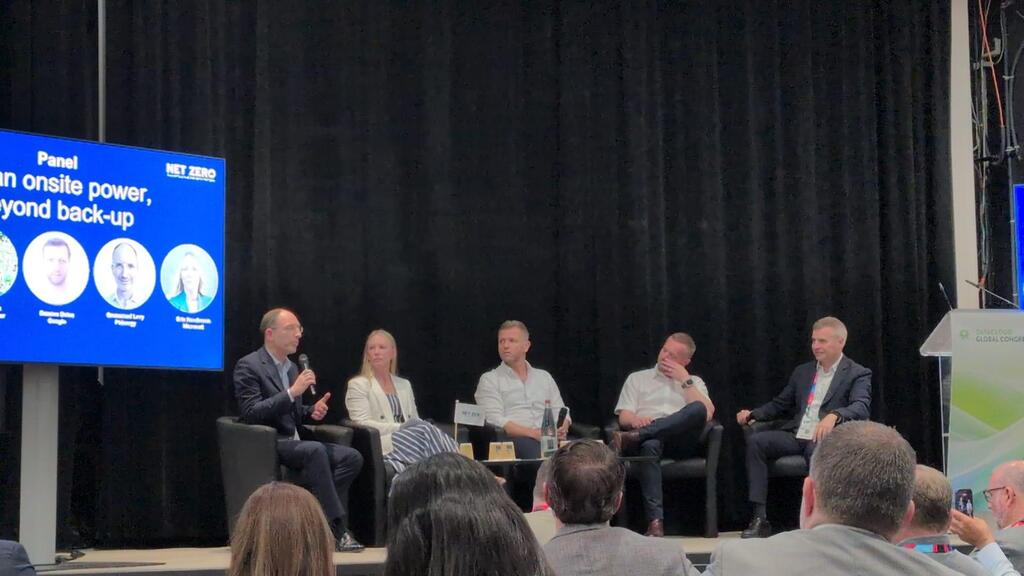
Phinergy’s CEO, Emmanuel Levy, shared the stage in Cannes during a high-profile panel discussion alongside senior executives from Google and Microsoft
(Photo: Phinergy)
To accelerate its momentum in the U.S. market, Phinergy has partnered with American electrical contractor Rosendin Electric to leverage an established industrial delivery platform, while aligning the systems to qualify for substantial federal tax credits under U.S. energy subsidies.
While the data center market represents Phinergy’s primary frontier, the technology is already deployed in live commercial environments. In Europe, the company entered into a strategic agreement with Swisscom Broadcast to validate and deploy its clean backup systems across critical communication sites in Switzerland. Meanwhile, in Israel, a commercial rollout with Netivei Israel commenced this past April to equip 300 major traffic intersections with clean backup power units, extending their operational survival during blackouts to 3–4 continuous days.
This real-world reliability is rooted in crisis operations. During the October 7 attacks, Phinergy’s clean backup systems automatically activated at mobile network sites near the Gaza border, successfully maintaining continuous cellular communication for several hours during the critical opening phases of the emergency.
As the AI boom demands more data centers, the tech industry can no longer afford to ignore its carbon footprint. By replacing combustion with circular, recyclable material science—where the oxidized aluminum byproduct is collected and recycled back into the supply chain—this Israeli deep-tech solution is showing the world's largest companies that the future of the cloud doesn't have to be fueled by diesel.