

Somewhere along the remote roads of Colorado, Tamar Cesana, 20, was preparing for another day of RV travel with her partner, Benaya, following a route they had planned carefully. Then a casual scroll through Instagram changed everything.
A post reported that 17 major wildfires were raging along the Colorado-Utah border. She immediately opened a map, compared it with their route and realized they were heading straight toward the burning area.
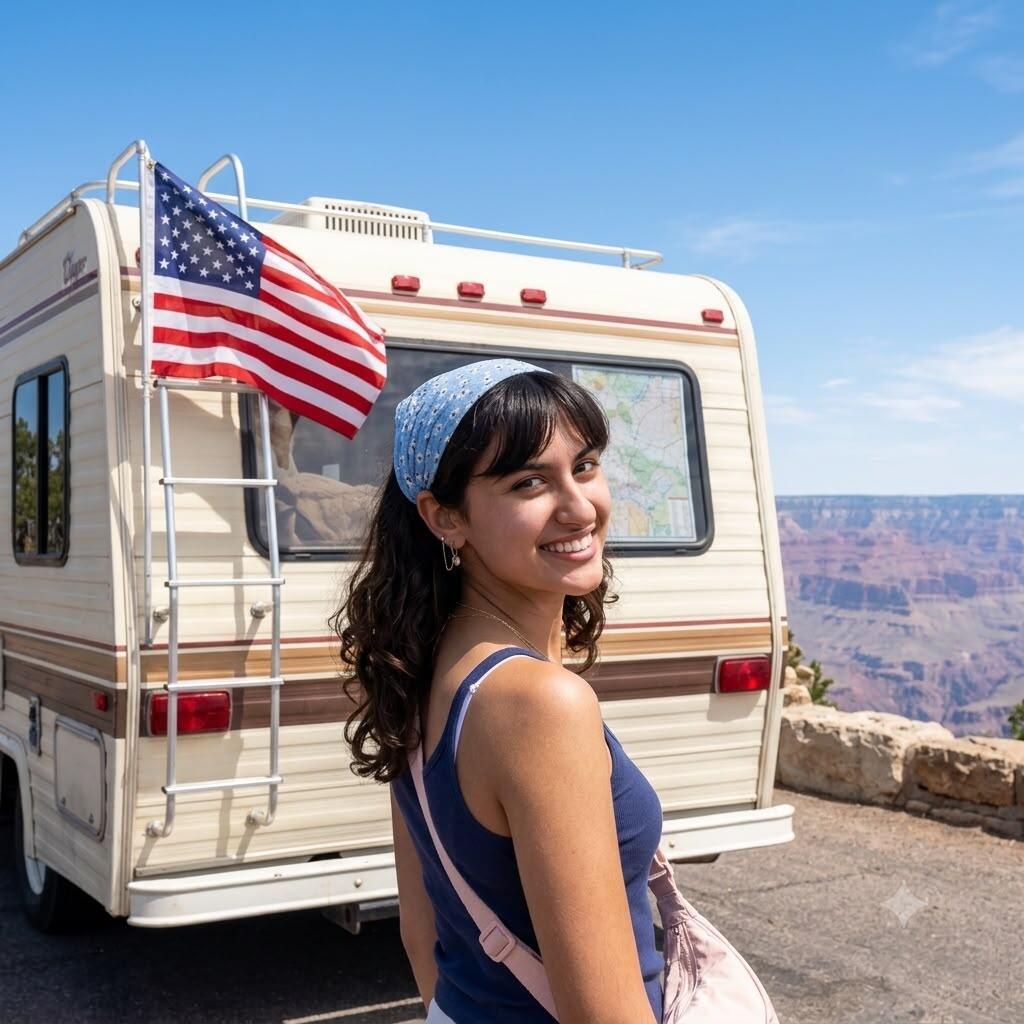
“I looked at the map and realized the rest of our route cut through the fires,” she told ynet. “We were supposed to head down to Utah and see all the places we had planned, but at that moment we understood we had to change everything. We cut out a large section of the route and started driving around the fire zone.”
Once they were on the road, it was impossible to ignore what was happening around them.
“We saw burned areas, firetrucks and a lot of smoke. We didn’t see flames right beside the road, but it was clear we were very close. In the end, we drove for more than four hours straight just to get out of the smoke. We didn’t want to sleep somewhere with such severe air pollution.”
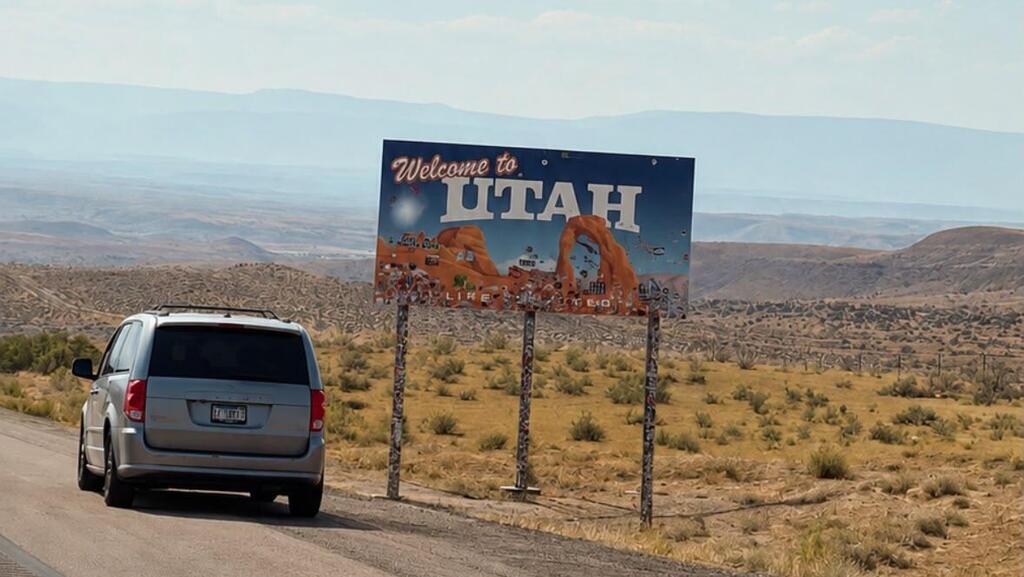
Changing course and fleeing the wildfires
(Photo: Courtesy of Tamar Cesana)
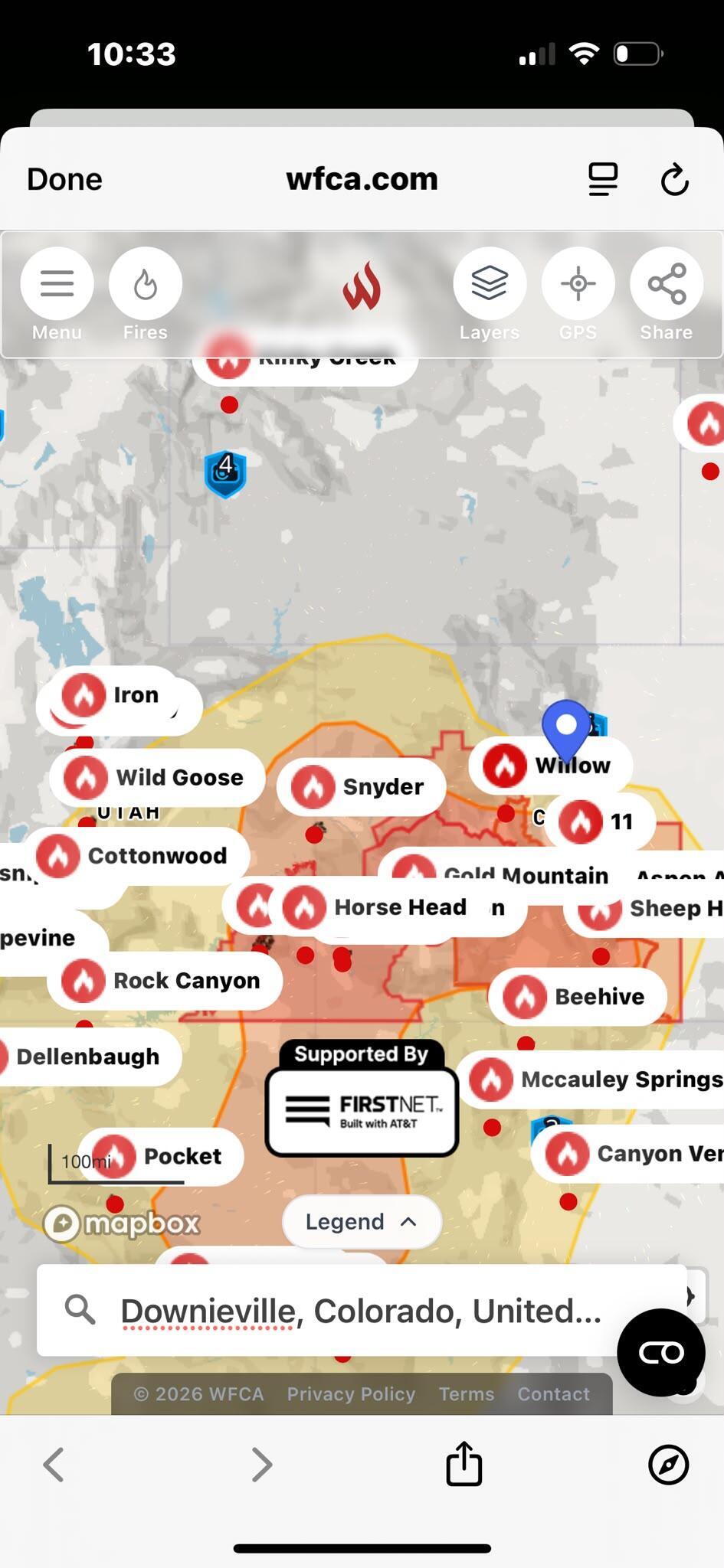
Fire in every direction
For Cesana, it was another unexpected turn in a journey she had dreamed about since completing her IDF service. She grew up in Israel and later moved with her family to Chicago. She experienced the October 7 attack while in the United States, but said there was never any doubt about what she would do next.
“Because of the war, I returned to Israel to enlist,” she said. “I served a full two years as a lone soldier. I was very lucky because I had extended family who supported me throughout that period. Now that I’ve been discharged, I’m finally on the big trip I had planned.”
While many recently discharged Israeli soldiers choose to backpack through South America or the Far East, Cesana went in a different direction.
“At first, I dreamed of traveling around the world,” she said with a laugh. “But then I realized dreams also come with a price tag. I started looking at routes and discovered that the United States has almost everything: snowy mountains, forests, lakes, deserts, small towns and huge cities. Instead of moving between several countries or continents, you can experience it all on one trip.”
“I admit I’m a little spoiled,” she added. “I couldn’t see myself sleeping in a hostel with people I don’t know at all. Without an RV, I probably would have stayed in motels, which would have made the trip much more expensive.”
The RV also gave them privacy and almost complete freedom.
“It’s my home, my refrigerator, my kitchen, my restaurant and my vehicle. If I’m hungry, I pull over and cook. If I’m tired, I park and rest. I don’t depend on hotel check-in times, restaurants or anyone else’s schedule. Everything is with me.”
The couple picked up their rental RV in Denver and set off from there. Their first destination was Rocky Mountain National Park.
“That was our first scenic stop,” Cesana said. “There are amazing lakes, snow-covered mountains even in summer, beautiful roads and small towns with a rural atmosphere. It’s very touristy, but in a good way.”
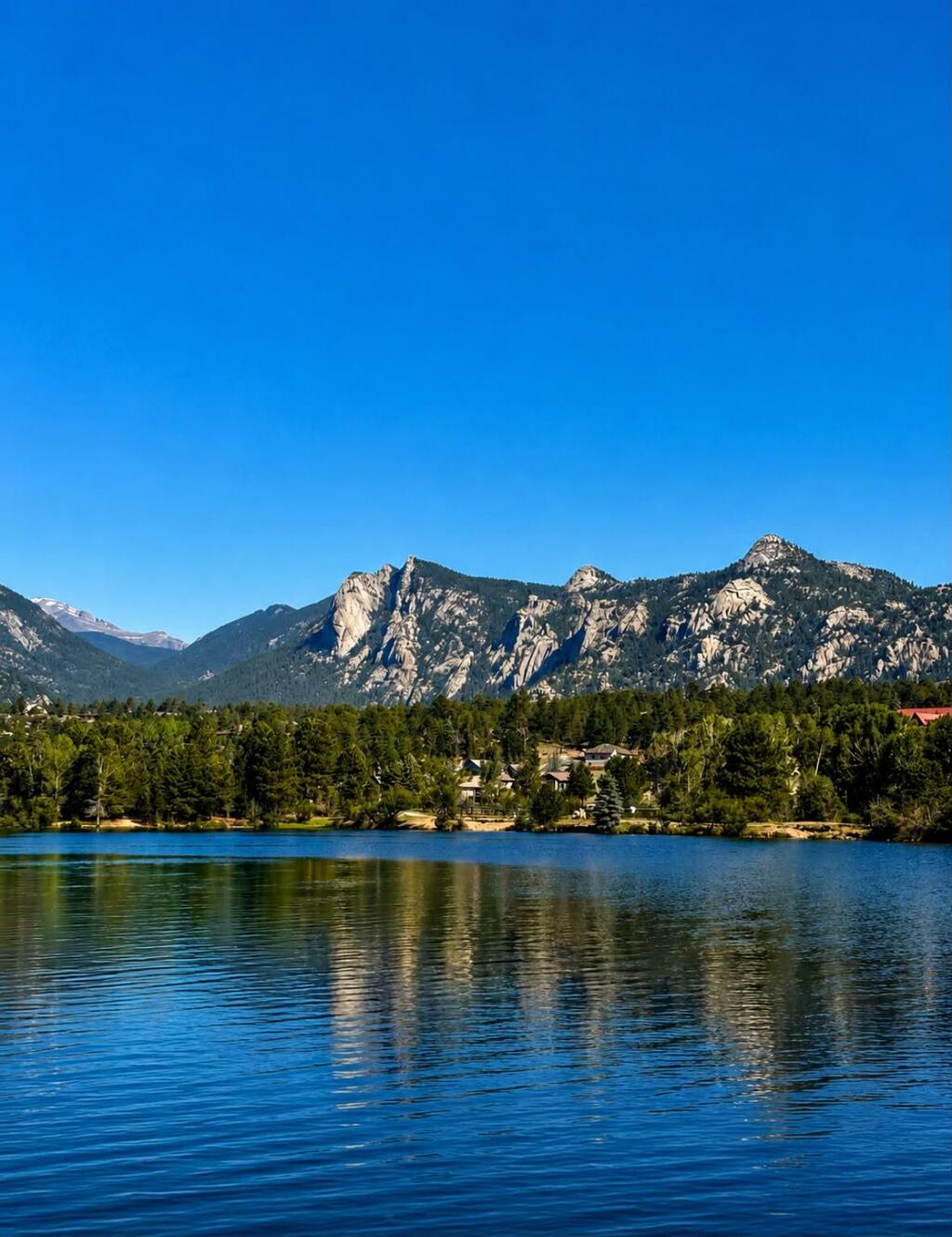
Waking up to a view like this
(Photo: Courtesy of Tamar Cesana)
The wilderness is also associated with one of America’s best-known legends: Bigfoot.
“It’s a legend, or a conspiracy theory, about a huge creature that lives in the forests, and over the years it has become part of the region’s identity,” she said. “Every store sells Bigfoot souvenirs. I don’t really believe it exists, of course.”
“We went walking in the forest and jokingly looked around to see whether we might spot it, but to me it’s a good legend that became a tourist attraction.”
The couple stopped in Salt Lake City for Shabbat.
“Because we observe Shabbat, we looked for a place where we could park the RV for a few days,” she said. “We found a spot near a Chabad house, connected the RV to electricity and prepared all the food in advance. Once you hook up to power, you have a refrigerator, lights and everything else you need. It really feels like home, except the home travels with you.”
Shabbat began at about 8:30 p.m. and ended after 10 p.m.
“In Israel, you’re not used to that, but it gave us plenty of time to prepare,” she said. “People don’t always understand the distances in the United States. Driving three or four hours here is not like driving three or four hours in Israel. You travel hundreds of kilometers and have to stay focused the entire time.”
“Even for someone who doesn’t observe Shabbat, I would recommend stopping for one day in the middle of the trip to rest and recharge. It makes a big difference.”
Before setting out, one issue that concerned the couple was food.
“I live in Chicago in an area with a large Jewish community, so it’s easy to find kosher products at home,” Cesana said. “I didn’t know what it would be like when we reached small towns in the middle of nowhere.”
At the start of the trip, they stocked the RV with coffee, rice, Israeli couscous, pasta and other kosher products they were not sure they would find later.
As the trip continued, they discovered their fears had been exaggerated.
“I was surprised to find that even in the smallest places, you can find kosher products,” she said. “We stopped at a gas station in the middle of Utah just to buy water, and suddenly we saw snacks, candy, sauces and other products with kosher certification. We even managed to find kosher meat. In the middle of the trip, inside an RV, we felt as though we were eating Shabbat dinner at home.”
Her encounter with the local Jewish community also surprised her.
“We hadn’t planned to reach Salt Lake City at all, and then we discovered there was a Chabad house and Israelis living in the area,” she said. “They immediately asked whether we needed anything, invited us over and were simply wonderful people. It was moving to feel that warmth so far from home.”
Although she has lived in the United States for several years, Cesana said her Israeli identity follows her everywhere.
“I think I’m very Israeli,” she said with a laugh. “It’s true that life in the United States teaches you to be more polite, to say ‘thank you,’ ‘I appreciate it’ and all kinds of expressions like that. But when I meet Israelis, I immediately feel at home. There’s something unmistakable about Israeli warmth, directness and the sense of family.”
After Shabbat, the couple returned to Interstate 80 and continued west toward one of Utah’s most distinctive landscapes.
“It’s a huge salt flat, one of the flattest places in the world,” Cesana said. “They conduct speed-record attempts there because everything is flat and straight. You step off the road and see kilometers of white salt. It’s all cracked, but hard as a floor. It looks as though someone poured a sea over the ground and left it to dry. It was unlike anything I had ever seen.”
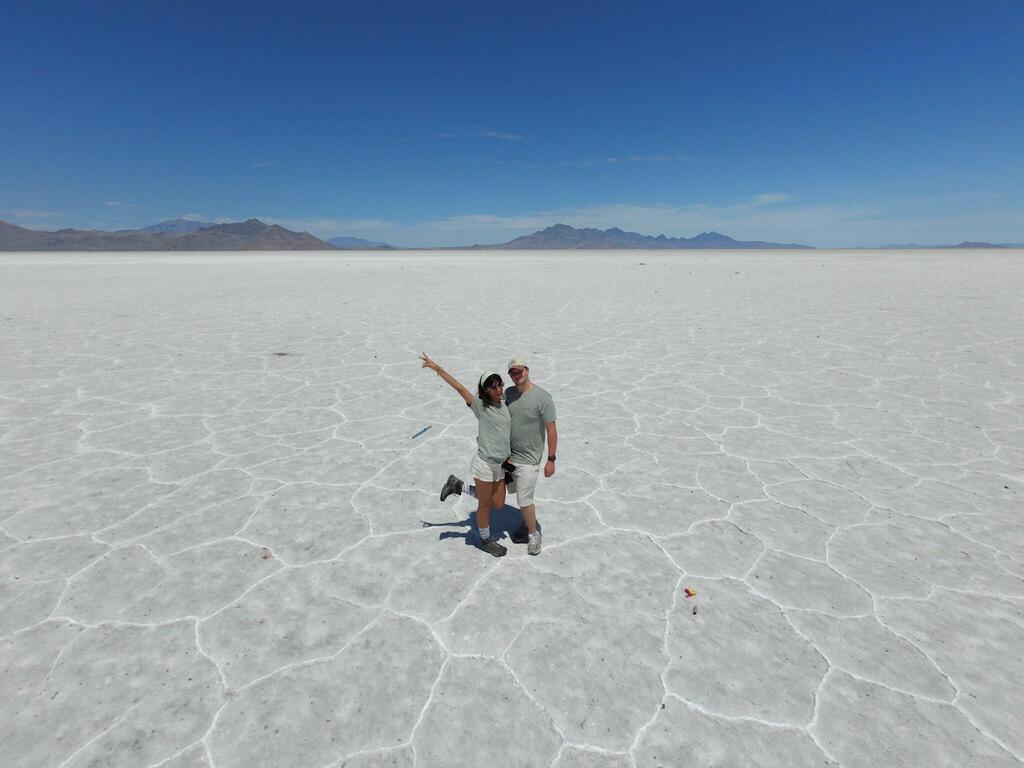
In Utah’s salt desert
(Photo: Courtesy of Tamar Cesana)
But the stop was only a prelude to one of the most unsettling experiences of the journey.
“I did everything I could to avoid going there,” she said with a sigh. “I knew I didn’t want to drive on Nevada’s remote roads. We’re young and didn’t want to find ourselves traveling hundreds of kilometers without a gas station or other people around.”
She spent hours researching the route.
“I dug through ChatGPT, Google, TikTok and Instagram to understand which roads we should avoid. I really spent hours on it.”
Despite all the planning, reality intervened.
“Of course, we ended up on that exact road,” she said, laughing. “It was U.S. Route 50 in Nevada, known as ‘the Loneliest Road in America.’ At first, we didn’t even realize we had entered it. We just kept driving, and then suddenly you understand there’s nothing there: no town, no gas station, no cell service. Just one lane in each direction and endless desert.”
After about 20 minutes, the tension began to set in.
“My boyfriend looked at me and asked, ‘Do you think there’s even a gas station here?’ We looked at the fuel gauge, opened the map and only then understood what we had gotten ourselves into.”
They decided to turn around, drive back to the first junction and leave the highway.
“In retrospect, it was an excellent decision,” she said. “When we finally reached the first gas station, we stopped immediately. We already needed fuel.”
The experience showed her how different American distances are from what Israelis are accustomed to.
“You can’t understand it until you’re there,” she said. “You drive more than 100 miles through the desert and see the road stretching all the way to the horizon. Every so often, a single car passes in the opposite direction, but other than that, there’s nothing. If something happens and there’s no cell service, you really are alone.”
Amid the tension, they also encountered a surprise.
“Suddenly, we saw wild horses,” she said. “I had never seen horses like that in nature, and it was an amazing moment.”
Still, she did not hide her relief when the highway was behind them.
“We drove the entire way in daylight. I don’t even want to imagine what it looks like at night. It was an experience I’ll never forget, and I’m glad it’s behind us.”
They spent the night in Elko, a small town that looked as though it had been taken from a Western.
“The whole area lives and breathes cowboy culture,” she said. “Suddenly, you see people walking around every day in cowboy hats, boots and metal spurs. It looks as though they stepped outside in costume, but for them, that’s simply life.”
From there, they continued to the Ruby Mountains, sometimes called the “Swiss Alps of America.”
“We drove about 40 minutes inland and the scenery changed completely,” she said. “Suddenly, there are wooden cabins, winding roads, a stream running between the mountains and peaks with patches of snow. If you continue farther in, you reach turquoise lakes, but we decided to return to the main road. What we saw was enough to understand the nickname.”
“So far, we’re not tired of each other yet,” Cesana said with a laugh when asked how their relationship was surviving inside a box on wheels.
“We knew in advance that if we were going to live in an RV for almost two months, we needed space. We chose a relatively large RV with a permanent bed, a small living room and a kitchen. It’s bigger than the room I had in the army. There were eight girls in one room there, so to me, this feels like a lot of space.”
Behind the pastoral photos lies a grueling maintenance routine that many travelers discover only after receiving the keys.
“At first, everything felt complicated,” she admitted. “Just figuring out how to turn on the oven took us almost three hours. There’s a water tank, a generator and hookups for electricity, water and sewage. When you rent the RV, they explain everything in a few minutes, but you only really understand how it works once you’re out on the road.”
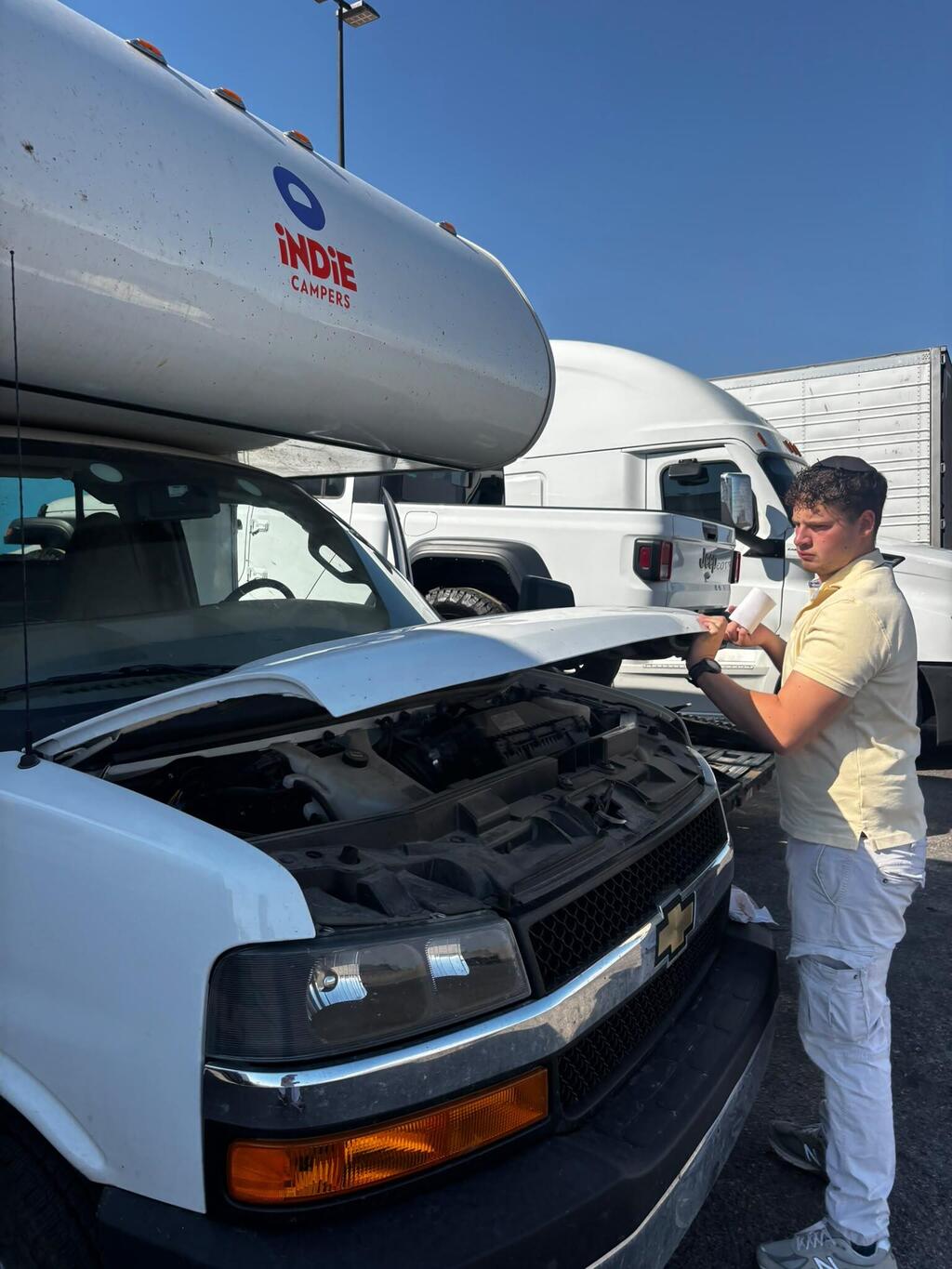
Maintaining the RV
(Photo: Courtesy of Tamar Cesana)
On their first night, they received close guidance at an RV park.
“Luckily, we ended up next to a really nice neighbor who showed us how to connect everything,” she said. “That helped a lot because the first time, everything looked much more complicated than it really was.”
After two weeks on the road, setting up the RV had become routine.
“We arrive at a campground and each of us knows exactly what to do. I connect the electricity and water, and Benaya handles the sewage. In less than a minute, everything is working. In the United States, you have to be at least 21 to drive an RV like this, so Benaya is our permanent driver.”
Cesana laughed about their division of labor.
“I’m happy to connect the water and electricity, but I leave the sewage to him.”
Despite the technical work, Cesana is convinced that life on wheels is worth every moment.
“You need a lot of patience for a trip like this,” she said. “Some things don’t work the way they do at home, there are systems you have to learn and at first, you make a lot of mistakes.”
“But the most amazing thing is that every morning I wake up somewhere different: one day beside the mountains, another day beside a lake and the next in the middle of the desert. In the end, the RV is much more than a place to sleep. It’s our home, and every day we simply park it in front of a different view.”