

This was probably not what anyone expected. Spain, one of the strongest soccer teams in the world, opened its 2026 World Cup campaign and failed to score a single goal against a country that, let’s admit it, many people had barely heard of: Cape Verde, also known by its official name, Cabo Verde.
So after everyone opened a map to figure out exactly where Cabo Verde is, we decided to get to know the country, and especially what it offers visitors.
Gallery
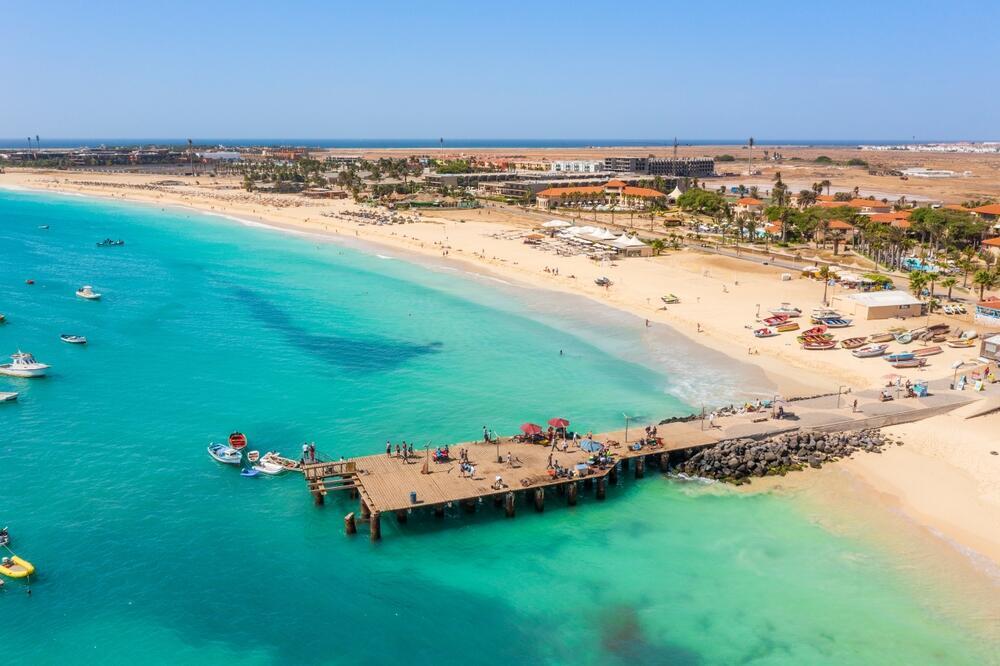
Pier and boats in the turquoise waters of Santa Maria, on Sal Island in Cape Verde
(Photo: Sopotnicki / shutterstock)
Cape Verde is an archipelago of 10 islands in the Atlantic Ocean, about 500 kilometers west of the coast of West Africa, near Senegal. The former Portuguese colony gained independence in 1975 and is considered one of Africa’s more stable democracies and a relatively safe destination, though, as everywhere, travelers should remain alert to pickpocketing and theft, especially in urban and tourist areas.
According to local tourism publications, the country enjoys nearly 350 days of sunshine a year and offers a rare combination of rich Afro-Portuguese culture and landscapes that change dramatically from one island to the next.
Island-hopping between turquoise beaches and active volcanoes
The most common mistake travelers make is treating Cabo Verde as one single destination and landing on the wrong island. The archipelago is divided into two island groups, and each island has a completely different character, landscape and pace.
The flat, desert-like islands that draw most incoming tourism are Sal and Boa Vista. On Sal, visitors will find the lively coastal town of Santa Maria, surrounded by about eight kilometers of soft white sand and resorts. This is the place for those looking for a relaxed vacation, with natural attractions such as Pedra de Lume, salt pools inside the crater of an extinct volcano where visitors can float, and Buracona, an underwater cave that glows at certain midday hours.
Neighboring Boa Vista offers a similar but more untouched experience, with huge sand dunes and beaches where, in season, travelers can join regulated tours to watch sea turtles, while taking care not to harm their nesting sites.
Those looking for wilder nature will find it on Santo Antao, accessible only by ferry and considered one of the archipelago’s most impressive hiking islands. It is a dramatic, towering rock mass whose heart is the Paul Valley, a green agricultural region filled with terraces of sugar cane, mango trees and banana trees. The hiking trails there were carved into the rock by locals over centuries and offer breathtaking views.
The island of Fogo offers an equally dramatic experience. It is home to Pico do Fogo, the country’s highest peak at 2,829 meters. The active volcano can be explored on guided tours, including climbs around the crater and descents down volcanic ash slopes. Visitors can even end the day with a tasting of wine produced in villages inside the crater area.
‘No stress’ culture and a fascinating history
Many visitors get to know the cultural heart of the archipelago on Sao Vicente, especially in the city of Mindelo, considered by many to be Cape Verde’s cultural capital. Its streets are full of pastel-colored colonial architecture and cafés.
Mindelo is the birthplace of legendary morna singer Cesaria Evora, and the music associated with her is a central part of the city’s cultural identity, especially as it prepares for its colorful carnival, usually held around February.
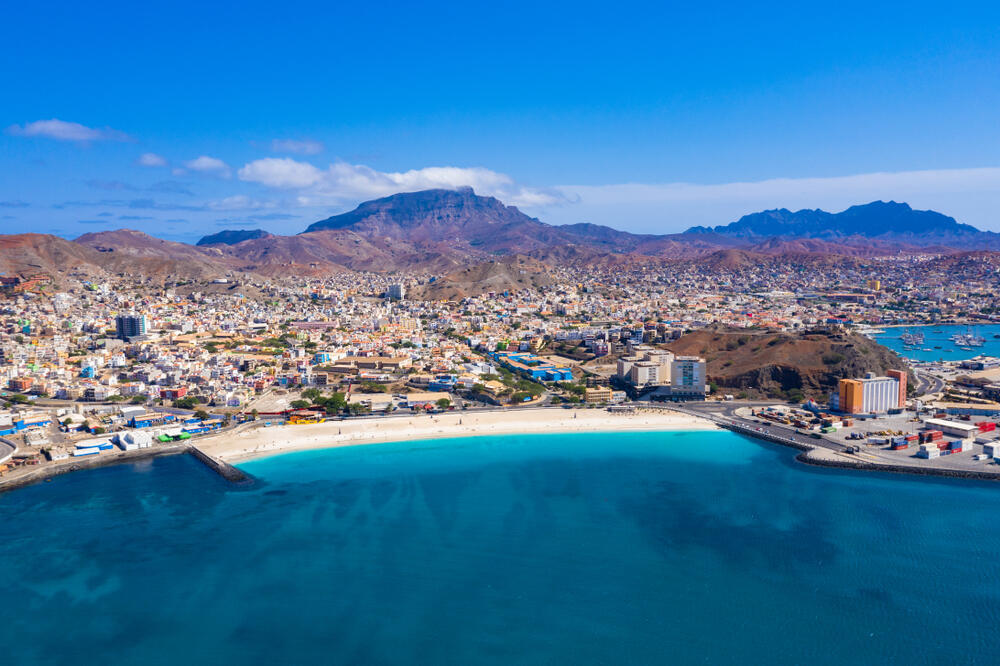
Aerial view of Laginha Beach in Mindelo, on São Vicente Island, Cape Verde
(Photo: Samuel Borges Photography / shutterstock)
The fascinating blend of Africa and Portugal also created a unique cuisine. The dish most closely identified with Cape Verde is cachupa, a slow-cooked stew of white corn, beans, vegetables and often meat or fish. Fish and seafood are central to local cooking, but visitors should adopt the local life motto, “no stress”: food is often cooked from scratch, nothing happens quickly and waiting in restaurants is simply part of the experience.
Beyond nature and cuisine, the islands have a rich and visible history. On Santiago, visitors can tour Cidade Velha, a UNESCO World Heritage Site and the first European colonial settlement built in the tropics. The city historically served as a center of the slave trade, and the pillory still stands in the main square.
In the north of the same island is the Tarrafal camp, now a memorial site and museum dealing with political repression under the Portuguese dictatorship and the anti-colonial struggles in Portuguese Africa.
Traveling to Cape Verde? Don’t drink the tap water
Before packing, there are several logistical details worth knowing, accurate as of June 2026. In general, November through June are considered especially comfortable months to visit because of the dry weather. One of the convenient ways to reach Cape Verde from Israel is by connecting through Lisbon.
Travel between the islands is done by domestic flights or ferries, but schedules can change, so it is best not to build an overly tight itinerary, especially if an international flight is planned for the same day.
The local currency is the Cape Verdean escudo, which is pegged to the euro. In many tourist areas, especially on Sal and Boa Vista, euros are also accepted, but it is still recommended to carry local cash, particularly on the more remote islands.
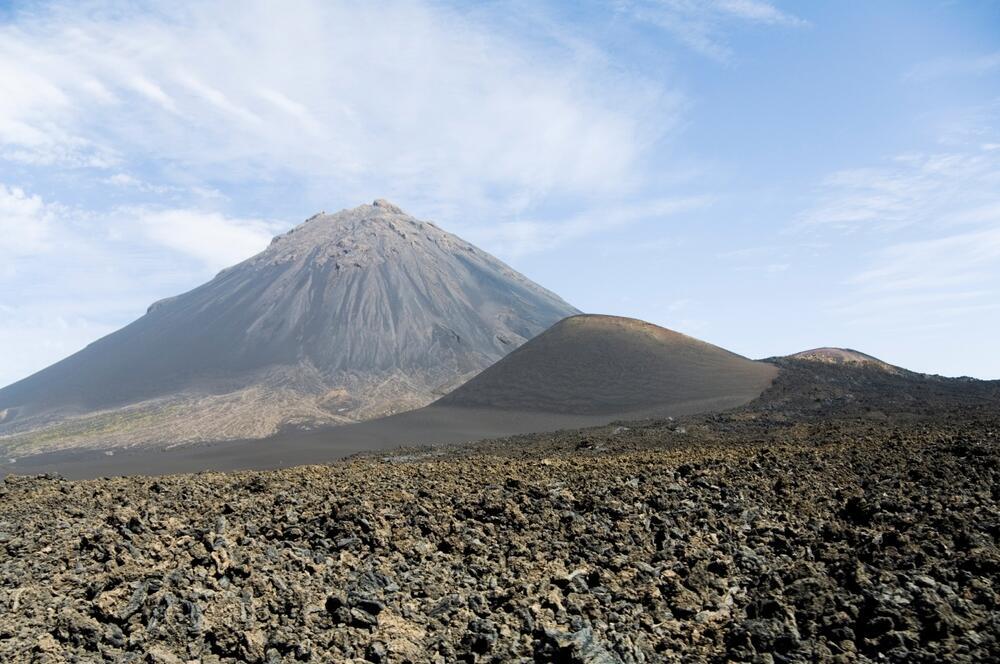
Pico do Fogo volcano in the background on Fogo Island, Cape Verde
(Photo: Robert Harding Video / shutterstock)
From a bureaucratic standpoint, entry is relatively simple for Israelis, but travelers should still check entry requirements before flying. According to available information as of June 2026, Israeli passport holders do not appear on the list of nationalities required to obtain a visa in advance before arriving in Cape Verde. However, all passengers must complete advance registration through the EASE system and pay the airport security tax.
Because entry rules change from time to time, it is recommended to verify the final requirements with the airline or an official source before departure
As for health, tap water on the islands is not recommended for drinking. In addition, following reports by European health authorities of gastrointestinal infections among travelers who recently returned from Cape Verde, visitors are advised to drink only sealed bottled water, avoid drinks with ice, maintain strict hand hygiene and be careful with food that is not thoroughly cooked.