

For many years, the sulfur water spring of Ein Gofra was hidden beneath the waters of the Sea of Galilee. Only the lake’s declining water level in recent years revealed the small pool again, quickly turning it into one of the most intriguing spots among hikers in northern Israel. Hen Yosef, a veteran spring blogger, decided to find out whether the online excitement was justified – and returned with a recommendation, but also with quite a few reservations.
" I came across a post by one of the hikers online and suddenly saw a place I had never heard of before," Hen told ynet. "I said to myself: How can there be such a beautiful and unique place near the Sea of Galilee and I don’t know about it at all? I had never been there and had never heard of it." She laughs. "I immediately started looking for information and trying to understand its story."
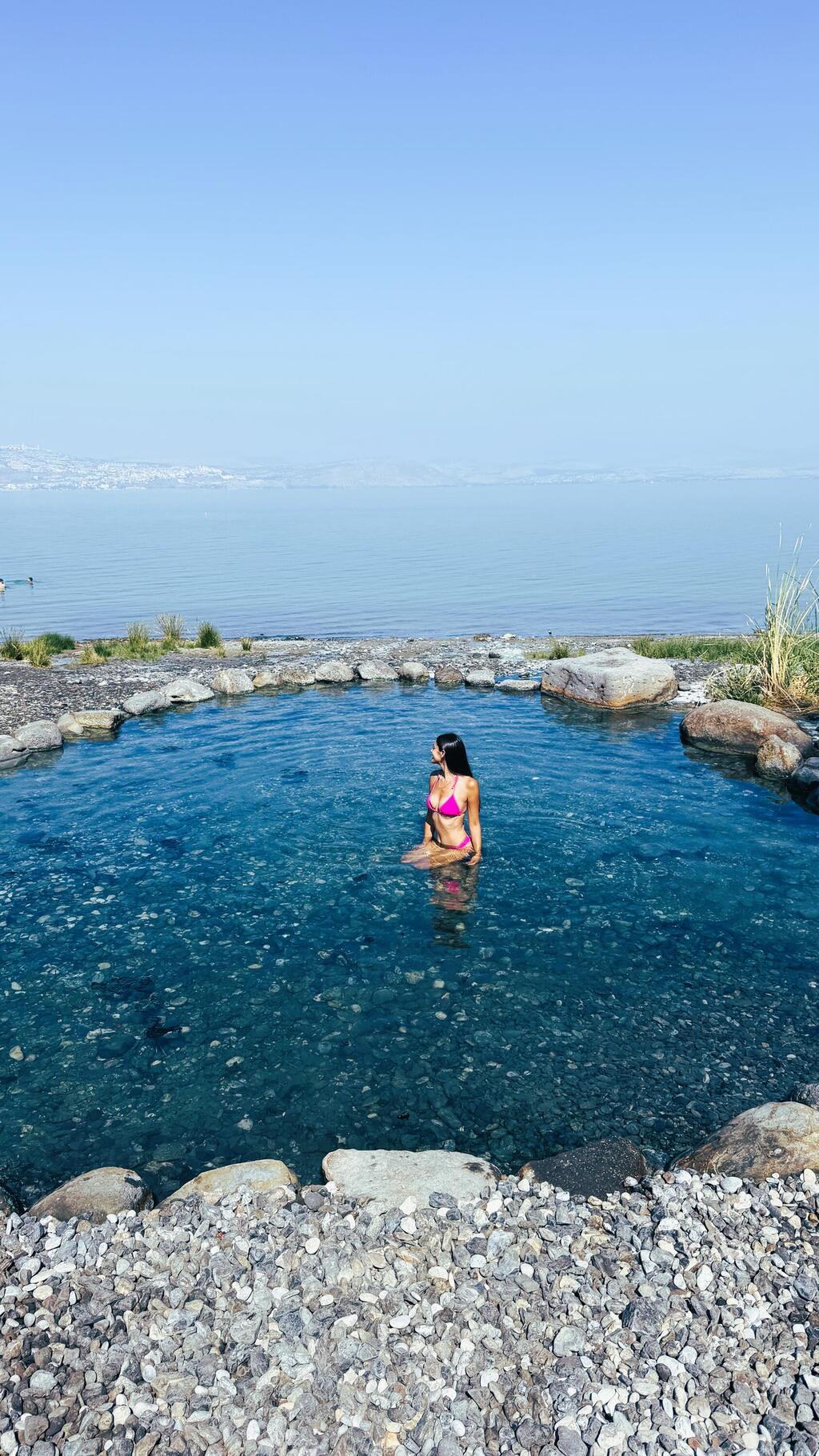
She says she quickly discovered that the picturesque spring was not actually new. "I realized that this pool had existed all along, but it was simply underwater. You couldn’t see it, you couldn’t enter it and you couldn’t even know it was there. When the water level dropped, it was exposed again. The site was developed and made accessible to visitors, but the natural spring itself remained exactly as it was – alive, existing and amazing."
Ein Gofra is located at Gofra Beach on the eastern shore of the Sea of Galilee. It is a warm sulfur water spring that attracts curious visitors looking to combine a dip in a natural spring with time on the shores of Israel’s national lake and photos for social media.
"I saw people writing that the place smells bad," she says with a smile. "It’s true, these are sulfur waters and they have a characteristic smell, but it is nowhere near as bad as I feared, like at Ein Jones for example. The water is also not very hot. It is warm, even lukewarm. That’s why it is most pleasant to arrive in the morning or toward evening. On a hot summer day, in the middle of the day, it is less enjoyable to get in and in winter I’m not sure the water will feel warm enough."
The Sea of Galilee region is considered one of Israel’s most active areas in terms of geothermal activity. Along the fault lines near the lake, natural groundwater springs emerge, warmed deep underground and rich in minerals, including sulfur. Some of these springs, such as Hamat Tiberias, Ein Nun and Ein Gofra, have been known for decades, while others have periodically been covered by the waters of the Sea of Galilee. When the lake’s water level drops after dry periods, springs, natural pools and hydrological remnants that had been hidden underwater are sometimes exposed again. Conversely, after rainy winters and rising water levels, some may disappear beneath the surface once more.
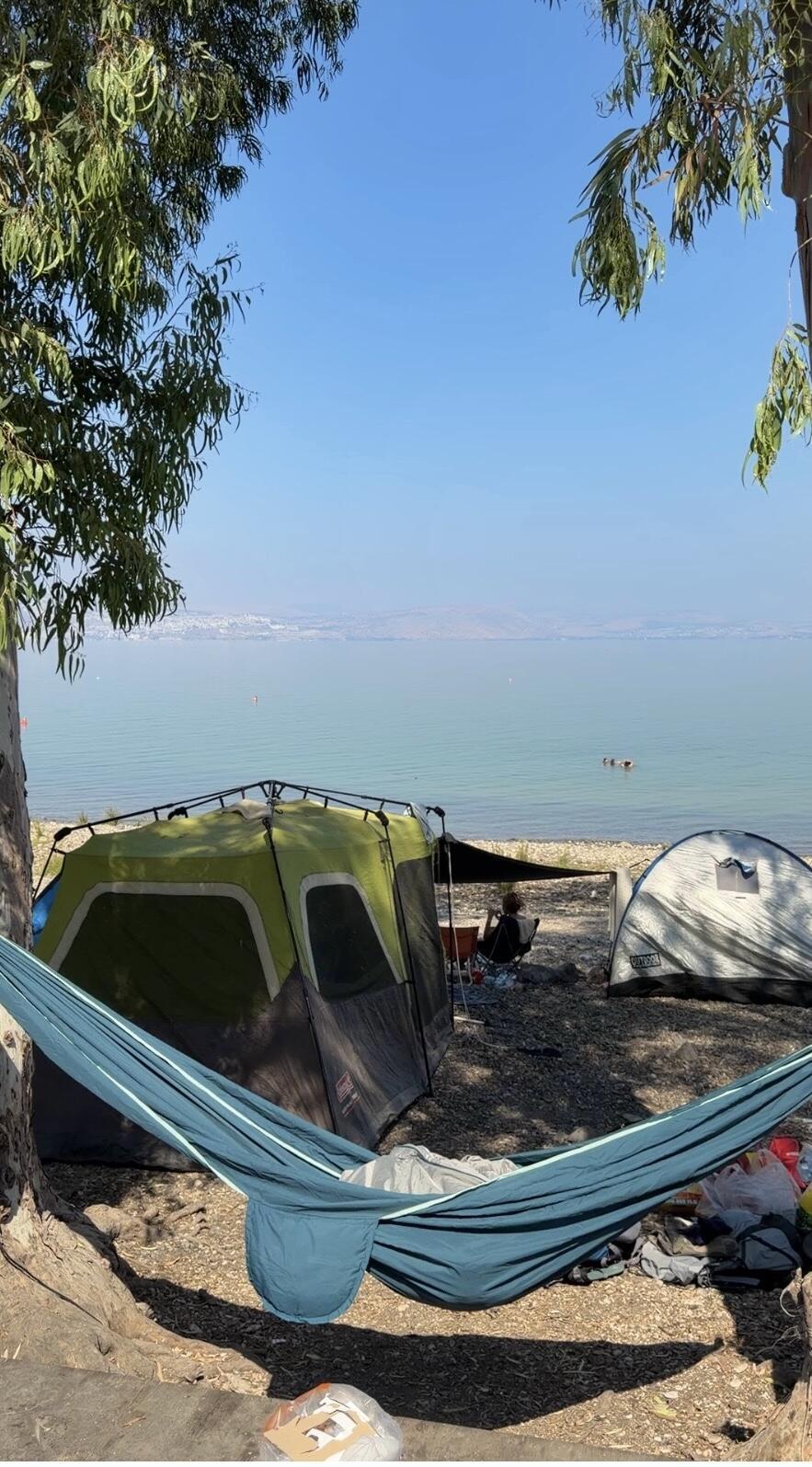
Also suitable for camping
(Photo: Courtesy of Hen Yosef)
Hen arrived at the site in the morning, before the heavy heat and midday crowds took over the beach. "I wanted to see the spring with my own eyes and it really does photograph beautifully – even more than it looks in reality. If you are already in the area, it is definitely worth stopping and going in, but I’m not sure I would drive there specifically just for this pool."
She says the spring takes on a different character in the afternoon. "I think it could be a stunning place at sunset. There is a very pleasant atmosphere there and the whole area looks different."
One of the site’s biggest advantages, she says, is actually the beach surrounding it. "It is an organized beach run by the Kinneret Cities Association. There are restrooms, showers, shaded seating areas, you can camp and there is also a small coffee bar on the beach. We saw many young people sleeping there in tents and fewer families. The atmosphere was really fun."
She says the fact that it is considered a "quiet beach" is noticeable. "Everything was clean and organized. There are no private sound systems and no loud music. If someone turns on a speaker, there is enforcement and someone to contact. For me, that is one of the biggest advantages of the place."
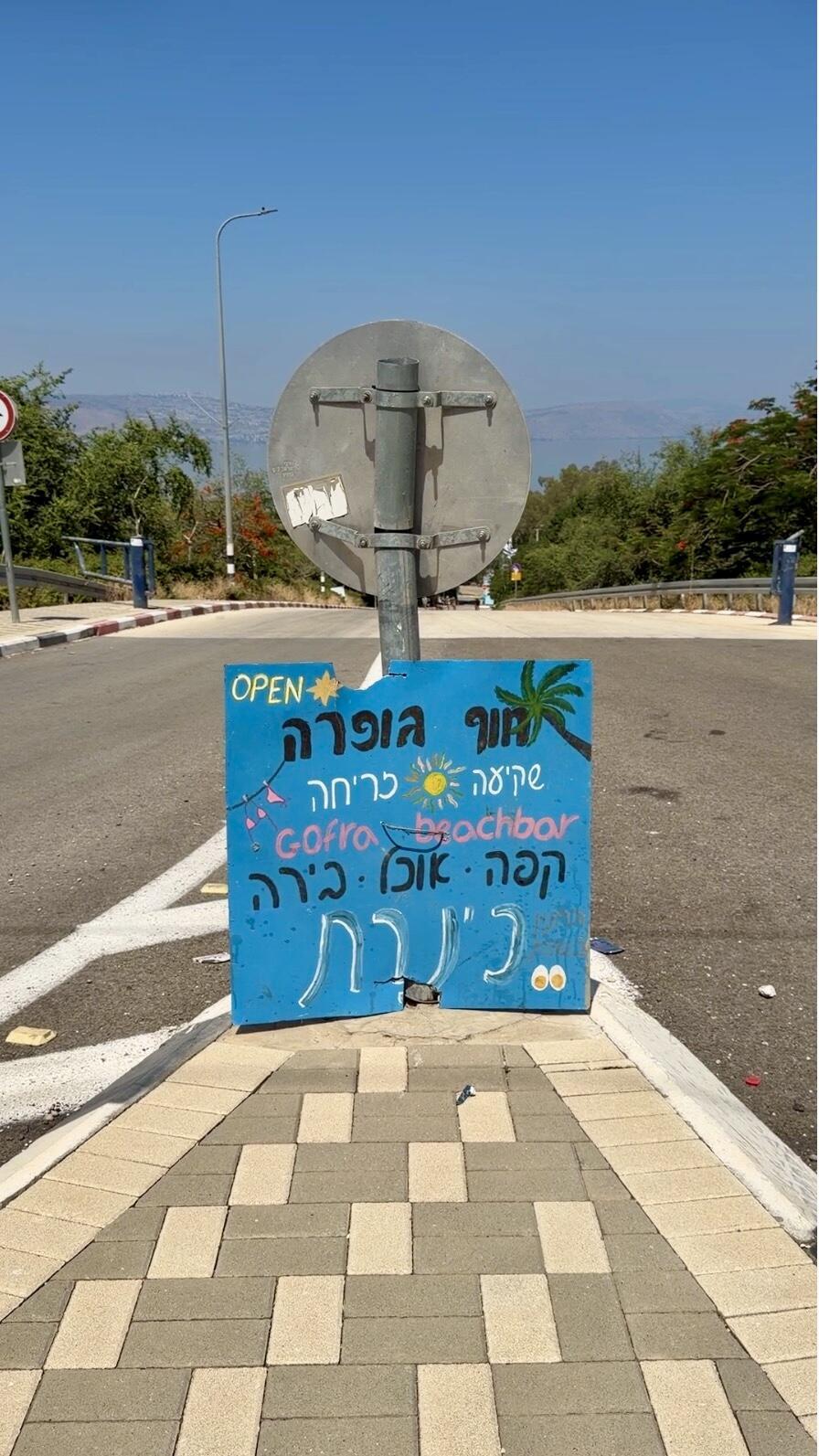
On the way to the beach
(Photo: Courtesy of Hen Yosef)
Alongside the praise, Yosef also wants to slightly cool the wave of enthusiasm surrounding the spring. "People need to understand that this is a small and shallow place. It is not a huge pool where you can spend hours. You come, get excited, take a short dip, take photos and move on. For me, it is more of a nice stop as part of a day at the Sea of Galilee rather than a destination worth traveling to on its own."
Still, she admits there is something exciting about the discovery itself. "In a small country like ours, it is already difficult to find a new natural spot. So even if this is a modest spring, the fact that another place has suddenly been revealed that people can visit – that is already a lot of fun."
How to get there: Drive north from Kibbutz Ein Gev on Route 92 until reaching Gofra Beach, or simply enter "Gofra Beach" into Waze. The beach entrance is regulated. After walking down the stairs to the shore, the spring is located very close to the entrance. It is also possible to arrive by public transportation and walk in. Parking at the site is paid.