

For nearly six years, flyDubai was one of the most visible aviation symbols of the Abraham Accords. It was the first Emirati airline to launch scheduled service to Israel, grew into one of the busiest foreign carriers at Ben Gurion Airport and, during years of war, kept flying when many of its competitors pulled out.
The Dubai-Tel Aviv flight was forced to make an emergency landing in Tabuk, Saudi Arabia, on Wednesday after what Israeli security officials increasingly suspect was an attempted terrorist attack inside the cockpit. The Omani co-pilot is suspected of trying to crash the aircraft, while the captain, crew members and Israeli passengers fought to stop him.
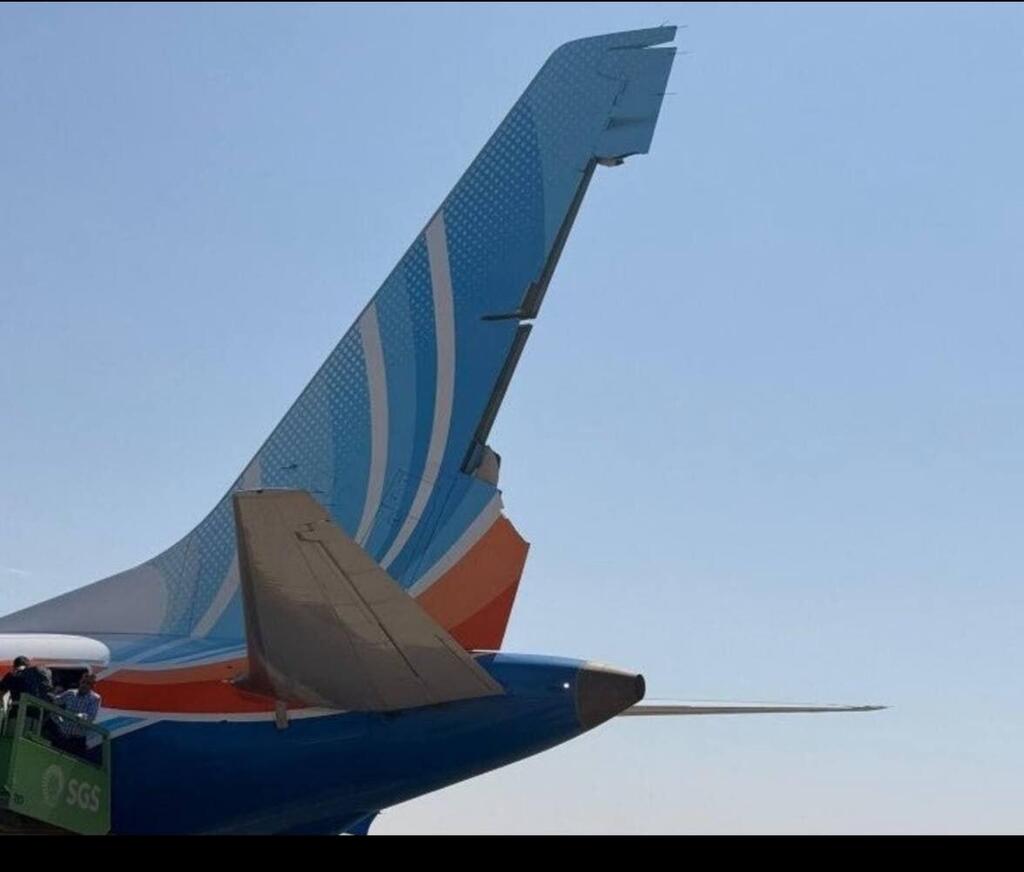
The aircraft, carrying 174 passengers including 27 children, plunged more than 14,000 feet during the incident, transmitted both emergency and hijacking codes and eventually landed safely in Saudi Arabia.
For flyDubai, the episode is more than an extraordinary security incident. It threatens a relationship with the Israeli market that has expanded steadily since 2020 and became particularly significant after October 7, 2023.
From two daily flights to 10
FlyDubai is young by global aviation standards. The airline was established by the Dubai government in 2008 and began commercial operations the following year.
Although closely associated with Emirates, it is not an Emirates subsidiary. Both airlines are owned by the Investment Corporation of Dubai, the Dubai government’s investment arm, but they operate separately.
For Israeli travelers, flyDubai’s story began shortly after the Abraham Accords established formal relations between Israel and the United Arab Emirates.
On November 26, 2020, the airline’s first scheduled commercial flight from Dubai landed at Ben Gurion Airport. It was greeted with the traditional water-cannon salute, with a delegation led by the airline’s CEO aboard.
The carrier entered the Israeli market at scale from the start, operating two daily flights, or 14 a week, between Tel Aviv and Dubai.
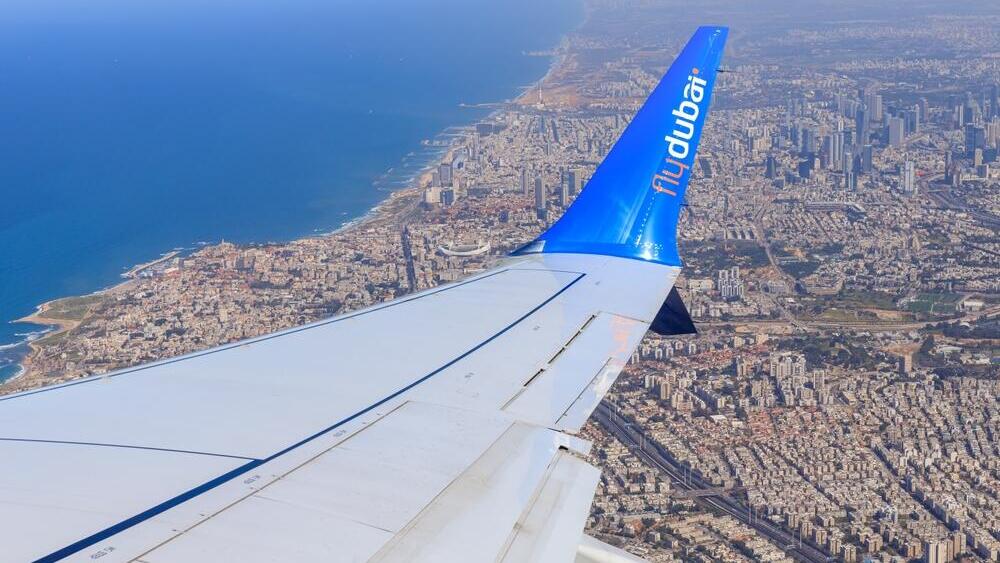
Flydubai aircraft over Tel Aviv
(Photo: Dmitriy Feldman svarshik / Shutterstock.com)
The route was important not only for travelers heading to the UAE. Dubai quickly became a connecting hub for Israelis traveling onward to destinations across Asia, Africa and the Far East.
The operation expanded dramatically over the following years. During parts of 2026, flyDubai operated as many as 10 flights a day in each direction between Tel Aviv and Dubai.
A route that began as one of the practical products of normalization had become one of Israel’s busiest air connections with an Arab country.
The airline that kept flying
The relationship faced its most significant test after October 7, 2023.
As foreign airlines suspended Israel service, sometimes for months at a time, flyDubai remained one of the most consistent international operators at Ben Gurion Airport.
According to figures from aviation analytics company Cirium published in November 2024, the airline had operated more than 1,800 flights to Israel since the outbreak of the war while canceling just 77.
That made flyDubai an increasingly important part of Israel’s international aviation network at a time when the list of foreign carriers willing to serve the country had sharply contracted.
Israel Airports Authority figures show how quickly its presence grew.
FlyDubai carried 551,274 passengers to and from Israel in 2024. In 2025, the figure jumped to 801,379, an increase of 45.36% in a single year.

The water-cannon salute at Ben Gurion Airport for Flydubai’s first official flight
(Photo: ynet)
The airline accounted for 4.33% of all international passenger traffic at Ben Gurion Airport and ranked as the airport’s sixth-largest carrier that year.
FlyDubai did not continue operating under every circumstance. When Israeli airspace was closed or security conditions made normal operations impossible, it canceled or suspended flights.
But in many cases, it was among the foreign airlines that returned relatively quickly once restrictions were lifted, giving it a far more stable presence than many European and U.S. carriers that stayed away for extended periods.
Dubai as a global gateway
FlyDubai’s importance for Israeli travelers extends beyond the direct Tel Aviv-Dubai route.
Since 2017, the airline has maintained a broad strategic partnership with Emirates, including codeshare flights and coordination between their route networks.
The arrangement allows passengers arriving in Dubai on flyDubai to connect to a much wider range of destinations served through the two airlines’ combined networks.
Most flyDubai flights operate from Terminal 2 at Dubai International Airport. Passengers flying to Tel Aviv, however, check in at Terminal 3, where stricter security arrangements are in place.
Wednesday’s incident raises a very different security problem. According to the emerging Israeli assessment, the suspected threat did not come from a passenger who breached airport screening, but from inside the cockpit itself.
No longer simply a low-cost carrier
FlyDubai was created in March 2008 as Dubai’s low-cost airline. The government initially invested 250 million dirhams in the company, and its first commercial flight took off in June 2009.
The original concept was straightforward: relatively inexpensive nonstop service from Dubai to regional cities and markets that lacked direct connections to the emirate.
The airline has changed considerably since then.
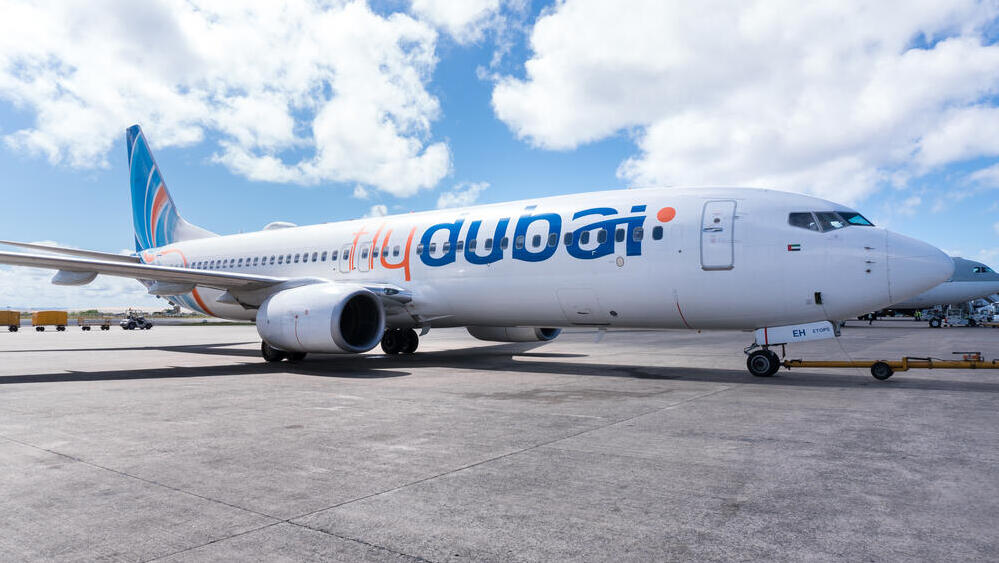
(Photo: photopixel / Shutterstock.com)
FlyDubai still operates only narrow-body aircraft, but its product has moved well beyond the traditional no-frills low-cost model. Alongside economy class, it offers business class, with some aircraft fitted with seats that convert into fully flat beds.
Its growth has been rapid. As of September 2026, flyDubai operates 98 aircraft, all from the Boeing 737 family, and serves more than 125 destinations in 56 countries.
According to the airline, it has carried more than 137 million passengers since beginning operations.
The financial figures tell a similar story. FlyDubai carried 15.7 million passengers in 2025 and reported revenue of 13.6 billion dirhams, about $3.7 billion.
A much bigger airline is coming
FlyDubai is also preparing for the largest transformation of its fleet since the company was founded.
Until now, every aircraft it has operated has belonged to the narrow-body Boeing 737 family.
That is set to change.
In 2023, flyDubai ordered 30 Boeing 787-9 Dreamliners, the first wide-body aircraft in its history. Deliveries are expected to begin in 2027, giving the airline the ability to operate longer routes with significantly larger aircraft.
It later signed a memorandum of understanding with Airbus for 150 A321neo aircraft, with options for another 100.
If completed, the deal would also mark another major change: a move away from a fleet made up entirely of Boeing aircraft.
The airline’s deadliest accident
FlyDubai’s history also includes one fatal crash.
In March 2016, Flight FZ981 crashed in Rostov-on-Don, Russia, during a second landing attempt, killing all 62 passengers and crew aboard.
The final investigation found that the crash resulted from incorrect aircraft handling, difficult weather conditions and the pilot’s loss of spatial orientation.
Until Wednesday, that remained the darkest episode in the airline’s history.
What happens after FZ1073?
It remains too early to know how the suspected attack aboard FZ1073 will affect flyDubai’s extensive Israel operation.
The airline has so far announced no change to its Tel Aviv schedule, but the incident is already affecting passenger confidence.
Numerous Israeli customers have asked to change their tickets, and some passengers rescued from Saudi Arabia on Wednesday initially refused to board another flyDubai aircraft because they were afraid to fly with the airline.
Political pressure is also building.
Transportation Minister Miri Regev has asked Prime Minister Benjamin Netanyahu to immediately suspend flyDubai flights to Israel until the circumstances surrounding the incident are fully investigated. She has also called for an examination of whether aviation agreements between Israel and the UAE were violated.
For years, flyDubai’s willingness to keep serving Israel while other foreign carriers stayed away helped turn it from an Abraham Accords symbol into a fixture at Ben Gurion Airport.
Flight FZ1073 has now created a test of a very different kind: whether that trust, built through nearly six years of intensive operations and reinforced during war, can survive a suspected attack originating inside the cockpit.