

A U.S.-brokered ceasefire understanding between Israel and Hezbollah was extended Monday under new terms, after President Donald Trump said both sides had agreed to halt attacks and Israel held off on a threatened strike in Beirut.
Prime Minister Benjamin Netanyahu spoke with Trump on Monday evening, about seven hours after ordering the military to prepare to strike Beirut’s southern Dahieh district, a Hezbollah stronghold. Despite that order, Israel did not attack the Lebanese capital ultimately.
Gallery
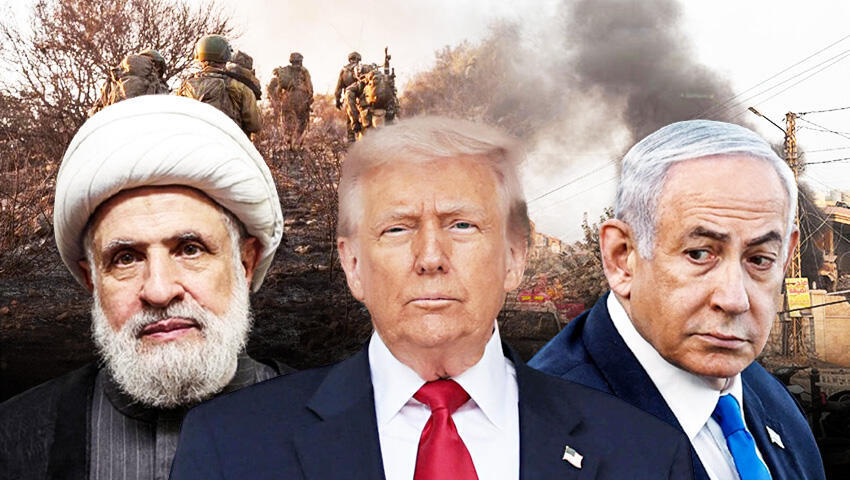
Hezbollah Secretary-General Naim Qassem, US President Donald Trump, Prime Minister Benjamin Netanyahu
(Photo: IDF, REUTERS/Amir Cohen, REUTERS/Jessica Koscielniak)
Trump effectively announced a “quiet will be met with quiet” formula. Lebanese officials later said the arrangement meant Israel would refrain from striking Dahieh, while Hezbollah would stop attacking Israeli communities.
Netanyahu appeared to confirm the understanding in his first response, issued about two hours after Trump’s announcement. “I spoke with President Trump and told him that if Hezbollah does not stop attacking our cities and civilians, Israel will attack terrorist targets in Beirut,” Netanyahu said. “This position remains unchanged.”
He added that the IDF would continue operating as planned in southern Lebanon.
Despite the understandings, sirens in northern Israel resumed after about three hours of quiet following Trump’s post. Alerts sounded in the Galilee Panhandle and later in the western Galilee, including Shlomi. The IDF said a rocket fell near Israeli forces in southern Lebanon.
The incident raised questions about the scope of the new arrangement, including whether Hezbollah is still permitted under the understandings to fire at Israeli forces in southern Lebanon, and whether attacks on troops inside Israeli territory would violate the deal.
The Netanyahu-Trump call came shortly after Iran announced it was suspending negotiations with the United States because of Israeli strikes in Lebanon. Tehran also warned northern Israeli residents to leave if Israel attacked Dahieh, saying they could be harmed.
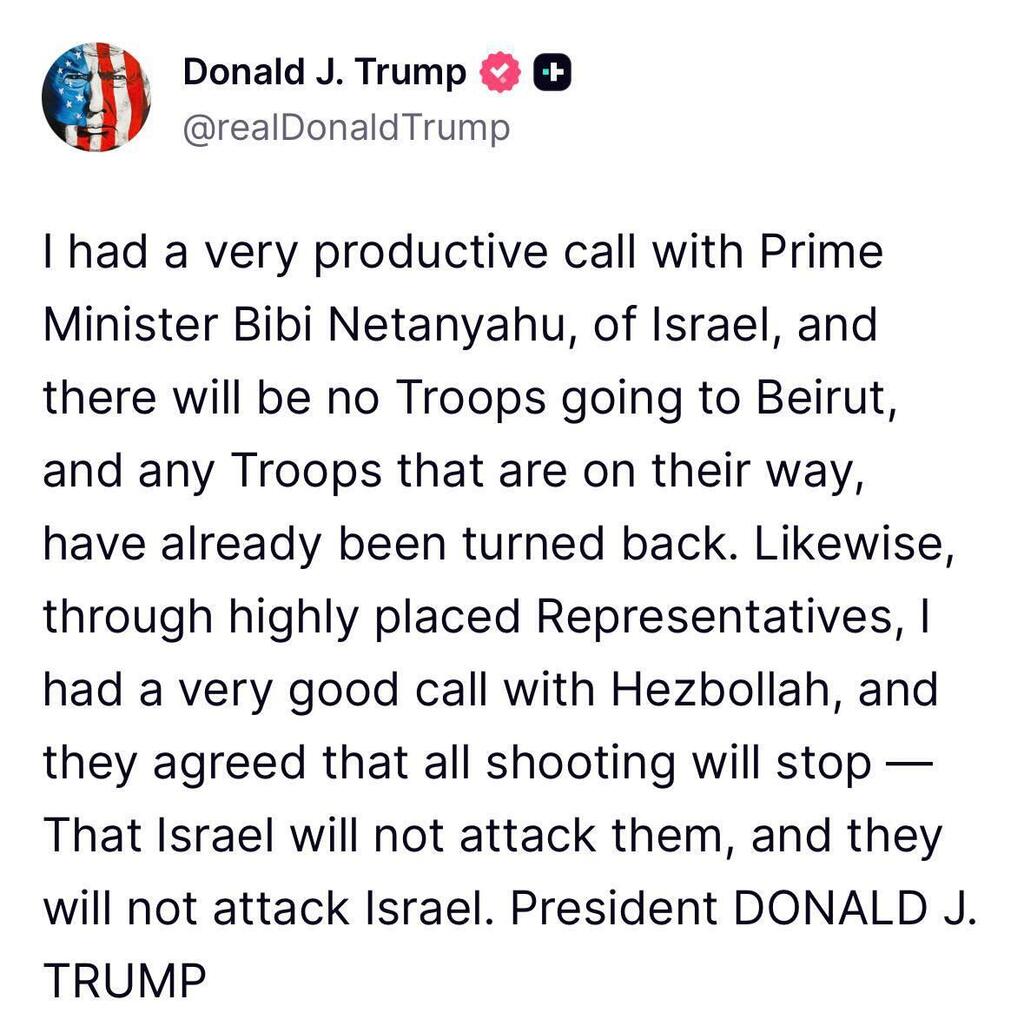
Trump: Israel will not attack Beirut
(Photo: Screengrab)
In a post on Truth Social after the call, Trump described the conversation as “very productive” and said “there will be no Troops going to Beirut.”
“[A]ny Troops that are on their way, have already been turned back,” Trump wrote. He may have been referring to an airstrike, since Israel had no known plan for a ground operation in Beirut.
Trump said Hezbollah had agreed to halt fire at Israel. “[T]hrough highly placed Representatives, I had a very good call with Hezbollah, and they agreed that all shooting will stop,” he said. “Israel will not attack them, and they will not attack Israel.”
The Lebanese Embassy in Washington said Lebanese authorities had received confirmation of Hezbollah’s agreement to accept the U.S. proposal on ending reciprocal attacks.
Under the arrangement, the embassy said, Israeli strikes on Dahieh would stop in exchange for Hezbollah refraining from attacks on Israel. The ceasefire would later be expanded to cover all of Lebanon. The embassy said Trump contacted Lebanon’s ambassador to the United States and told her he had secured Netanyahu’s agreement.
Earlier, Axios reported that Lebanese Parliament Speaker Nabih Berri told the Trump administration that Hezbollah was ready for a full and immediate ceasefire with Israel and had pledged to ensure its implementation. The account was given to Axios by Ali Hamdan, a senior adviser to Berri.
Berri is one of Lebanon’s most powerful Shiite politicians and has close ties with Hezbollah. U.S. and Israeli officials, however, have questioned whether he can ensure the Iran-backed terrorist group will honor any commitment.
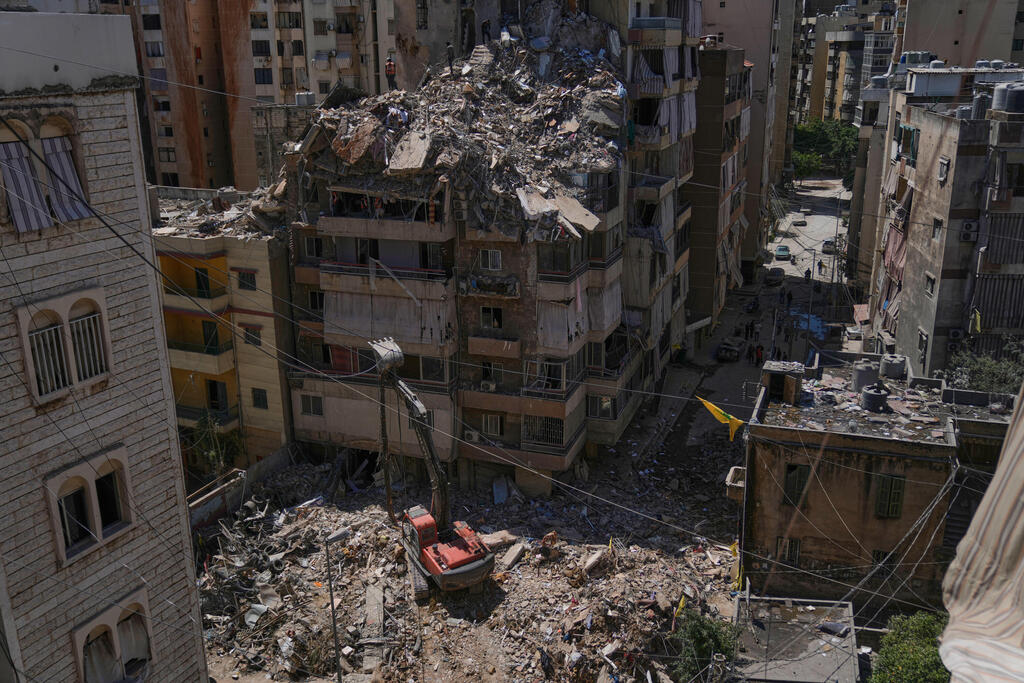
Archival: aftermath of Israeli strike on Beirut's southern Dahieh suburb, May 7, 2025
(Photo: AP Photo/Bilal Hussein)
Hamdan said the proposal presented to Berri was that Hezbollah would stop attacking northern Israel in exchange for Israel not bombing Beirut, with the ceasefire then gradually expanded to additional areas. “Berri’s response was: Why a partial ceasefire? Let’s reach a full ceasefire,” Hamdan said.
Berri proposed a ceasefire on land, at sea and in the air, including an Israeli commitment to stop demolishing homes in southern Lebanon. For now, however, the accepted proposal appears to be the American one rather than Berri’s broader plan.
Hamdan said Berri maintains a channel to Hezbollah that allows him to pass messages to the group’s leader, Naim Qassem, who has been in hiding since Israel killed senior Hezbollah commanders. “We are confident Hezbollah will meet its commitment to a full ceasefire,” Hamdan said. “In our view, it will be more effective. We know time is running out.”
Trump, meanwhile, said on Truth Social that talks with Iran were “continuing at a rapid pace.”
But Iran’s announcement suggested Tehran is trying to link any future agreement with Washington to a ceasefire between Israel and Hezbollah, one that would restrict Israeli military action in Lebanon and allow the Shiite group to recover. Iranian television said there was a high chance Iran’s ceasefire with the United States would end if Israel continued striking in Lebanon.
Tasnim, an Iranian news agency close to the Revolutionary Guards, said Tehran officials had indicated that the so-called “axis of resistance” had also considered fully blocking the Strait of Hormuz and activating other fronts, including the Bab el-Mandeb Strait, “to punish Israel and its supporters.” The comment appeared to be a threat to reactivate the Iran-aligned Houthi rebels in Yemen.
In an interview with NBC, Trump said he had not heard from Iran that it was suspending negotiations. “I think we've been talking too much if you want to know the truth,” Trump said. “I think going silent would be very good, and that could be for a long time.”