

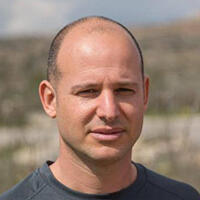
The IDF said early Friday that troops shot and killed a knife-wielding Palestinian who attempted to stab soldiers operating in the northern West Bank city of Jenin. No Israeli troops were wounded.
A security official identified the man as Fathi Hazem, the father of Ra'ad Hazem, a Palestinian terrorist who killed three people in a shooting attack on Tel Aviv’s busy Dizengoff Street in 2022. The elder Hazem had since become known for inflammatory rhetoric against Israel, went into hiding and was sought by Israeli security forces.
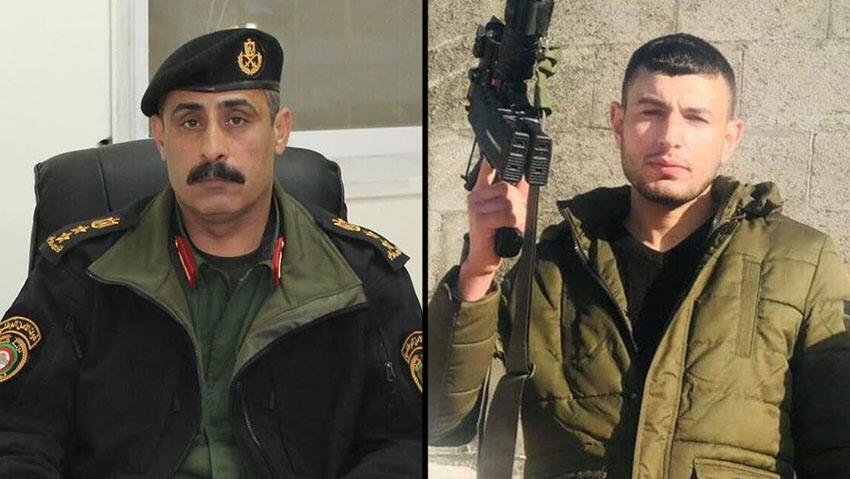
The security official said 890th Paratroopers Battalion troops were conducting an operation to arrest Palestinians suspected of involvement in planning terrorist attacks when the incident occurred.
As the troops entered one of the locations being searched, Hazem attempted to stab one of the soldiers, the official said. The soldier opened fire, killing him. The battalion then resumed its operation.
Father of 2022 Tel Aviv attacker
Hazem became widely known in Israel shortly after his son, Ra'ad, was identified as the terrorist who carried out the April 7, 2022, shooting attack at Ilka Bar on Dizengoff Street.
Ra'ad Hazem killed three Israelis — Tomer Morad, Eytam Magini and Barak Lufan — and wounded others before being killed by security forces following an hourslong manhunt.
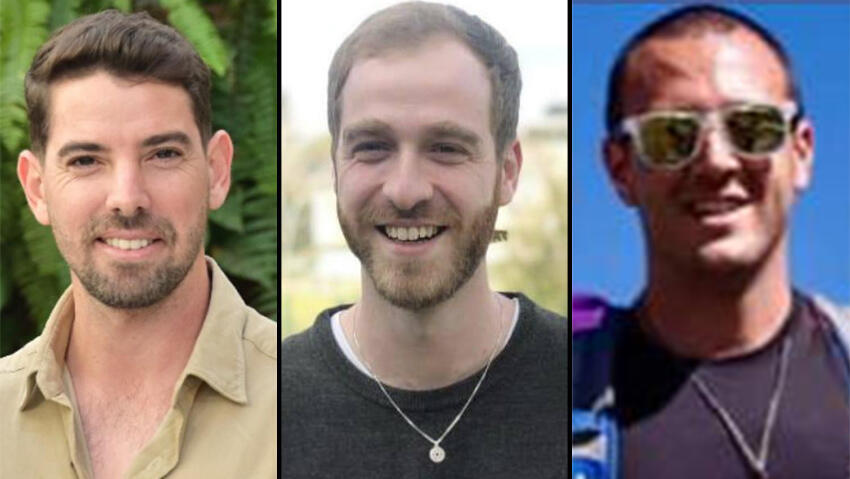
Barak Lufan, Eytam Magini, Tomer Morad
Fathi Hazem, a former senior officer in the Palestinian Authority security forces, began making inflammatory statements against Israel within hours of his son’s death.
In an impassioned speech from the balcony of his home that went viral among Palestinians, Hazem addressed hundreds of people who had arrived to offer condolences.
“You will see victory and change in the coming years and in the coming days,” he said. “Allah will cleanse Al-Aqsa Mosque of the impurity of the occupiers.”
Security forces after the shooting attack at Ilka Bar on Tel Aviv's busy Dizengoff Street, April 7, 2022
(Video: Nadav Eves)


After the speech, Hazem apparently concluded that Israeli security forces might seek to detain him for questioning. He and another son, the brother of the Tel Aviv attacker, subsequently went into hiding, receiving protection from terrorist groups in the Jenin refugee camp.
Former Palestinian security commander
Fathi Hazem had previously served as a commander in the Palestinian National Security Forces in Nablus, a senior position roughly comparable in responsibility to that of a brigade commander in the IDF.
During his years in the Palestinian security services, Hazem was known as a volatile figure who clashed with numerous officials, according to people familiar with his background. His departure from the security forces was linked to those disputes.
A source familiar with the details told ynet and its parent newspaper, the Yedioth Ahronoth daily, after the 2022 attack that Hazem had expressed hard-line positions toward Israel and security coordination with it during his service.
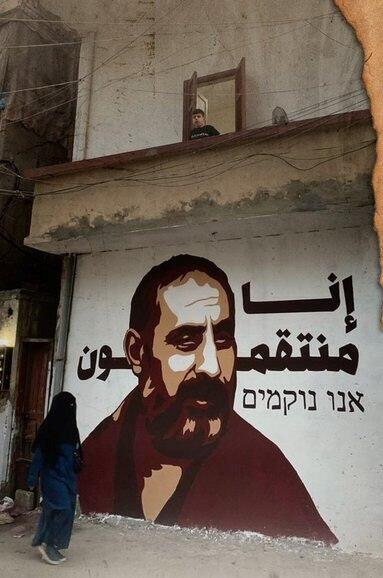
'We take our revenge': a mural praising Fathi Hazem at a Palestinian refugee camp in Beirut, Lebanon
In the aftermath of his son’s attack, Hazem sought to capitalize on the attention it generated to bolster his standing in the Jenin refugee camp and obtain financial support from Palestinian terrorist factions, according to the account.
He publicly portrayed himself as the head of a family determined to protect his children from Israeli arrest. Palestinian sources at the time, however, described a different family dynamic, saying he had previously been estranged from his family.
A year after the Dizengoff Street attack, an Italian tourist, Alessandro Parini, was killed in another attack along Tel Aviv’s beachfront promenade. Hazem subsequently invoked his son in a Facebook post.
“His spirit emerges from the heart of the ashes,” he wrote. “‘He told me, do not grieve, father, for I am alive.’”
Years in hiding in Jenin
Israeli forces had sought to apprehend Hazem and his son for questioning, but security officials said operational priorities meant other suspects considered more likely to carry out imminent attacks were pursued first.
Over time, Hazem became a prominent symbol among Palestinians and used that status to continue making inflammatory statements, occasionally emerging briefly from hiding to attend public gatherings in the Jenin refugee camp and posting on Facebook.
Security officials did not, however, classify him as a “ticking time bomb,” a term commonly used by Israeli security agencies for a suspect believed to be involved in an imminent terrorist attack.
Israeli forces therefore prioritized arrests of terrorists assessed as posing a more immediate threat. Apprehending Hazem inside the densely populated Jenin refugee camp was also considered operationally complicated because he was frequently surrounded by armed men.
Security officials had previously assessed that forces would seek to apprehend him when he was particularly vulnerable. Friday’s encounter appears to have brought the yearslong search for him to an end.