

Yisrael Beytenu leader Avigdor Liberman signaled a dramatic reversal Friday on one of his signature political positions, declaring his willingness to compromise on military conscription for ultra-Orthodox Jewish men to help establish a government without Prime Minister Benjamin Netanyahu.
The announcement marks a striking departure for Liberman, who has spent years campaigning against exemptions from compulsory military service for ultra-Orthodox men and has repeatedly made the issue a central condition for joining governing coalitions.
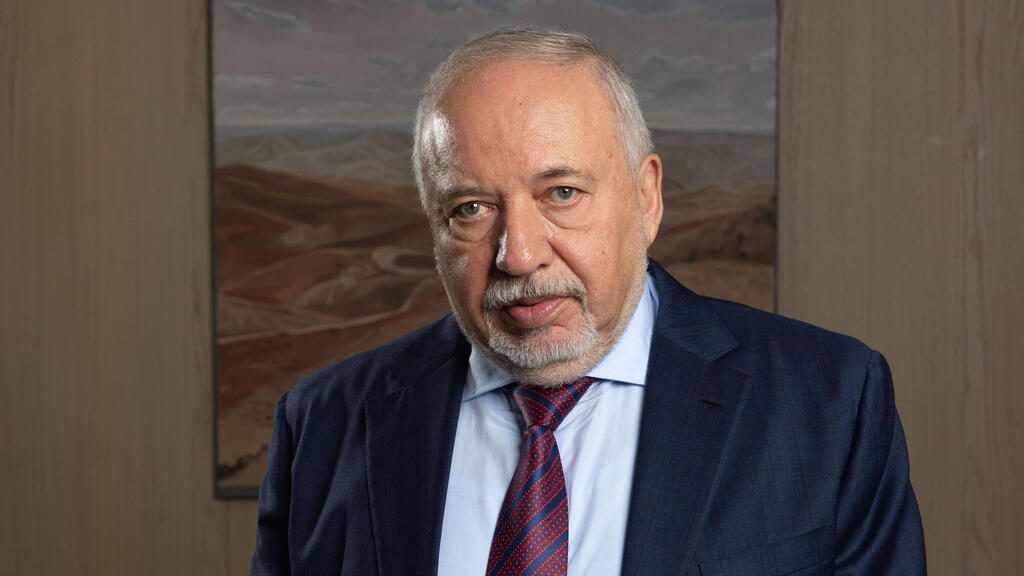
Now, with anti-Netanyahu parties struggling to assemble a parliamentary majority following the 2026 election, Liberman says compromise on the issue is necessary to prevent Netanyahu from remaining in power.
His newfound flexibility immediately drew a positive response from United Torah Judaism, the ultra-Orthodox party whose demands over military exemptions have long been at odds with Liberman's political agenda.
"We must prevent the destruction of the Third Temple," Liberman wrote Friday, invoking a phrase used in Israeli political discourse to warn of a national catastrophe.
"The election results require all of us to recalculate our course and understand that we have no good alternatives or magic solutions," he said. "To understand the magnitude of the responsibility placed upon us and the price we may pay for wrong decisions, we must learn from past mistakes and think several moves ahead."
Liberman said the political situation required difficult decisions and painful compromises but outlined three conditions he would not abandon: ending Netanyahu's tenure, avoiding another election and refusing to establish a government dependent on the support or abstention of Arab parties.
"We must put an end to the Netanyahu era, we must not be dragged into another election, and we must not establish a government that relies on the abstention of the Joint List and Ra'am," he wrote.
He reiterated that Yisrael Beytenu would oppose any government dependent on either party, even if their lawmakers merely abstained from voting against it.
"On every other issue, it is permissible and desirable to show flexibility and compromise, and to understand that if you try to grab too much, you end up with nothing," Liberman said.
"That includes the conscription law. This pains me, and I know it pains many others as well. But in light of the many challenges we face today, the national interest of the State of Israel and the Jewish people must take precedence over every other consideration."
The reversal is particularly significant given Liberman's political history.
In 2019, he refused to join a Netanyahu-led coalition over legislation regulating military exemptions for ultra-Orthodox seminary students, contributing to the collapse of coalition negotiations and another election.
His opposition to sweeping exemptions subsequently became a defining feature of his party's platform, particularly as the IDF faced growing personnel demands during the war that began with the Hamas-led attack on Oct. 7, 2023.
Friday's statement effectively opens the door to concessions on the same issue that Liberman previously treated as a political red line.
Ultra-Orthodox party welcomes Liberman's reversal
United Torah Judaism chairman Yaakov Asher welcomed the apparent change in position, while emphasizing that no formal coalition offer had yet been made.
"It is encouraging to discover the flexibility of all the political players on the conscription issue," Asher said. "It is painful to think how much incitement and hatred between brothers could have been avoided if that same flexibility had emerged in recent years."
Other party officials said they welcomed the outreach. "We are happy about every extended hand," they said.
United Torah Judaism officials also suggested that if an agreement could be reached with Yashar! leader Gadi Eisenkot, who is leading efforts to form the next government, they believed the other major ultra-Orthodox party, Shas, would eventually join as well.
United Torah Judaism has not yet endorsed a candidate for prime minister, leaving open the possibility of joining either Netanyahu or Eisenkot.
Political sources said Jerusalem Mayor Moshe Lion, who maintains close ties with both Liberman and ultra-Orthodox political leaders, has been mediating between the sides in an effort to facilitate a joint government.
The ultra-Orthodox party has not ruled out joining an anti-Netanyahu coalition.
In Yated Ne'eman, a newspaper affiliated with the Degel HaTorah faction of United Torah Judaism, the party said it would examine which candidate could offer the best legally viable arrangement on military conscription.
Netanyahu's office, meanwhile, sought to intervene Thursday night, attempting to contact the various factions within United Torah Judaism to prevent them from accepting an offer from Liberman.
Liberman blames opposition campaign for election losses
Liberman defended his change of course by arguing that the anti-Netanyahu bloc had squandered electoral support in the final days of the campaign and risked handing Netanyahu another term if it failed to act strategically.
He pointed to warnings he said he had issued before previous national crises, including a Dec. 21, 2016, warning about the possibility of Hamas' elite Nukhba fighters infiltrating Israeli territory and capturing communities near the Gaza Strip.
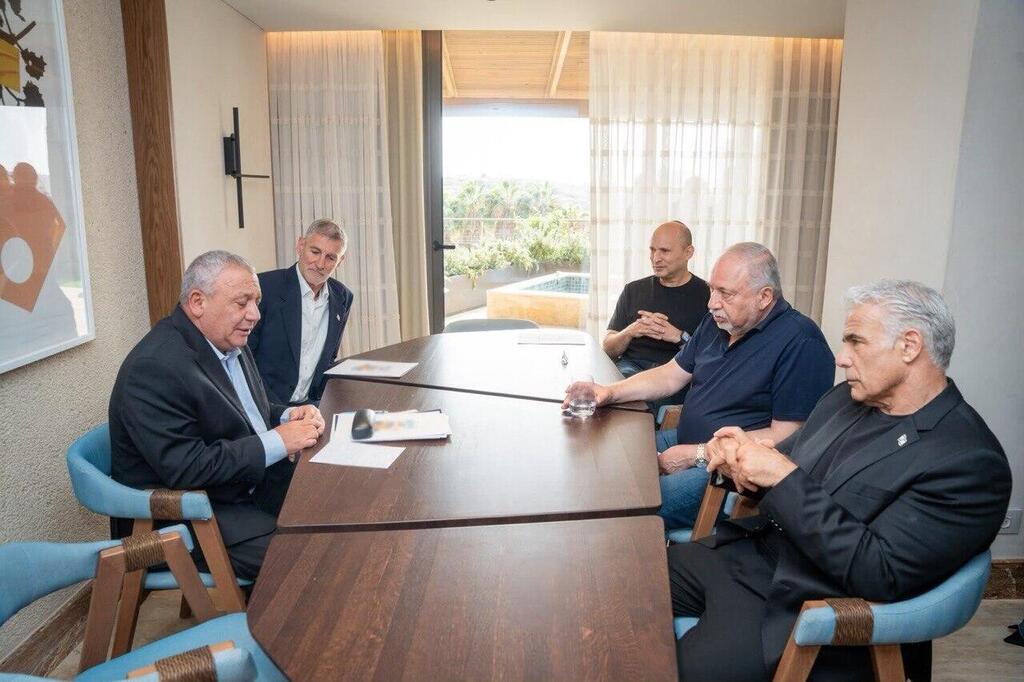
Anti-Netanyahu bloc leaders
"At the time, everyone dismissed the warning and rejected it outright," Liberman said. "Unfortunately, my assessment was fully realized."
He also said he had warned roughly 12 days before the latest election that the opposition's emphasis on becoming the largest party, along with talk of establishing a minority government, was damaging the anti-Netanyahu bloc.
"I recognized that the bloc was beginning to bleed seats," he said. "I tried to explain the danger and stop the bleeding, both in private conversations and through a public appeal, but to no avail."
Liberman claimed the bloc lost seven to eight parliamentary seats in the final 10 days of the campaign, including three to four seats that would otherwise have gone to Yisrael Beytenu.
Those voters, he claimed, returned to Netanyahu, allowing Likud to emerge as the largest party.
The figures were Liberman's own assessment of the campaign's final days.
"That is why I am warning once again: In politics, as in chess, you must think three or four moves ahead and not settle for just one," he said.
He cited the previous anti-Netanyahu government, led by Naftali Bennett and Yair Lapid, which lasted a little more than a year before collapsing in 2022.
"The government for change lasted a little more than a year, and what did we get afterward? Netanyahu with 64 seats for four years," Liberman said.
"A minority government would last much less time, and afterward we would get Netanyahu back with 70 seats for another four years. From there, the road to the destruction of the Third Temple would be short."
Rejecting power-sharing and Arab-backed government
Liberman also denied reports that he had discussed a rotating premiership arrangement, under which two political leaders would take turns serving as prime minister.
"Contrary to various reports, I have not spoken with anyone about a rotation," he said.
He argued that the arrangement, used in different forms since the political partnership between former prime ministers Yitzhak Shamir and Shimon Peres in the 1980s, was fundamentally flawed.
"I believe this mechanism, from the days of Shamir and Peres until today, is harmful, undermines the proper management of the country and must disappear," he said. "Whoever succeeds in forming a government should receive full authority for the entire term."
Liberman said the opposition must make every effort to assemble a coalition of at least 61 lawmakers, the minimum majority in the 120-seat Knesset, without relying on the Joint List or Ra'am.
He suggested that once such a government was established, it could potentially attract three or four additional lawmakers from Netanyahu's Likud party.
"There is a high probability that another three or four Likud members could be brought in after the government is formed," he said.
"This is the only strategy that reflects the interests of the State of Israel and the Jewish people. It is the way out of the political deadlock and toward establishing a stable government for the next four years."
Golan cites progress in coalition negotiations
Meanwhile, Democrats party leader Yair Golan expressed optimism Friday about efforts to form a government, saying negotiations were advancing despite significant obstacles.
"There is progress. There is willingness. And serious work is taking place every day to turn the election results into a government of change," Golan wrote on X. "There are difficulties, and I do not intend to hide them. But there is also real progress."
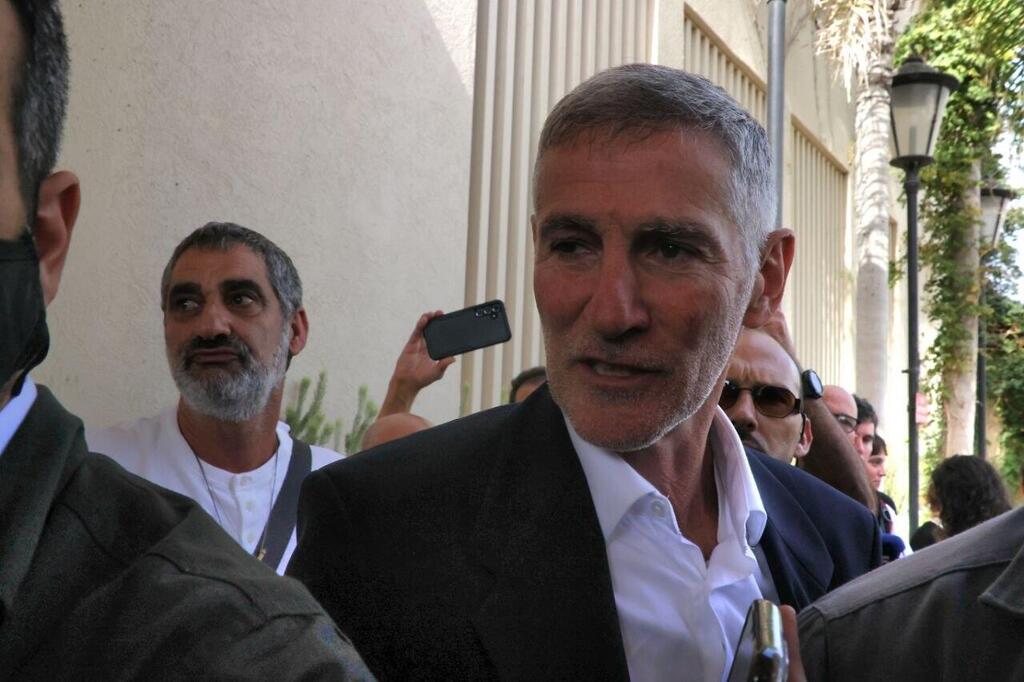
Yair Golan
(Photo: Moti Kimchi)
Golan said negotiating teams from the Democrats and Eisenkot's Yashar! party, which is leading the coalition talks, had met several times during the week.
"We are working seriously, responsibly and determinedly to advance the formation of a government as quickly as possible," he said.
He did not explicitly mention negotiations with an ultra-Orthodox party.
Golan said the opposition was also intensifying political and public pressure on Netanyahu and his allies while preparing to take control of the Knesset when the newly elected parliament convenes Tuesday, Nov. 10.
"We are making it clear on every platform that there is a majority for replacing the government, working with our partners in the bloc for change to accelerate the process and preparing to take control of the Knesset as early as Tuesday," he wrote.
He acknowledged the obstacles but said he believed the opposition parties understood the stakes.
"I know our partners, the responsibility they feel and their genuine desire to bring about change," Golan said.
"The public has given us a great opportunity. Now it is our responsibility to turn it into reality. It will not be simple. But it is possible, and I am determined to do whatever is necessary for us to succeed."
He added: "We have a majority. We have an opportunity. And we have a historic responsibility not to miss it."
Arab parties back parliamentary maneuver despite Liberman's opposition
The emerging coalition discussions come as the Joint List, one of the Arab political factions Liberman refuses to rely upon, has already taken steps to support the anti-Netanyahu bloc's parliamentary strategy.
After recommending to President Isaac Herzog that Eisenkot receive the mandate to form the next government, the Joint List formally requested Thursday that Knesset Speaker Amir Ohana convene a vote to replace him during the new parliament's first session.
The party asked for the vote to take place "at the first sitting of the 26th Knesset, which will be sworn in on Nov. 10."
Replacing Ohana, a senior Likud figure, would allow the anti-Netanyahu parties to gain greater control over parliamentary proceedings and potentially advance legislation before a new government is formed.