

While most Israelis encounter the country’s defense systems mainly through headlines about interceptions, strikes or covert operations, a massive technological revolution has been unfolding behind the scenes in recent years.
At a panel held during the ynet and Yedioth Ahronoth “2026: From Frontline to Growth” conference in cooperation with Sapir Academic College, three of the people actively shaping Israel’s future battlefield gathered: Israel Aerospace Industries (IAI) Executive VP for Technology and R&D Eytan Eshel, EVP Strategy Innovation & CTO at Elbit Systems Yehoshua "Shuki" Yehuda and Rafael Advanced Defense Systems' Head of R&D Department Elad Shitrit.
Gallery
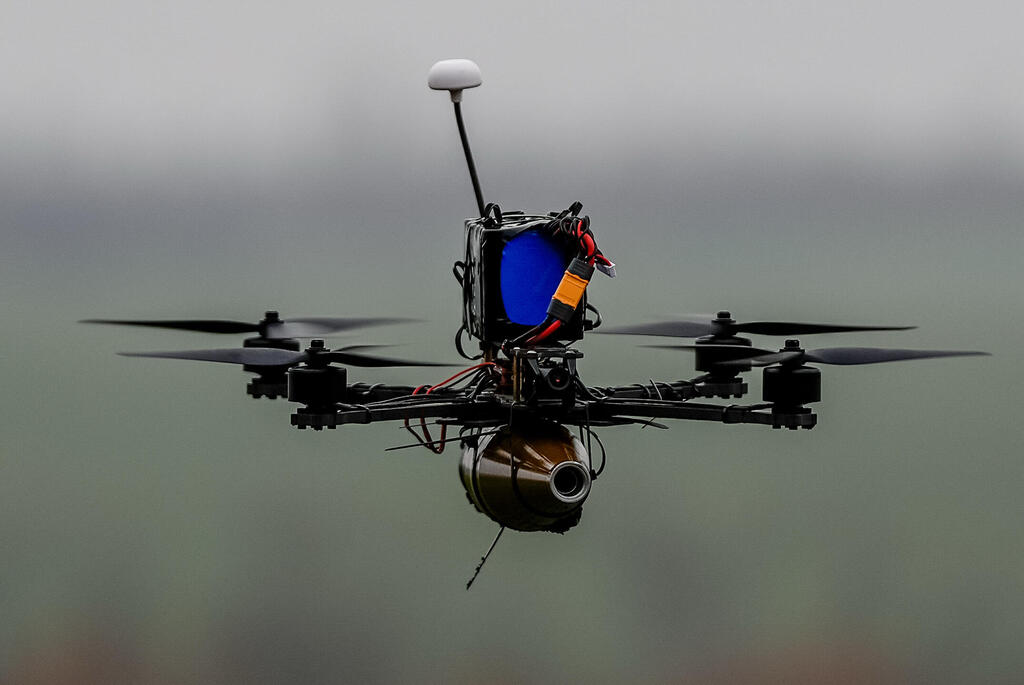
FPV drones are currently among the most painful challenges facing the defense establishment
(Photo: Julia Demaree Nikhinson\AP)
The three discussed the new threats troubling the defense establishment, chief among them first-person view (FPV) drones that have become one of the most problematic weapons on the modern battlefield, the penetration of artificial intelligence into every layer of combat, the space war they say is already taking place and the dramatic surge in global demand for Israeli defense technologies.
The most painful challenge of all
Shitrit acknowledged that FPV drones are currently among the most painful challenges facing the defense establishment.
“At Rafael, we established a department dedicated solely to the drone threat,” he said. According to him, the company is currently working on a series of rapid solutions, including a project called “Hunter Eye.”
“It’s essentially an attack drone that will attack drones,” he said. “I very much hope that in the coming months we will see a significant solution to this.”
Yehuda also stressed that developments are already underway but warned that this is a complex process that takes time. “The process of developing a weapon and dealing with it takes time, it takes time to mature it,” he said. According to him, Elbit is working with the Defense Ministry “with very, very significant intensity” on both offensive and defensive solutions against FPV drones.
Eshel explained why the threat is so difficult to solve. “These drones are hard to detect and identify, and as a result also difficult to intercept,” he said. According to him, the future response will rely on a combination of detection systems, radar, electro-optics and artificial intelligence.
“It’s not a magic solution, but almost every challenge Israel has faced — in the end the defense industries brought a solution.”
The discussion later turned to how the past two years of fighting have changed perceptions of the future battlefield. According to Shitrit, the recent campaign against Iran demonstrated that modern armies can no longer settle for systems that are merely “good enough.”
“I think the campaign against Iran made it clear that we need super-technological systems,” he said. According to him, Rafael has already integrated artificial intelligence deeply into its combat and intelligence systems.
“We achieved metrics orders of magnitude faster than what we knew before the AI era,” he said.
Yehuda explained that “what we are seeing today is that the battlefield is becoming increasingly digital.”
According to him, one of the most significant changes is the ability to connect intelligence, munitions, aircraft, ground forces and AI systems in real time.
He estimated that the future belongs to autonomous robots. "The number of robots will continue to grow,” he said. “Ground and aerial systems alike, UAVs and drones alike, will operate far more autonomously and in much larger numbers.”
The first space war
One of the most intriguing moments of the panel came when the discussion shifted to space warfare and military satellites, with Eshel claiming that Israel is effectively already in the midst of a “space war.”
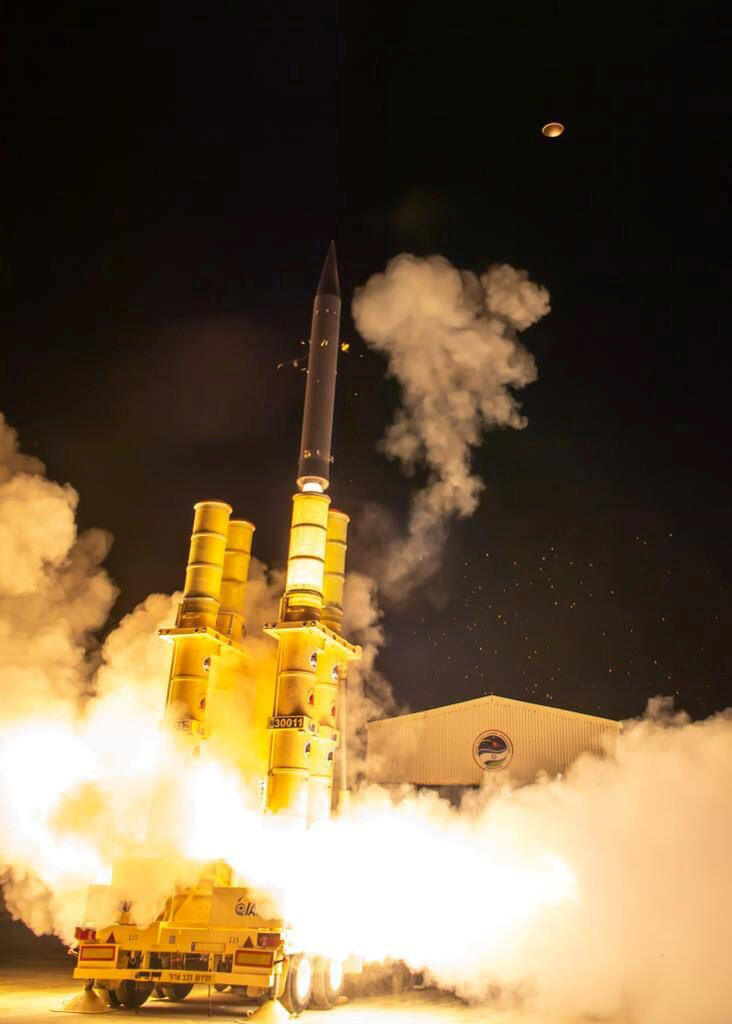
'It’s enough to mention Arrow 3, which intercepts a target outside the atmosphere, and you can already imagine what else can be achieved'
(Photo: Spokesperson and Public Relations Division at the Defense Ministry)
According to him, the new battlefield is no longer made up of isolated systems but of a vast network of interconnected systems, both Israeli and international.
Asked whether the IDF might one day establish a “Space Force,” Eshel suggested the technologies are already here.
“IAI controls communications and observation satellites,” he said. “It’s enough to mention Arrow 3, which intercepts a target outside the atmosphere, and you can already imagine what else can be achieved.”
Alongside the military aspects, the three also addressed the enormous economic boom experienced by Israel’s defense industry since the start of the war.
According to Shitrit, alongside the major companies, Israel’s defense-tech sector is now growing rapidly: “When there is competition, it sharpens thinking. Defense-tech will add some spice to this and the ability to accelerate our development processes.”
Yehuda stressed that demand for Israeli systems does not stem from solidarity with Israel but from genuine technological superiority. “We are a defense powerhouse,” he said. “Our solutions are the best in the world.”
According to him, Israel is now reaping the rewards of decades of investment in defense technology.
Eshel returned to the prestigious Paris Air Show held last year, where the Israeli pavilion was shut down.
“I told them that instead of seeing our models here, they would see them in action over Tehran,” he said. “And that’s exactly what happened.”