

The assassination of Ali Larijani, the secretary of Iran’s Supreme National Security Council and, according to some reports, the country’s de facto leader, has left Iran once again facing uncertainty over who will fill one of its most sensitive posts, with hard-line politician Saeed Jalili emerging in Arab media reports as a possible successor.
No official announcement naming a replacement has been issued, and it remains unclear whether Jalili will ultimately be appointed. Under Iranian law, President Masoud Pezeshkian would name Larijani’s successor, just as he appointed Larijani to the post in August 2025.
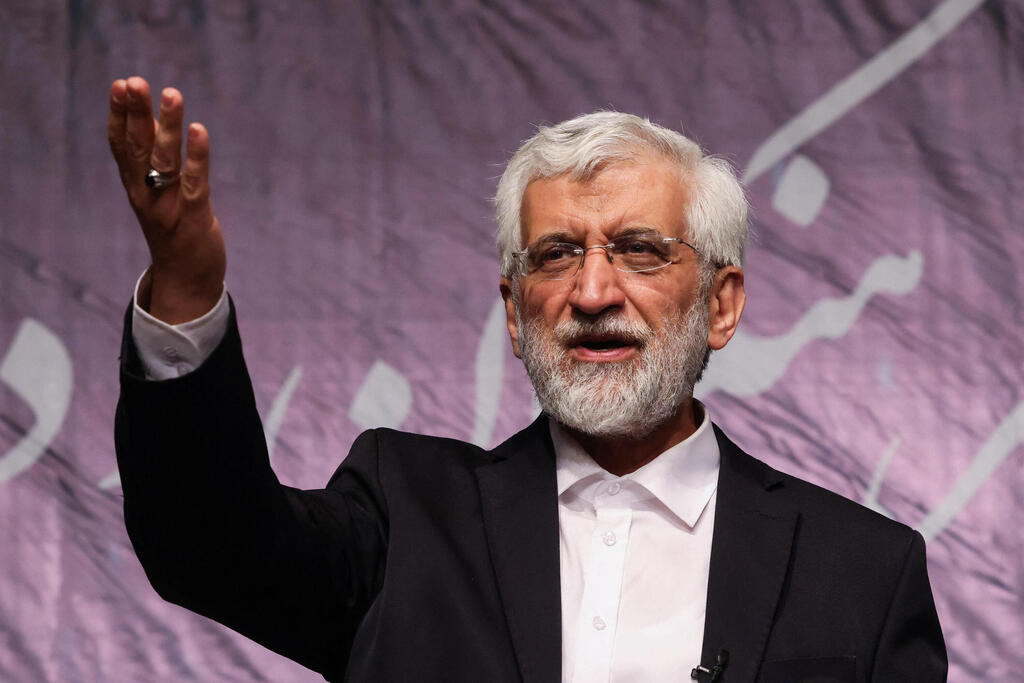
Still, Jalili’s name has quickly surfaced in regional media and online speculation, drawing attention to a veteran conservative figure long associated with some of the Islamic Republic’s most rigid positions on the West, nuclear negotiations and regional policy.
Jalili offered condolences overnight over the deaths of Larijani and Basij commander Gholamreza Soleimani, describing them as part of a continued sacrifice for the Islamic Revolution that would only strengthen Iran’s resolve.
“These steps will not only fail to free the enemy from the quagmire in which it has sunk, but will also accelerate the process of its defeat and humiliation,” Jalili said.
Jalili has served as the representative of the slain supreme leader, Ayatollah Ali Khamenei, on the Supreme National Security Council since 2008. According to a profile aired Tuesday by Al Jazeera, he is regarded not only as a conservative traditionalist but as one of the most hard-line figures in Iran’s political system. His name has long been linked to a more hostile vision toward the West and to opposition to political openness or compromise in negotiations.
He previously served as secretary of the Supreme National Security Council and played a prominent role in Iran’s nuclear talks with Western powers. He now serves on the Expediency Discernment Council, a body tasked with resolving disputes within the system and safeguarding the regime’s interests.
Jalili began his diplomatic career in 1989 when he joined Iran’s Foreign Ministry. He later headed the ministry’s inspection office until 1996, then served as a senior aide on U.S. affairs. From 2001 to 2005, he worked in the office of the supreme leader. In September 2007, he was appointed secretary of the Supreme National Security Council and became head of Iran’s nuclear negotiating team in talks with Western powers.
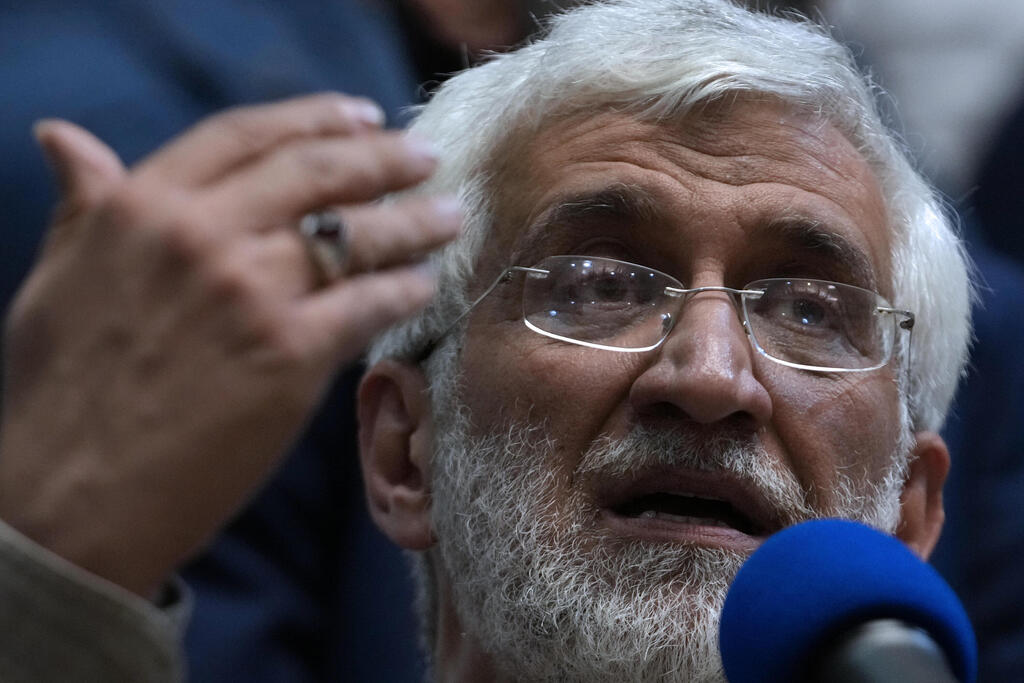
Saeed Jalili
(Photo: AP Photo/Vahid Salemi)
Khamenei formally appointed Jalili as his representative on the council on July 28, 2008. Five years later, after Hassan Rouhani was elected president, Jalili was replaced as council secretary by Ali Shamkhani, who was killed in the opening strike of the current war. Jalili has since remained in the Expediency Discernment Council.
He has also made repeated bids for the presidency. In 2013, he finished third in the election won by Rouhani. In 2021, he entered the race but withdrew before voting in favor of Ebrahim Raisi. In 2024, in the election held after Raisi’s death in a helicopter crash, Jalili lost to Pezeshkian.
Jalili is widely associated with uncompromising positions on both regional and international issues. He is seen as firmly opposed to political concessions on the nuclear program and on relations with the United States.
Although no formal decision has been announced, Arab media reports have suggested that the rise of more hard-line figures in Iran could further reduce the chances of diplomatic solutions in the near term, particularly as Iran remains at war with the United States and Israel.
If appointed, Jalili would represent a return to a familiar but more confrontational figure at the center of Iranian decision-making, one likely to reinforce the most hard-line currents within the Islamic Republic at a moment of acute military and political crisis.
'A dangerous man holding very extreme positions'
Danny Citrinowicz, a former head of the Iran branch in the Military Intelligence Directorate’s research division and now a research fellow in the Iran program at INSS, added: “It makes sense that Jalili would be appointed, because he has already served as secretary of the National Security Council and is the supreme leader’s representative there.
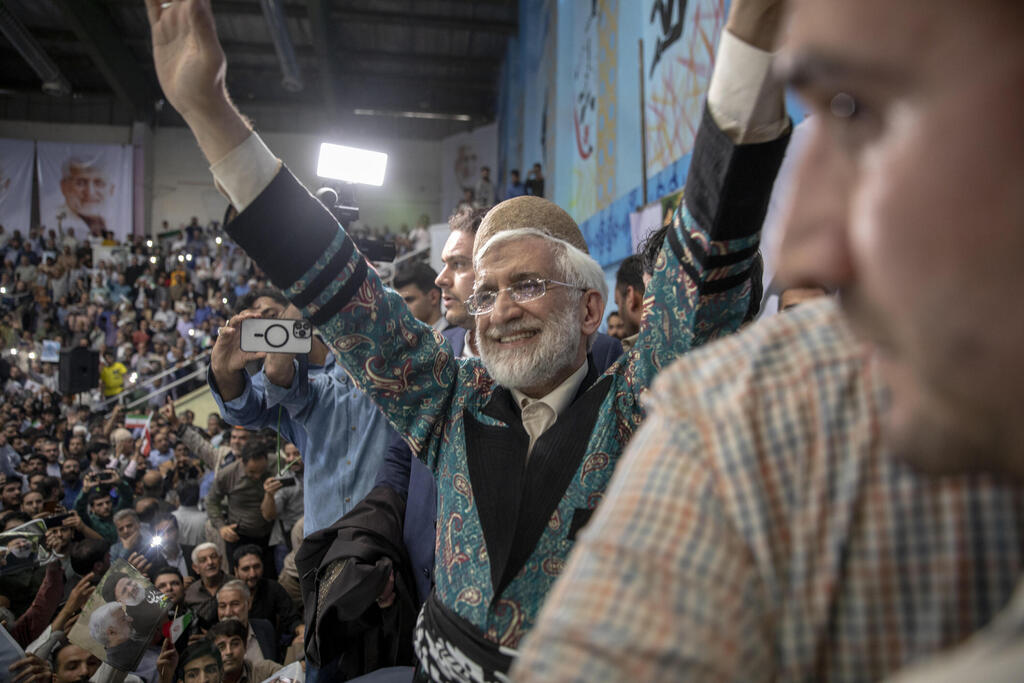
Saeed Jalili
(Photo: Majid Saeedi/Getty Images)
“He is ultra-conservative and holds very extreme positions. His appointment also makes sense because he would win the support of the Revolutionary Guards, since he is truly regarded as one of the biggest hawks in the regime itself. His appointment would not bode well in terms of the ability to reach any kind of agreement with this regime. That is the problem from the outset with what is happening right now. True, the regime is being weakened, but in the end all those figures like Larijani, with whom it was still possible to conduct some kind of moves, are being removed. With Jalili, less so.”
“This is a dangerous man,” Citrinowicz said. “He lost to Pezeshkian in the last presidential election, and the fact that he received 13 million votes in the second round only shows how strong the regime’s ideological base is in Iran. That is no small number, when he is offering Iran a very conservative, ideological and religious horizon. If he is chosen, it will be another step toward the regime’s radicalization.”
According to Citrinowicz, it is clear that the Iranian system is becoming significantly more extreme, and the question is what the objective is. If the regime does in fact fall, then it will not matter, because its people will no longer remain in power. But if the regime survives, he said, this would be a highly troubling development for Israel, the Iranian people and the Gulf states.
“These are very extreme people. It will be very difficult to reach any kind of arrangement with them. The Iranian system is becoming much more extreme. That reduces the likelihood of ending the war. It creates a situation in which either the regime collapses or the war continues for a very long time,” he said.