

Israel is examining the possibility of establishing a forward base in Somaliland that would allow it to strike Yemen’s Houthi rebels from a far closer point than Israeli territory, Bloomberg reported on Wednesday, citing officials familiar with the matter.
Bloomberg said an Israeli team of security officials visited Somaliland in June and surveyed parts of the coastline for a possible site for the base. Over several days, the team reviewed locations along the coast of the breakaway territory, which lies across the Gulf of Aden from Yemen and at its closest point is roughly 260 kilometers, or about 160 miles, away, according to the report.
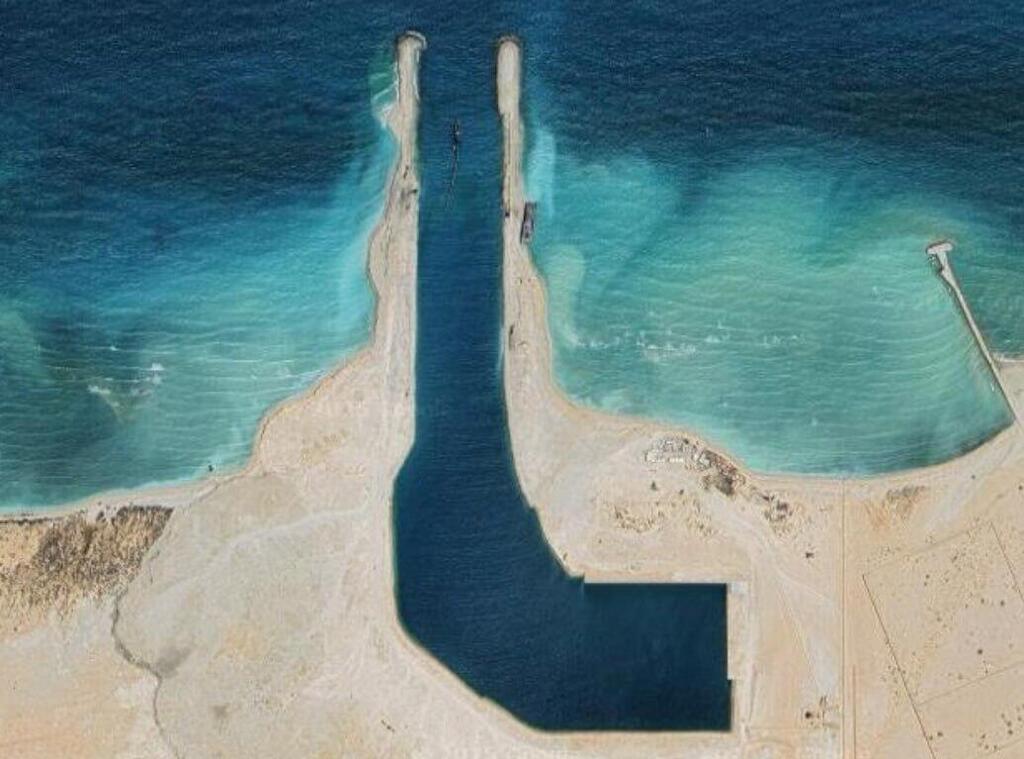
One of the locations under consideration is an elevated area about 100 kilometers, or 60 miles, west of the port city of Berbera, Bloomberg reported. The United Arab Emirates, an Israeli ally, operates an air base and port facilities in the Berbera area.
The proposed outpost would give Israel a position much closer to Houthi-controlled parts of Yemen and could eliminate the need for far more complex flights of roughly 2,000 kilometers, or 1,240 miles, with aerial refueling, according to the report.
Khadar Hussein Abdi, Somaliland’s minister of the presidency, told Bloomberg that Israel and Somaliland were preparing for strategic security cooperation that could include a base, possibly a covert one. “In terms of security, we will have a strategic relationship and that encompasses a lot of things,” he told the news outlet.
Two other Somaliland officials cited by Bloomberg said the territory would allow Israel to collect intelligence and carry out operations against the Houthis.
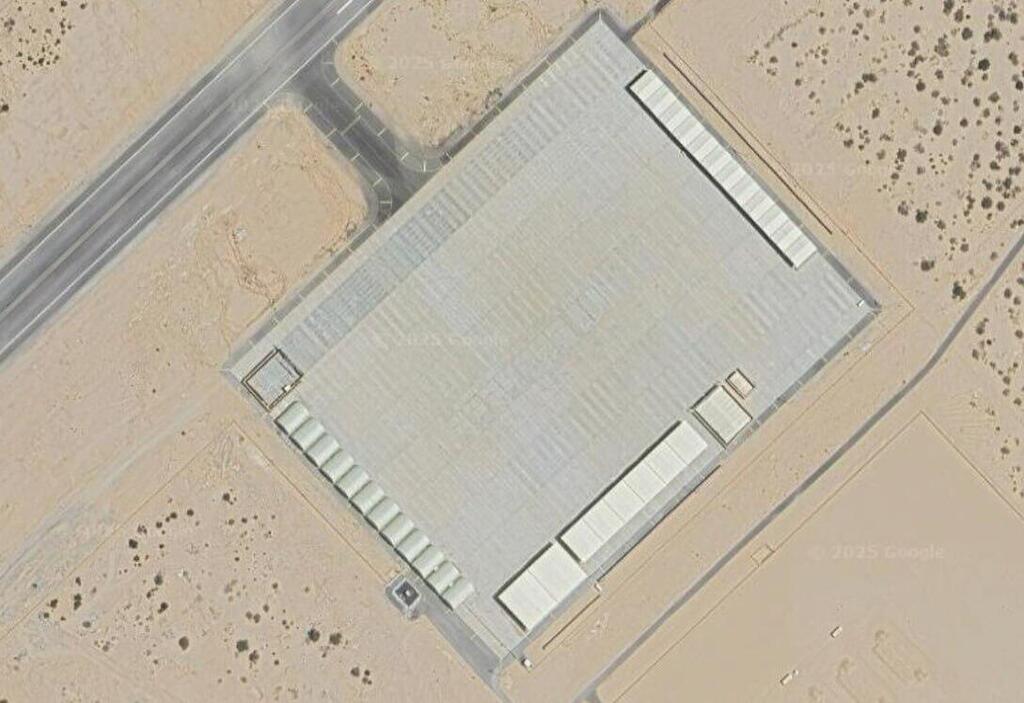
UAE base in Berbera, Somaliland
(Photo: Google Maps)
The discussions come as Israel seeks to ensure a foothold near the Gulf of Aden amid its confrontation with Iran. The Houthis, an Iran-backed group based in Yemen, have threatened Israel repeatedly and have attacked shipping and launched missiles and drones during the broader regional conflict.
“The Israeli relationship with Somaliland matters in large part because the Houthis are expanding along the Horn of Africa,” Arye Heistein, a research fellow at the Jerusalem Institute for Strategy and Security, told Bloomberg. He said that if the ongoing campaign by the United States and Israel weakens Iran’s ability to support the Houthis, the region could become even more strategically important for them.
Israel formally recognized Somaliland as an independent and sovereign state on Dec. 26, becoming the first country to do so. Prime Minister Benjamin Netanyahu said at the time that Israel would seek immediate cooperation with Somaliland in agriculture, health, technology and the economy. Somaliland President Abdirahman Mohamed Abdullahi said the territory would join the Abraham Accords.
Israel’s recognition drew condemnation from Somalia, which considers Somaliland part of its sovereign territory, as well as criticism from the African Union and several regional governments. Somalia called the move unlawful and said it would pursue diplomatic, political and legal measures to defend its territorial integrity.
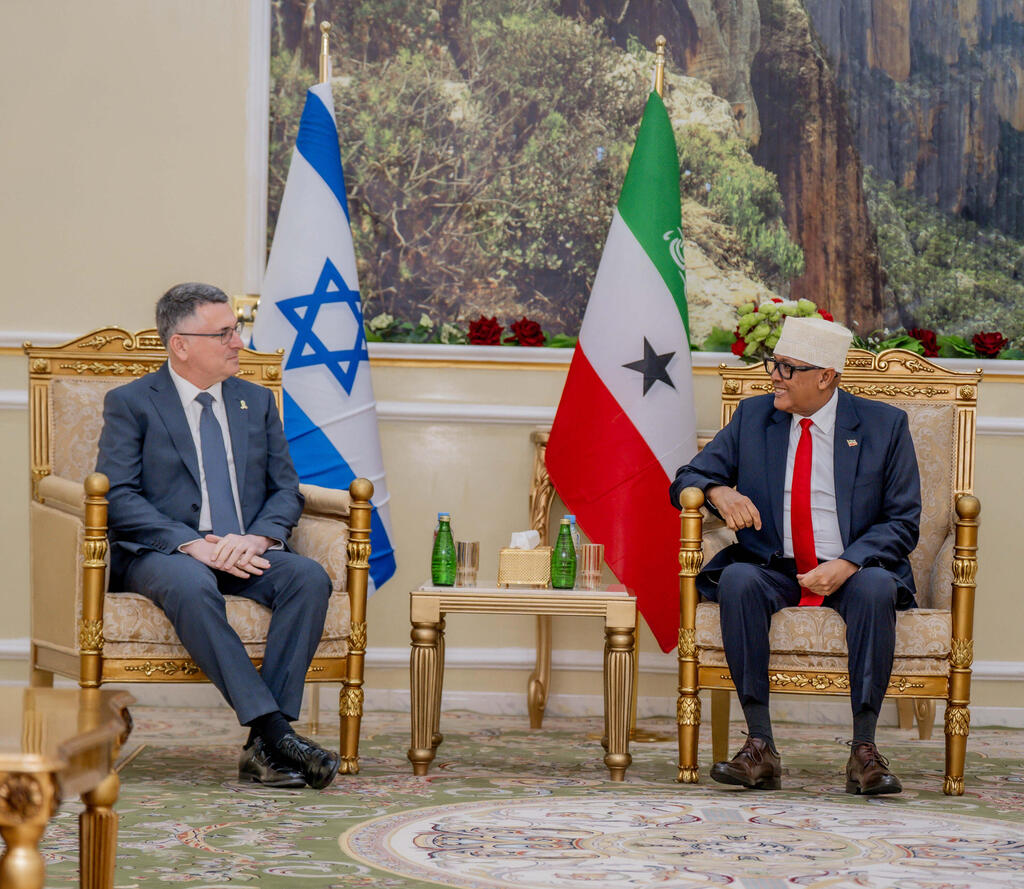
Foreign Minister Gideon Sa'ar meets with Somaliland President Abdirahman Mohamed Abdullahi in Hargeisa
(Photo: AFP PHOTO / Somaliland Presidential Office / HANDOUT)
Foreign Minister Gideon Sa'ar visited Somaliland on Jan. 6, 10 days after recognition, in the first official trip by a senior Israeli official. During the visit, he met President Abdullahi in Hargeisa and said Israel would move quickly to deepen ties. Sa'ar said Israel would soon open an embassy and appoint an ambassador. He led a high-level delegation to discuss ways to strengthen bilateral relations.
Bloomberg reported that more than a dozen senior Somaliland military officers later traveled to Israel for training as part of efforts to deepen security ties, and that Israel had rented fortified rooms on an upper floor of a hotel in Hargeisa, the Somaliland capital. Those details could not be independently confirmed.
Somaliland broke away from Somalia in 1991 after the collapse of the Somali state and has since operated as a de facto independent territory with its own government, currency and security forces. Despite its relative stability, it had not been formally recognized by any country before Israel’s move. The territory sits along a major shipping route across from Yemen and is viewed as strategically important by regional powers, including Ethiopia and the UAE.