


Nearly six months have passed since the collapse of Bashar Assad’s regime in Syria, after which IDF forces began entering Syrian territory. The new security buffer zone Israel has established along the border in the Golan Heights is beginning to take shape, but the atmosphere remains tense, and the situation is evolving faster than history is accustomed to.
Take Tel Kodna, for example—once a Syrian outpost, it has overnight become a forward Israeli control post. “We’ve gone back to the days of border outposts, like in South Lebanon,” says Col. Benny Kata, commander of the 474th Golan Brigade. “This is an outpost. It operates like one. It’s a combat zone, with ready machine-gun positions, fragmentation grenades and missiles.”
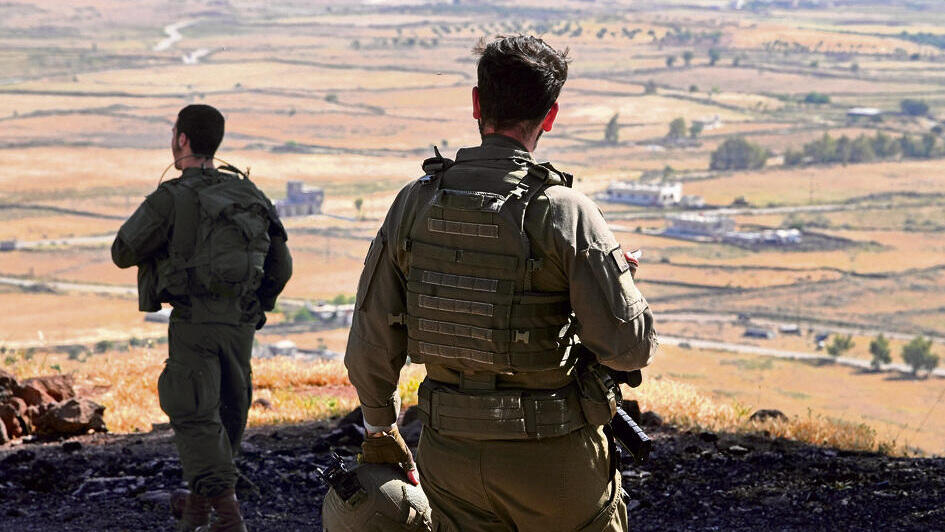
There’s no small military canteen here, no vending machines. As a deep combat post, civilian suppliers and services don’t come near it. Entry and exit are conducted only via secured convoys, much like the final years of Israel’s presence in southern Lebanon. Touring the new line of positions beyond the border, where the IDF now operates freely, Kata says: “If I’m physically sitting here on the ground, I’m protecting the Golan much better—and that’s our mission.”
Lessons from Lebanon, eyes on Syria
The fears and memories of the security zone in southern Lebanon, with its high costs and fierce public debate, still linger. Kata doesn’t ignore the comparison, but tries to extract relevant lessons. “Even in Lebanon, it wasn’t intense combat every day in the outposts,” he says. On the surface, the operations may seem similar, but today’s technology, intelligence, and defense capabilities are worlds apart.
“We have fighters here who served in the outposts of the Lebanese buffer zone and told us about the protocols and operations there so we could learn from them,” Kata says. “When more senior commanders came to visit, I heard more than one of them say, ‘Wow, this feels just like going up to Gedalyula [a well-known outpost in Lebanon].’ In the end, our goal today is the same as it was back then—to defend the territory and prevent infiltration. Back then, it was Kiryat Shmona and its surroundings; today, it’s the Golan Heights.”
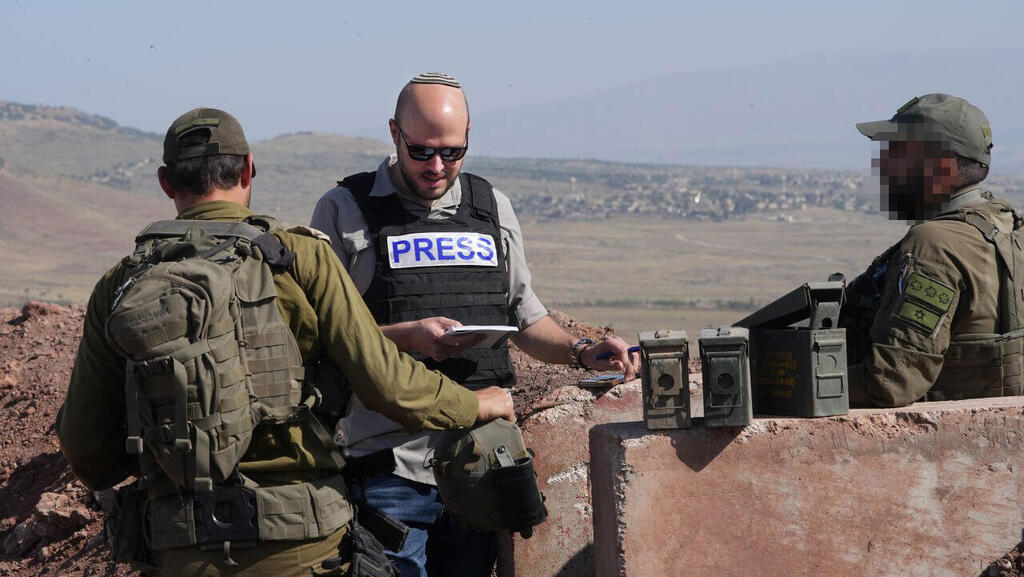
Ynet's Yair Kraus with IDF troops
(Photo: Efi Shrir)
But in Kata’s view, the key difference between the situation in Syria and what was in Lebanon lies not just in technology. “This reality is different because we chose the places where we operate. We didn’t overreach—we went into specific points that provide real defense for the Golan residents. Every decision we make is guided by one principle: what serves the mission of defense. If something doesn’t have real value, we don’t go chasing adventures.”
Reservists called up, morale remains high
Recently, the Alexanderoni Reserve Brigade replaced the regular troops of the Paratroopers Brigade at Tel Kodna and other outposts, after the latter redeployed to Gaza. Maj. (res.) D., commander of the Kodna Company, has logged around 350 reserve duty days since October 7. He says morale and commitment remain strong despite the strain.
“The most important thing I want to say is how heroic and brave the women and families we leave behind are,” he says. “Despite the challenges, the enlistment rate in our brigade is extremely high. We were supposed to start our 70-day reserve rotation in June, but it was brought forward a month, and they kept the original end date. So we’re talking about roughly 110 days. Even so, our company had a 98% turnout. Nearly everyone showed up. Everyone understands how important it is to be here, to free up regular forces, and to take part in this mission so we can end it.”
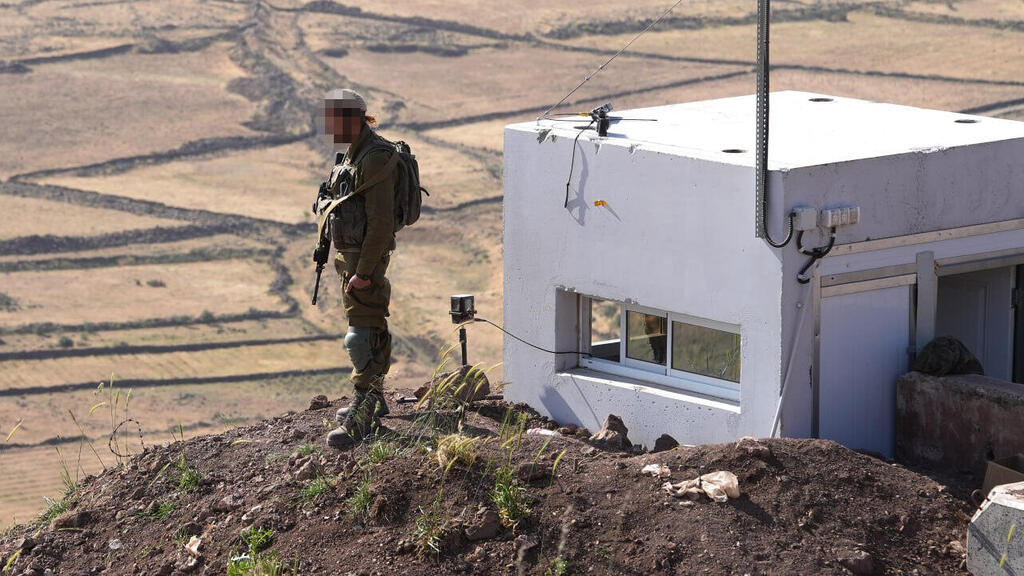
(Photo: Efi Shrir)
The atmosphere across the chain of outposts reflects constant vigilance and efforts to understand the rapidly changing environment. For the reservists, the challenge is not just operational—it’s also maintaining cohesion and professionalism.
“We’re reservists; we understand the complexities of life,” says Maj. D. “I’ve been company commander here for five years and know these fighters inside and out. When someone has personal challenges, we handle it. This battalion now operates like a regular unit in terms of gear, capabilities, skill, and spirit. The longer these fighters serve together, the stronger the bond, and the deeper their commitment to one another.”
The locals and the limits of responsibility
One of the most sensitive challenges is interaction with local Syrian civilians. “The population here is a major factor in our defensive effort,” explains Kata. “They’ve lived under tyranny and dictatorship their whole lives.”
He recalls the brigade’s first entry into a village: “We arrived on December 9 and told the residents, ‘We’re here—hand over your weapons.’ We left with two truckloads. There isn’t a house here without a Kalashnikov.”
Kata emphasizes a deliberate approach, avoiding dependency. “That kind of dependency could create responsibility, and I don’t want to be responsible for the population. They are Syrian citizens. I’m here to defend Israeli citizens.” Aid to local Syrians is provided only in ways that align with Israel’s security interests.
Get the Ynetnews app on your smartphone: Google Play: https://bit.ly/4eJ37pE | Apple App Store: https://bit.ly/3ZL7iNv
To Kata, the Syrian sector is strategic and critical, and holding key terrain on the Syrian side of the Golan is essential for protecting Israel’s mountainous terrain. “This area, in my eyes, is the most strategically important for defending the Golan. The number of changes here on a daily basis is staggering.”
This includes monitoring Syrian social media as part of IDF intelligence practices in 2025. “Sometimes when I want to assess how our forces are performing, I check Syrian networks. It’s vital we stay connected to that reality,” he says. “Even when I was in the Kfir Brigade, if I wanted to know whether troops were mishandling their weapons after signing them out for the first time, I’d see it on TikTok. You have to stay in tune with these things. I don’t post anything myself, but I’m there, watching what matters. And just as we monitor them, we have to be aware of what they can pick up from us—operational security is critical. We assume they see everything.”
Despite the relative quiet, the threats are ever-present. “The Iranian axis and the route to Lebanon have nearly ground to a halt—but we know this situation can flip. That Syrian guy living down there in Kodna—someone hostile could give him 50 bucks to photograph something or plant something against us. The poverty and desperation here make that all too possible.”
Faced with these realities, Kata tries to instill a clear operational ethos. “I tell all my commanders: before every operation or activity, ask yourself one simple question—does this serve the mission of defense? If yes, it’s relevant. Go for it.”
On the shoulders of Col. Kata, Maj. D., the reservists, and all the soldiers on the Syrian front rests the heavy responsibility of carrying out this complex policy, hoping that this time, the “Syrian mud” doesn’t swallow Israel the way the “Lebanese mud” once did.