

Iran on Monday rejected reports in U.S. media that talks with the United States would resume Tuesday in Doha in an effort to resolve disputes over the Strait of Hormuz, even as a source familiar with the discussions told Reuters that Iranian and U.S. technical teams were expected to meet in the Qatari capital in the coming days.
Iranian Deputy Foreign Minister Kazem Gharibabadi told Iran’s Tasnim news agency that “technical meetings of the working groups are not planned for this week.” He said meetings would take place only when Iran’s conditions in the agreement were met, adding that consultations were continuing through mediating countries.
US strikes in Iran
(Video: CENTCOM)


A source familiar with the discussions told Reuters that mediators had established communication channels to de-escalate any incidents and that technical talks were set to continue. A senior Iranian source said a meeting would take place in Doha on Tuesday, but unlike previous technical talks between Tehran and Washington in Switzerland, the focus would be on managing the Strait of Hormuz and reducing tensions.
U.S. President Donald Trump also wrote on Truth Social that, “at Iran’s request, talks will resume tomorrow in Doha.” White House press secretary Karoline Leavitt told Fox News that U.S. envoys Steve Witkoff and Jared Kushner would fly to Doha this week for high-level meetings alongside the technical talks. “As far as we’re concerned, we’re holding up our end of the ceasefire. Violence will be met with violence,” Leavitt said.
The U.S. and Iran signed a 14-point memorandum of understanding on June 17 aimed at ending four months of conflict. Under the interim accord, both sides agreed to cease hostilities and reopen the Strait of Hormuz, through which about a fifth of the world’s oil and liquefied natural gas typically passes. The closure of the waterway pushed oil prices above $100 a barrel, fueling inflation concerns and creating a political problem for Trump ahead of the midterm elections. Trump touted falling oil and gas prices in a series of other early morning posts Monday.
The accord is meant to pave the way for 60 days of more in-depth talks on thornier issues, including Iran’s nuclear program, though both sides have given conflicting accounts of what was agreed.
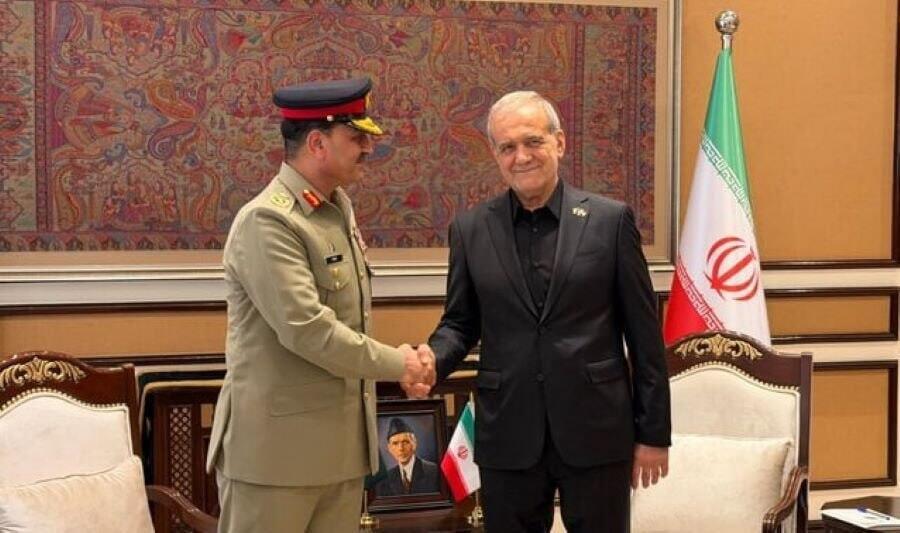
Iranian President Masoud Pezeshkian said Monday that $6 billion out of $12 billion in Iranian assets frozen in Qatar would be released and returned to Iran, Iranian state media reported. He described the memorandum, which includes waivers for sanctions on Iran’s oil and petrochemical sectors, as “a great victory for the Iranian people.” The senior Iranian source told Reuters that Doha and Tehran were in the final stages of agreeing on technical details for the release of the first $6 billion, which would be issued in two tranches.
Oil prices rose Monday, with Brent crude futures up almost 1%, after the weekend violence underscored the fragility of the U.S.-Iran accord.
A return to talks would follow several days of strikes and counterstrikes since an Iranian projectile hit a cargo vessel in the Strait of Hormuz on Thursday, with Washington and Tehran each accusing the other of breaking the interim ceasefire. Iran, which has sought to assert authority over shipping in the strait, launched missiles and drones at U.S. military sites in Kuwait and Bahrain early Sunday, shortly after Trump issued his latest threat against Tehran.
“There may come a point when we are no longer able to be reasonable, and will be forced to militarily complete the job that we very successfully started,” Trump wrote on social media. “If that happens, the Islamic Republic of Iran will no longer exist!”
About an hour after Trump’s post, Kuwait’s army said its air defenses were responding to missile and drone attacks, while Bahrain said sirens had sounded there. Iran’s Revolutionary Guard Corps said U.S. strikes had violated the ceasefire and warned that American bases in the region would “experience hell in the coming days.”
At the center of the escalation is a dispute over how to interpret the U.S.-Iran memorandum of understanding on the strait. According to previous reports, Iranian Foreign Minister Abbas Araghchi said that under the understandings with Trump, responsibility for managing traffic in the Strait of Hormuz belongs exclusively to Tehran. “No other country or body has responsibility or authority in this matter,” he said, according to Iranian state media.
The United States rejects Iran’s interpretation, arguing that the agreement does not grant Tehran control over the strait and that international shipping must continue without disruption. The agreement places responsibility on Iran to help ensure the safe reopening of the waterway and passage of commercial vessels, while also requiring the removal of military obstacles and the immediate resumption of maritime traffic.
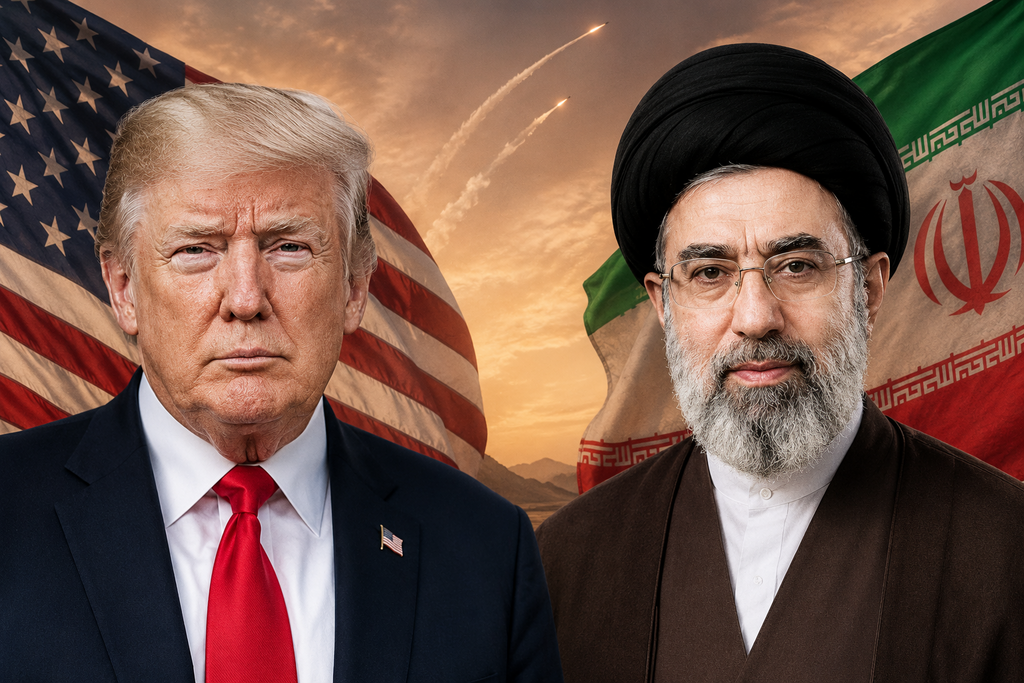
In practice, those clauses have become the center of the confrontation. Iran attacked a ship that tried to pass near Oman’s coast in an apparent attempt to avoid the route Tehran is seeking to impose closer to Iranian waters, while the United States responded with strikes on Iranian communications sites, drones and missile positions along the strait’s coast.
CENTCOM said U.S. strikes targeted surveillance infrastructure, communications systems, air defense sites, drone facilities and mine-laying capabilities. Iran rejected the U.S. allegations, accused Washington of violating the understandings between the sides and retaliated with attacks on American bases in Bahrain and Kuwait.
First published: 14:23, 06.29.26