

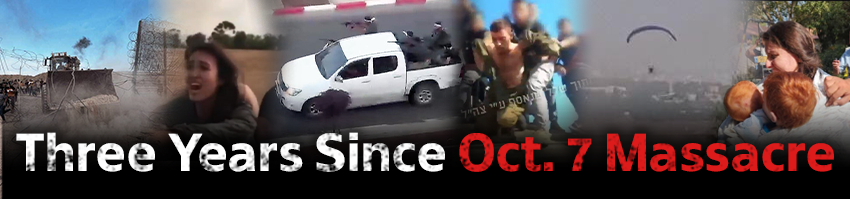

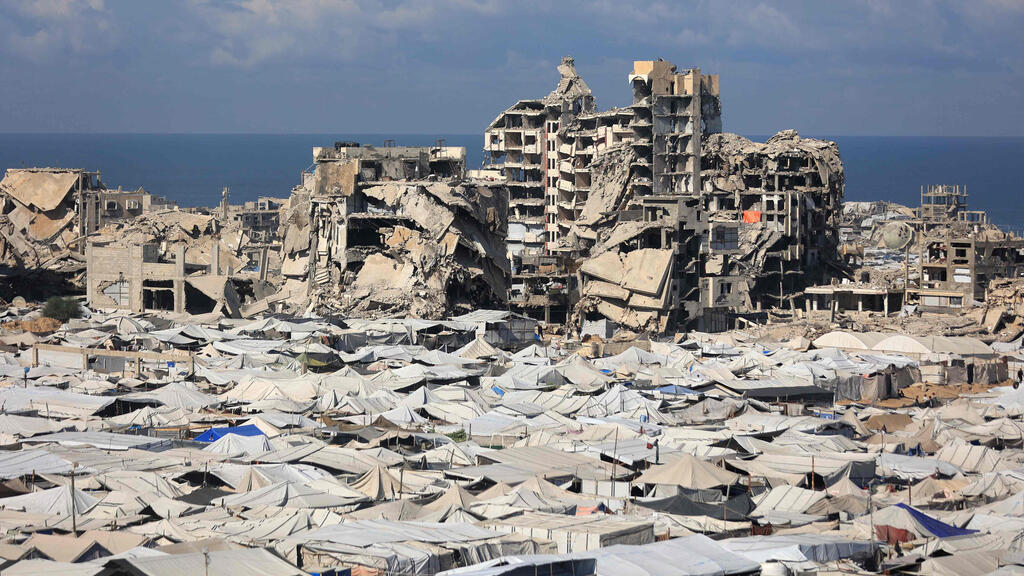
Three years after October 7, the Gaza Strip no longer looks as it did on the eve of Hamas’ invasion of southern Israel. From northern Gaza to Rafah, entire neighborhoods have been transformed and hundreds of thousands of structures have been damaged. Gaza in 2026 is fundamentally different from Gaza before the war.
A United Nations analysis based on satellite imagery estimated that about 82% of buildings in the Strip were damaged — more than 200,000 structures. According to the assessment, about two-thirds of the damaged buildings were destroyed. The number of housing units damaged is also estimated in the hundreds of thousands.
Gaza City, three years after October 7
(Video: Reuters)


But the destruction is only part of the story. Three years after the October 7 attack, the larger question is what has happened to the attitudes of Gaza residents themselves, and especially to their views of Hamas.
Throughout the war, some Gaza residents tried to protest against Hamas and challenge its rule, though not always successfully. Last June, hundreds of Palestinians demonstrated against Hamas at several locations across the Strip, with signs bearing slogans such as “With God’s help, Hamas out.” But those movements were either suppressed or failed to gain momentum in the first place.
The anti-Hamas trend also was reflected in polling. In the latest survey by the Palestinian Center for Policy and Survey Research, conducted in August 2026, support for Hamas had declined. Support for the organization in Gaza stood at 33%, while support among Palestinians overall was 24%. The center described the trend as part of a broader “decline of Hamas” in Palestinian politics.
Satisfaction with Hamas’ performance also eroded. According to the survey, only 38% of Gaza residents said they were satisfied with the organization’s performance, compared with 51% 10 months earlier.
At the same time, declining support for Hamas does not mean Gazans are ready to accept its dismantling. Sixty-two percent of Gaza residents oppose Hamas disarming before a complete Israeli withdrawal, while 72% of Palestinians overall believe that if Hamas disarms the war will resume and Israel will not fully withdraw.
In other words, Hamas is losing support but still retains significant political strength and the ability to influence public opinion.
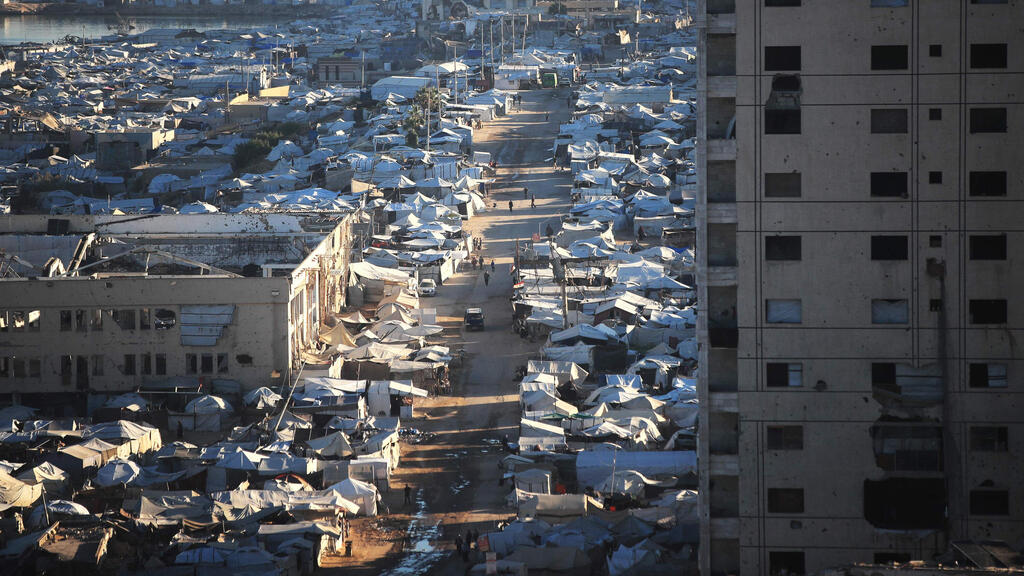
Displaced Gazans still live in tents
(Photo: Omar Al-Qattaa / AFP)

(Photo: Omar Al-Qattaa / AFP)
Alina, a Gaza resident, wrote that she feels “personal hostility” toward anyone who still celebrates October 7. For her, she said, this is not a political argument about resistance or Israel, but about a day after which “my family became numbers, and my city became rubble.”
“How do you expect me to respect your celebration of the day after which my family became numbers, my city became rubble and people’s homes became graves?” she wrote.
She later directly criticized those who turn the attack into a celebratory event: “Don’t tell me you love Gaza more than I do and then celebrate the day when the gates of hell were opened on it.”
Egyptian writer Abdullah Ibrahim called October 7 “the day the madmen opened the way for the Zionists to destroy all of Gaza, kill more than 70,000 martyrs and 200,000 wounded, and displace all of Gaza’s residents.”
He wrote: “May God curse whoever planned it, took part in it and supported it.”
IDF deepens control, Hamas boasts of a 'glorious day'
Against voices such as Alina’s and Ibrahim’s, many others continue to support Hamas’ surprise attack, which included rape, murder and looting.
Faiz Abu Shammala, a former mayor of Khan Younis who is identified with Hamas, wrote that October 7 was “a day of battle and heroism” for Muslims, Arabs and Palestinians.
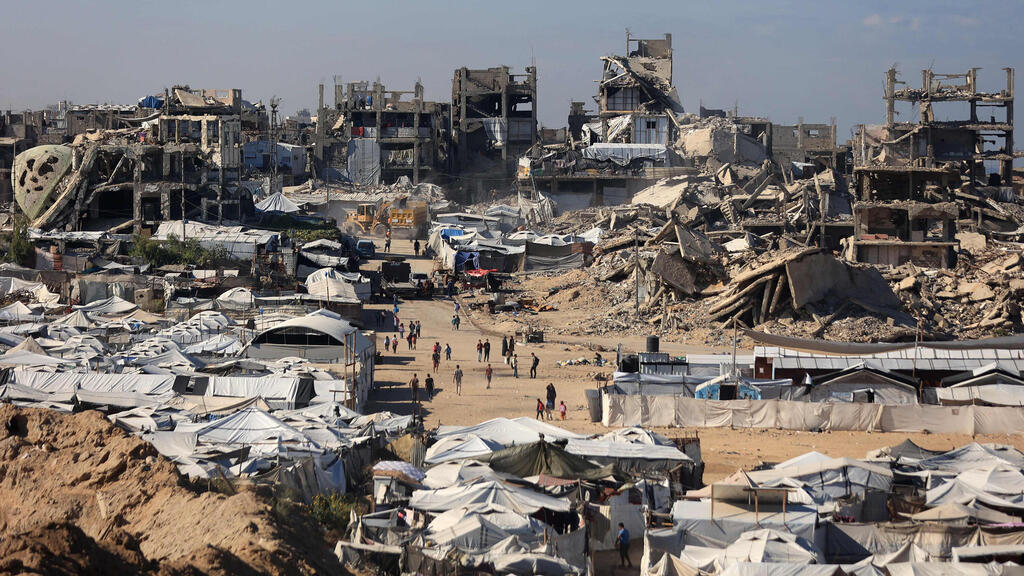
The IDF controls about 64% of Gaza
(Photo: Omar Al-Qattaa / AFP)
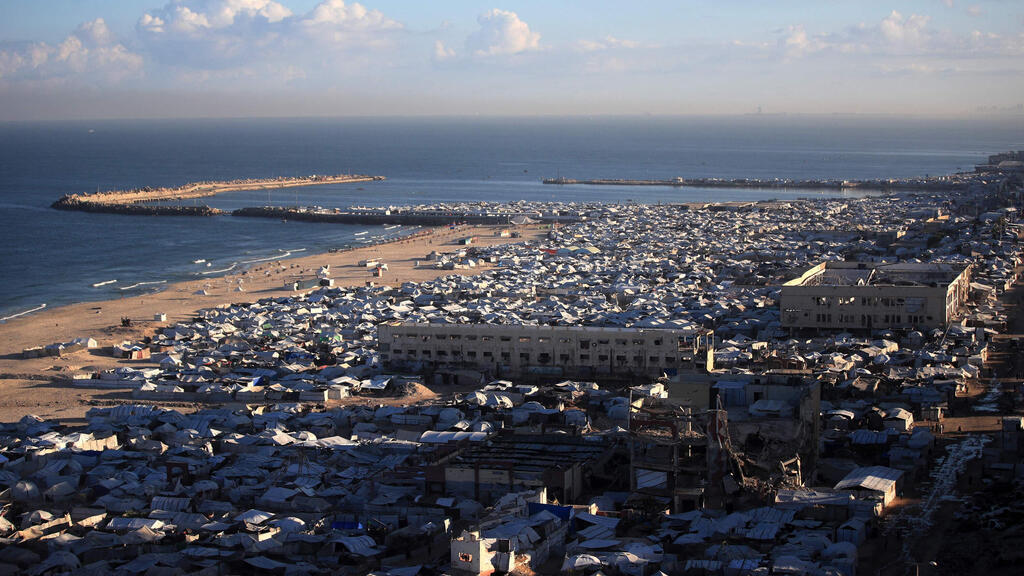
Gaza, three years after October 7
(Photo: Omar Al-Qattaa / AFP)
Gaza influencer Aboud Battah wrote that October 7 “will remain the most beautiful memory,” despite “the pain and loss that came afterward.”
Palestinian writer and commentator Yassin Izz al-Din wrote that October 7 was a day when “God humiliated the tyrants and criminals” and marked “the beginning of the end of their arrogance.”
Hamas itself continues to present the attack as a historic turning point and a “glorious day,” while arguing that armed resistance is a legitimate right.
And what happened to the Gaza Strip itself? Satellite images of the territory, including those available to Google Maps users, show neighborhoods that were densely built before the war and have since become vast areas of destruction. Schools and universities were damaged, residential buildings were erased, and new roads, earthworks, trenches and deployment points appeared in various parts of the Strip.
The IDF says it currently controls about 64% of Gaza and has established roughly 40 new military outposts there.
On the humanitarian situation, an Israeli security official said conditions in the Strip today are “stable and much better” than they were a year ago. According to data presented by COGAT, more than 2.2 million tons of food have entered Gaza since the ceasefire in October 2025. About 70%-80% of aid trucks carry food, and Israeli officials say food prices in the Strip have fallen by around 83%.
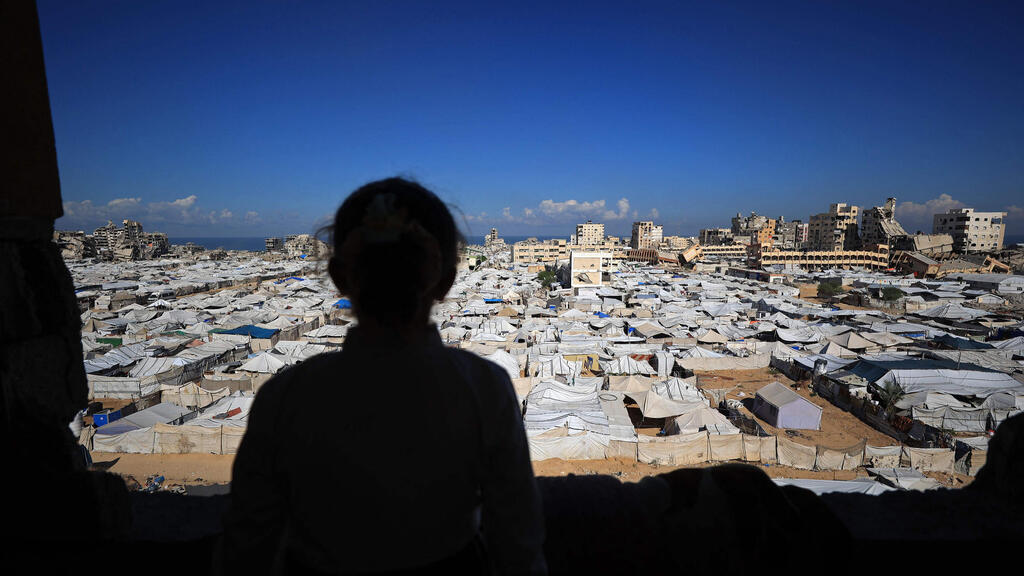
an Israeli security official said conditions in the Strip today are 'stable and much better' than they were a year ago
(Photo: Omar Al-Qattaa / AFP)
According to Israeli figures, 41 bakeries operated by international organizations are currently functioning in Gaza, producing more than 3 million pita breads a day, alongside dozens of local bakeries.
Israel also cites significant figures in the medical field. More than 24,000 tons of medical equipment have entered the Strip since the ceasefire, according to COGAT. Israel says permanent hospitals and field hospitals are operating in Gaza, and that tens of thousands of Gazans have been evacuated from the Strip for treatment or onward travel to third countries.
On water, Israeli data indicate that more than 70,000 cubic meters are supplied to Gaza each day through four water lines, desalination facilities, wells and water trucks. According to COGAT, that amounts to more than 60 liters per person per day.
At the same time, Israeli security officials claim Hamas is exploiting aid mechanisms to preserve its rule by taxing merchants, seizing goods, stockpiling aid and influencing distribution systems.