

The tightly packed houses along the slope of a Shiite village — or what remains of them — the mulberry trees already bearing fruit and the brown earth turned to mud evoke memories from decades ago. This is not the outpost system of the past, and IDF soldiers are barely visible, sheltering to avoid exposure to Hezbollah surveillance and FPV drones.
“Are you creating a new security zone here?” I ask a senior officer in the western sector, invoking Israel’s security zone in southern Lebanon in the 1980s and 1990s.
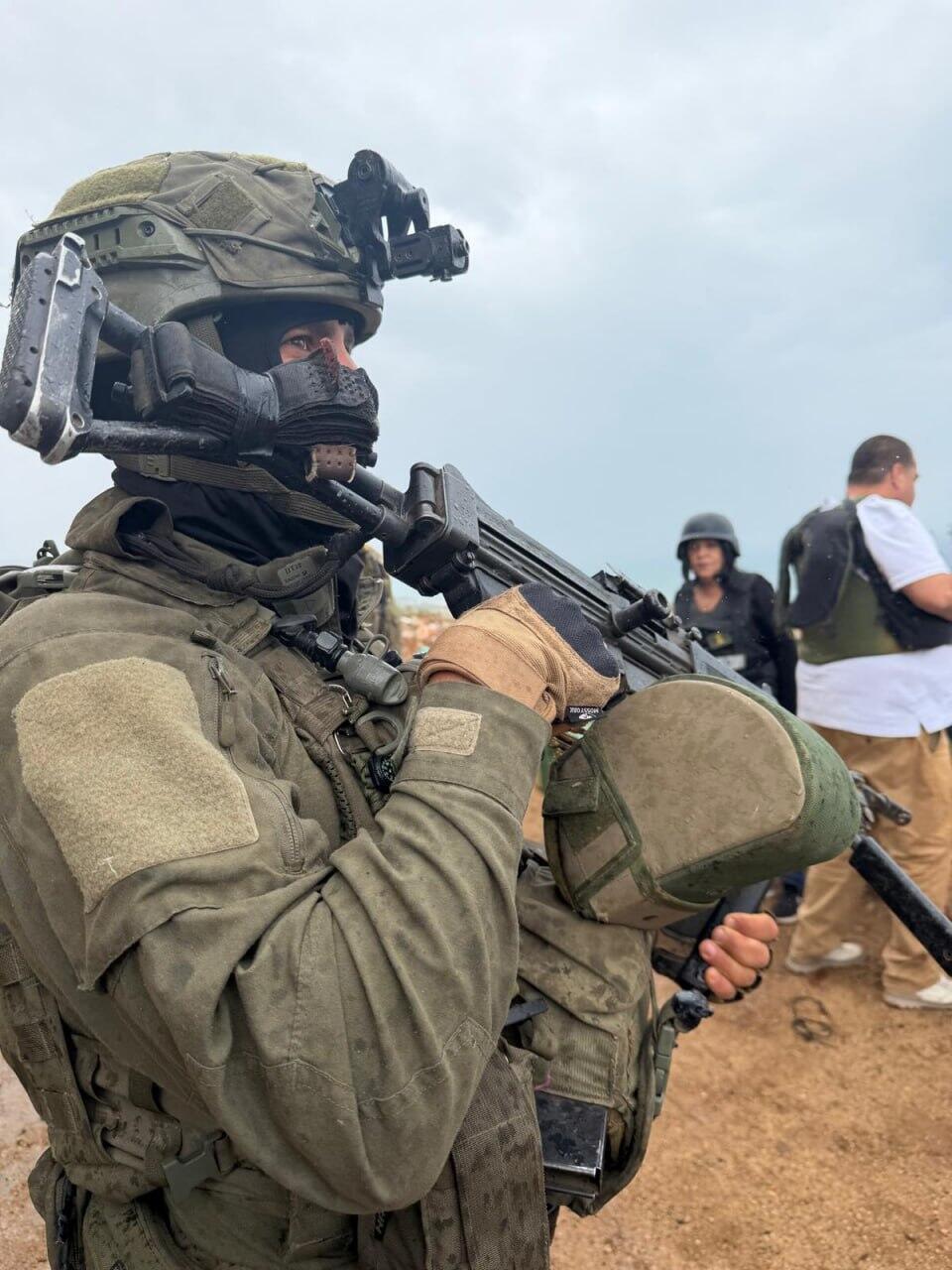
“No. That’s a decision for the political leadership,” he replies. “We are here to prevent Radwan Force infiltrations into Galilee communities and to stop direct fire, primarily anti-tank missiles, at frontline towns. We are achieving that. But we are also here to create conditions for continued fighting.”
In practical terms, that means IDF forces now positioned along the so-called “yellow line” ceasefire demarcation may not remain there if political leaders decide — for example, in a peace agreement with Lebanon — to pull them back to Israel’s border, or alternatively to push farther north beyond the Litani River.
For now, troops are in what Brig. Gen. A. describes as a “ceasefire under fire.” The ceasefire was imposed by U.S. President Donald Trump, but both Hezbollah and Israeli forces continue exchanging fire.
Commanders say remaining static and focused on defense works against them, allowing Hezbollah to gather intelligence via drones and launch rocket attacks. Yet whenever the IDF initiates offensive action, Hezbollah fighters retreat — though not always. At times, operatives ignore orders to engage and prioritize survival, while in other cases, they remain committed to the mission.
There are no civilians left in the village — only IDF soldiers. Residents heeded evacuation warnings long ago. Remaining terrorists are well concealed.
It took the unit an entire night to advance from the border under harsh weather conditions and establish positions roughly 7 to 10 kilometers inside Lebanon, forming a buffer zone. The maneuver followed renewed Hezbollah fire after Israeli strikes in Iran under Operation Roaring Lion. Since then, reserve-heavy units have worked to clear the area, where 25 to 35 terrorists were believed to be operating, most of whom have been killed.
Across the western and central sectors of the Lebanese front, the IDF says it has killed about 400 terrorists. But on the ground, the body count appears less decisive than officials suggest. Hezbollah is fighting for its survival in Lebanon and must show displaced Shiite villagers that it is defending them and working to restore their homes. Losses hurt morale, but not with the same impact seen in Israeli society.
The battlefield is heavily shaped by low-altitude aerial warfare. Both sides deploy drones and indirect fire, but Israel currently holds an advantage in near-unrestricted use of fighter jets. In one instance, a drone identified a Hezbollah cell — likely Radwan Force commandos preparing an attack — and shortly afterward, a one-ton bomb struck the building they were in, killing all five terrorists.
“On Monday night, we launched another operation based on intelligence, and it seems to have succeeded, though we are still awaiting battle damage assessment,” says Lt. Col. Lior, commander of the 401st Armored Brigade's 9th Battalion. His unit, composed largely of young conscripts, was among the first to enter Lebanon with tanks and armored personnel carriers in March.
During one week of fighting, the battalion took more than 30 anti-tank missile attacks. One soldier was killed and several wounded, but active maneuvering and the Trophy defense system prevented further casualties. Now, the unit faces a growing threat from fiber-optic guided first-person-view (FPV) drones, for which Israel does not yet have an effective solution. Until one is found, the focus is on fortification, concealment, early warning and protective netting.
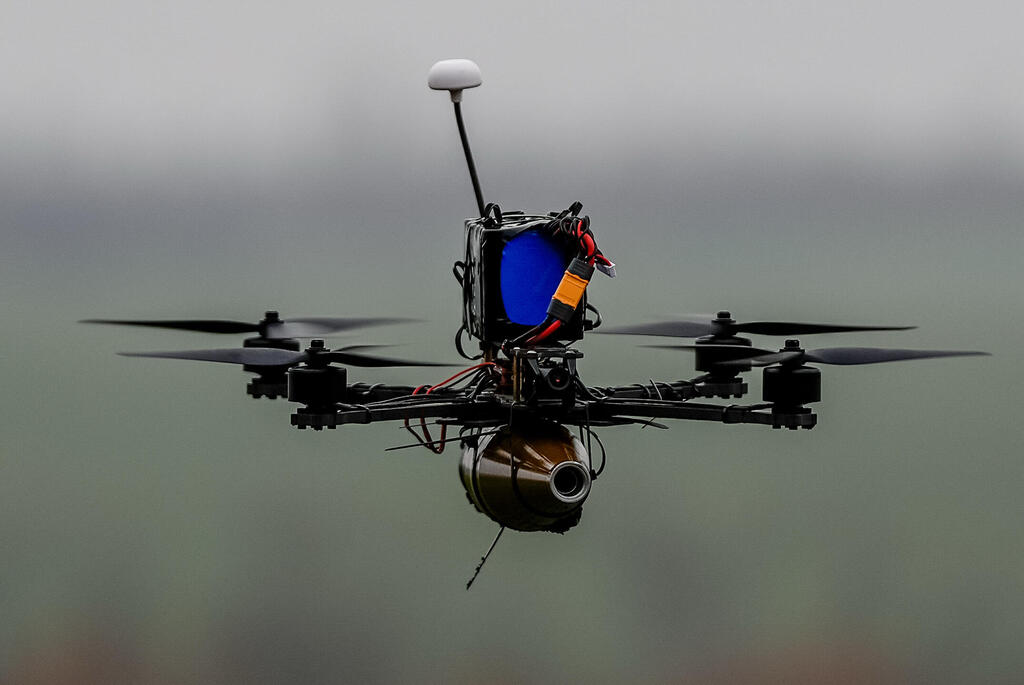
FPV drone
(Photo: Julia Demaree Nikhinson\AP)
“We are trying to strike these drones at every stage — from production to operators to the drone itself,” Lior says. “When they are airborne, we mainly focus on not becoming a target, while continuing to strike the enemy. We faced similar challenges with tunnels in Gaza. This is another challenge we will solve.”
The battalion commander, a resident of the West Bank, has been fighting continuously since the October 7 Hamas-led attack. Two of his three children were born during the war. “It’s a huge challenge to fight such a long war, but we will not allow the enemy to establish itself on our border,” he says. Many reserve soldiers on their third or fourth consecutive deployment share that sentiment.
He notes that both reservists and regular troops — many of whom enlisted after October 7 — have gained valuable combat experience that reduces casualties, but at the cost of growing fatigue and psychological strain.
“We need to act wisely and responsibly with our people, so they can catch their breath,” he says.
Rain taps against helmets when suddenly a soldier shouts: “Drone in the air.” Within minutes, everyone moves into an armored vehicle. The soldiers nearby do not appear especially hurried — the alert likely came from a neighboring sector. They have grown used to it.