

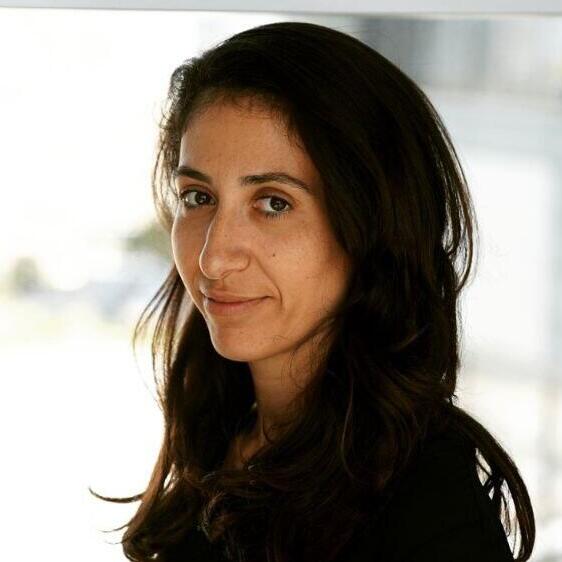
Khalil al-Hayya’s election as head of Hamas’ political bureau was not merely a personal contest between him and Khaled Mashaal. Behind the dramatic vote, decided by a single ballot, was an intense struggle over the movement’s direction after Oct. 7 and whether it should continue along the path that led to war and widespread destruction in Gaza or seek a new course to ensure its survival.
A senior source close to the Hamas leadership told ynet on Monday that discussions in the movement’s central Shura Council were particularly stormy and reflected a deep internal rupture. According to the source, the two camps presented almost entirely opposing views about Hamas’ future, its approach to the Oct. 7 attack and the way it should operate politically and regionally.
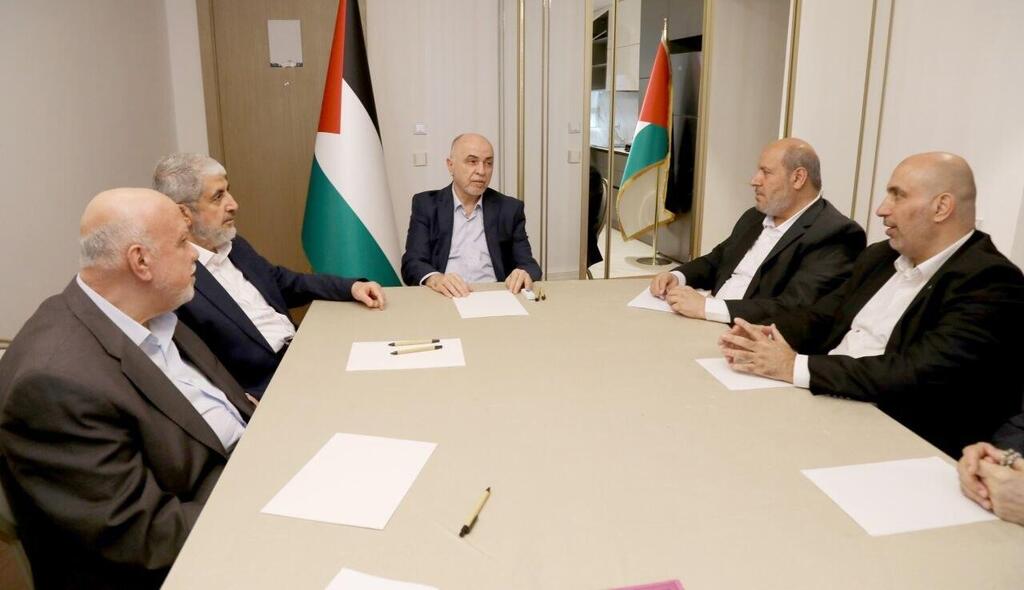
Al-Hayya defeated Mashaal by 35 votes to 34 and will replace the five-member council that has led Hamas since the killing of Yahya Sinwar in October 2024. Until now, al-Hayya served as the de facto head of Hamas in Gaza and as the head of the group’s negotiating delegation.
According to the source, the camp identified with Mashaal presented an unusually bold position by Hamas standards: that the Oct. 7 attack had been a strategic mistake. Mashaal’s supporters argued that the human and material price paid by Gaza was unimaginable and that the war had nearly destroyed the governmental and institutional infrastructure Hamas had built over years.
“The human and material price Gaza paid is insane and nearly eliminated the movement’s institutional infrastructure,” the source said, describing the arguments presented by Mashaal’s camp. According to the source, this position did not mean abandoning Hamas’ principles, but reflected an acknowledgment that continuing to operate through the same methods could lead to the organization’s final collapse.
Mashaal sought to present the world with what the source described as a “new and more moderate face” of Hamas, allowing the group to gradually emerge from international isolation and rebuild relations with countries in the region. His camp sought closer ties with Saudi Arabia, the United Arab Emirates, Egypt and Turkey, while promoting a political route that could allow reconstruction funding to flow into Gaza.

Khaled Mashaal
(Photo: Osama Faisal, AP)
The discussions also included ideas considered far-reaching within Hamas, including placing the group’s military wing under a broader Palestinian national framework. The goal was to offer Arab states and Western countries a formula for rebuilding Gaza without requiring Hamas to announce the complete dismantling of its weapons.
That approach faced absolute opposition from the camp aligned with Hamas’ leadership in Gaza and its military wing. According to the source, its members rejected any attempt to alter the movement’s character or move away from the line established by Sinwar. Their central argument was that Gaza had borne the cost of the war and therefore must retain control over Hamas’ leadership and direction.
“Gaza is the one that played with blood and fire, and it is the one that paid the price,” the source quoted members of the camp as saying. “Therefore, it is also the one that must continue to lead and determine the direction.”
For this camp, Mashaal’s proposals were not viewed as an adjustment to a new reality but as “a shameful surrender” and a renunciation of the outcome of Oct. 7. Its members feared that political change, closer ties with moderate Arab states or the placement of the military wing under a broader Palestinian framework would gradually lead to Hamas losing control of Gaza and the dismantling of its centers of power.
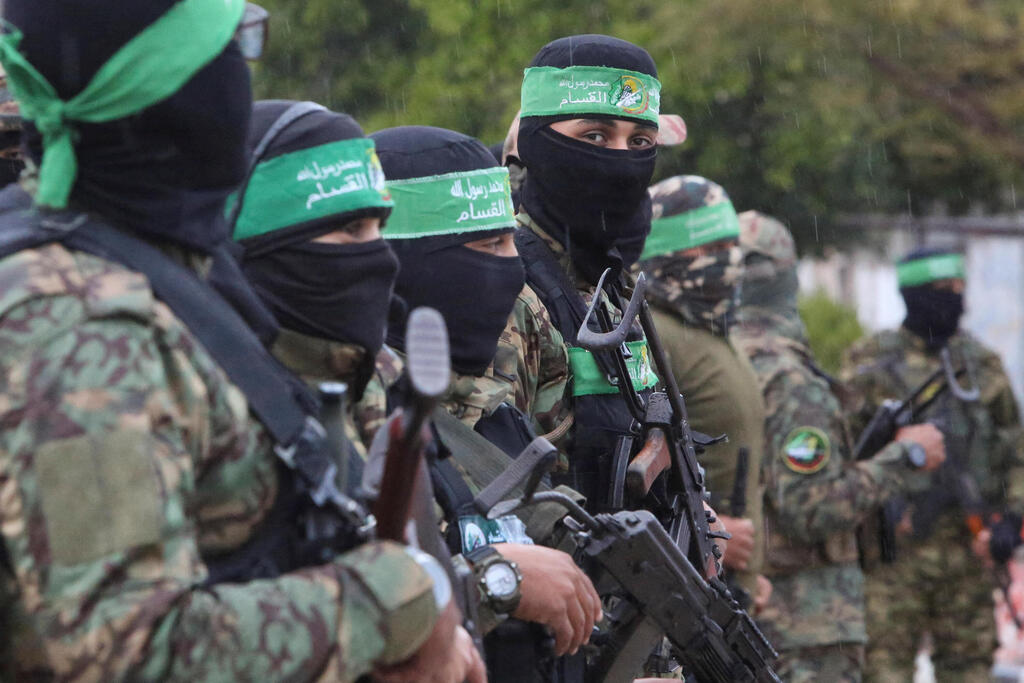
Hamas terrorists in Gaza
(Photo: REUTERS/Hatem Khaled)
In the end, the Gaza-based and more militant line prevailed, but by the narrowest possible margin. “Khalil al-Hayya is a kind of forced compromise created by the ballot box,” the source said. “On the one hand, he is from Gaza, from the Shijaiyah neighborhood, and lost family members in the wars. On the other hand, he lives abroad, knows the regional capitals and manages the negotiations.”
Hamas officials believe al-Hayya’s election closes the door, at least for now, to any significant change in the group’s positions in negotiations or on Gaza’s future. Al-Hayya has led Hamas’ negotiating team and was central to shaping its demands: a full Israeli withdrawal, a complete end to the war and a hostage-prisoner exchange agreement.
Now that he has been elected to lead the movement as a whole, those demands are expected to become Hamas’ official and binding position. “Al-Hayya is the one who managed the negotiations until now and set the hard line,” the source said. “When he was head of the delegation, it was still possible to think there was a leadership above him that could change the decisions. Now he himself is head of the movement, and these positions have become doctrine for him. There is almost no chance he will move away from them.”
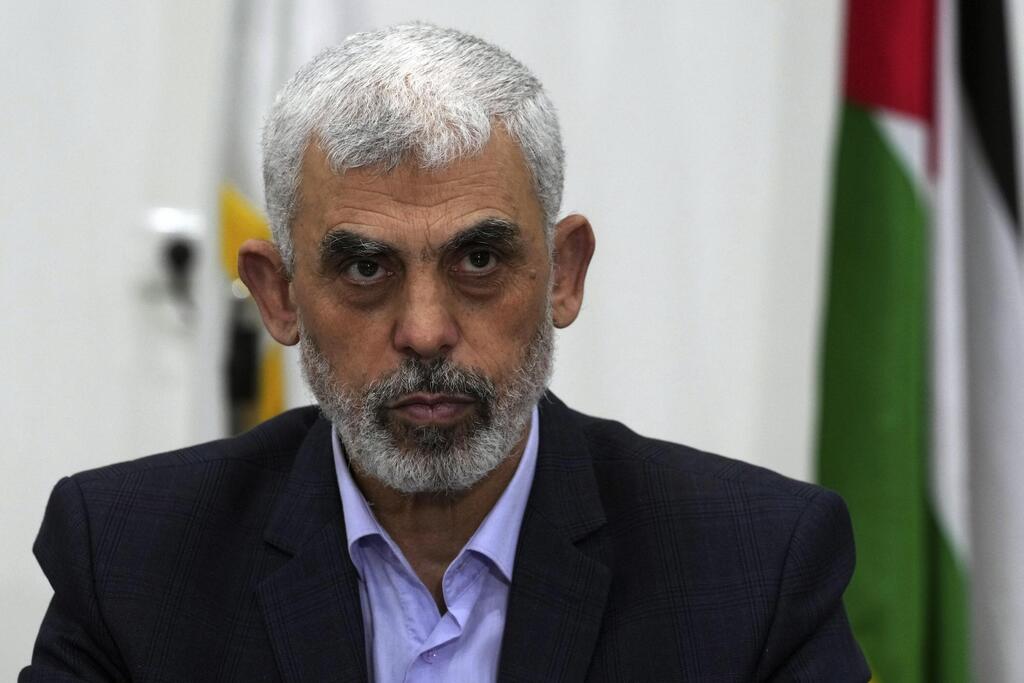
Yahya Sinwar
(Photo: Adel Hana, AP)
Al-Hayya has become one of Hamas’ most prominent public figures and a central representative in political contacts. Born in Gaza in 1960, he has been active in Hamas since its founding and was elected Sinwar’s deputy in the movement’s Gaza leadership in 2017. He left Gaza before Oct. 7 and later became one of Hamas’ main representatives in indirect talks with Israel and mediators.
Another major factor behind his victory was his relationship with Iran. According to the source, members of Hamas’ military wing in Gaza made clear that they would not accept Mashaal as leader, partly because of his historically strained relations with Tehran after he supported rebels fighting Syrian President Bashar Assad during Syria’s civil war.
Al-Hayya, by contrast, is regarded as one of the senior Hamas figures with the closest ties to Iran’s leadership. “His election was intended to ensure that the organization’s financial and military pipeline remains open,” the source said. “The military wing was not prepared to risk a leader whose relations with the Iranians had experienced crises. Al-Hayya preserves that axis.”
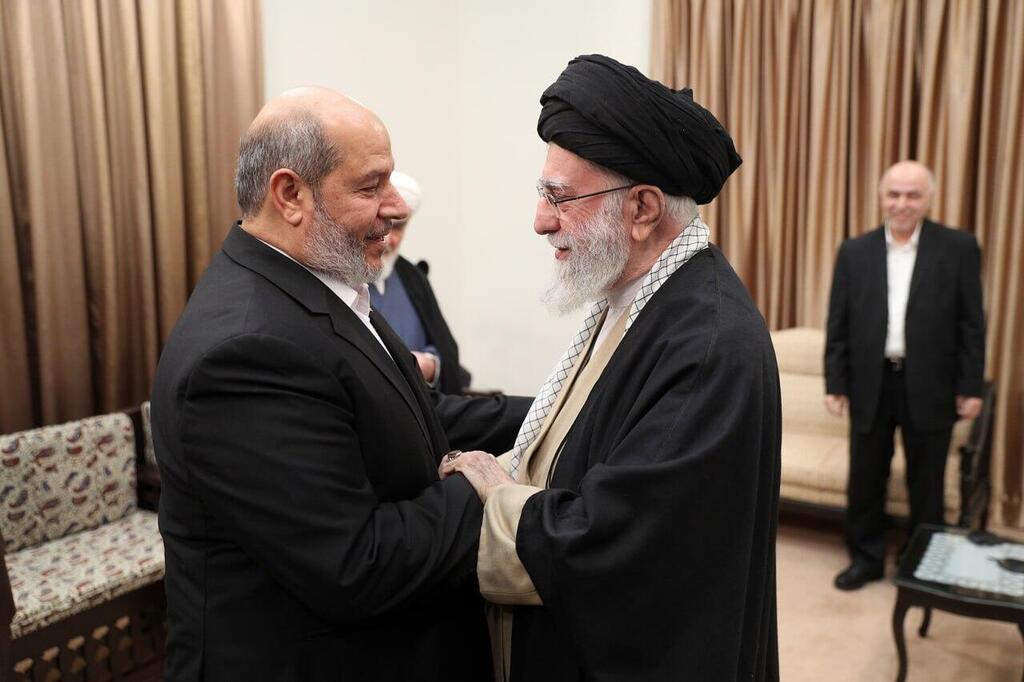
Then-Iranian supreme leader Ali Khamenei meeting with senior Hamas officials
Even before his election, al-Hayya was considered close to Sinwar and a clear ally of the Iranian axis, while Mashaal represented a more independent line toward Tehran and maintained close relations with Qatar and Turkey. Al-Hayya’s victory also leaves Hamas’ political center of gravity in the hands of leaders identified with Gaza.
Ultimately, Hamas chose continuity. Rather than carrying out a deep reassessment after the war, adopting a new political outlook or offering a different formula for Gaza’s future, the movement chose to continue managing the crisis through the same power centers, regional relationships and demands.
Officials familiar with the discussions said that because al-Hayya is identified with Hamas’ Oct. 7 leadership and does not enjoy significant trust among moderate Arab states, his election is expected to leave the movement entrenched in its positions. The internal struggle was decided by a single vote, but for now that vote determined that Hamas will not change direction.