


Jerusalem is concerned about the line being pursued by Donald Trump’s envoy to Syria and U.S. ambassador to Turkey, Tom Barrack, and his ability to influence the American president. The latest confrontation between Israel and Barrack was not an isolated incident. Israel’s strike on the Abu al-Duhur base in northwestern Syria this week once again exposed the gap between Jerusalem and the American envoy over Syria’s future, Turkey’s position in the region and Israel’s freedom of action.
Barrack responded to the strike in relatively strong terms. He said it carried a “real risk” of a rapid escalation and a direct confrontation between Israel and Turkey and Syria, and warned that the lack of communication between the sides could have led to a mistaken Turkish response. He said the United States is now working to establish a mechanism to prevent friction between Israel, Syria and Turkey.
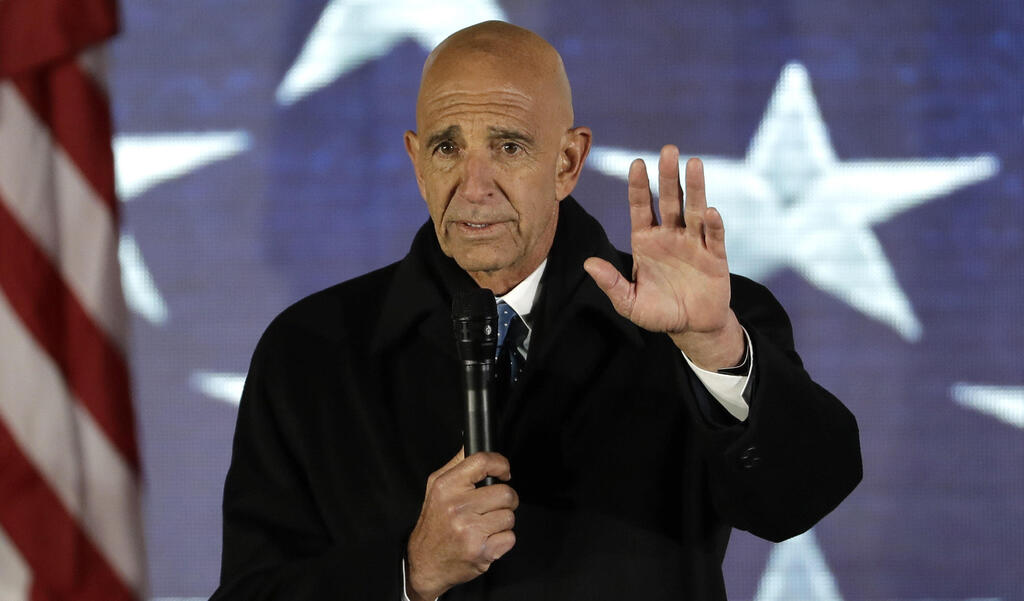
But Jerusalem sees the incident differently. The Prime Minister’s Office said Syria had ignored Israeli warnings about the possibility of Turkish forces being deployed at the base and that the strike was intended to prevent a change in the security balance on the ground. According to reports, the attack involved eight strikes that hit the base’s runway and storage facilities.
Prime Minister Benjamin Netanyahu addressed the strike himself, saying: “We will not tolerate a Turkish military presence moving south. Because it threatens us, and we made that clear in general terms. We saw that Turkey intended to establish a presence at an airfield south of its line, near Aleppo. And we sent a message — don’t. The message got through, but apparently they didn’t hear it. So we made sure they understood.”
In Israel, officials believe the main concern is not only Barrack’s statements but also the worldview he brings with him, according to which Turkey, and particularly its president, Recep Tayyip Erdogan, occupies a central place in shaping the regional order.
“Barrack is considered someone who promotes Erdogan’s interests and those of the Syrian regime in the United States,” said an Israeli official familiar with Israel-Turkey relations. “He is not sensitive to Israeli sensitivities. He is focused on the immediate benefit the United States can gain from Syria.”
The senior official added: “Netanyahu doesn’t like Barrack because he thinks Barrack is behind Trump’s support for Syrian President Ahmed al-Sharaa and connects him to Erdogan.”
Integrating Syria into the regional system
There is disagreement in Israel over how much real influence Barrack has over Trump. On one hand, he is one of the president’s closest associates of several decades. Barrack was close to Trump long before entering government and over the years served as a point of contact for him with the Arab world and Gulf officials.
On the other hand, officials in Jerusalem stress that a personal relationship does not necessarily translate into influence over decision-making. Israeli officials say that “it is not at all clear how much he influences Trump. He certainly doesn’t influence Rubio.” As evidence, they point out that after Barrack condemned the strike on the air base, neither Trump nor the State Department issued a condemnation.
Senior Western diplomats, however, paint a different picture and believe Trump sees Barrack as his point man on Turkish and Syrian affairs. In their view, the fact that Trump entrusted him simultaneously with the ambassadorship in Ankara and the special envoy role for Syria is evidence of the degree of trust he places in him.
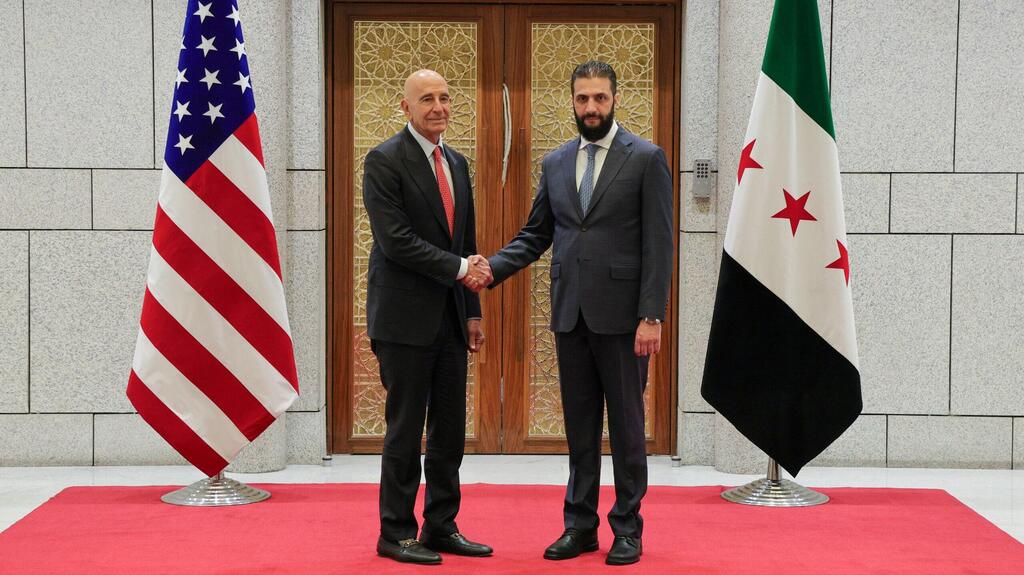
Barrack with Syrian President Ahmed al-Sharaa
The gap between Barrack and Jerusalem became apparent with Ahmed al-Sharaa’s rise to power in Damascus. Israel initially had serious concerns about the new American approach toward the Syrian leadership, which is supported to a large extent by Turkey. Trump himself met with al-Sharaa and promoted a dramatic shift in U.S. policy toward Damascus. Barrack became one of the key architects of contacts between Israel, Syria and Turkey.
But during those contacts, it became clear that Barrack was not seeking only to prevent a war between Israel and Syria. He was promoting a broader vision: integrating Syria into the regional system, economic reconstruction, strengthening ties with Turkey and reducing the American and Israeli military presence as much as possible.
Barrack has also previously described the conflict between Israel and Syria as a “solvable problem” and called for beginning with a nonaggression agreement. Israel, by contrast, wants to ensure that the new arrangement does not turn Syria into a Turkish client state or allow Ankara to build military infrastructure that would threaten Israel’s freedom of action.
Did he dismiss Israel’s democratic character?
One of the statements that particularly worsened relations between Barrack and Israel came in December 2025 at a forum in Doha. Barrack said that “Israel can claim that it is a democracy,” but added that in the region, what “worked best,” in his words, was a “benevolent monarchy.”
The remarks caused an uproar in Israel and were understood in Jerusalem as an unusual slight to the country’s democratic character. The statement did not remain at an academic level. It became a symbol of how Barrack is viewed in Israel — an American diplomat willing to look at the region through the prism of “what works,” even when that conclusion clashes with fundamental Israeli perceptions.
Barak meets with Prime Minister Netanyahu in 2025
(Credit: Roi Avraham, GPO)


Following the remarks, Barrack came to Israel and met with Prime Minister Netanyahu. In December, it was reported that the meeting addressed, among other things, Israel’s red lines in Syria and efforts to prevent a confrontation between Jerusalem and Washington. After the meeting, the discussion was publicly described as “constructive.”
One of the most sensitive issues for Israel is the American effort to bring Turkey closer to the U.S. security system. Barrack has publicly pushed for progress on Turkey’s possible return to the F-35 fighter jet program. He said productive talks were taking place between Washington and Ankara and highlighted the positive atmosphere created by the relationship between Trump and Erdogan.
Israel opposes the move, in part because of Turkey’s military buildup and Ankara’s deepening involvement in Syria.
The issue is not merely theoretical. Turkey has become one of the most influential actors in rebuilding the Syrian military and the country’s security infrastructure over the past year. The Abu al-Duhur base, which was at the center of the latest Israeli strike, underwent reconstruction work with Turkish assistance.
Alongside his personal ties to Trump, some in Israel also view Barrack’s business background with suspicion. He is a Lebanese Maronite American businessman and billionaire who was involved for years in business deals and commercial ties in the Middle East. He previously had extensive business connections in Gulf states, including Qatar.
These ties do not in themselves prove that Barrack is promoting foreign interests at the expense of American or Israeli policy. In fact, Barrack has said over the years that he seeks to advance American business interests in the region.
But some Israeli officials believe his business background explains at least part of his worldview: less emphasis on historic alliances and more on deals, stability, investment and the ability to generate economic gains from regional arrangements.
“He is not necessarily against Israel — he simply does not see it through Israeli eyes,” those officials say.
And that may be the central issue with Barrack. Even Israeli officials who criticize him do not necessarily claim that he is “anti-Israel” in the traditional sense. Their concern is that Barrack does not accept the Israeli starting point that security threats must take precedence over considerations of regional stability and economics.
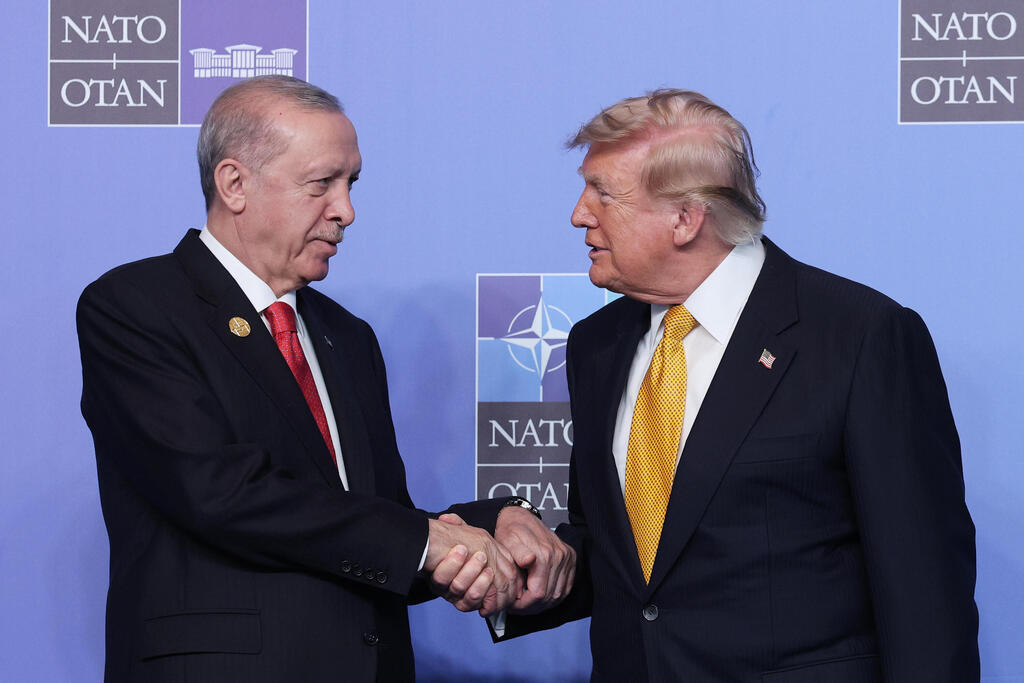
Trump with Turkish President Erdogan
(Photo: Win McNamee/Getty Images)
He sees Turkey as a regional power that can and should be engaged. He sees the new Syrian regime as an opportunity that should be consolidated rather than a threat that must be contained. And he believes economic arrangements, coordination mechanisms and direct diplomacy can replace some of the use of force.
Thus, following the strike on Abu al-Duhur, Barrack did not focus on whether Israel was right from an intelligence or operational perspective. He focused on the danger that the strike could lead to a confrontation with Turkey and the need to establish a permanent mechanism to prevent friction. He even proposed a 24-hour staffed mechanism in which Hebrew, Arabic, English and Turkish speakers would operate.
Sharp messages to Washington
It is worth noting that Israel and Turkey are currently marking 20 years since the beginning of tensions between them. Israel is cautious about calling Turkey an “enemy” and refers to it as an adversary.
Israel is continually sending Washington strong messages that Turkey is working to rebuild the Syrian military and that Erdogan is constantly inciting against Israel. The assessment in Israel is that there is no real danger of an imminent military confrontation between Israel and Turkey, but that care must be taken to ensure it does not reach that point.
An Israeli official who specializes in Israel-Turkey relations said: “The Americans will not allow this under any circumstances and at any price. It would be a disaster for the United States if two of its allies were fighting each other. These are more like provocations on both sides intended for domestic political purposes.”
The official added: “No one in Israel wants a war with Turkey. There is dialogue between Israel and Turkey. There are direct channels, but they are probably not effective enough. In any case, the Americans would like the dialogue to go through them so they can control it. It is possible that the American envoy is deliberately presenting the situation as more severe in order to strengthen the channel of dialogue through the United States.”