


The overnight strike on Syria’s Abu al-Duhur military airfield, attributed in reports to Israel, was more than another regional headline. It was a reminder that Washington has unofficial boundaries Israel is expected to respect and that those boundaries often leave room for maneuver.
U.S. special envoy for Syria Tom Barrack, who also serves as ambassador to Turkey, did not wait long to respond. Writing on X, he said he was “deeply concerned” by what he described as an “unnecessary escalation.” The Israeli version sounded somewhat different. A senior official told Fox News that Israel had shared classified intelligence with senior officials in Washington before the strike and that the message to Syrian President Ahmad al-Sharaa was clear: “He cannot behave like the previous regime.”
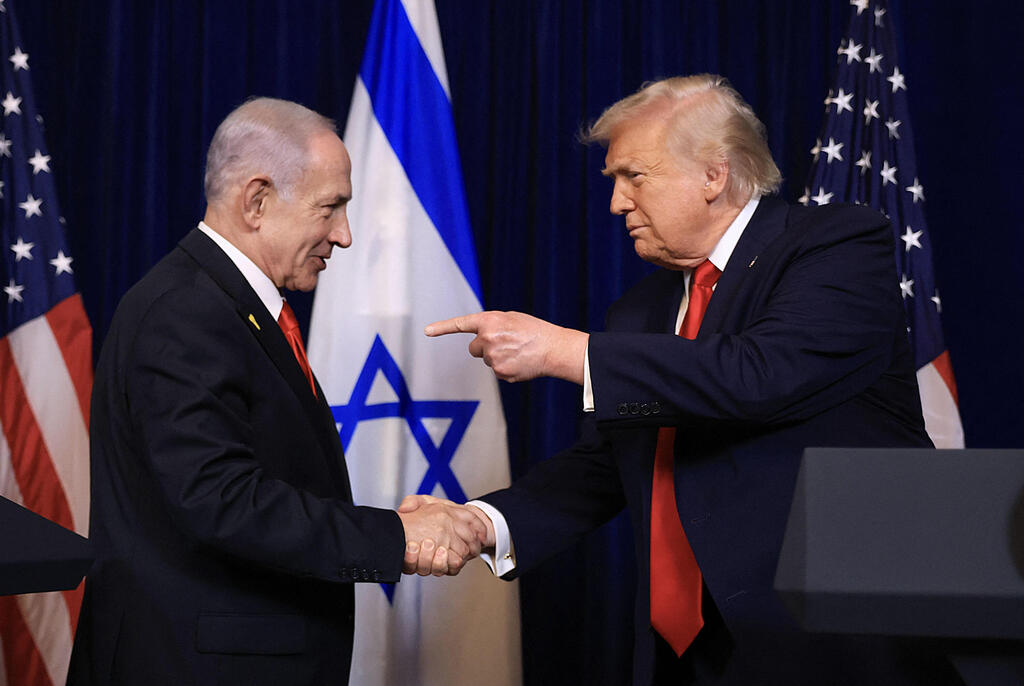
At first glance, the two accounts appear contradictory. In practice, they illustrate something more basic: America’s regional red lines are often drawn in pencil, not permanent ink. Israel has learned how to find the spaces between them.
Who draws the lines?
Since the Oct. 7, 2023 massacre, Washington has built an informal framework of limits around Israeli military action. These are rarely explicit prohibitions. More often, they are understandings that shift from one arena to another and sometimes from one week to the next.
Gaza
The central U.S. concern in Gaza has been preventing a cutoff of humanitarian aid, alongside continued pressure to limit the scale of military operations and targeted killings. In recent weeks, Israel has killed several senior terrorists even as the IDF has tightened approval procedures for strikes. Operations now require authorization from increasingly senior levels, recently including the chief of staff, amid U.S. pressure on Israel’s political leadership.
Washington fears that excessive Israeli action could derail the Board of Peace’s road map for Gaza’s reconstruction. The Americans are therefore allowing Israel to act while trying to restrain it. President Donald Trump’s son-in-law Jared Kushner told Prime Minister Benjamin Netanyahu that he would not tell Israel how to defend itself. In practical terms, the message was closer to: defend yourself, but be more careful.
That delicate balance was visible again Tuesday evening. The IDF struck Hamas commanders in Gaza City’s Shati neighborhood who, according to the military, were planning attacks against Israeli troops. Palestinian reports said six people were killed and 14 wounded.
There is a broader sense in Washington that Israel’s trigger finger can be too quick. Under former President Joe Biden, patience for aggressive Israeli action was particularly limited. Under Trump, there is greater understanding of Israel’s security needs and therefore a longer fuse. That does not mean Washington will not periodically rebuke Israel, especially in public.
Syria
Recent reports indicate that Washington has more than once blocked Israeli plans for broader strikes in Syria. On one side are Israeli concerns over the rearmament of the Syrian military, fears that Turkey is helping al-Sharaa build a more advanced force and concern over the Druze community in Sweida. On the other is Trump’s desire to strengthen relations with Damascus, expand U.S. influence in Syria and preserve his close relationship with Turkish President Recep Tayyip Erdoğan, whom he repeatedly describes as a friend.
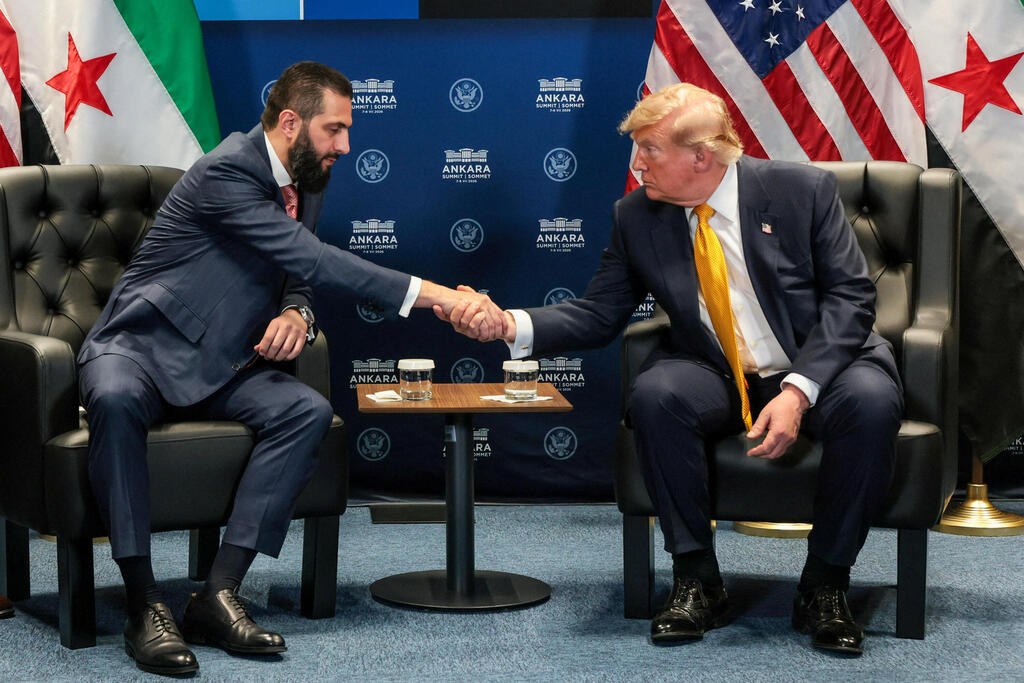
(Photo: REUTERS/Jonathan Ernst )
Leaks about regional leaders allegedly advising one another to reach an agreement with Israel and then prepare for war have only deepened Israeli suspicion toward Syria. For that reason, Jerusalem was not surprised by Barrack’s sharp condemnation of the latest strike. Barrack is viewed in Israel as someone who advances Erdoğan’s interests, and Israeli officials have previously objected to remarks he has made. Ankara later issued its own strong condemnation of the attack.
Iran and Yemen
The clearest U.S. red line is Iran: no independent Israeli initiative without American approval. Trump has already stopped Israeli attacks on Iran, both during the ceasefire at the end of the 2025 war and again during the June 2026 fighting.
A similar pattern appears to exist with the Houthis in Yemen. Despite repeated threats and launches toward Israel, Jerusalem has refrained from carrying out broad new bombing campaigns. When the Houthis escalated recently, Israel again exercised restraint. It is reasonable to assume Washington played a role in that restraint, particularly because earlier Israeli strikes in Yemen were coordinated with the United States.
Lebanon
In Lebanon, the rule is simpler: do not touch Beirut. Israel has observed that restriction with remarkable consistency and has avoided a broader campaign against Hezbollah infrastructure in the capital, even as Hezbollah terrorists continue operating around the strategically important Abu Ali Taher ridge in southern Lebanon.
Israel has the military capability to dominate that area through surveillance and firepower, but reports have said Jerusalem is waiting for a U.S. “green light” before fully seizing the ridge.
The sensitivity became clear again after Hezbollah launched an explosive drone at Israeli troops several days ago, seriously wounding three soldiers. The IDF responded with strikes, and before the full circumstances of the incident were made public, Netanyahu issued an unusual English-language statement during Shabbat accusing Hezbollah of violating the ceasefire.
Lebanese reports said more than 10 people were killed in the subsequent strikes, the highest reported toll since the framework agreement between Israel and Lebanon was signed in late June. The IDF said one of those killed was a Hezbollah commander involved in drone launches.
The recurring pattern and Trump’s personal relationships
What makes the system interesting is not simply where the red lines lie, but how Israel treats them. The pattern repeats itself. When Hezbollah, for example, violates an agreement, Israel quickly sees an opening, a justification to strike harder and target senior commanders. The American red line does not disappear, but it becomes something to maneuver around.
Israel does not necessarily cross it head-on. It looks for a breach through which action can be presented as legitimate. One phrase that recurs in conversations around these decisions is “emerging threat,” an extraordinarily flexible term. It allows almost any operation to be framed as an immediate response to a danger about to materialize rather than an offensive initiative that violates understandings with Washington.
There is another, less discussed layer in Syria. Reports suggest that some Israeli officials would like to strike areas where Turkey is seeking to deepen its military presence, but the U.S. administration has blocked such action because of Trump’s close relationship with Erdoğan.
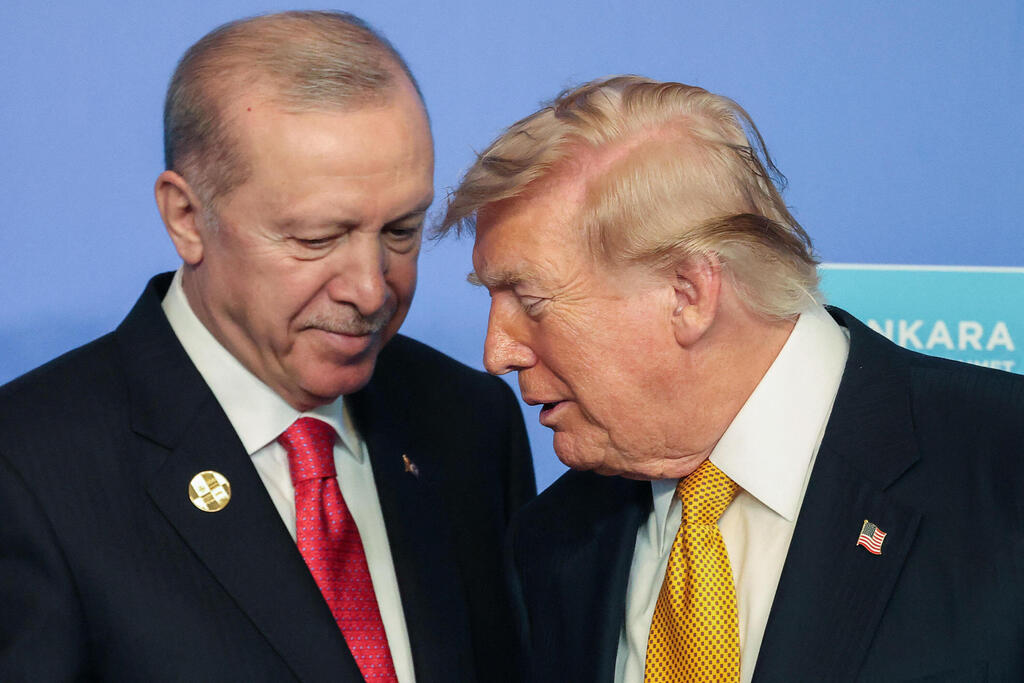
(Photo: Ludovic MARIN / POOL / AFP)
That creates another question beyond what Israel is allowed to do: who is Israel not supposed to confront because Trump likes them? Trump also appears personally fond of al-Sharaa. That raises an obvious question following Barrack’s latest condemnation: will Washington issue more public criticism of Israeli operations in Syria, or will Barrack remain largely alone in doing so?
Some would argue that Netanyahu understood this system earlier than most. The American red lines are real, but they are often erasable. That allows him to maintain two narratives at once. On one hand, he can present himself as standing up to Washington on matters of Israeli security. On the other, when the United States genuinely insists, Israel often backs down quickly.
Two examples regularly cited are the Israeli Air Force strike package canceled on the day of the ceasefire with Iran in June 2025 and the Gaza ceasefire that took effect in September 2025.
The resulting picture is not one of Israel ignoring Washington, nor of Israel simply obeying it. The relationship is more complicated. Israel has learned to read between the lines, to distinguish between a boundary Washington truly considers red and one that is merely pink. Each new strike, whether in Gaza, Lebanon or Syria, becomes another test of that system: how far can Israel push before the line stops moving?
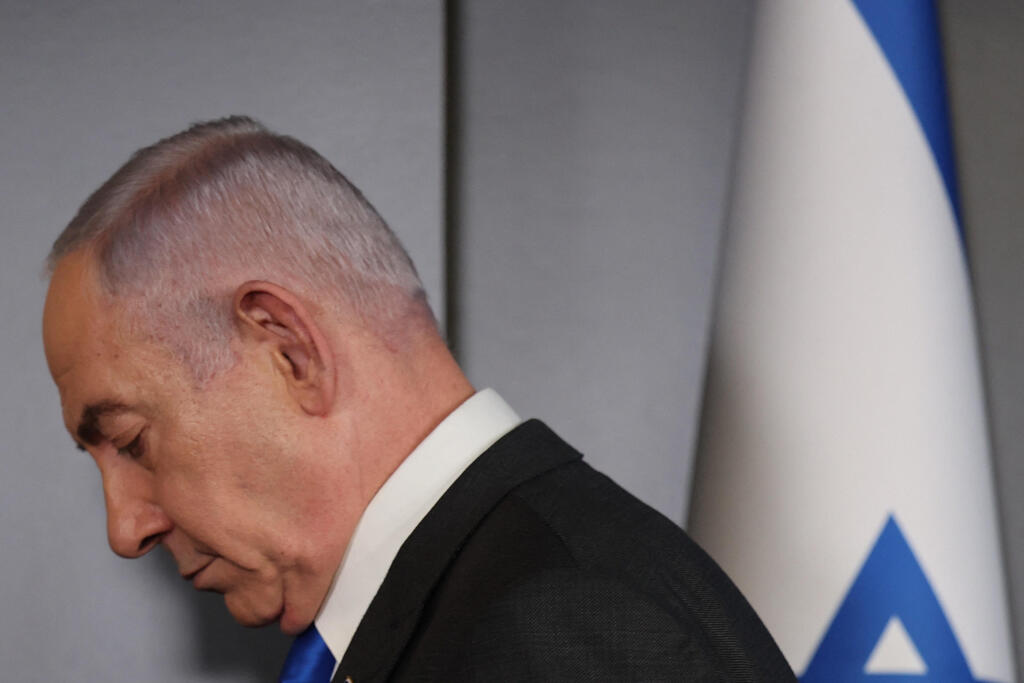
(Photo: ABIR SULTAN / POOL / AFP)
The latest reported strike in Syria also highlights the importance of distinguishing between different levels of U.S.-Israel coordination. The IDF maintains close coordination with U.S. Central Command and routinely informs CENTCOM about military operations, while not every targeted killing or strike is necessarily discussed at the political level between the Prime Minister’s Office and the White House.
That distinction can create the impression that Israel is acting behind Washington’s back when, in many cases, military coordination has still taken place.
Politics adds another variable. Israel knows its enemies believe the United States is tying its hands. At times, Jerusalem has an interest in demonstrating that when it comes to core security concerns, it will act even at the cost of angering Washington.
As Israel approaches the Oct. 27 election, Netanyahu may also have a political incentive to test those boundaries more aggressively and turn defiance of outside pressure into domestic political capital. If Trump decides Israel has pushed too far, however, there is little doubt the world will hear about it.