


“Haytham Ali Tabatabai had been one of the most consequential figures still remaining in Hezbollah. He led the terrorist organization’s rehabilitation since the ceasefire began, worked with Iran to bring in additional equipment and capabilities, and re‑established Hezbollah’s organizational structure,” Lt. Col. Y, head of the Lebanon Division in the Research Division of the Military Intelligence Directorate, explained in an exclusive interview with ynet and Yedioth Ahronoth.
The Hezbollah chief of staff who was eliminated, as Lt. Col. Y describes, “rose through the organization’s field ranks, and also played a very significant role in its headquarters.” Among other responsibilities, he commanded the Radwan unit and other units handling Hezbollah’s liaison with axis networks in Iran, Syria, Iraq and Yemen. “For 30 years Tabatabai was a central figure,” Lt. Col. Y’ adds.
Funeral for Hezbollah military chief of staff Haytham Ali Tabatabai


The optimal timing
For many years, the Military Intelligence Directorate kept tabs on Tabatabai — but it was routine surveillance, standard for a senior Hezbollah figure. According to Lt. Col. Y’, from the moment Tabatabai was appointed chief of staff of the terrorist organization, “attention to him turned up a notch.”
Over the course of the war, Tabatabai evolved: his standing rose as a commanding, offensive-minded leader who “was always ready to employ force.” According to Lt. Col. Y’, “he received appointments that strengthened his position and he became highly visible in Hezbollah’s decision-making forum. Once he was named chief of staff we saw his prestige rise and gradually he assumed command. He became the number one target in military circles and, when a unique operational opportunity was identified, together with the target‑research, operations and air force units, we recommended exploiting it.”
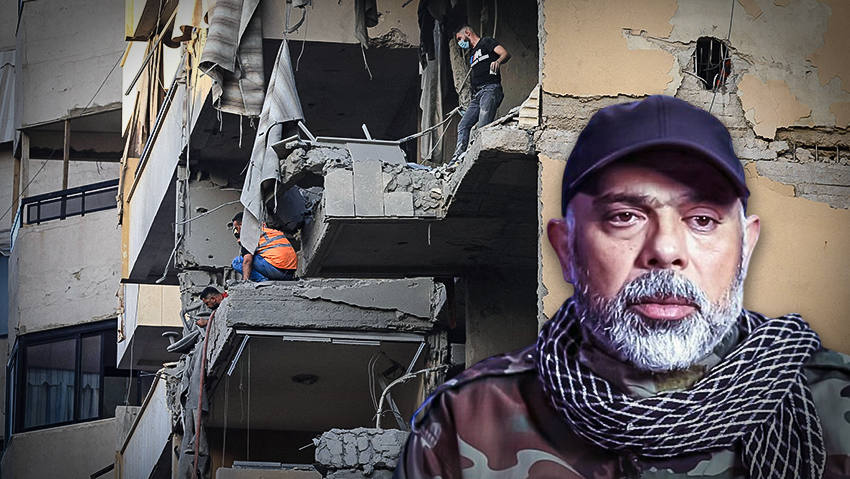
Lt. Col. Y’ explains that the operation eliminated not only Hezbollah’s military commander but also one of its most significant centers of knowledge — a figure deeply involved in Hezbollah attacks that caused many Israeli casualties. In recent times, he says, Tabatabai was at the peak of Hezbollah’s transformation and operational activity — a group re-arming, refusing to disarm, re‑establishing itself, and bracing for the next war. That is why, in Lt. Col. Y’s assessment, “he created a cohesion for which, as far as we are concerned, there was no better time to eliminate him.”
After every Hezbollah commander’s elimination, Lt. Col. Y’ explains, the branch identifies potential successors, analyzes their profiles and flags to decision makers what their plans are. “We monitored successors to Nasrallah over many years,” he shares. “During all the years he served, we continuously marked the heirs apparent. The goal is always to show who has potential — and push to eliminate whoever poses a threat.”
Since Tabatabai’s elimination, the division has already identified several potential Hezbollah candidates to take over as chief of staff. “We also note the need for further eliminations of targets that may seek to break the ceasefire agreement, strengthen themselves and drive Hezbollah to places deeply against our interests, and we are also addressing the day after,” he says. “We ask whether whoever replaces him will be more cautious or deterred — but that is not among the factors we consider when we pass our recommendations to the political echelon.”
Lt. Col. Y’
(Photo: IDF Spokesperson's Unit)
Lt. Col. Y’ clarifies that the branch he commands, responsible for examining Hezbollah’s force structure, has been monitoring developments on the Lebanese front since the 1970s and 1980s. Over decades, in both routine times and during wars, the branch has conducted military research on Hezbollah — from how the organization is structured, who its commanders are, what their force‑building plans are, to the actual activation of its military capabilities. “What we do on a daily basis is hold Hezbollah under surveillance from end to end,” he says.
According to him, “today we have an outstanding ability to map Hezbollah’s senior command picture. We track both people and the processes within the organization.”
Identifying Hezbollah’s narrative
For Lt. Col. Y’, the goal is to give the enemy the sense that the Israel Defense Forces (IDF) is always present. “We succeed in closing in on a target to a degree that enables its elimination — and that is exactly what we want them to feel,” he says. “The Israeli public hears about us only when there is an elimination or a significant action, but on the Lebanese front we have been running a marathon for 43 years — since Hezbollah was formed and even before that.”
He adds: “We are part of a long chain in something enormous and ongoing. That is how we build our strength and our intelligence capabilities. Our objective is to identify the processes the enemy is undertaking — their intentions to grow stronger and become a threat — and also to hold up a mirror to anyone who thinks Hezbollah might be heading in a different direction.”
With many years of experience and knowledge behind them, Lt. Col. Y’ clarifies that Hezbollah is founded on religious principles. “Here are ideas and agendas that have developed for years, so it is unlikely to see a change in this murderous ideology soon,” he says. Over the years, the Military Intelligence Directorate has continued to refine and enhance its capabilities, facing many challenges on the Lebanese front that have changed continuously since Oct. 7. “We have made great strides. We learn both from failures and successes,” he says. “Our challenge is to provide the political echelon with the clearest possible image — not only of Hezbollah’s intentions but also of its actions. How it is preparing for war, how it is strengthening itself and what it plans to do.”
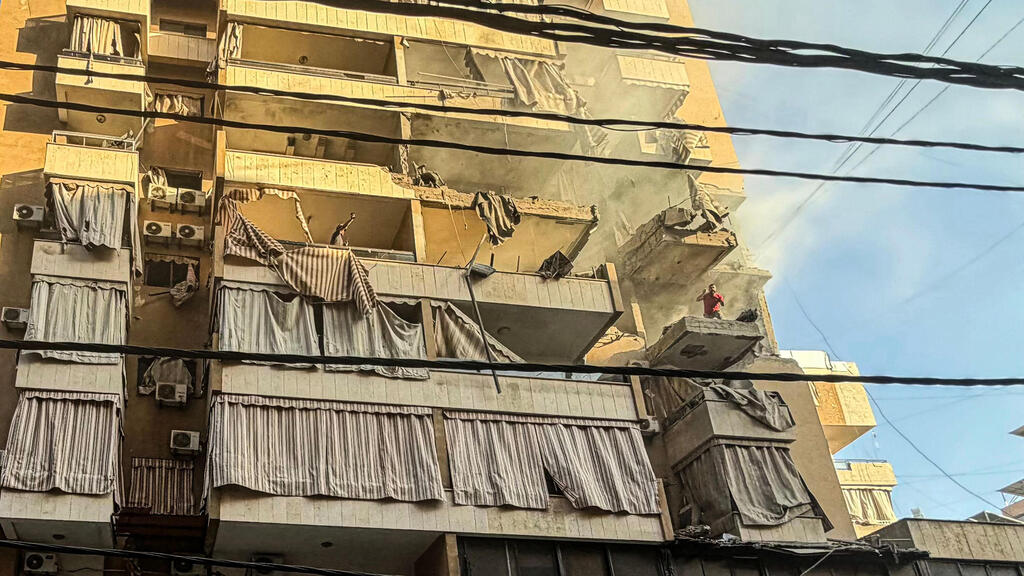
Attack in Lebabon
(Photo: Ibrahim Amro / AFP)
The most significant challenge, as Lt. Col. Y’ describes, “is trying to identify Hezbollah’s current narrative — in the last two years — regarding its desire to initiate force and carry out offensive actions. In addition, to understand how it integrates into the larger axis idea, how it sees its role in that framework and cooperates with other entities — Palestinians, Iranians, Houthis, Iraqis and so on.”
Since the start of the war, the branch under Lt. Col. Y’ has mobilized dozens of regular and reserve personnel working around the clock. “These people are centers of knowledge working into the night. They are here on Saturdays and holidays — helping assemble a million‑piece puzzle called ‘Hezbollah’s intelligence picture.’ That is what brings success,” he says with pride.