

A day after Israel killed Hezbollah’s acting military chief, a Lebanese security official said Israel appears to be shifting its focus toward the terror group’s “next generation” of operatives, following years of assassinations of founders and senior veterans. A Western diplomat working in Lebanon echoed the assessment, saying Israel is “peeling them away layer by layer.”
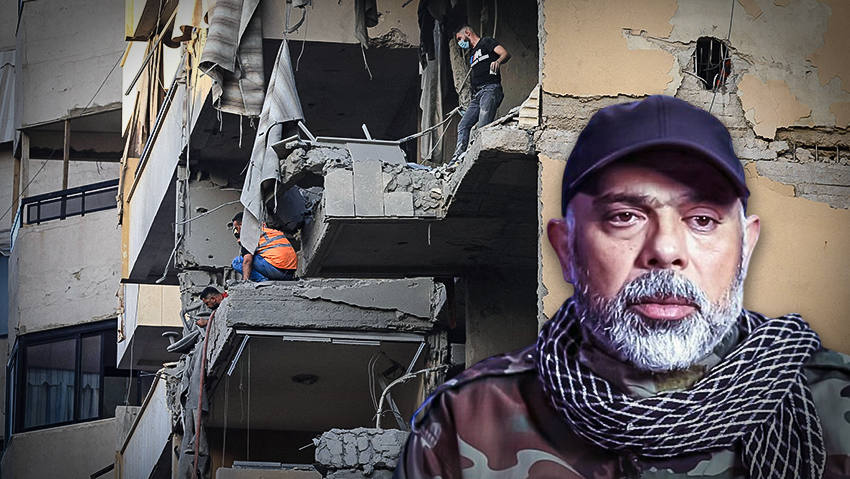
Hezbollah commander Haytham ‘Ali Tabataba’i — considered part of the group’s “old guard” — was regarded as a highly secretive and influential figure. According to the United States, he served as a senior military leader overseeing Hezbollah special forces in Syria and Yemen as part of what Washington described as the group’s “broad effort to provide training, material and personnel to destabilize the region.” Saudi-owned network Al Hadath reported that Tabataba’i had returned to Lebanon from Yemen after the killing of the group's leader Hassan Nasrallah and was given command of Hezbollah’s military operations.
Footage from the elimination of Haytham ‘Ali Tabataba’i
(Video: IDF)


With Israel bracing for a possible Hezbollah response, a source close to the group told Al Hadath that “current conditions do not allow for a response to Tabataba’i’s killing.” Other sources told Sky News Arabia that “Israel’s escalation is a clear reaction to President Joseph Aoun’s decision to continue negotiations with Israel. Targeting leaders does not change Hezbollah’s positions. The assassination was not surprising, but the timing was political.”
Iran condemns the strike
Iran, Hezbollah’s primary backer, condemned the killing. Iran’s Islamic Revolutionary Guard Corps (IRGC) said the assassination reflects “the weakness and inability of the enemy, which has reached a dead end in the face of the will of the region’s peoples and the axis of resistance.” The IRGC said Hezbollah “has the right to avenge the blood of its fighters, and there will be a crushing response at the appropriate time.”
Lebanese civilians also voiced support for Hezbollah. Mohammad Bazzi, a shop owner, told Reuters that Israel “thinks it will break us with this barbaric and brutal method, but it does not know that we carry the spirit of Nasrallah. We have the determination of Mousawi and the pride of Hajj Radwan. You cannot break people with this strength. Everything that happens only increases our resolve. We are all with the resistance.”
Breaking Hezbollah’s 'equations' — and the terror group’s dilemma
Tabataba’i’s killing was not unexpected. Israeli officials had been seeking an opportunity for months, and once he surfaced and actionable intelligence arrived, the strike was authorized by the chief of staff, the defense minister and the prime minister. A senior member of Hezbollah’s Jihad Council was also killed in the strike.
Two weeks earlier, Hezbollah Secretary-General Naim Qassem made another appearance from a bunker, vowing “response equations” and declaring that the group would not tolerate “Israeli aggression.” Despite those statements, Hezbollah has remained silent since the assassination.
Hezbollah is debating whether to retaliate. The group has the capability to act against Israel — through rocket fire or limited ground incursions — but Israel’s surprise strike has forced it into a dilemma. Israel has also disrupted the group’s long-standing “response formulas,” and Hezbollah knows it will face severe retaliation if it acts.
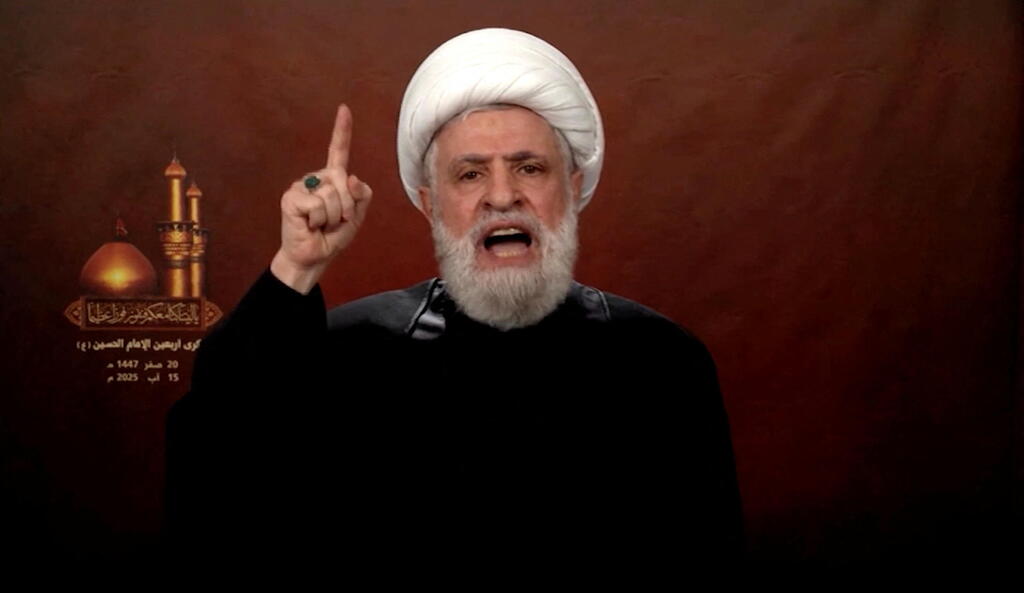
Hezbollah chief Naim Qassem
(Photo: Al Manar TV/Reuters)
During June's 12-day clash between Israel and Iran, not a single rocket was fired from Lebanon into Israel. In recent months, Israel has killed Hezbollah operatives in Lebanon almost daily. Visiting Paraguay on Monday, Foreign Minister Gideon Sa'ar said: “As long as Hezbollah remains Lebanon’s strongest military force, Israel has no security and Lebanon has no future. We want the Lebanese government to disarm Hezbollah, but that is happening only marginally. Hezbollah is arming itself more than it is being disarmed.”
Why hasn’t Hezbollah responded?
One possibility is that Hezbollah is preparing an operation that requires time. Another is based on Qassem’s own warning that any Hezbollah action would give Israel “legitimacy to lose its restraint,” suggesting he may prefer to avoid a broader confrontation at a moment when Israel is prepared for escalation.
A third scenario is that Hezbollah is not intimidated and will retaliate later. Israel must be prepared for all options: targeted rocket fire aimed at disrupting civilian life in northern Israel, a wider attack such as a limited raid or retaliation through the Houthis in Yemen — an organization that Tabataba’i helped train extensively.
With much of its old guard eliminated, Lebanese and Western officials say Israel is now focusing on the terror group’s younger ranks, as Iran asserts a right to respond and Hezbollah frets over US support for Israel its old guard eliminated, Lebanese and Western officials say Israel is now focusing on the terror group’s younger ranks, as Iran asserts a right to respond and Hezbollah frets over US support for Israel its old guard eliminated, Lebanese and Western officials say Israel is now focusing on the terror group’s younger ranks, as Iran asserts a right to respond and Hezbollah frets over US support for Israelbollah appears concerned that any response will draw a disproportionate Israeli counterstrike. Tabataba’i’s killing has placed the group in a strategic bind. Hezbollah also sees strong American backing for Israel and understands that Israel has acted only when its intelligence clearly showed violations of the ceasefire. Israeli strikes have been precise, targeting terrorists while avoiding civilian casualties.