

The funeral of Haytham Ali Tabatabai, the deputy leader and de facto chief of staff of Hezbollah, was held in Beirut on Monday following his killing in an Israeli strike in the Lebanese capital’s southern Dahieh suburb the day before.
Lebanese sources also reported the presence of an Israeli drone flying over the capital’s airspace.
The funeral of Hezbollah's second-in-command Haytham Ali Tabatabai


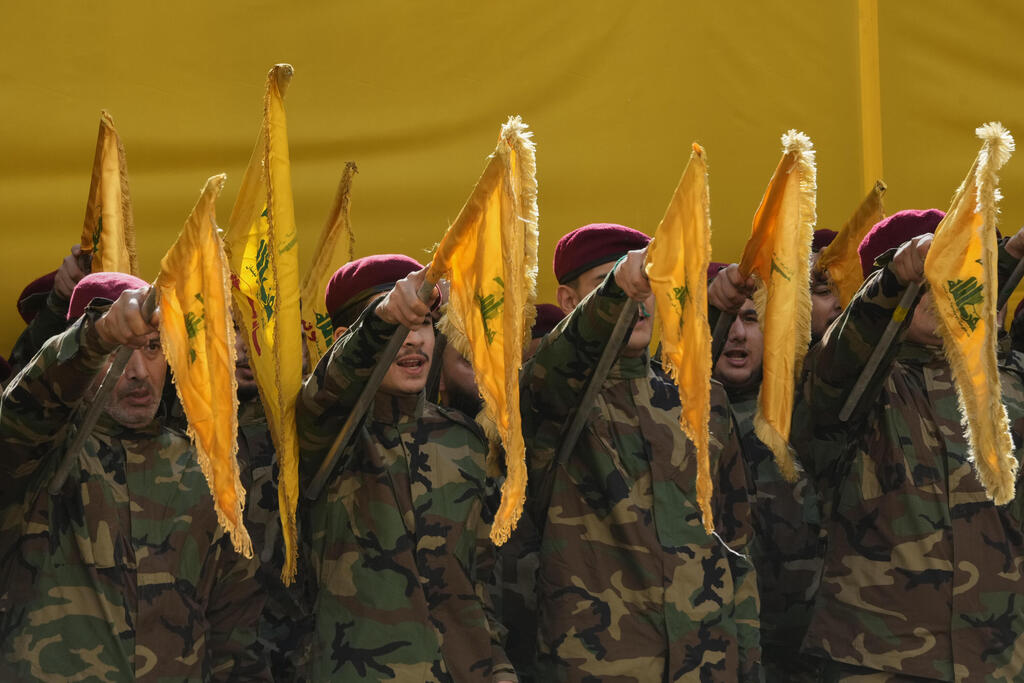
The ceremony took on a military character: the coffin was carried by activists in uniform and red berets, accompanied by a marching band. Mourners chanted slogans such as “At your command Nasrallah,” “Death to Israel” and “Death to America.”
Tabatabai was killed alongside four other Hezbollah operatives—two buried with him in Dahieh, one in the eastern Beqaa region and the fourth in the village of Aita al Shaab in southern Lebanon.
At the funeral, Ali Damoush, head of Hezbollah’s Executive Council, declared: “We have someone who can take responsibility. The enemy always thought that by assassinating leaders it would weaken the resistance, but it failed to understand that we grow stronger through our martyrs. We are not interested in any proposal as long as the enemy does not comply with the ceasefire agreement.”
Gallery
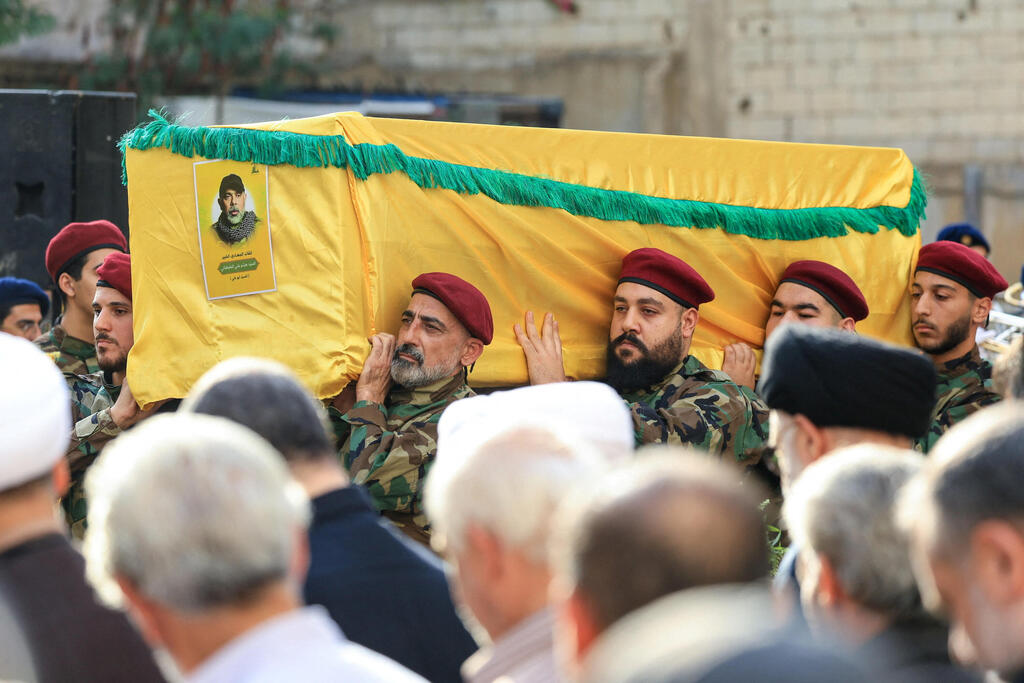
The funeral of Hezbollah's second-in-command Haytham Ali Tabatabai
(Photo: REUTERS/Mohamed Azakir)
Damoush added that “the state has a duty to protect its citizens and its sovereignty, and the government must develop programs accordingly and resist external dictates and pressure. All the concessions the Lebanese government has made so far were of no use and produced no results. The Israelis must continue to be held accountable for the grave mistake they made.”
Meanwhile, a Hezbollah adjacent source speaking to the French news agency AFP said there are “two opposing views within the organization: there are those who want to respond to the assassination and those who prefer to refrain. For now, the leadership is opting for the diplomatic route.”
The strike that killed Tabatabai came despite a ceasefire between Israel and Hezbollah in late 2024, marking a rare Israeli hit inside Beirut. The Lebanese Health Ministry reported five people killed and 28 wounded in the attack. Hezbollah confirmed Tabatabai’s death, calling him “a key military commander.” Israeli officials said the strike was aimed at halting Hezbollah’s efforts to rebuild its military capabilities.
(Photo: AP Photo/Hussein Malla)
Statements released by Hezbollah following Sunday’s assassination—including official announcements and comments by senior figures—highlight the terrorist group’s current domestic pressure and its ongoing efforts to maintain legitimacy and retain its weapons within Lebanon. In the background stands the country’s new leadership, headed by President Joseph Aoun and Prime Minister Nawaf Salam, which is seeking to centralize arms under state control and disarm Hezbollah, in line with the agreement signed with Israel last year.
Hezbollah continues to argue domestically that before any disarmament can be considered, more urgent issues must be addressed—chief among them, halting Israeli strikes, securing a withdrawal from southern Lebanon and obtaining the release of Lebanese prisoners held in Israel. Only afterward, the group says, can discussions about disarmament take place, and only as part of a broader national defense strategy.
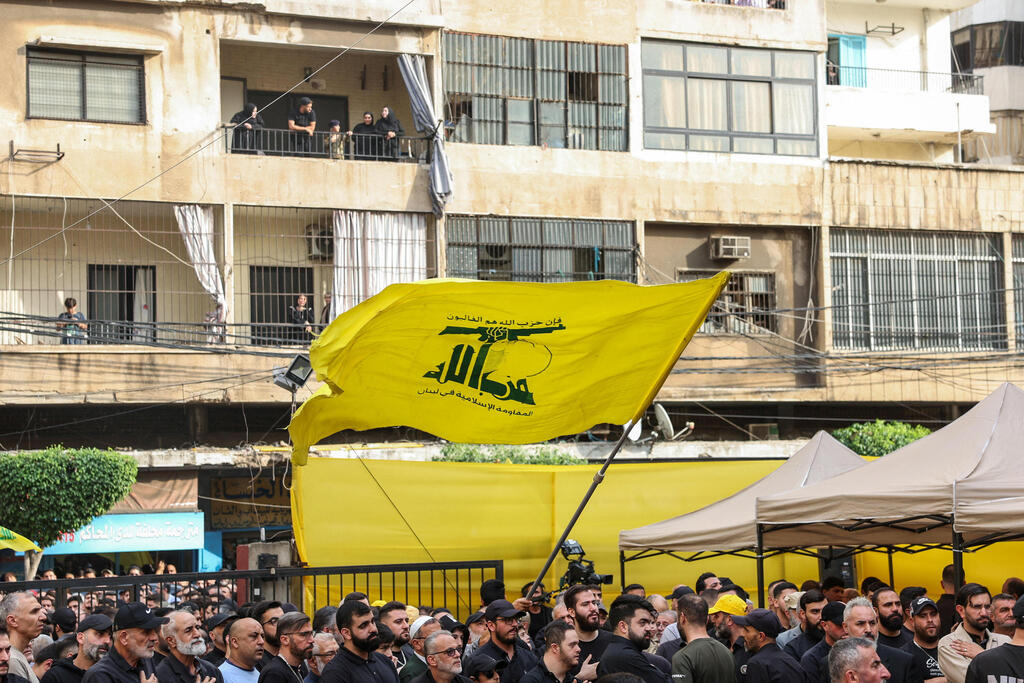
Meanwhile, the Hezbollah-aligned Lebanese network Al-Mayadeen is working to rally public support around the notion of a common enemy—Israel. The network reported on a protest march held in Beirut in response to the killing of Tabatabai, with demonstrators warning that “no group in Lebanon is safe from Israeli strikes.” Interviews broadcast by the channel featured participants claiming that “the resistance is essential for liberating occupied land” and that “a unified Arab stance is key to strengthening Lebanon’s official position.”
(Photo: REUTERS/Mohamed Azakir)
Hezbollah is seeking to leverage the rare Israeli strike deep inside Dahieh—the first of its kind since June—to reinforce the narrative that Israel is the true threat. Through various channels, the group has amplified the message that the attacks target all of Lebanon, not just Hezbollah, and that it is Hezbollah and its arsenal that serve as the country’s primary defense.
Hezbollah on Sunday released official statements confirming the killing of Tabatabai and four other operatives in the Israeli strike on Beirut’s Dahieh district, describing them as having “died defending Lebanon and its people.” The group has not consistently issued statements about the deaths of its members for some time, and when it has, they were often described as “martyrs on the path to Jerusalem.” This time, however, Hezbollah framed their deaths as part of a defense of Lebanon, not of Palestine.
This rhetorical shift reflects the group’s vulnerable domestic position in the aftermath of the war. With growing internal criticism, Hezbollah can no longer present itself as the protector of Gaza or the embodiment of a unified “resistance front” tied to Iran. Instead, the group is working to portray itself as an essential national actor—aligned with the state, not in defiance of it.
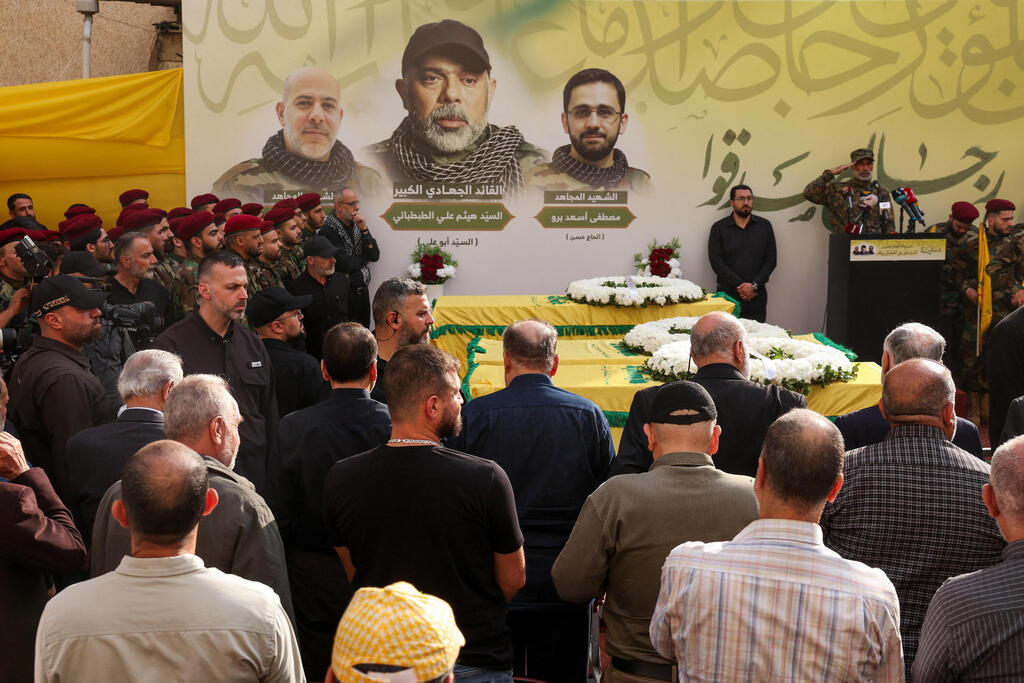
(Photo: REUTERS/Mohamed Azakir)
Hezbollah lawmaker Ihab Hamadeh said the assassination aimed “to pressure Hezbollah and all Lebanese,” calling it part of Israel’s plan to “annex Lebanon into its regional project.” Fellow Hezbollah parliamentarian Ali Ammar claimed that “Israeli aggression has targeted all of Lebanon since the U.S.-brokered ceasefire. The resistance is acting with wisdom and patience and will choose the right time to confront the enemy.” Mahmoud Qamati, deputy head of Hezbollah’s Executive Council, added: “We are coordinating with the Lebanese state to put an end to these Israeli violations.”
Iran also weighed in, despite objections from Lebanon’s new leadership. President Aoun has previously warned Tehran against interfering in Lebanon’s internal affairs. Nevertheless, Ali Shamkhani, senior adviser to Iran’s supreme leader Ali Khamenei, extended condolences “to the Lebanese people, Hezbollah and the resistance,” declaring: “Israel’s crimes will not lead to a safe future for the Zionists—they only confirm the path of resistance.”
Ali Larijani, secretary of Iran’s Supreme National Security Council—previously rebuked by Aoun—also sent condolences to Hezbollah leader Naim Qassem and accused Prime Minister Benjamin Netanyahu of “adventurism,” adding, “there is no alternative to confrontation with this entity.” Iran’s embassy in Beirut said Israeli “cowardly attacks will not break the will of the righteous or weaken their determination to confront injustice.”
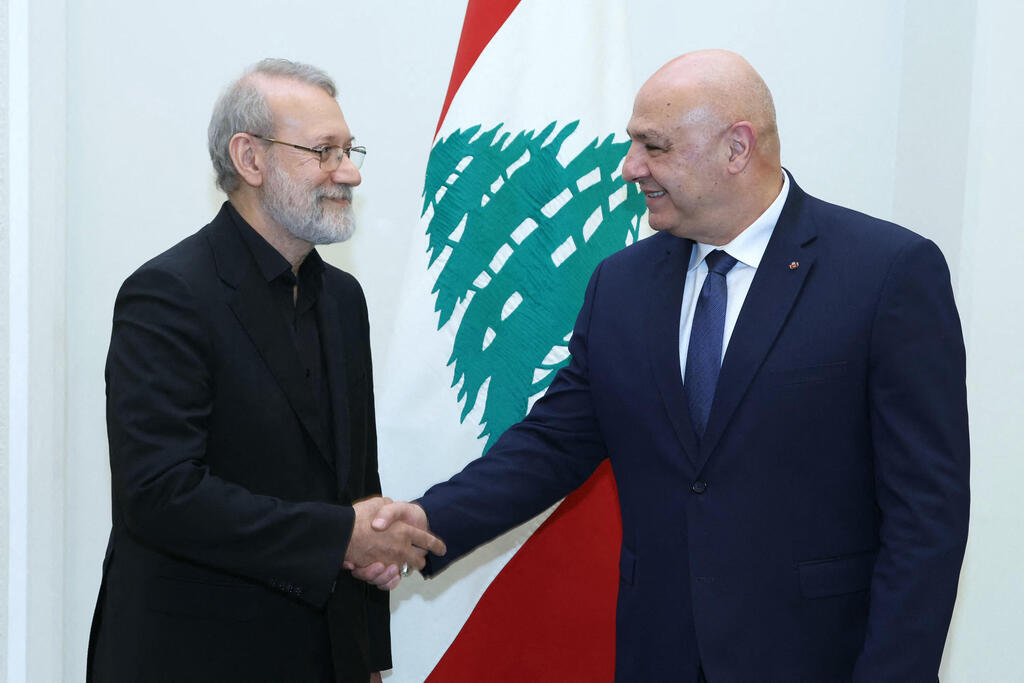
Ali Larijani, secretary of Iran’s Supreme National Security Council, and Lebanese President Joseph Aoun
(Photo: AFP PHOTO / LEBANESE PRESIDENCY / HANDOUT)
Despite Hezbollah’s efforts to rally Lebanese political support, Prime Minister Salam emphasized Monday that “protecting the Lebanese people and preventing the country from slipping into dangerous paths are the government’s top priorities.” He added that Lebanon would continue diplomatic efforts with friendly nations to ensure its security. President Aoun condemned the Israeli strike and urged the international community to intervene.
Even before the assassination, Hezbollah had been lobbying Lebanon’s political leadership to treat Israel—not Hezbollah—as the true threat. “It is the government’s responsibility to develop plans to confront aggression. The problem is the aggression, not the resistance,” Qassem said in a speech last week. “We are partners in this country. We have our voice, and we have the support of a large part of the Lebanese people. Those who say the resistance is the problem because it refuses to surrender are essentially handing the country over to Israel—but we will not accept that.”
Qassem, however, was absent from Tabatabai's funeral. He also did not issue a recorded message, and as of Monday, had not publicly commented on the killing.
Hezbollah’s response options following Tabatabai's assassination
Tabatabai's killing has raised the possibility that Hezbollah may retaliate militarily. The IDF has increased its alert level, bolstered its air defense systems and is conducting ongoing threat assessments. Possible scenarios include rocket fire into Israeli territory, infiltration attempts or raids on IDF positions near the Lebanon border, or even activation of Houthi forces in Yemen for a proxy response. However, given Hezbollah’s current weakened state, the group may ultimately choose not to respond at all.
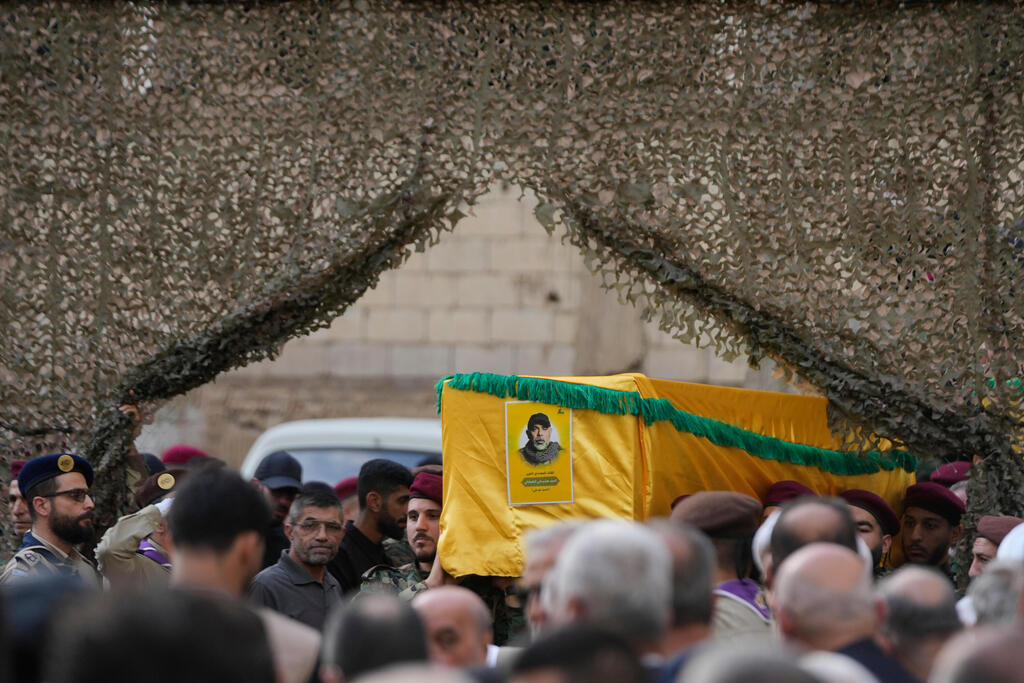
(Photo: AP Photo/Hussein Malla)
The IDF is also preparing for a potential short, preemptive strike inside Lebanon, aimed at deterring Hezbollah and degrading its operational capabilities. One year has passed since a ceasefire agreement was signed along the northern front. That agreement included a clause—yet to be implemented—calling for Hezbollah to be disarmed by the Lebanese Army.
Military officials in Israel increasingly see the country approaching its most critical test yet of its “zero containment” policy, declared in the aftermath of the Oct. 7 Hamas-led massacre.
Hezbollah did not issue a direct threat following the assassination. In its official statement, the group said Tabatabai was “killed while defending Lebanon and its people in a treacherous Israeli attack in Dahieh,” and described him as “one of the leaders who laid the foundation for a resistance that remains strong and dignified.” The statement added that fighters “will carry his blood and press forward with courage to thwart all the projects of the Zionist enemy and its sponsor, America.”
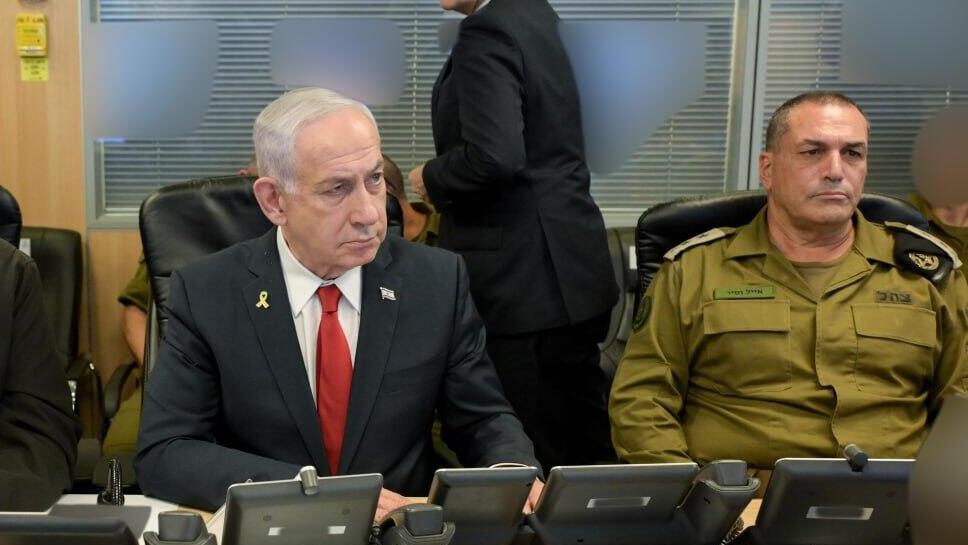
Prime Minister Netanyahu and IDF Chief of Staff Lt. Gen. Eyal Zamir
(Photo: GPO)
Prime Minister Netanyahu said Sunday that “Israel will not allow Hezbollah to rebuild its military power,” and called on the Lebanese government to fulfill its commitment under the ceasefire deal and ensure the group is disarmed.
IDF Chief of Staff Lt. Gen. Eyal Zamir hinted at the possibility of military action, saying, “There will be no containment. We may be required to return to fighting in arenas we have already confronted.”