

At protests on Iran’s streets, it is no longer only women or opposition activists taking part. These are business owners, students and civil servants. People who, for themselves and their families, have a great deal to lose by going out to demonstrate.
There are many reasons for the protest: the cost of living, inflation, a collapsing economy and currency, failing infrastructure. But the protest is against the legitimacy of the regime itself. No one is chanting “Woman, life, freedom” anymore, because the goal has become larger. Women’s rights are important and worth fighting for, but when protesters march on the main streets of the largest cities, their shirts and hands stained red, shouting “Death to the dictator,” you understand that the cry is for something else, something bigger.
(Video: Iran International)


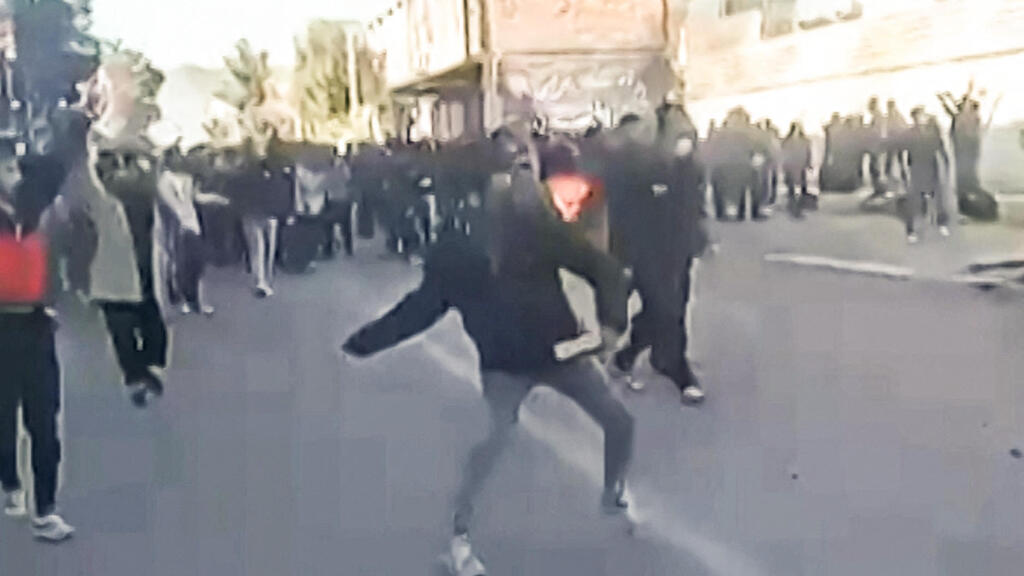
I believe that what has happened in Iran over the past two years, reinforced since the Israeli and U.S. attack that made clear the regime cannot protect its citizens, is that people have completely lost their fear. Once it was only us, the “crazies” from the opposition. Today it is everyone. There is fear of nothing: not of death, not of torture, not of brutal beatings. How do you frighten someone who is not afraid of death, who is not afraid of fear itself?
We feel abandoned
These protests are smaller in scale than those that followed the killing of Mahsa Amini three years ago, but they are much deeper in their courage, their geographic spread and who is taking part. This is a new audience of protesters. And we, the veteran opposition activists, feel that the deepest change is in the intensity of the cry. People are no longer shouting inward. They are shouting outward. They want to call out and hear that people abroad hear us, that we have support, that the world sees what is happening here. The cry is for intervention.
I think this is our greatest disappointment. If there were voices from major countries, from international bodies, from well-known human rights organizations, it would give enormous momentum to our struggle. More people in Iran would understand that we have international backing and that it is possible to continue protesting until change comes.
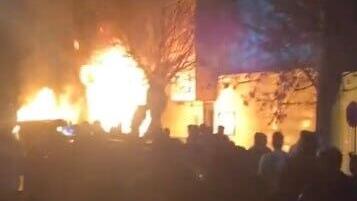
A police station is burning in Azna
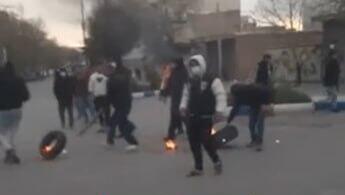
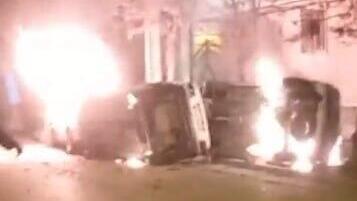
For now, aside from a statement by Trump, we have heard nothing. It is deeply disappointing. Many of us fear a replay of the Green Movement, which received no international support and was crushed by the regime. We saw how much international pressure mattered in Gaza, so why not here? Why does no one intervene when people have no water and the regime shoots citizens dead? We feel abandoned.
We live in a vortex of fear and courage. We are brave enough to go out into the streets and fight for our freedom from the dictatorship of death that rules us, but at the same time we fear that we will fail again.
I think this is the central issue. At first, Trump threatened our country only over ballistic missiles or the nuclear project, but over the weekend he spoke about intervention if the regime harms civilians. That is enormous for us. A superpower backing us and warning the regime not to hurt us. We still want to hear from the West that it is no longer afraid and that it will intervene to change the regime, but this is a beginning.
If the regime is afraid to use violence against us, to arrest us or to shoot us, we will be able to keep protesting. And the more we continue, and the larger the protests grow — and they will grow because there is no water in the taps and no electricity in homes — the more reasons and opportunities we will give the West to overcome its fear and help us bring down the regime.
We in the Iranian opposition go crazy talking among ourselves: How is it not clear to every Western country that if this regime falls, it is not only we who will benefit, but global security will be strengthened? We swear we do not understand it.
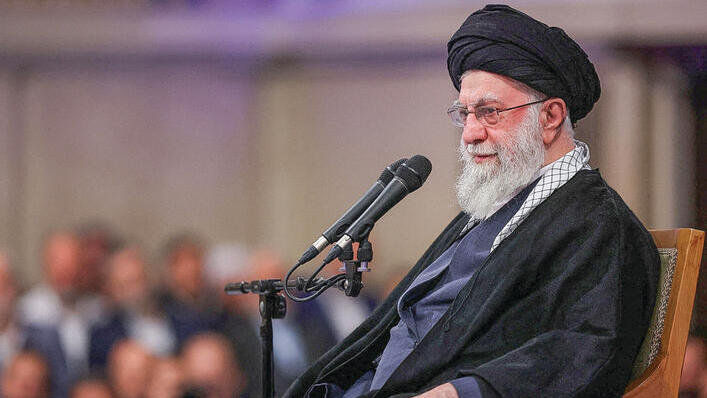
Iran’s supreme leader, Ali Khamenei
(Photo: Office of the Iranian Supreme Le, via Reuters)
We understand the West’s fear of internal intervention, and we know that any outside involvement in Iran’s internal affairs will immediately be used by the authorities as propaganda about foreign interference. But the West must also understand that there is a limit to the psychological strength we have to stand up to this force. Every time we went out and were crushed, the regime took revenge on opposition forces with all the power and means at its disposal. After the 2009 Green Movement protests, it took us eight years to organize, regain courage and return to the streets. Eight years. We cannot survive another defeat. Not my generation.
Protests of despair
Still, we are optimistic. Again, these protests are no longer political protests. They are protests of despair. Of the collapse of the middle class. Of the success of sanctions and the military blow in June. There is no teacher, nurse, market vendor or taxi driver whose quality of life has not been eroded by all of this. Many people in Iran were not interested in politics. They just wanted to work, come home safely, eat with their families, take a vacation. That is over. People are desperate. Their money no longer buys what it once did. This is not about a vacation by a northern lake. It is about whether there will be bread for dinner tonight for the children. Will there be electricity? You cannot put deterrence and military confrontation with Israel on your children’s breakfast plate. When the middle class is destroyed from the ground up, it means one thing: people and families are pushed down a rung, into poverty.
More and more people are waking up from their dream. Suddenly, obtaining basic medicines for your children has become a luxury. They thought they had a social contract with the regime, and now they understand that this contract has collapsed, if it ever existed at all.
Despair, disappointment, anger, a sense of betrayal. When you put them together, they are far stronger than fear or the shame of not being able to provide the most basic needs for your family and yourself. These are people who need help, a push, a feeling that they are supported. This is new for them. We are not religious people, but we pray that more and more international institutions and Western countries will join Trump and the Mossad. That they will learn from us, ordinary Iranian citizens, that there is nothing to fear. It is nonsense to say that if there is intervention the regime will strangle us and tighten the economic siege in the name of “national security,” citing proof of foreign money backing us.
We are ready to live with the blows we will suffer if we fail, but we want the West to be with us to the end this time. We do not want it to say in 15 years that it was wrong not to intervene, as happened after the Green Movement. We want to know that we did everything and received all the support we could.
The help does not have to be overt. There are many ways to assist us. Even stronger internet access, satellite connectivity. Iran’s digitalization helps us in the struggle. In the past, everything was done in darkness. It was possible to spread propaganda and rally people around the flag instead of around protests. Today information is far more accessible. People can ask questions about the erosion of the currency, corruption or the unimaginable gaps between the elites and the rest of the population.
We are fighting for women’s rights, for rights that citizens across the West take for granted. We are not afraid of death and we are not afraid of fear. We are fighting for a life with minimal dignity. We are fighting against collective punishment. We are fighting for our future, for the future of the next generations and for the character of our country and what it will look like. And we are certain of one thing: Diplomacy is over. If we are fighting for our future, we are fighting to overthrow the regime. We have no future with the current murderous regime.
Brought to publication by Zeev Avrahami