


Israel was preparing to launch a broad airstrike on hundreds of targets in Iran last week before the mission was canceled just one hour before aircraft were set to take off, Israeli Air Force Commander Maj. Gen. Omer Tishler revealed in a letter to air force personnel.
Tishler described the sequence of events after Israel carried out a strike in Dahieh, a district in southern Beirut that is considered a Hezbollah stronghold. Hezbollah is the Iran-backed Lebanese terror group that has fought Israel for decades and has been firing at northern Israel since the start of the war in Gaza.
According to Tishler, Iran responded to the Dahieh strike by launching dozens of surface-to-surface missiles at Israel. The missiles were intercepted by Israel’s air defense systems, he said, and caused no casualties.
“Last week, after a strike in Hezbollah’s stronghold in Dahieh, the State of Israel was attacked with dozens of surface-to-surface missiles launched from Iran,” Tishler wrote. “The air defense array operated in an extraordinary manner, intercepted all relevant threats, with no casualties in the State of Israel. There is no defense like this anywhere in the world.”
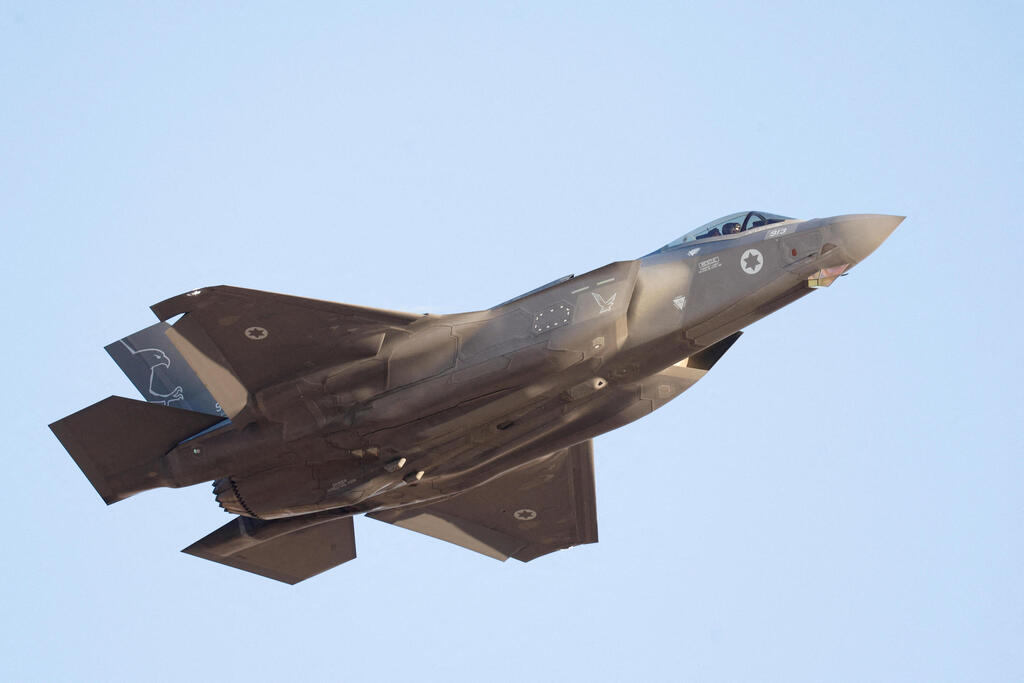
At the same time, he said, the Israel Air Force, known as the IAF, launched strikes deep inside Iran, about 1,500 kilometers, or 930 miles, from Israel.
“Within a few hours, dozens of targets in Iran were attacked, we significantly damaged the Iranian air defense array and attacked additional regime components,” he wrote.
Tishler then revealed that Israel had prepared a much wider attack for the following day. The operation, he said, would have sent the air force to strike hundreds of targets in the heart of Iran, but it was halted shortly before launch.
“The next day, in the afternoon, the entire air force was ready to take off for a broad strike sortie,” he wrote. “Hours before the order to take off, while shortening the alert period, demonstrating exceptional flexibility, arming the entire air force, planning, preparing and being ready for takeoff to strike hundreds of targets in the heart of Iran. The strike was stopped while we were briefing in the squadrons, only one hour before departure for the sortie.”

Israel Air Force Commander Maj. Gen. Omer Tishler
(Photo: IDF)
In the letter, Tishler also referred to a memorandum of understandings reached between Iran and the United States, suggesting the last-minute halt came as international diplomatic moves were underway. He did not say in the letter who ordered the strike to be stopped.
“It is too early to know how global moves will affect the security reality, but our mission was and remains to protect the security of the State of Israel and act on its behalf,” he wrote. “Men and women of the air force, my subordinates, in a period of uncertainty, I have complete certainty in you.”
Tishler praised air force personnel for their conduct in recent weeks, saying they had once again shown “flexibility, speed and power in defense and offense, in planning and in execution.”
“I know that all of this carries no small personal and family costs,” he wrote. “I appreciate your dedication and sacrifice time and again. We continue looking forward, to ensuring the existence of the State of Israel and the security of our citizens. This is our command, this is our responsibility. The eyes of the citizens of the State of Israel are turned to the skies, to air power. For them, we take off every day.”