

In addition to economic sanctions targeting Israeli settlements, the British government imposed measures on five Israeli citizens, several of whom are prominent figures in Israel’s far-right and settlement movements.
Britain sanctioned Bentzi Gopstein, Baruch Marzel, Meir Mordechai Ettinger, Avichai Suissa and Eliav Libi, describing them as “extremist settlers.”
British Foreign Secretary Ed Miliband announces sanctions of Israeli settlements in West Bank
(Video: UK Foreign, Commonwealth and Development Office)


The individual sanctions come as Britain and 11 other countries move toward restrictions on trade with Israeli settlements in the West Bank, part of growing international pressure over settlement expansion and violence against Palestinians.
Meanwhile, Yossi Dagan, head of the Samaria Regional Council, which represents Israeli settlements in the northern West Bank, was visiting Slovenia, where he met senior officials including newly elected Prime Minister Janez Janša, whose government is considered more supportive of Israel than its predecessor. Dagan was seeking to head off further European measures against Israel.
“The British decision to boycott products from Judea and Samaria and impose sanctions on Jews simply because they live and operate in parts of their homeland is a disgraceful antisemitic step,” Dagan said, using the biblical names commonly used in Israel for the West Bank. “It is time for Britain to wake up: The British Mandate ended almost 80 years ago.”
During Dagan’s meeting with Slovenian Deputy Prime Minister and Transportation and Energy Minister Jernej Vrtovec, the Slovenian official wore a Samaria pin.
“Thank you very much, Mr. Dagan, for your visit to Slovenia,” Vrtovec said. “Slovenia and Israel are friendly countries, and we need to strengthen that spirit under our new conservative government.”
Gallery
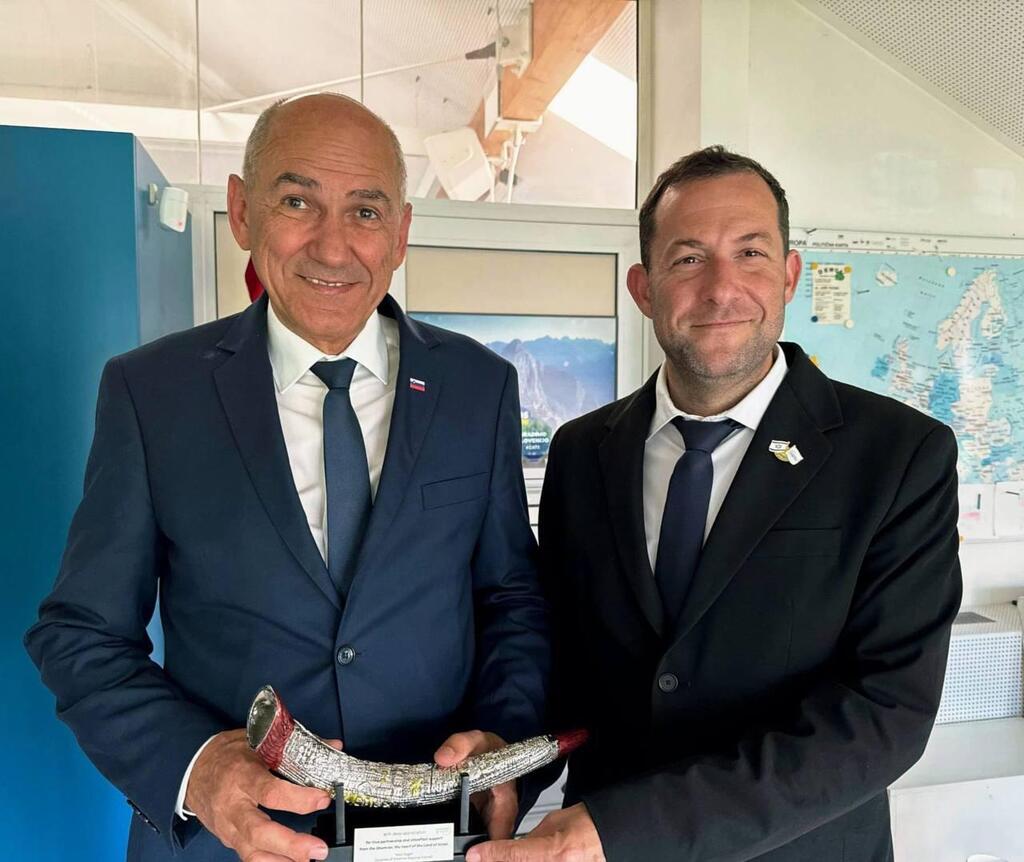
Slovenian Prime Minister Janez Janša and Samaria Regional Council head Yossi Dagan
(Photo: Samaria Regional Council)
The five Israelis targeted by Britain have differing backgrounds but are associated with far-right activism, the settlement movement or organizations operating in the West Bank.
Bentzi Gopstein is a prominent far-right activist and a follower of the late Rabbi Meir Kahane, whose Kach movement was banned in Israel over its racist ideology.
Gopstein was placed on the electoral slate of the far-right Otzma Yehudit party in two Israeli elections. Still, the Supreme Court barred him from running following petitions challenging his candidacy.
He founded Lehava, an organization that campaigns against relationships and marriages between Jews and non-Jews.
In 2024, a Magistrate’s Court convicted Gopstein of incitement to racism after he compared Arabs to cancerous growths during a memorial event for Kahane. In February 2025, a District Court accepted a prosecution appeal and also convicted him of incitement to terrorism.
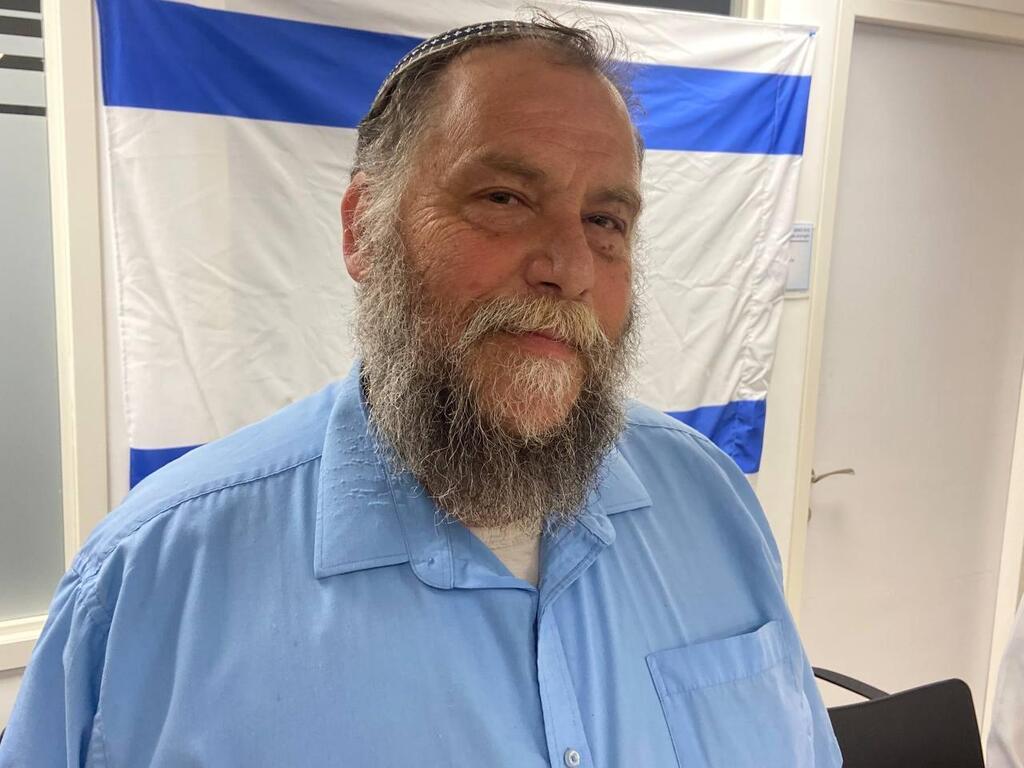
Bentzi Gopstein
(Photo: Gil Yochanan)
Responding to the British sanctions, Gopstein said he had no intention of traveling to Europe and derided the measures.
“I wish them great success with the Arab occupation they are experiencing. We would be happy to send them the Arabs from here as well,” he said. “Down with the White Paper! We in Lehava will continue to save the daughters of Israel, and they will continue imposing sanctions.”
The reference was to Britain’s 1939 White Paper, which sharply restricted Jewish immigration to Mandatory Palestine on the eve of World War II.
Baruch Marzel is another prominent far-right activist and former follower of Kahane. He has been arrested numerous times over the years on suspicion of offenses involving public disturbances and confrontations with Israeli security forces and Palestinians.
Marzel was first convicted in the 1980s of obstructing a police officer during the evacuation of an unauthorized outpost. In 2003, he was convicted of assaulting a police officer during clashes at the Gilad Farm outpost in the West Bank and sentenced to community service.
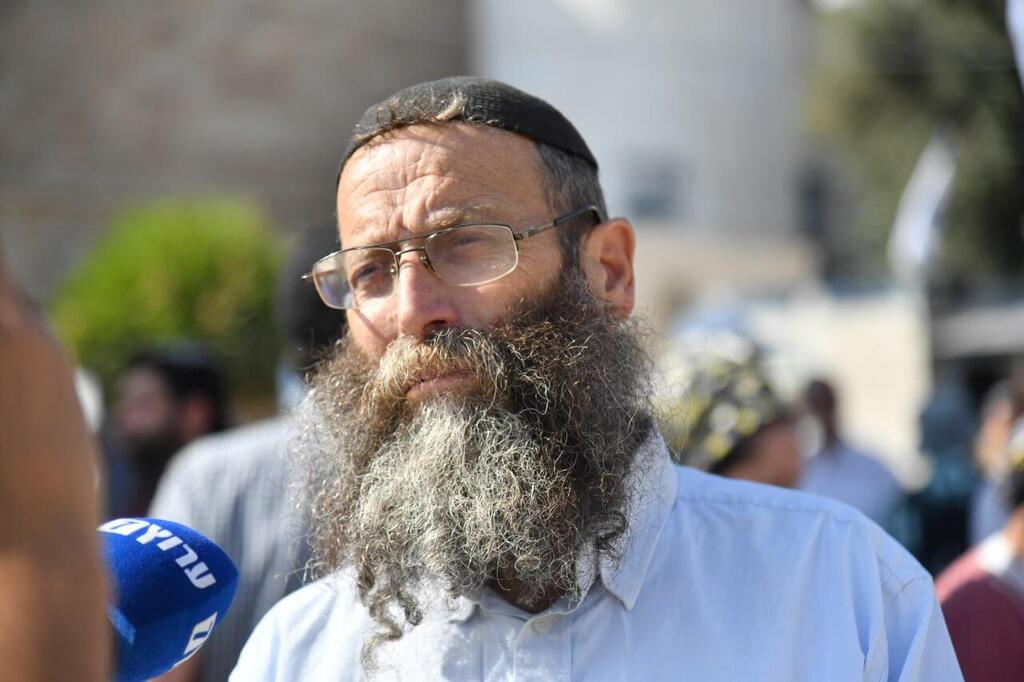
Baruch Marzel
(Photo: Yoav Dudkevitch)
In 2023, under a plea agreement involving reduced charges, Marzel was convicted of participating in a brawl and shoving another person following a confrontation with a left-wing activist in Hebron. He received a suspended prison sentence.
Marzel has run for the Knesset several times but has never been elected. In 2019, the Supreme Court barred him from running after reviewing statements including a filmed interview in which he said: “Arabs — an enemy must be expelled! You don’t try to educate them.”
Marzel has also spoken against employing Arabs, saying that “anyone who employs them is committing an offense.”
Meir Mordechai Ettinger, another Israeli sanctioned by Britain, is a far-right activist and grandson of Kahane. The Shin Bet domestic security agency has identified him as a prominent figure among the so-called hilltop youth, a loose movement of radical young settlers associated with unauthorized West Bank outposts.
Ettinger has been described as an ideological architect of a movement known as “The Revolt,” which seeks to dismantle Israel’s existing state institutions and replace them with a state governed according to Jewish religious law.
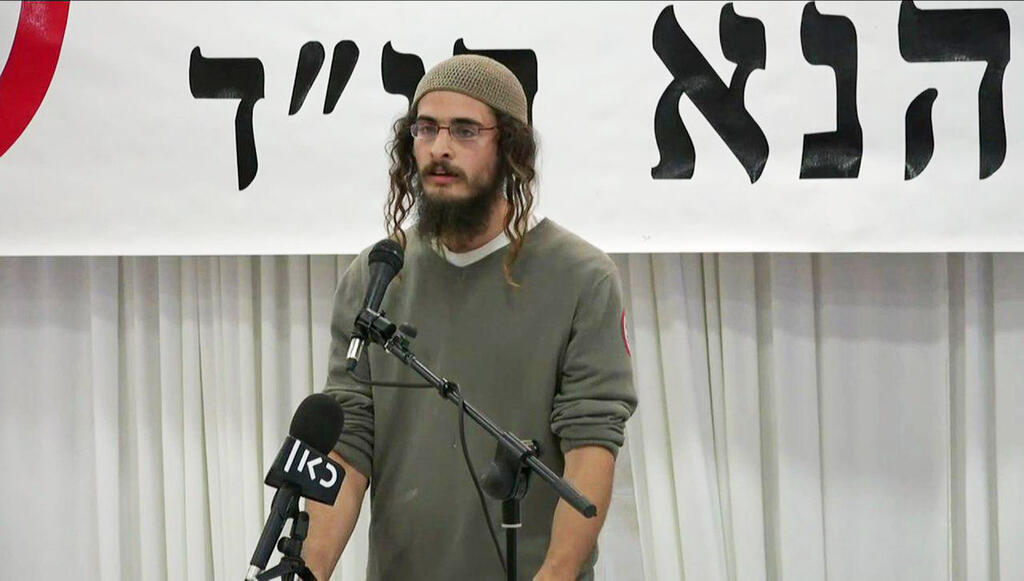
Meir Mordechai Ettinger
(Photo: Gal Arbel)
Following the deadly 2015 arson attack in the Palestinian village of Duma, in which three members of the Dawabsheh family were killed, Ettinger was held in administrative detention for about 10 months. He was not accused of participating directly in the attack. Israeli security authorities instead described his connection to the extremist milieu surrounding it as ideological.
Ettinger was previously convicted under a plea agreement of conspiracy to commit a crime with a racist motive. Israeli authorities have also issued dozens of administrative orders barring him from the West Bank and other areas.
The United States, Canada and Australia have previously imposed sanctions on him.
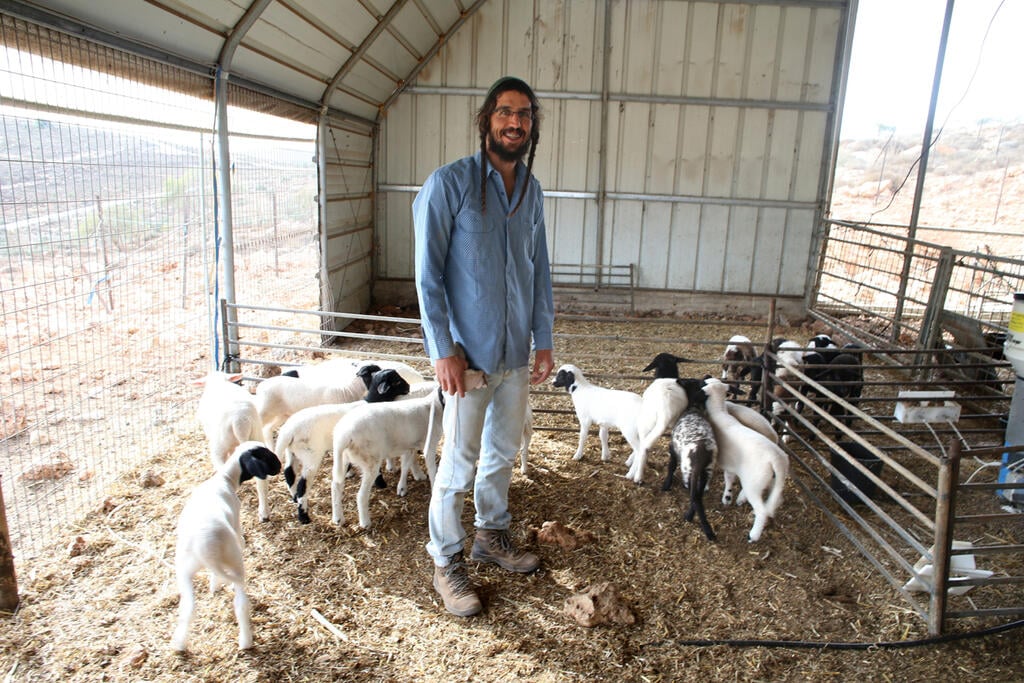
Avichai Suissa was among the founders of Hashomer Yosh, a security organization operating in West Bank settlements and agricultural outposts that takes its name and inspiration from Hashomer, an early 20th-century Jewish defense organization. Suissa previously served as the organization’s CEO.
The European Union imposed sanctions on Suissa in May, accusing him of involvement in abuses against Palestinians.
Avichai Suissa
(Photo: Amit Shabi)
Eliav Libi is a right-wing settlement activist and one of the founders of the Farms Association, which works to formalize the status of Israeli agricultural farms in the West Bank.
He has established several outposts, some of which later developed into recognized communities, including Malachei Hashalom in the Binyamin region north of Jerusalem.
Libi currently heads the Habayta Forum, which advocates Jewish settlement in parts of the West Bank designated as Areas A and B under the Oslo Accords. Under the agreements reached between Israel and the Palestinians in the 1990s, Area A was placed under Palestinian civil and security control, while Area B was placed under Palestinian civil control with varying Israeli security authority.
The organization seeks to overturn those territorial arrangements and promotes tours for politicians and other public figures at settlement outposts. Among them is the Tel Talpiot outpost in the Binyamin region, which has been evacuated several times.
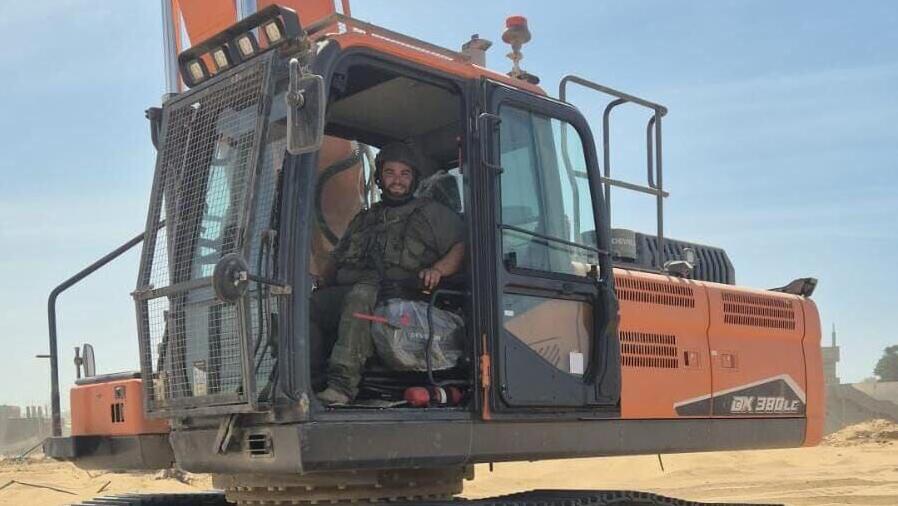
Libi’s son, David, was killed in the northern Gaza Strip on May 29, 2025, when an explosive device detonated on the bulldozer he was operating. David Libi worked as a heavy-equipment operator for a contractor carrying out infrastructure demolition work for the IDF.
David Libi
Responding to the British sanctions, Eliav Libi quoted a saying associated with Israel’s founding prime minister, David Ben-Gurion: “It doesn’t matter what the gentiles say; what matters is what the Jews do.”
“I say clearly: We will not be deterred and we will not stop,” Libi said. “We will continue to struggle and fight for the people of Israel and the redemption of Israel.”
He called on the Israeli government to adopt a clear policy and provide full support to individuals and organizations targeted by international sanctions, which he described as “antisemitic persecution and a blatant violation of Israeli sovereignty.”
“We will continue to build, settle and put down roots in our ancestral homeland,” he said.
‘We will respond with more construction and communities’
Israel Ganz, head of the Binyamin Regional Council and chairman of the Yesha Council, the umbrella organization representing Israeli settlements in the West Bank, also denounced the British measures as antisemitic.
“The British decision to boycott products from Judea and Samaria and impose sanctions on Jews simply because they live and operate in parts of their homeland is a disgraceful antisemitic step,” Ganz said.
“Instead of dealing with the serious problems at home, the British government is assembling a coalition of pro-Palestinian countries for an economic war against Jews in Binyamin, Judea and Samaria. It is a moral disgrace.”
Ganz said international pressure would not stop settlement expansion.
“Our message to Britain and anyone joining the boycott is clear: You will not succeed in removing the Jews from Judea and Samaria,” he said. “For every attempt to harm the settlement enterprise, we will respond with more construction, more communities and Israeli sovereignty.”
Shai Alon, head of the Beit El Local Council, a settlement north of Jerusalem, called on the Israeli government to reconsider cooperation with Britain in response to the sanctions.
“I call on the Israeli government to examine retaliatory measures, including reducing cooperation with Britain in cyber, artificial intelligence, medicine, agriculture, water technologies and defense industries,” Alon said.
“Those who seek to benefit from Israeli innovation cannot expect a one-sided relationship,” he added. “Reciprocity and national respect are fundamental conditions in relations between countries.”