

The Shurat HaDin conference on combating antisemitism opened Sunday at the Museum of Jewish Heritage in New York. Former IDF Chief of Staff Herzi Halevi addressed the failures surrounding the October 7, 2023, Hamas attack, describing it as "a failure that could have been prevented" and calling for a thorough examination of what went wrong.
Asked about establishing a state commission of inquiry into the failures, Halevi said, "As part of the healing process, Israel must complete its investigation and ask difficult questions."
Gallery
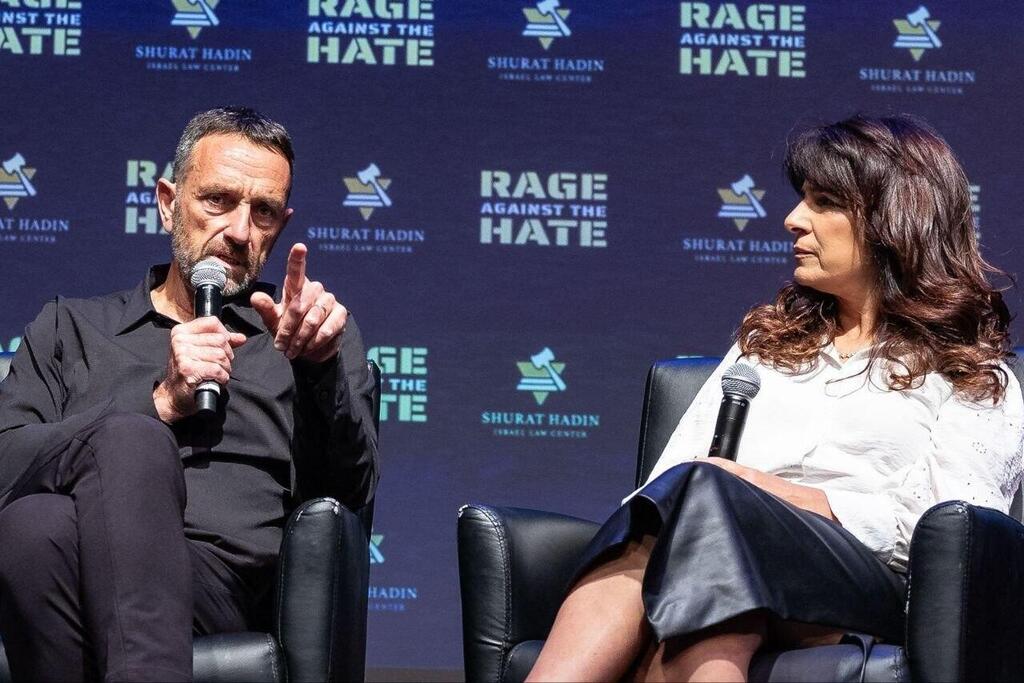
Former IDF Chief of Staff Herzi Halevi at the Shurat HaDin conference in New York
(Photo: Yuval Golan, Shurat HaDin conference)
The conference brought together dozens of pro-Israel organizations, Jewish opinion leaders, American influencers, foreign policy and security experts, international legal scholars, academics and researchers.
Halevi also addressed the IDF's military operations in the Gaza Strip, saying, "Contrary to popular belief, without military pressure in Gaza, we would not have been able to bring the hostages back."
Asked whether "absolute victory" was achievable, he did not directly answer the question, saying instead, "It took us a long time to convince the political echelon to conduct a ground maneuver in Gaza."
The conference, now in its third year in New York, is organized by Shurat HaDin, an Israeli legal advocacy organization, and led by its president, attorney Nitsana Darshan-Leitner.
Addressing the October 7 massacre, Halevi rejected claims that the attack had been facilitated by an inside betrayal.
"There was absolutely no betrayal. The political echelon and the country's leadership need to state this clearly and unequivocally. I can explain exactly how October 7 unfolded, down to the smallest detail. I know these individuals, and I cannot believe that any of my colleagues, after decades of service during which they risked their own lives, would suddenly decide to assist Hamas.
"Furthermore, from a practical standpoint, aiding Hamas would require not just a single collaborator, but an extensive network. Yet, even after three years, not a single such person has been found."
Regarding the establishment of a state commission of inquiry, Halevi said, "As part of the process of learning and healing, Israel must complete its investigation and ask difficult questions, just as we have done within the IDF. This is of great importance. October 7 was a failure that could have been prevented.
"We must look failure in the eye in order to be able to fix things. I look at a photograph of Shiri Bibas and see the fear in her eyes. We were not there in time to help and save her. That is the failure."
The mistaken assumptions before October 7 and Israel's warning to Hezbollah: 'We are watching you closely'
Asked whether "absolute victory" was possible, Halevi said, "It took us a long time to convince the political echelon to conduct a ground maneuver in Gaza. We needed to break the pattern of small, limited rounds of conflict that relied solely on airstrikes.
"I know some people think otherwise, but without strong military pressure inside Gaza, we would not have been able to bring the hostages back. I can prove this. Unfortunately, we made mistakes. Our own bombs killed hostages. Of course, this was not intentional. We did not know they were there. We underwent an accelerated learning process to improve our ability to pinpoint the exact locations of the hostages, with the goal of preventing such errors."
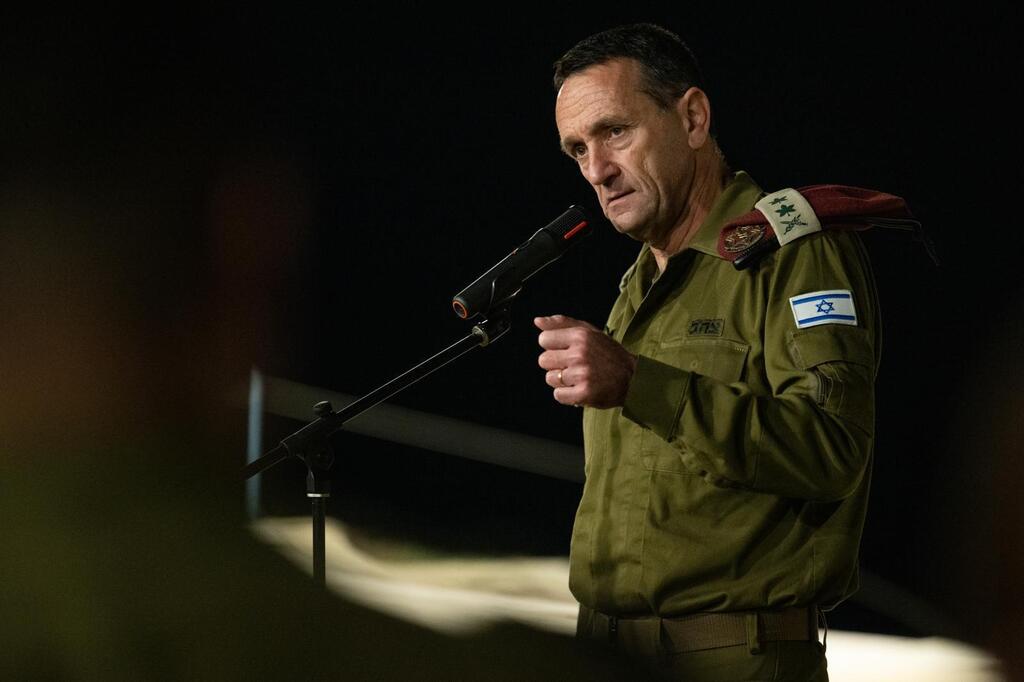
Halevi acknowledged the mistaken assessment: 'Hamas invested significant effort into leading us to this assessment'
(Photo: IDF Spokesperson's Unit)
Looking back at the assumptions that shaped Israeli policy before the attack, the former military chief said, "We should have gone to war in Gaza, but our order of priorities was: first Iran, then Hezbollah and only then Hamas, because we did not know that Hamas intended to carry out an operation of this scale.
"The prevailing view within the IDF, the Shin Bet and the political echelon was that Hamas did not want war because it sought to demonstrate its ability to provide for the two million Palestinians in Gaza, with the ultimate goal of eventually seizing control of Judea and Samaria as well. That was our concern. Hamas invested significant effort into leading us to this assessment."
Addressing the surprise attack and fears that the fighting could spread to multiple fronts, Halevi said, "Yahya Sinwar did everything in his power to catch us off guard and launch simultaneous operations. Every point along the Gaza border was attacked immediately after 6:29 a.m.
"Sinwar was also confident that we would not conduct ground maneuvers within the Strip, as he was convinced that Israel viewed Gaza as an overly complex combat theater. Regrettably, we contributed to that perception.
"However, by the late morning of October 7, we conveyed a message to Hezbollah: 'We were caught by surprise in Gaza, but we are watching you closely. Should you make even the slightest move, a devastating blow will fall upon Lebanon.'"
Shurat HaDin President Nitsana Darshan-Leitner, who initiated the conference, concluded, "The existential struggle of the State of Israel and the Jewish people is no longer confined to the military battlefield alone. Surging antisemitism and modern-day hatred of Israel are fueled by massive funding, leveraging artificial intelligence, social media and international legal systems in an attempt to defeat us.
"Our response must be an unprecedented collaboration among legal experts, diplomats, researchers and technology professionals. It is time to shift from defense to offense and to exact a heavy price from anyone who seeks to undermine our right to live securely in our own land."