

The relative optimism that prevailed, especially in the Arab world, regarding the possibility that ongoing talks in Qatar could produce a ceasefire agreement and the release of hostages as early as this week cooled on Tuesday afternoon.
Qatar’s Foreign Ministry spokesperson Majd Al-Ansari announced that Israel and Hamas still haven’t begun discussing the actual terms, and are continuing to work on “a general framework document.” Qatar also expressed hope that the U.S. Middle East envoy, Steve Witkoff, who is expected to join the talks this week, will help bolster efforts to finalize an agreement.
Gallery
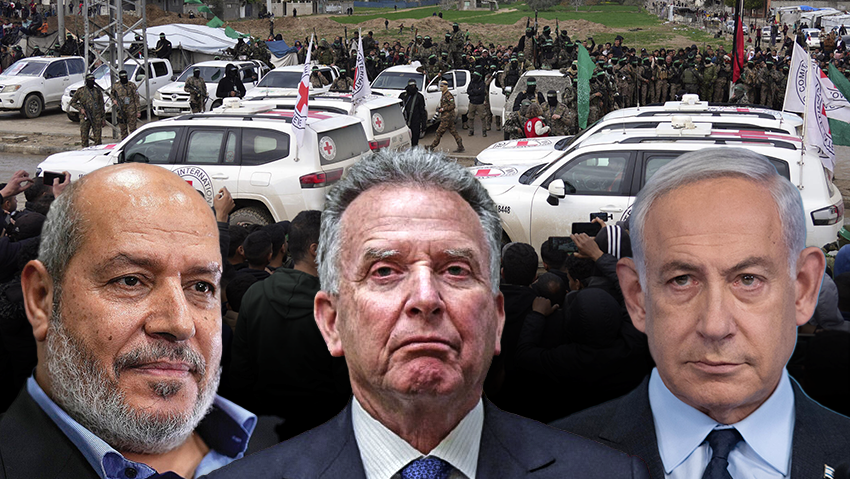
Khalil al-Hayya, Steve Witkoff, Benjamin Netanyahu
(Photos: SkcJicnokl, Alex Kolomoisky, Abdel Kareem Hana/AP, Evelyn Hockstein/Pool/Reuters)
The draft framework under discussion calls for a 60-day ceasefire, the release of approximately 10 living hostages in two stages—eight on the first day and two more on the 50th—alongside the return of 18 bodies in three stages. It also includes the release of Palestinian prisoners and increased humanitarian aid to Gaza. U.S. President Donald Trump is expected to serve as a guarantor of the negotiations to end the war.
The Saudi channel Al Hadath reported Tuesday that negotiations are progressing slowly due to disagreements between the parties. According to the report, Israel is refusing to withdraw from the Morag Corridor, thus pulling back to the Philadelphi Corridor, and is unwilling to relinquish the aid distribution points in Rafah.
Al‑Ansari said during a midday press conference: “We aim to reach a framework agreement between the two sides and are trying to bridge their gaps.” He welcomed Witkoff’s intention to join the Doha talks, believing it “will give impetus to achieving an agreement.” He stressed that “both sides are positively involved in the negotiations,” and warned: “Any escalation on the ground will affect the mediation.”
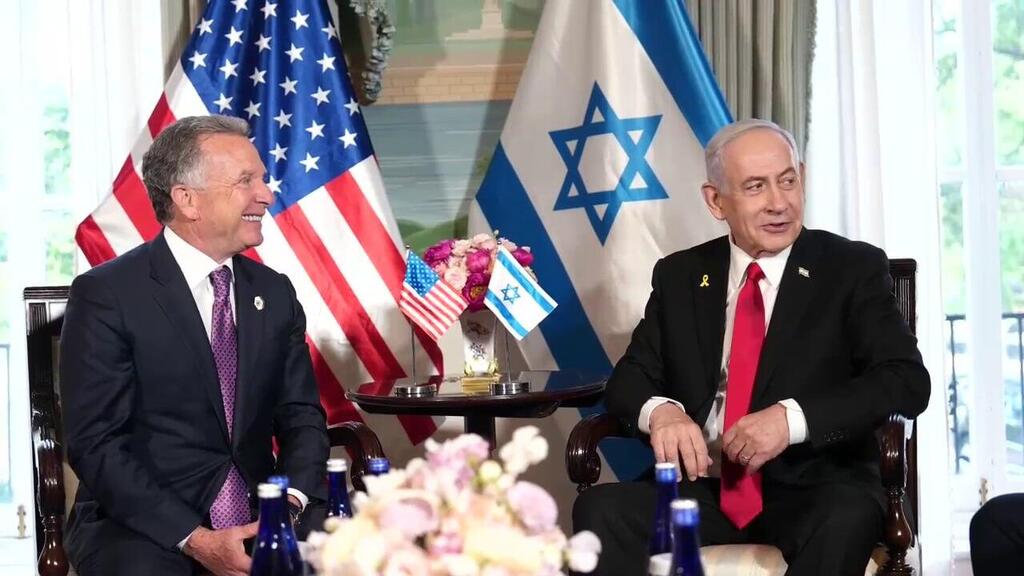
Steve Witkoff and Benjamin Netanyahu at the White House
(Photo: Itay Beit-On/GPO)
Qatari newspaper The New Arab reported that Witkoff will arrive in Doha on Friday or Saturday to announce the completion of the agreement. According to a source, he will not arrive in Qatar until participants have finalized all terms. The source estimated that the outstanding issues are expected to be resolved on Thursday, and expressed optimism about a positive "major event" that will take place then. This report is unconfirmed and slightly contrasts with Al‑Ansari’s statements.
Names and aid: the core disputes
Sources in Hamas told the Saudi newspaper Asharq Al-Awsat that “the negotiations are more serious than ever before, but no agreement has been reached on any of the disputed issues.” The sources said the amendments submitted by the Palestinians are critical from their perspective—and that only U.S. pressure could change their position.
One of the main sticking points, they said, relates to humanitarian aid, with Hamas demanding a return to the previous aid distribution mechanism. By contrast, a source quoted in The New Arab claimed that an agreement was reached to allow aid into Gaza through the United Nations, without specifying what would happen to the Qatar-administered aid fund.
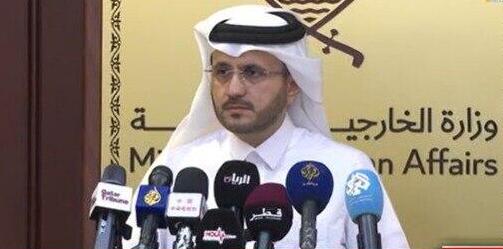
Qatar’s Foreign Ministry spokesperson Majd Al-Ansari
Hamas also believes that Israel will refuse to release high-profile terrorists held in Israeli prisons like Marwan Barghouti or Ahmad Sa'adat, whom it considers “aces.” The mediators, the sources added, are working to draft language that would be acceptable to both sides.
According to the source quoted in The New Arab, Israel is demanding the names of the 10 hostages who would be released in the first stage of a deal. Hamas, however, is willing to provide those names only after the negotiations on the IDF’s deployment maps are concluded, and in return for the names of Palestinian prisoners to be released.
Regarding Hamas’ demand for U.S. guarantees that the war won’t resume after a ceasefire, the source said Trump “will act to ensure the war does not continue after the truce,” though no official statement has been made on the matter.
Qatar: No timeline yet
Qatar’s Foreign Ministry spokesman Al-Ansari reiterated that, at this point, there is no clear timeline for reaching or launching an agreement.
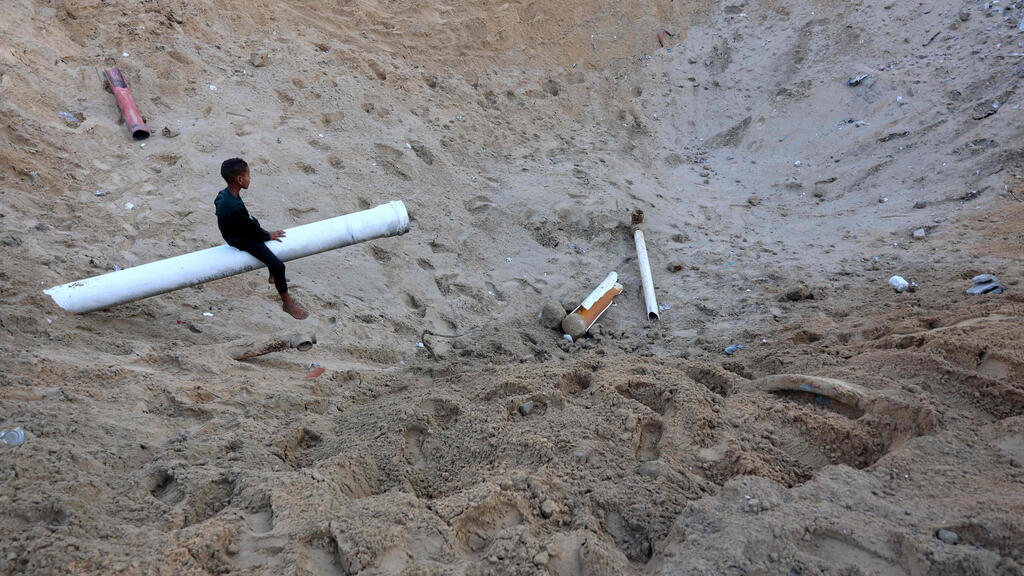
A crater formed in Gaza City's Rimal neighborhood after the attack
(Photo: Omar Al-Qattaa / AFP)
“We are discussing a general framework document, and talks on the details have not yet begun,” he said. “We are trying to bridge the gap. It’s too early to talk about specifics, but there are positive signs. The process takes time, and no definite timeline can be given. The mediators are focused on reaching a phase where the war ends.”
Get the Ynetnews app on your smartphone: Google Play: https://bit.ly/4eJ37pE | Apple App Store: https://bit.ly/3ZL7iNv
Al-Ansari added that he could not speak to the Israeli delegation’s authority or mandate but noted that “the level of engagement is positive.” In recent days, Palestinian officials have claimed the Israeli delegation lacks a genuine mandate to strike a deal. The Israeli team includes former senior Shin Bet official M., hostage affairs coordinator Gal Hirsch, Netanyahu adviser Dr. Ophir Falk, and other security officials.
Who will govern Gaza 'the day after'? A senior official says maybe Israel
A senior political official visiting Washington with Prime Minister Benjamin Netanyahu said Tuesday morning that Israel has no intention of withdrawing from the Philadelphi Corridor. According to the source, Netanyahu sees Hamas’ response to the Qatari proposal as essentially a “no,” though he added, “the gaps are small enough for us to enter into talks.” He continued: “We hoped the answer would be ‘yes’ and it would take a few days, but we’re working on it. It could take longer.”
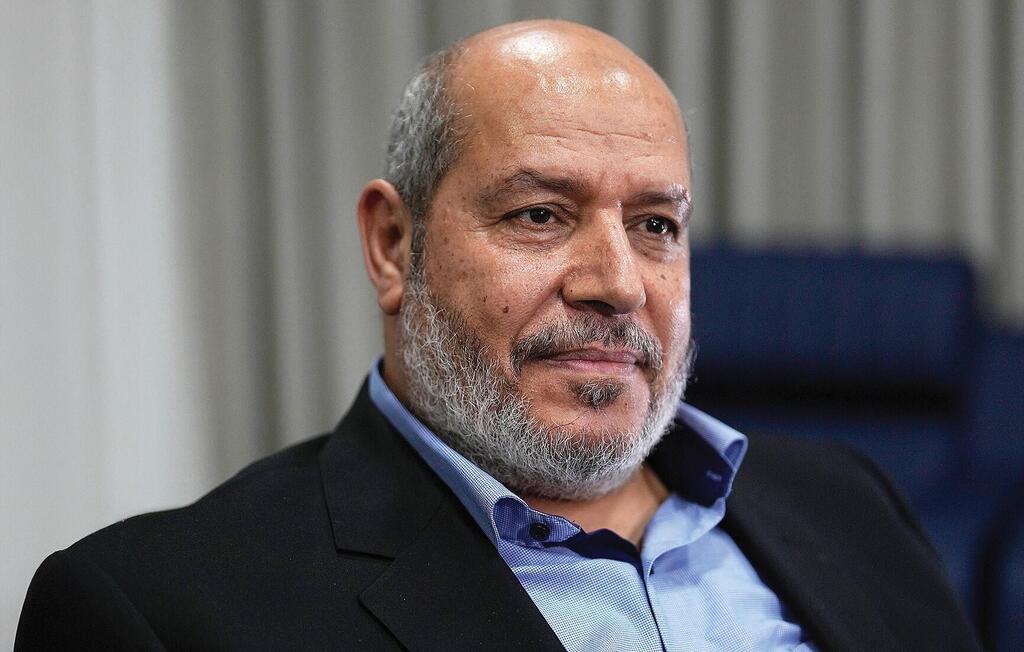
Hamas' Khalil al-Hayya
(Photo: Khalil Hamra.AP)
The same official clarified that Netanyahu expects Gaza to be governed by Palestinians “the day after”—but not by the Palestinian Authority or Hamas. “There may be Hamas-aligned clans,” he said, “but the PA is a discredited entity that cannot be trusted with anything. The prime minister wants it dismantled militarily and Gaza demilitarized.”
The official did not rule out the possibility that “Israel will be responsible for Gaza’s security apparatus for a time. Perhaps even for its governance, at least temporarily.”
Hamas has signaled for months that it does not intend to govern Gaza after the war, but officially it refuses to disarm or accept exile. On Friday, reports suggested the group might show some flexibility, but so far no progress has been reported on that front—a matter expected to dominate negotiations during the proposed 60-day ceasefire.
Israeli sources told Reuters on Tuesday that “the gaps between Israel and Hamas in the Qatar talks can be bridged, but it may take more than a few days to reach a deal.” Another Israeli official said progress had been made, though a Palestinian source told Reuters there are still significant differences, particularly regarding the entry of humanitarian aid.