

They were killed, but they are still with us — and not only "in spirit," as the Iran-led Shiite axis likes to proclaim. Many operatives and senior figures in the axis, whether in Iran, Lebanon, Iraq or Yemen, maintain accounts in their own names on various social media platforms while they are alive. The accounts generally contain documentation of their activities, from meetings and trips around the world to statements they make to the media. Over the years, they accumulate followers and build their public personas. But what happens after they are killed? The senior figures themselves, of course, were not the ones actually operating the accounts, and behind the scenes, the social media managers of the Iran-led Shiite axis remain.
The accounts, which have amassed anywhere from tens of thousands to millions of followers, are not shut down. They continue to amplify the messages of the Shiite axis and those of figures who are no longer alive. Some of the pages become a kind of memorial, incorporating updated messages in response to regional developments, while others continue operating as usual.
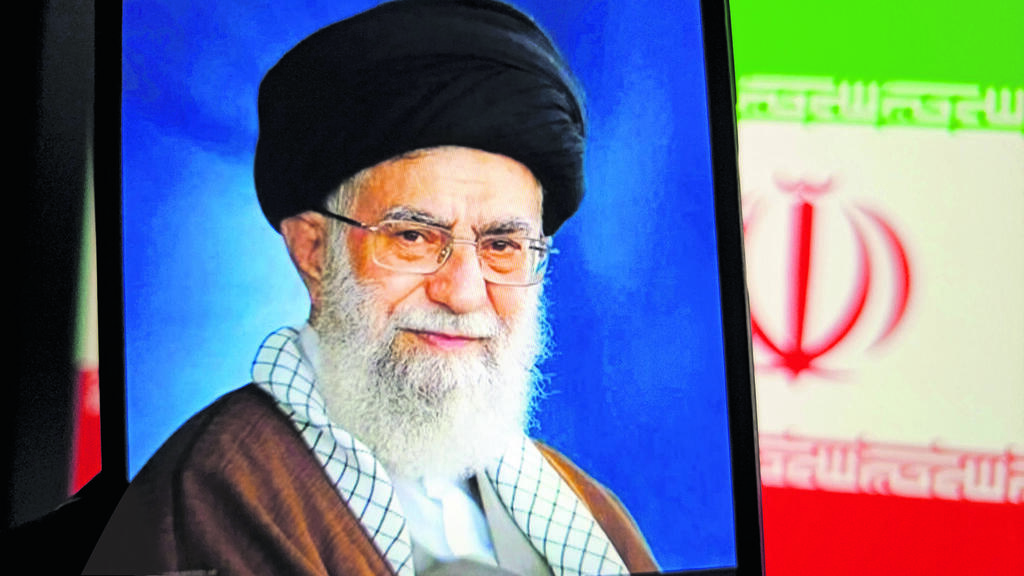
Ali Khamenei
(Photo: FotoField/Shutterstock)
Iran's former supreme leader, Ali Khamenei, was known for his accounts in various languages on X. The media frequently quoted his posts there, including those from his Hebrew-language account. While the social media manager of the Hebrew account, which has more than 64,000 followers, appears to have become somewhat less attentive, activity continues on his larger English- and Persian-language accounts.
On Sept. 25, the English-language account posted an edited video with an ominous tone featuring Netanyahu's speech at the United Nations General Assembly. The video highlights various delegations leaving the hall. It was accompanied by a quote from Khamenei dated Aug. 24, 2025: "oday, our enemy, the Zionist regime [as stated in the original], is the most despised regime in the world." The account has more than 2 million followers.
Another Ali who remains with us even after his death is Ali Larijani, who previously served as secretary of Iran's Supreme National Security Council. Larijani was highly active on social media. Since he was killed in Operation Roaring Lion, someone has continued operating both his Telegram channel and his X account. On Sept. 17, both posted a video featuring Lebanese children from the Imam al-Mahdi Scouts, Hezbollah's youth movement, carrying pictures of Larijani and his son Morteza, who was killed alongside him in the March 17 strike.
From there to Lebanon, and another, more unusual case involving another Ali — this time Ali Shoeib, who was killed on March 28. According to the IDF Spokesperson's Unit, he served in Hezbollah's Radwan Force while posing as a journalist for Al-Manar, a television channel affiliated with the terrorist organization. Shoeib was a very well-known figure who reported from the border with Israel for many years, disclosed the locations of IDF forces and had a large following.
Although his most recent X account has not been active since he was killed, his Telegram channel, which has more than 63,000 followers, continues reporting as though he were still alive, under the title: "The page of the martyred journalist Ali Shoeib."
Former Hezbollah Secretary-General Hassan Nasrallah, whose killing two years ago was commemorated in Lebanon on Saturday, did not maintain personal accounts. But behind many other enemies are entire social media teams that remain with us long after the killings.
They are killed, but their accounts remain. Anyone who follows senior figures in the axis knows that their statements and messages continue to weigh on us both in life and in death. Former Hezbollah Secretary-General Hassan Nasrallah, whose killing two years ago was commemorated in Lebanon on Saturday, did not maintain personal accounts. But behind many other enemies are entire social media teams that remain with us long after the killings, continuing to amplify and promote anti-American and anti-Israel messages. With such large audiences, they are probably succeeding in exerting influence as well.