

Australia vowed to tighten its already strict gun laws on Monday as the country began mourning the victims of its deadliest mass shooting in nearly three decades, a terrorist attack in which a father and son murdered 15 people at a Hanukkah celebration on Sydney’s Bondi Beach.
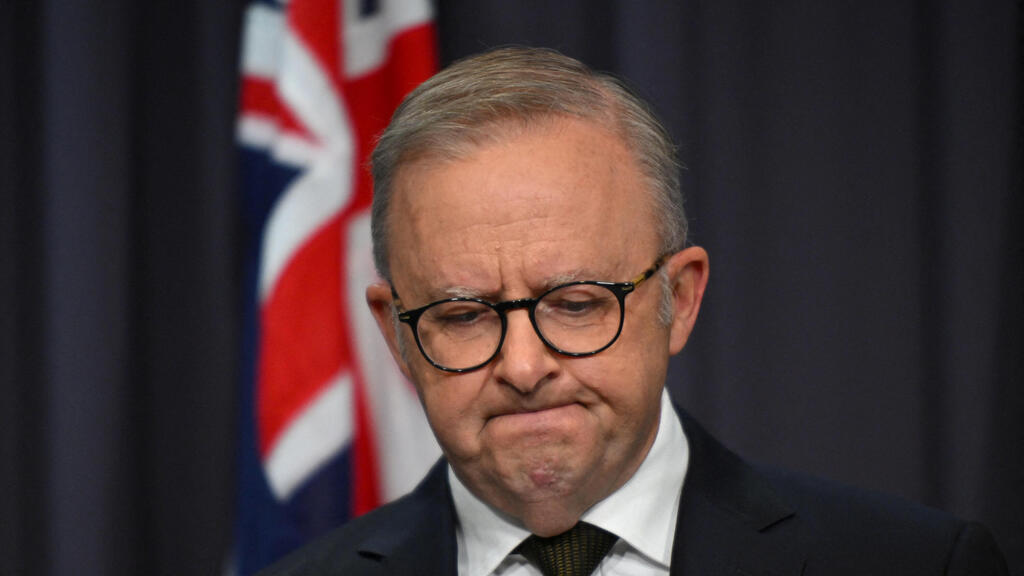
Prime Minister Anthony Albanese said authorities would review firearm licensing procedures after it emerged that the older attacker had legally owned multiple weapons, despite prior security concerns surrounding his family. “This was a heinous act of terror,” Albanese said, adding that Australians expected the government to “leave no stone unturned” in preventing similar attacks.
Minute by minute footage of the terror attack in Bondi Beach


The terrorist, identified as 50-year-old Sajid Akram, was killed at the scene after an extended exchange of gunfire with police. His 24-year-old son, Naveed Akram, who participated in the terror attack, was critically wounded and remains hospitalized under police guard. Forty-two others were injured, including two police officers.
The shooting unfolded shortly before 6:50 p.m. on Sunday during a Chabad-organized public Hanukkah event attended by hundreds of Jewish families, tourists, and beachgoers. Eyewitness and surveillance footage showed sustained gunfire lasting several minutes as families fled in panic and victims were struck while attempting to shield loved ones.
Police said the terrorists used at least three long rifles. An Islamic State flag and improvised explosive devices were found inside their vehicle, underscoring the terror-related nature of the assault. Authorities later confirmed that Sajid Akram had held a firearms license since 2015 and possessed six registered weapons, raising urgent questions about oversight failures.
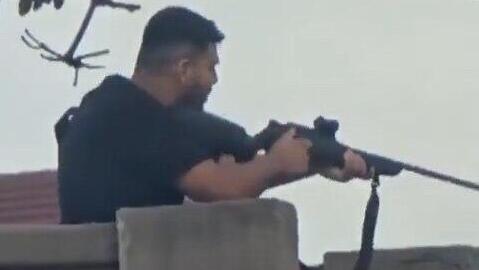
The surviving terrorists Naveed Akram
Australian intelligence officials revealed that the Australian Security Intelligence Organisation had investigated Naveed Akram in 2019 over suspected ties to an ISIS-linked cell operating in Sydney. At the time, officials said there was no indication of an imminent threat. Critics have since questioned whether warning signs were missed and whether Jewish community events received adequate protection.
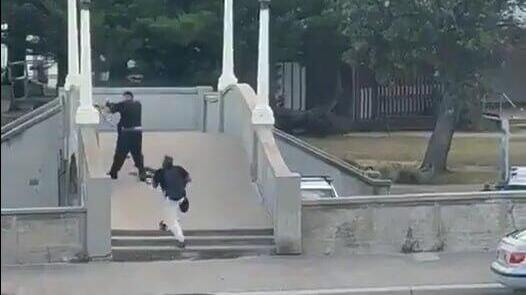
Terrorists Sajid Akram, and Naveed Akram
Sajid Akram was a Pakistani-born Australian citizen who arrived in the country in 1998 on a student visa. His son was born in Australia. The two lived in a modest home in the western Sydney suburb of Bonnyrigg and had recently been staying at an Airbnb property in Campsie, which police believe may have been used to prepare the attack. Raids on both locations led to additional arrests and the seizure of weapons.
The victims included prominent members of Sydney’s Jewish and Israeli community, among them rabbis, Holocaust survivors and a 10-year-old girl. Those killed included Rabbi Eli Schlanger, a Chabad emissary who helped organize the event; Reuben Morrison, a longtime member of the Chabad community in Australia; Holocaust survivor Alex Kleytman, 87, who was killed while protecting his wife; Rabbi Yaakov Halevi Levitin; Dan Elkayam, a 27-year-old French-Israeli immigrant; and Matilda, whose family released her photograph but withheld her surname.
The massacre sent shockwaves through Australia’s Jewish population. Jewish and Israeli-owned businesses closed across Sydney, and several Hanukkah celebrations were canceled nationwide. Community leaders warned that the attack had shattered a long-held sense of security.
Israel has closely followed the investigation, with Israeli officials urging Australia to bolster security for Jewish institutions and confront rising antisemitism. Israeli intelligence officials have offered assistance, and Mossad has reportedly shared expertise with Australian authorities.
Amid the horror, one act of heroism stood out. Ahmed al Ahmed, a 43-year-old Muslim migrant and father of two, was seriously wounded after charging one of the terrorists from behind and wresting away his rifle, an action credited with saving numerous lives. World leaders, including U.S. President Donald Trump, praised his courage.
As Australia debates gun laws and counterterrorism failures, Jewish leaders say the central issue must not be obscured: the attack was a deliberate antisemitic act of Islamist terror, carried out during a Jewish religious celebration. For many, the demand now is not only stricter gun controls, but a clearer moral stance and stronger protection for Jewish life.