

Hours after a deadly terror attack Monday at a bus stop in Jerusalem’s Ramot neighborhood left six Israelis dead, commuters and locals returned to the site that had become a scene of bloodshed.
Police raised the national alert level ahead of the upcoming Jewish holidays, but on the ground residents expressed a mix of unease and determination to continue daily life.
By evening, locals gathered at the bus stop to light memorial candles. A handwritten sign beside them read: “For the elevation of the souls of all the victims, may their souls rest in heaven.”
The first moments of the shooting.


“I work here just a kilometer away. This is my workplace. I’m not afraid,” said Esther Aviram, a teacher from the neighborhood waiting for her bus home. “We are people of faith, we believe in divine providence. I also feel that the Torah learned here protects this place. But alongside faith comes responsibility.”
Aviram spoke personally as well: “I have a son who is a combat soldier who was injured and cannot fight right now, and I have a daughter serving in the Border Police in the Jordan Valley. I am the mother of two fighters. Since October 7, we’ve been in a constant state of mobilization. We are doing our part, but someone needs to allow them to protect the people.”
Beside her, Aryeh, another resident, said the area is no stranger to violence: “This is not the first time. The area is exposed.” He accused the authorities of lacking control: “There needs to be order, cameras, policing. A patrol car speeding by at 120 kilometers an hour won’t catch anyone. It shouldn’t take long—someone needs to do some soul-searching.”
Still, he insisted: “Life goes on. We have no other choice. We won’t stop because of anyone. There are risks, but we keep going.”

The victims of the attack were identified as Rabbi Mordechai Steintzeg (known as Dr. Mark), 79, whose food products are sold in nearly every supermarket in Israel; Rabbi Levi Yitzchak Pash; Yaakov Pinto; Rabbi Yisrael Metzner; Rabbi Yosef David; and Sarah (Sarita) Mendelson. The youngest victim was 25.
According to security sources, the two Palestinian assailants—who did not have permits to be in Israel—likely crossed that morning through a known breach in the separation barrier around Jerusalem, carrying makeshift Carlo submachine guns. There was no prior intelligence warning of the attack, and neither suspect was known to security services.

Six people were killed on the Jerusalem bus attack
The shooting began shortly after 10 a.m., when the attackers opened fire on people at the bus stop, hitting two buses on lines 62 and 320. In addition to the six killed, several others were wounded, including some seriously.
The attackers were killed at the scene by an ultra-Orthodox IDF soldier from the Hasmonean Brigade and a yeshiva student carrying a licensed handgun.
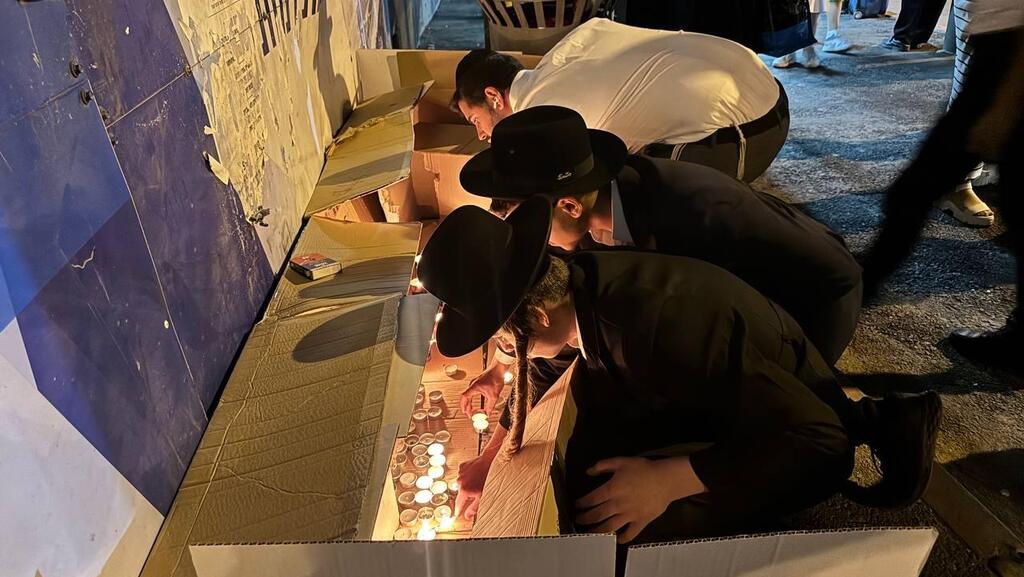
Candles at the site of the attack at Ramot Junction in Jerusalem
(Photo: Liran Tamari)
“I saw people running and understood I had to engage,” said Sgt. Sh., the soldier. “I was at the junction and heard gunfire. I went toward the bus and saw the terrorists. Together with a few civilians we identified them, opened fire until we saw they were neutralized, and then moved to help the wounded.”
The yeshiva student, identified only as Y., described the moment: “Suddenly I heard gunfire. It took me a moment to realize it was a terror attack. People started running and shouting. One civilian took a position and returned fire, and I simply joined him. I only had 10 bullets in my magazine, so I couldn’t think too much. The terrorists fired back. I moved behind the concrete barriers, crouched, then took another position. That’s when we brought them down. I didn’t feel particular stress—I acted calmly. I always wondered what would happen if I was caught in an attack, and thank God I acted correctly.”