


In early September 2023, a significant meeting took place at a hotel in Jerusalem. During the meeting, official Israeli representatives asked a senior Qatari official to increase the transfer of funds to Hamas in Gaza, money they knew, and the Qatari official also knew, would not reach needy Palestinian families but rather Hamas’ governing apparatus.
Until now, it had been reported, including in a New York Times investigation published in December 2023, that Israel asked Doha to continue transferring funds to Hamas. It now emerges that Israel went further and actively sought to increase those transfers in response to Hamas threats of escalation in Gaza.
Gallery
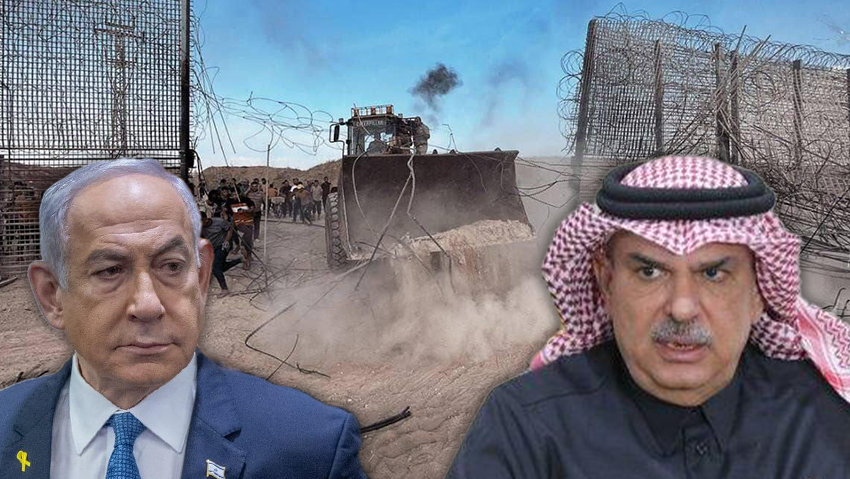
Mohammed al-Emadi, Qatari official responsible for transferring millions of dollars to Hamas
(Photo: X, Chaim Goldberg)
The guest of honor at the meeting was Mohammed al-Emadi, the Qatari official who for years oversaw the transfer of hundreds of millions of dollars to Hamas, with the knowledge and approval of successive Israeli governments. Ahead of the meeting, tension mounted within Israel’s security establishment and political leadership amid rising friction along the Gaza border and renewed talk of reviving the so-called return marches.
‘Return camps’ threat
That same week al-Emadi arrived in Israel, Israeli security officials received reports, based on information from the Palestinian Authority and Palestinian media, that Hamas had begun reestablishing ‘return camps’ in northeastern Gaza and preparing them with heavy equipment. The date was August 30.
Representing Israel at the meeting, on behalf of the political leadership, were the head of the Shin Bet’s southern district, known by the codename Oscar; the Coordinator of Government Activities in the Territories, Maj. Gen. Ghassan Alian; and representatives of other agencies. The goal was to address Hamas’ claims and demands.
The background was a broad assessment across the security establishment that Hamas was not seeking full escalation and was using confrontations near the border fence to extract economic concessions.
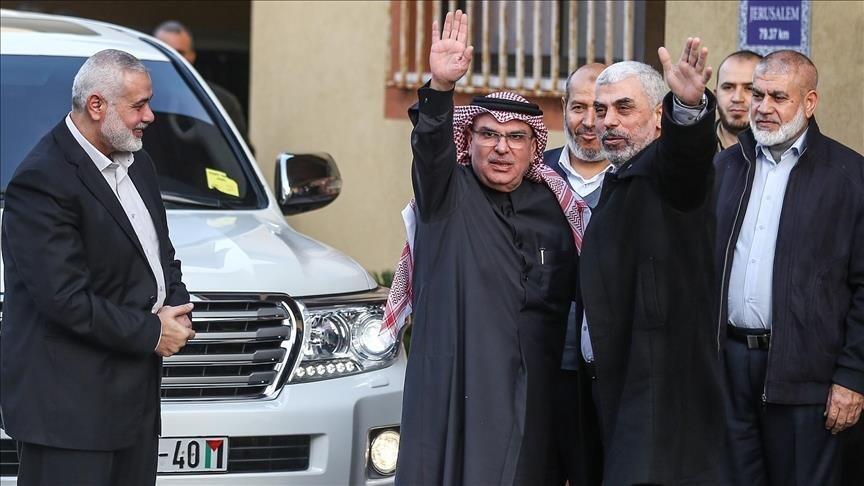
Al-Emadi alongside Yahya Sinwar and Ismail Haniyeh
(Photo:Anadolu Agency)
About a month before the meeting, another senior Qatari official visited Gaza to prepare the ground for al-Emadi’s talks. He met with Hamas leader Yahya Sinwar, senior political bureau member Rawhi Mushtaha and others. After leaving Gaza, Qatar conveyed messages to Israel stating that Hamas was interested in stability and did not want escalation. Sinwar requested an increase in fuel allocations for the power plant for August and September due to the summer heat. He also demanded that fuel purchases from Egypt, financed by Qatar, be increased from $3 million a month to $7 million. According to the messages, the Qatari diplomat told Hamas that Qatar was not willing to approve the request.
At this point, it is important to explain the circular arrangement. Beginning in late 2021, in an effort to prevent direct cash transfers to Hamas, Israel, Qatar and Sinwar agreed that Qatar would purchase fuel in Egypt and transfer it as a donation to Hamas authorities. Hamas then sold the fuel to gas stations in Gaza. The sums appeared modest, between $3 million and $10 million, but Hamas profited far more. The proceeds were used to pay government employees. This money did not go to the needy or toward poverty reduction.
‘Quiet’ in exchange for fuel
The escalation in Gaza and the renewal of the return marches, later revealed to be a Hamas deception, were interpreted by the Shin Bet, Military Intelligence and COGAT as pressure tactics aimed at increasing cash flows into Gaza. Summary after summary and report after report focused on the ‘al-Emadi visit.’
The prevailing assessment within the security establishment was that Hamas reignited border confrontations in advance of the visit.
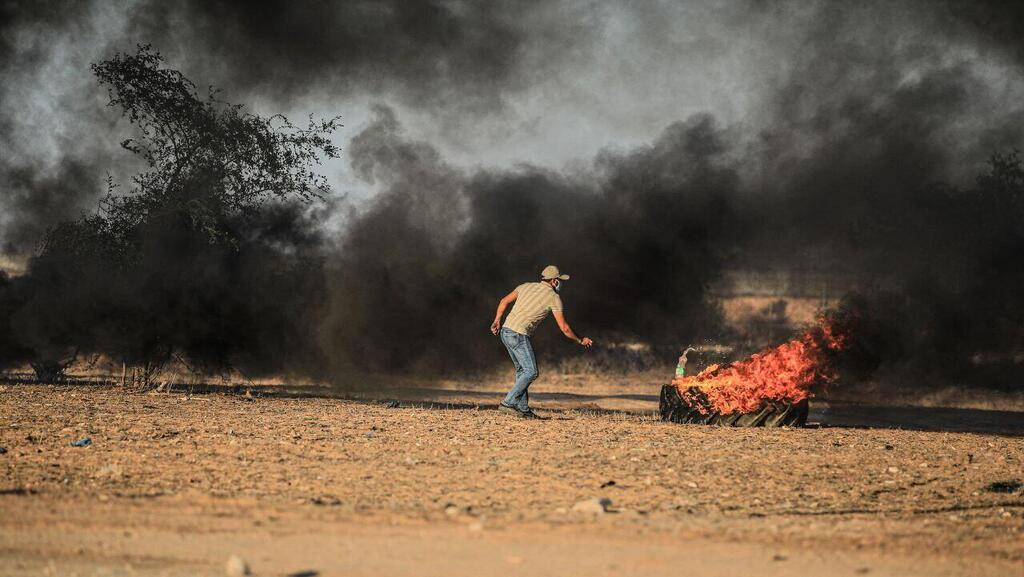
The escalation in Gaza in September 2023, a Hamas deception
This is why the early September meeting at the Jerusalem hotel was so significant. It dealt with Hamas demands, including fuel for the power plant, fuel purchases from Egypt and permits for workers. During the meeting, Israeli representatives asked al-Emadi to increase fuel purchases from Egypt for Hamas, effectively to ensure the continuation of calm.
Al-Emadi said he could not approve the request on the spot.
Later in September, Mossad Director David Barnea traveled to Doha for meetings with senior Qatari officials to try to regulate the continued transfer of funds to Hamas. As reported by the New York Times, the Qataris asked Barnea whether they should continue transferring funds, and he replied in the affirmative, acting on instructions from Prime Minister Benjamin Netanyahu.
It should be noted that Barnea, even before assuming his post, strongly opposed the transfer of funding to Hamas. Shin Bet Director Ronen Bar, like his predecessor Nadav Argaman, also opposed Qatari money reaching Hamas. Netanyahu himself repeatedly set the priority of maintaining calm in Gaza almost at any cost and instructed that this be coordinated with the Qataris.
That policy was also shaped by intelligence assessments that Hamas wanted quiet and was attempting to extort Israel, along with the intelligence failure to detect Hamas’ intention to invade Israel. It now appears, however, that the Israeli government was not content merely with continuing Qatari funding for Hamas. It sought to increase it and provide additional concessions, all at the request of Hamas leader Sinwar, in a desperate attempt to buy calm.
The Prime Minister’s Office declined to comment.
The Shin Bet declined to comment.
The office of the Coordinator of Government Activities in the Territories declined to comment.