

“Separately, the United States will work with Lebanon and handle the Hezbollah situation in an appropriate manner,” U.S. President Donald Trump declared last week, when he announced that he was barring Israel from striking in Lebanon and made clear that the ceasefire was not contingent on negotiations with Iran.
Now, by joining the meeting between representatives of the countries, he is trying to further separate the theaters, so that if the war with Iran resumes, it will not affect Lebanon and the ceasefire will continue.
Until Trump’s statement overnight that the ceasefire would be extended by another three weeks, the two deadlines in the different arenas had been synchronized and were set to expire Sunday. The United States informed Israel that the ceasefire with Iran had been extended again until that day, and the question was whether the ceasefire with Hezbollah would hold until then, against the backdrop of continued fire at IDF forces in southern Lebanon and also at Israel. But it seemed everyone needed more time.
Trump’s statement now essentially outlines expectations that no matter what happens with Iran, the ceasefire in Lebanon will continue. Israel does not like this, but is going along with Trump because at least the Americans agree to the principle of self-defense, which allows Israel to strike Hezbollah. Or as Prime Minister Benjamin Netanyahu told Cabinet members after they were not updated on the ceasefire: “When Israel’s greatest friend, President Trump, acts alongside us in close coordination, Israel cooperates with him.” Either way, it is not certain it will hold for long.
‘Make Lebanon great again’
After the talks at the White House, U.S. Ambassador to Lebanon Michel Issa said in an interview that “the president of the United States asked Israel not to harm civilians and journalists, and both sides were asked to stop violating the ceasefire agreement.” In doing so, the United States is effectively creating a kind of symmetry between the sides: “We hope both will adhere to the agreement.”
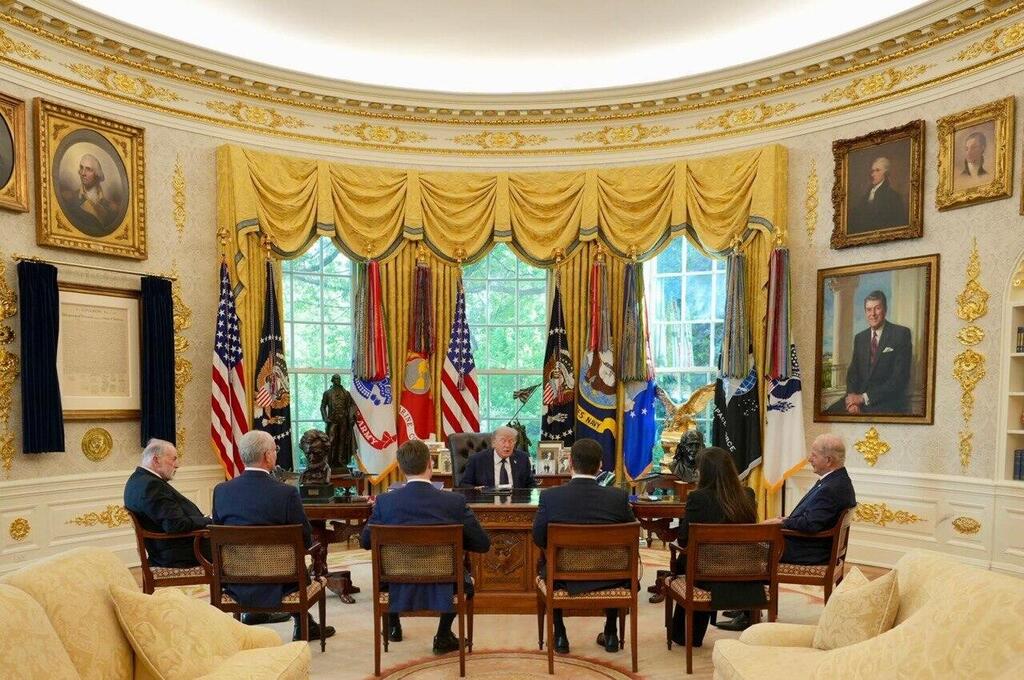
(Photo: John Humbucker/Israeli Embassy)
Lebanon is still insisting that before any agreement, the fire must also stop in the country’s south. “We expressed our position, which is the need to stop the Israeli violations and the destruction in the villages of the south. President Trump promised us his support,” Lebanese Ambassador to the United States Nada Hamadeh Moawad said.
Moawad thanked Trump during the meeting for hosting the talks. “I think that with your help, with your support, we can make Lebanon great again,” she told him. A Lebanese official said earlier that Beirut would push in the next stage of negotiations for a full Israeli withdrawal, the return of Lebanese nationals held in Israel and the demarcation of a land border. Israel, meanwhile, is seeking to create common ground with the Lebanese government on Hezbollah, with the goal of disarming the terrorist organization — something the two countries have so far failed to do.
After Hezbollah fired four rockets Wednesday night at Shtula in the western Galilee — just before the start of the talks in the Oval Office — the IDF struck military buildings in Kherbet Selm and Touline in southern Lebanon that were used by Hezbollah. The IDF said the strikes were carried out “in response to the rocket launches carried out by Hezbollah” and stressed that the military was “acting in accordance with the directives of the political echelon.”
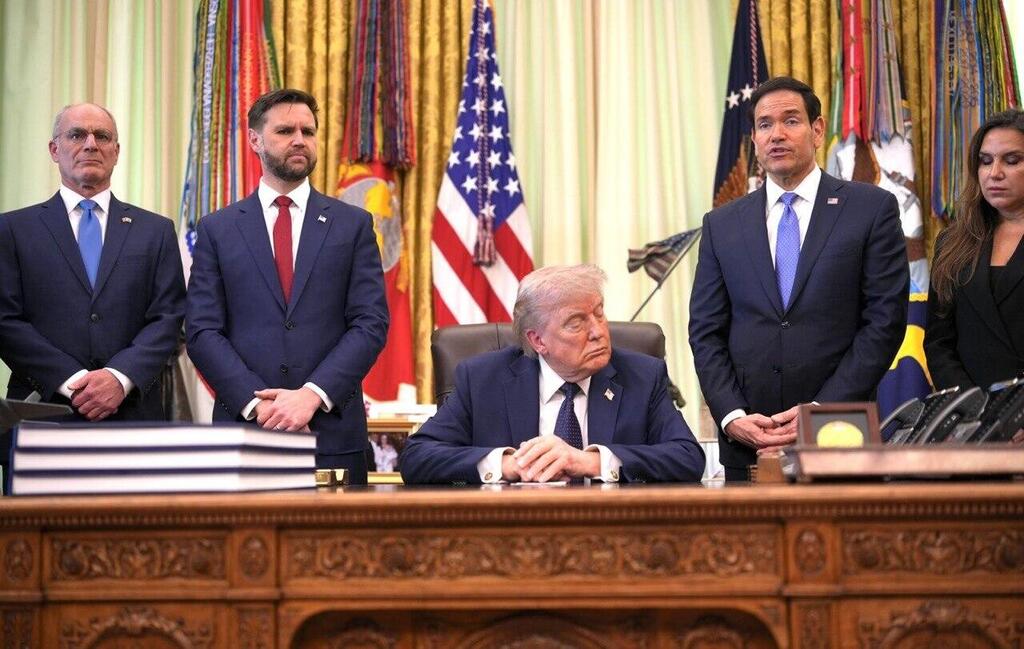
Trump wrote overnight in a post on Truth Social that his meeting with representatives of Israel and Lebanon in the Oval Office “went very well!” He added that the United States would be working with Lebanon "to help it protect itself from Hezbollah.” He concluded: “The Ceasefire between Israel and Lebanon will be extended by THREE WEEKS. I look forward in the near future to hosting the Prime Minister of Israel, Bibi Netanyahu, and the President of Lebanon, Joseph Aoun. It was a Great Honor to be a participant at this very Historic Meeting!”
Trump was also the one who informed Israeli citizens about the ceasefire with Hezbollah hours before it began, on April 16. Trump announced that evening that the ceasefire would take effect at midnight, while Netanyahu held a rare phone call with members of the Security Cabinet to update them on the details of the ceasefire.
Israeli Ambassador to the United States Yechiel Leiter, who is serving as Israel’s representative in the talks, said at the start of the meeting: “There are not enough words to praise the Trump administration for advancing peace between Israel and Lebanon. Israel sees Lebanon as a natural partner for good neighborly relations, coexistence and peace. We have no disputes that cannot be resolved with the sovereign state of Lebanon or with the Lebanese people. We believe this can be achieved in the spirit of the Abraham Accords and President Trump’s vision for peace.
“This vision is currently being held hostage by Hezbollah. Time and again, Iran and Hezbollah have dragged Lebanon into war against Israel. In light of the weakening of Iran and its proxies, led by President Trump and Prime Minister Netanyahu, we believe the time has come to put an end to this intolerable situation, once and for all.”
Against the backdrop of Lebanon’s demand that the IDF withdraw completely from its territory, Leiter said that “continuing to emphasize in our talks the issue of Israeli withdrawal means falling once again into the trap of placing the emphasis in the wrong place. If we continue down this path, we are doomed to fail.”