


Britain’s sanctions against Israel, along with measures taken by other countries in response to Israeli policy in the West Bank, are drawing sharp criticism from former senior Israeli diplomats.
Some disagree over how Israel should respond, but many agree that the deterioration in relations with Western countries is the result of an ongoing diplomatic failure.
Gallery
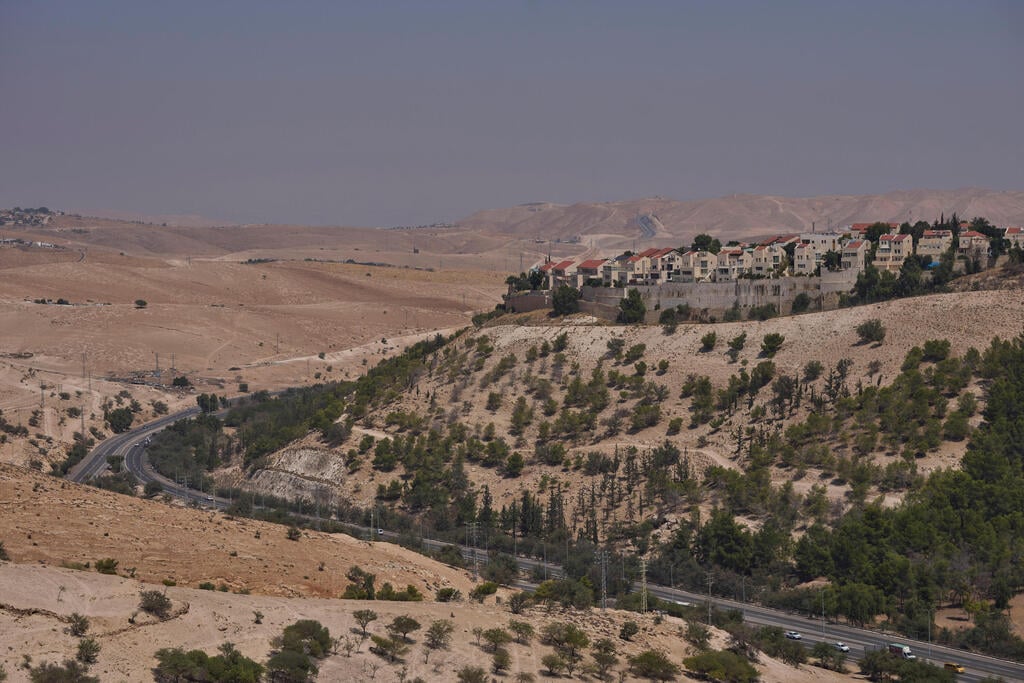
View of an area in the E1 zone near the settlement of Maale Adumim
(Photo: Ohad Zwigenberg/AP)
They point, among other things, to violence by Jewish extremists in the West Bank, the announcement of the E1 construction plan, the absence of a diplomatic horizon and Israel’s conduct toward friendly countries, and suggest steps they say could halt the crisis. Former senior diplomats weigh in on the sanctions crisis, what Israel should do and how the deterioration could have been prevented.
“First, the State of Israel must act immediately to prevent a further deterioration of the situation in the West Bank and violent activity by Jewish extremists against Palestinians," Jeremy Issacharoff, former Israeli ambassador to Germany, said. "In addition, the declared intention to build in the E1 area in order to finally bury the idea of a Palestinian state, alongside the proliferation of new settlements, invites harsh international responses, such as the measures taken by Britain and 11 other countries, including France, Canada and Denmark.”
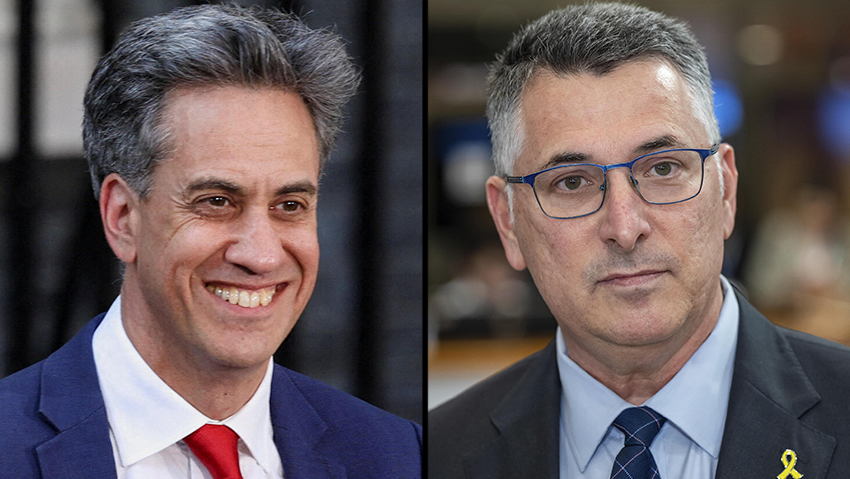
British Foreign Secretary Ed Miliband and Foreign Minister Gideon Sa'ar
(Photos: Temilade Adelaja/Reuters, Geert Vanden Wijngaert/AP)
Issacharoff added that “the absence of an enlightened Israeli policy in the Palestinian context neutralizes the ability of Israeli diplomacy to prevent hostile moves that damage Israel’s legitimacy in the international arena, with all that entails on the strategic, diplomatic and economic levels.”
Daniel Carmon, former Israeli ambassador to India, said that the "British sanctions against Israel and the support of several Western countries for such a move in the context of the settlements should serve as a wake-up call for all of us. Throughout the years, despite global opposition to the settlements and the Israeli occupation of the West Bank, the international community refrained from taking practical steps against Israel, on the assumption that the settlement issue would be discussed as one of the core issues in the peace process with the Palestinians.”

Jeremy Issacharoff, former Israeli ambassador to Germany
(Photo: Foreign Ministry spokesperson)
Carmon added that once the Israeli government itself extinguished the diplomatic light at the end of the tunnel of a political process and failed to act decisively against Jewish terrorism, important countries, some of them friendly to Israel, decided to impose sanctions that could harm all Israeli citizens. “Even if conditions are not currently ripe for restarting the diplomatic process, the Israeli government must signal its willingness for a peace process and not for annexation of the territories.”
Ronny Leshno-Yaar, former Israeli ambassador to the European Union institutions in Brussels, said it is important to continue the conversation. “Do the most basic thing in diplomacy — maintain dialogue even with those who disagree with us, do not speak about Western countries in a dismissive, belittling and arrogant manner, say loudly and clearly that Israel wants good relations with all its neighbors, all of them, that it has no desire to conquer territory and settle it but only to safeguard the security of its citizens, and do not treat the Palestinians in general, and their leadership in particular, with contempt. The ABC of diplomacy is dialogue, not disengagement and boycott,” he said.
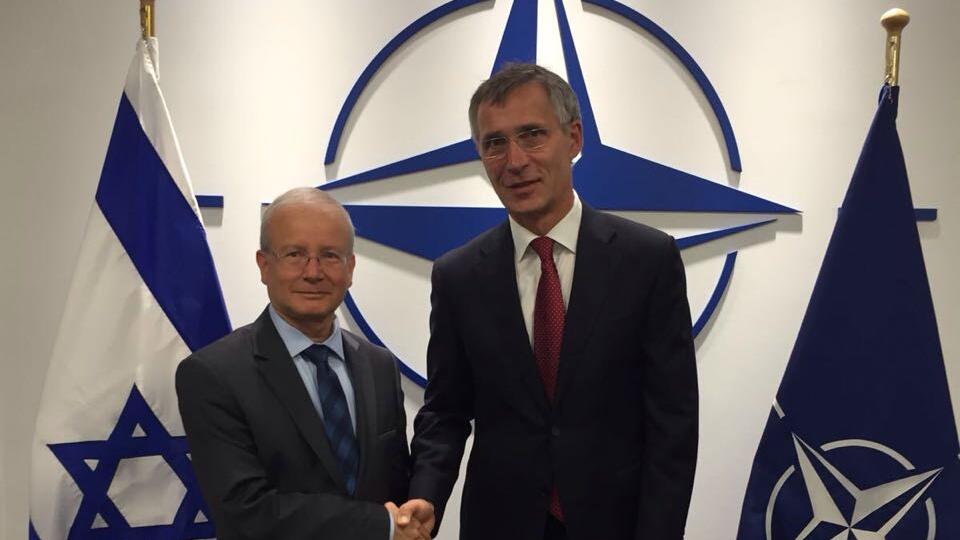
Ronny Leshno-Yaar, former Israeli ambassador to the European Union institutions in Brussels
“Israel is increasingly curling up inside a Masada mentality," said Nimrod Barkan, former Israeli ambassador to Canada. "Israel is endangering Jews around the world, and the state has gone from being a refuge for Jews at risk to becoming the main source of risk for Jews. Jewish support for Israel’s most extreme policies, which are becoming increasingly extreme, draws fire toward the communities from those who hate Israel’s conduct, such as Muslim immigrants in Europe and Canada and also in the United States, whose numbers are growing, and from critics of Israel on the left, while Jewish support no longer benefits Israel politically as it once did because of the public illegitimacy of their pro-Israel position.
“The South Africanization of Israel’s status in the world will lead to disaster if it is not stopped, and it can certainly be stopped even without establishing a Palestinian state, God forbid. Saar’s moves are ridiculous and contemptible and could lead to an expansion of the measures into additional areas,” he said.
Daniel Shek, former Israeli ambassador to France, said that the Israeli government is at the root of the problem. “The problem is not the British government but the Netanyahu government. Israel must immediately get control of the madness taking place in the West Bank and prove that it is not complicit in the daily crimes there and is not using them to advance creeping annexation,” he said.

Alan Baker, a retired ambassador, former legal adviser to the Foreign Ministry and former ambassador to Canada.
(Photo: Mickey Schmidt)
Unlike several disgraceful former senior Israeli diplomats quoted in The New York Times yesterday while expressing support for the sanctions — naturally, The New York Times found it appropriate to highlight them — I, who was also quoted but barely, actually support punitive Israeli measures against these countries," said Alan Baker, a retired ambassador, former legal adviser to the Foreign Ministry and former ambassador to Canada.
“Those same countries that encouraged and supported the negotiation process, even signed as witnesses and gave guarantees for implementation of the Oslo Accords, are now openly acting to undermine the agreements, out of domestic political constraints, a desire to appease pressure from Muslim populations at home and pressure from parliamentarians hostile to Israel, and out of an urge to punish Israel.”
Baker added: “As for closing the British Consulate in Jerusalem — we should have closed it long ago. It was established together with other consulates during the Ottoman period to serve Christian pilgrims coming to the holy sites of Christianity. They have long been unnecessary and now serve as a kind of embassy to a Palestinian state, in blatant violation of the Oslo Accords.
“The same applies to removing British and other representatives from Trump’s Board of Peace team. If they are undermining the peace process and punishing Israel for its activity against terrorism, then they have no business being here and would be better off leaving.
“As for the excuse of ‘settler violence,’ which they describe as terrorism — yes, there is a need to prevent it and punish the rioters more assertively," Baker also said.
“But there is no justification for turning that into a sweeping generalization against everyone and against the entire State of Israel. Perhaps we could have avoided the announcement of construction in E1, but ultimately, because of the pathetic statements by Ben-Gvir and Smotrich, because of the violence by a handful of troublemakers that the Europeans preferred to inflate out of all proportion and because of the election campaign, it could not have been prevented.
“It was foreseeable, and therefore we should not let the British and others’ actions pass without an assertive response. They need to know that they cannot dictate to us whatever they want according to their narrow political interests while ignoring ours. Those days are over," he concluded.
A former senior Foreign Ministry official who served as a senior ambassador and asked to remain anonymous said that “Israeli diplomacy in recent years has been conducted without purpose or logic. Instead of strengthening our relations with the significant players in the world, we quarrel with them and invest major resources in marginal players. The enormous investment in public diplomacy is failing because it amplifies an aggressive and confrontational policy. It is a waste of money.”
A former senior diplomat who was involved in contacts with the Palestinians said that Israel has cast aside diplomacy. “The bad news: The deterioration is the direct result of shortsighted policy. Since October 7, Israel has almost completely abandoned diplomacy and become enslaved to the illusion that military force will answer all its needs," according to the diplomat.
“We missed a rare opportunity to consolidate Israel’s regional standing, including normalization with Saudi Arabia and Indonesia, a thaw with Turkey and reasonable security arrangements with Lebanon and Syria. This is what happens when there is no diplomatic strategy and no understanding of the importance of the diplomatic act as the finishing leg of a political move.
“And we have not even mentioned the missed opportunity to reshape the Gaza system from within and with financing by the leading Arab states. The good news: All of this is reversible, provided there is a government willing to consider diplomatic progress,” the diplomat concluded.
A former senior diplomat who served in Europe and the United States said that "the undermining of the rule of law in Israel and the absence of enforcement and punishment against Jewish rioters in the West Bank accelerated the frustration of governments around the world, including friendly ones, over what is happening in the West Bank.
“Britain is no longer a member of the European Union and can therefore make its own decisions on foreign policy issues, but as an important country in Europe and in the international system, London’s decision could also influence Brussels.”