

Prime Minister Benjamin Netanyahu urged the High Court of Justice to reject petitions against the appointment of Maj. Gen. Roman Gofman as Mossad chief, arguing in a filing Friday that responsibility for national security rests with the prime minister alone.
“The responsibility for the security of the state and its citizens is entrusted to the prime minister, and only to him,” Netanyahu wrote in his response ahead of a court hearing on Gofman’s appointment.
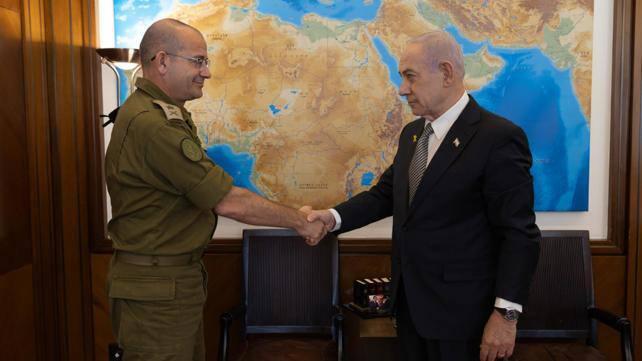
Netanyahu said the legal and democratic mandate to steer the country’s security was given by the public to the prime minister alone. He said the current proceedings, as well as the review by an advisory committee on senior appointments, did not and could not address broader security and strategic considerations.
“There is no possibility, even theoretical, to propose in this proceeding a different ‘balance’ against a system of considerations that is not before us at all,” Netanyahu wrote.
Netanyahu said the petitions seek to cancel the appointment of a Mossad chief in the middle of a war. He argued that the decision to appoint Gofman is a security decision at the core of the prime minister’s authority and that judicial review of it should be especially limited.
“There is actually good reason to assume that the reasonableness of the prime minister’s decision is many times preferable to the ‘reasonableness’ of anyone else, including the honorable court,” the filing said.
Netanyahu added that even if some flaw had been found in Gofman’s conduct, the prime minister was entitled — and in practice obligated — to weigh that flaw against Gofman’s advantages.
Netanyahu’s filing argued that the advisory committee’s chairman, retired Supreme Court chief justice Asher Grunis, “exceeded his authority” when he recommended against appointing Gofman.
“The committee’s role is not to ‘recommend’ or ‘not recommend’ the appointment of a given person, but only to reach conclusions regarding the integrity of that candidate. That is all,” the filing said. “Its conclusion regarding his integrity is not the final word, but only one data point among many on the question of his appointment, which will be decided by another institution and not the committee: the prime minister of Israel.”
The petitions against Gofman’s appointment were filed by the Movement for Quality Government and Ori Elmakayes, 21, a former teenage Telegram news channel operator from Ashkelon who says he was used as an intelligence asset in an unauthorized and illegal military “influence operation” when he was 17.
According to reports, officers under Gofman’s command in the 210th Division, then operating under Northern Command, passed information to Elmakayes for publication online. Elmakayes was later arrested by the Shin Bet security agency and police, who were reportedly unaware of the military operation, and questioned on suspicion of serious security offenses.
He was held in custody and under restrictive conditions for about 21 months and was charged with serious offenses before being acquitted and cleared of wrongdoing.
Gofman has said he did not know Elmakayes’ age and that he approved only the transfer of nonclassified information for publication on social media.
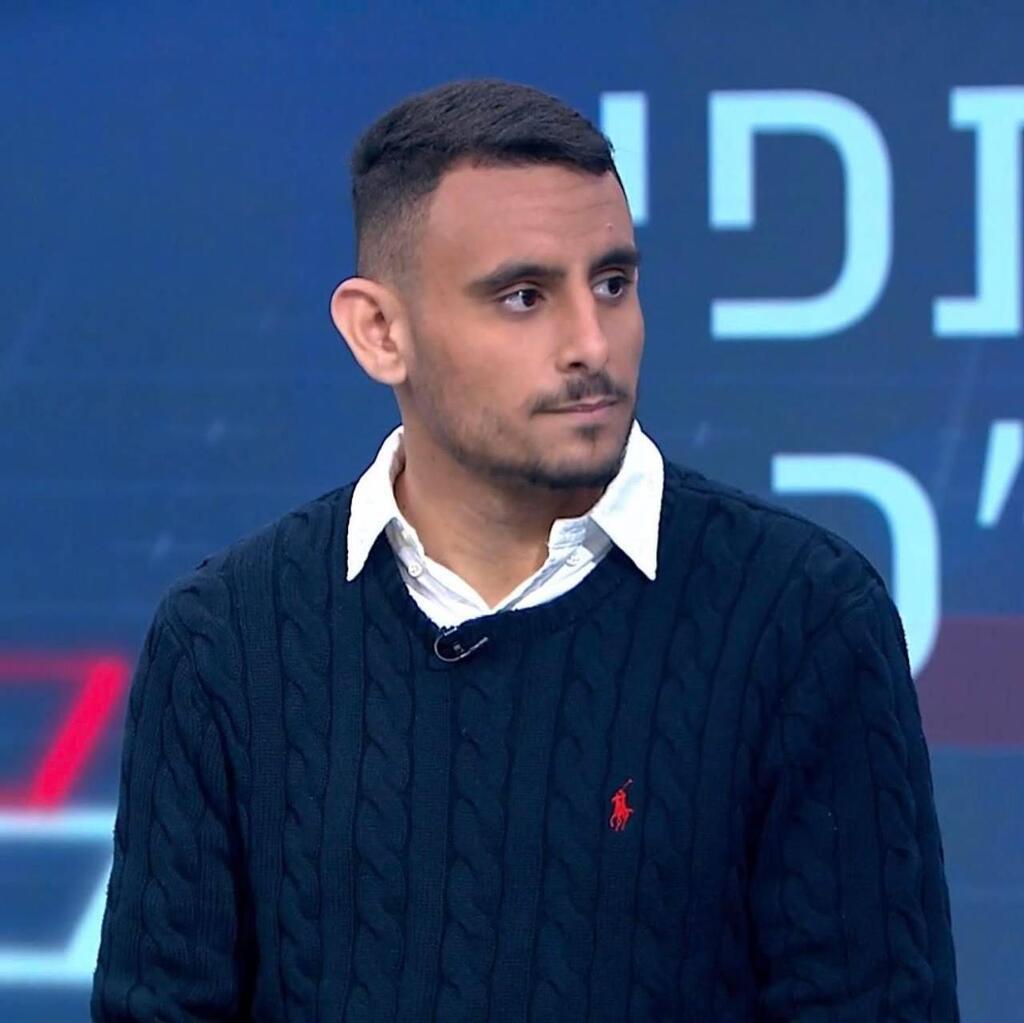
Ori Elmakayes
(Photo: from social media)
The petitioners laid out the affair involving Gofman and alleged flaws in his integrity, including what they said was a failure to tell the truth in a military inquiry, his silence throughout Elmakayes’ detention and trial, evasion of responsibility, mistreatment of a minor who had committed no offense and lack of credibility.
The petition also details and emphasizes the reasoning in the minority opinion by Grunis, who headed the Advisory Committee for Appointments to Senior Positions and found that Gofman should not be appointed Mossad chief because of flaws in his integrity.
The petitioners also said there was no sufficient factual basis for the committee’s decision to approve the appointment because its members declined to hear Elmakayes’ testimony and instead relied on media interviews with him. They also argued that the committee avoided summoning Brig. Gen. G., head of the Military Intelligence Directorate’s operations division during the relevant period.
The petition further claimed that the committee’s decision contained major factual contradictions between the findings presented by the members who approved the appointment and Grunis’ minority opinion.
The petition noted that two committee members, Talia Einhorn and Moshe Terry, were barred from reviewing classified documents that were shown to Grunis and another committee member, Daniel Hershkowitz, because they lacked the necessary security clearance. The petitioners argued that because half the committee was prevented from seeing the classified material, their position should carry no weight.
Gofman, for his part, rejected claims in his response to the High Court that he had handled Elmakayes in the course of his military role, saying the claim was a distorted portrayal of reality. “There was no such handling,” Gofman said.
Gofman, the Mossad chief-designate, said the 210th Division, which he previously commanded, sought to publish unclassified materials that had been approved in advance for publication on an additional communications channel after, according to the division, coverage in mainstream media failed to achieve its operational goal.
Gofman said he did not know Elmakayes was the person operating that communications channel and that there was no continuing relationship or control mechanism that could be considered “handling.”