

Israel has conveyed a message to the United States that a broad strike on Iran’s power stations and national infrastructure could trigger the collapse of the regime in Tehran and shorten the war, according to an Israeli official.
Officials in Jerusalem said a target bank focused on energy facilities and critical infrastructure has already been prepared, with any potential strike now dependent on a decision by U.S. President Donald Trump.
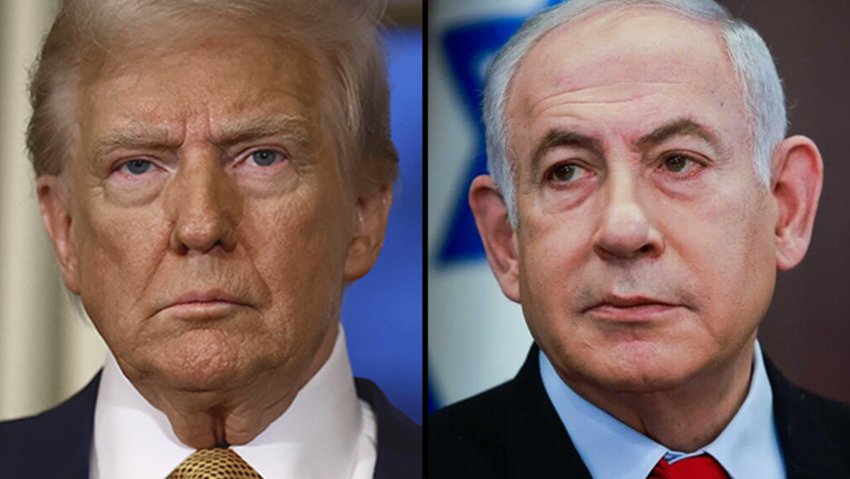
An Israeli source said there is “very heavy pressure” inside Iran and growing concern over such a scenario, noting that Iran’s president, Masoud Pezeshkian, has warned senior military officials that the country’s economy could collapse if infrastructure is hit.
“If Trump carries out the threat against infrastructure, we will be there in full force,” the official said. “We have a package of targets ready.”
Israel assesses that Trump is seriously considering further escalation, including a possible ground operation in Iran, and believes he is closer to taking military action than reaching a diplomatic agreement. Officials in Jerusalem said the chances of a deal are “low,” citing a lack of response from Tehran to a ceasefire proposal presented by Washington.
Security briefings presented to ministers during a recent government meeting indicated that weather conditions are limiting the ability of forces to locate and strike missile launchers inside Iran.
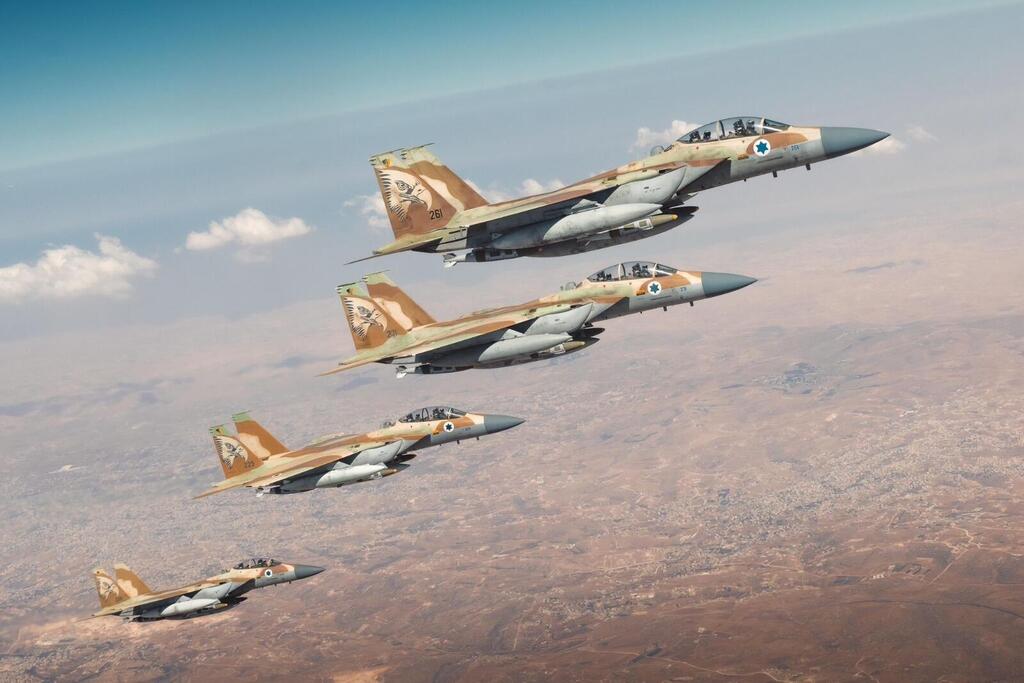
IDF fighter jets
(Photo: IDF)
According to the assessments, Iran still retains several hundred ballistic missiles, estimated at between 300 and 400, though hundreds of launchers have been hit in joint operations by Israel and the United States. More than half of Iran’s launch capabilities are believed to remain intact.
Attention has increasingly shifted to the Strait of Hormuz, which Iran continues to control. Officials in Jerusalem said that if Iran maintains its hold over the strategic waterway, it could claim a significant political and symbolic victory.
“If Iran keeps control of the strait, it will argue that it stood firm against the United States and Israel,” an official said. “That would strengthen the regime internally despite the damage it has suffered.”
Israeli officials also criticized regional Arab states, saying they have not taken action to counter Iran’s position in the Gulf.
“They have done nothing,” one official said, adding that Iran could use that in its narrative to bolster support at home.
Officials in Jerusalem believe that the issue of the Strait of Hormuz will be decisive in the coming weeks, with expectations that the United States will take action to reopen it.
“This could be the final phase of the war,” an official said. “It could take about a month.”
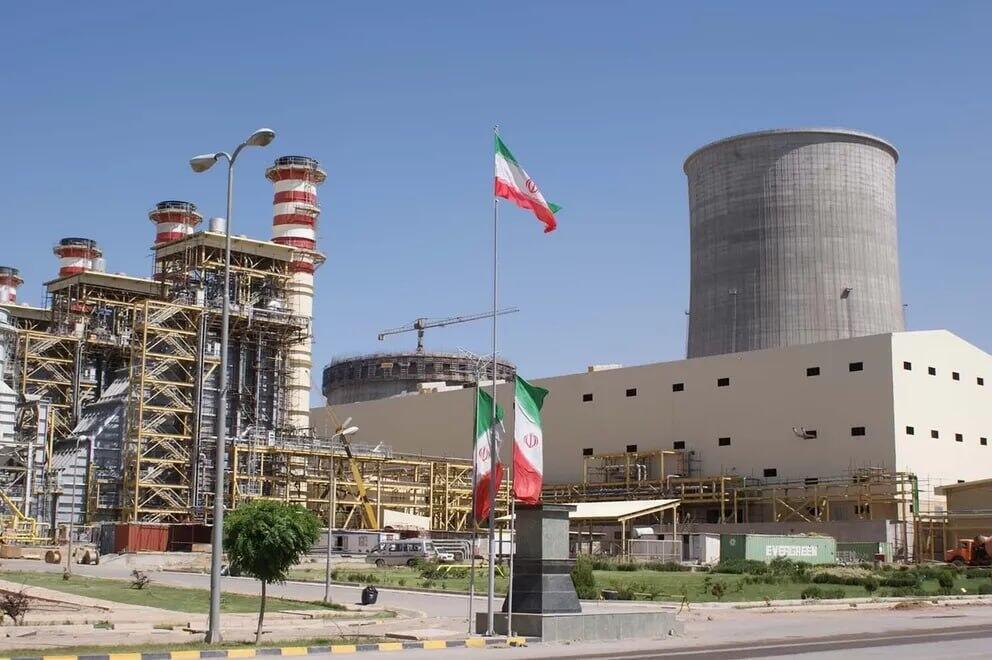
Iranian power plant
Speaking during the weekly Cabinet meeting, Prime Minister Benjamin Netanyahu said further strikes on Iran’s energy infrastructure could significantly destabilize the regime.
“Additional damage to the regime’s energy capabilities shakes it deeply,” Netanyahu said. “We are systematically targeting national infrastructure, nuclear infrastructure, missile infrastructure and industrial facilities.”
He said the campaign has already caused major economic damage, including a significant reduction in Iran’s steel production capacity, and described the impact as amounting to billions of dollars.
“It frightens them and undermines the regime,” he said.
Netanyahu also said the situation presents an opportunity to reshape regional alliances, including potential cooperation with Arab states on alternative energy routes that would bypass Iran.
“There is an opportunity here to redirect energy through Israel via Saudi Arabia,” he said. “This could be achieved within a few years and would serve a global interest.”
He added that Israel is working to expand regional partnerships in response to the Iranian threat, saying some contacts are ongoing but have not yet been made public.
Netanyahu also criticized European leaders, accusing them of acknowledging the Iranian threat privately while avoiding public action.
“They tell me in private they understand, but they are afraid to speak or act,” he said. “We understand — and we act.”
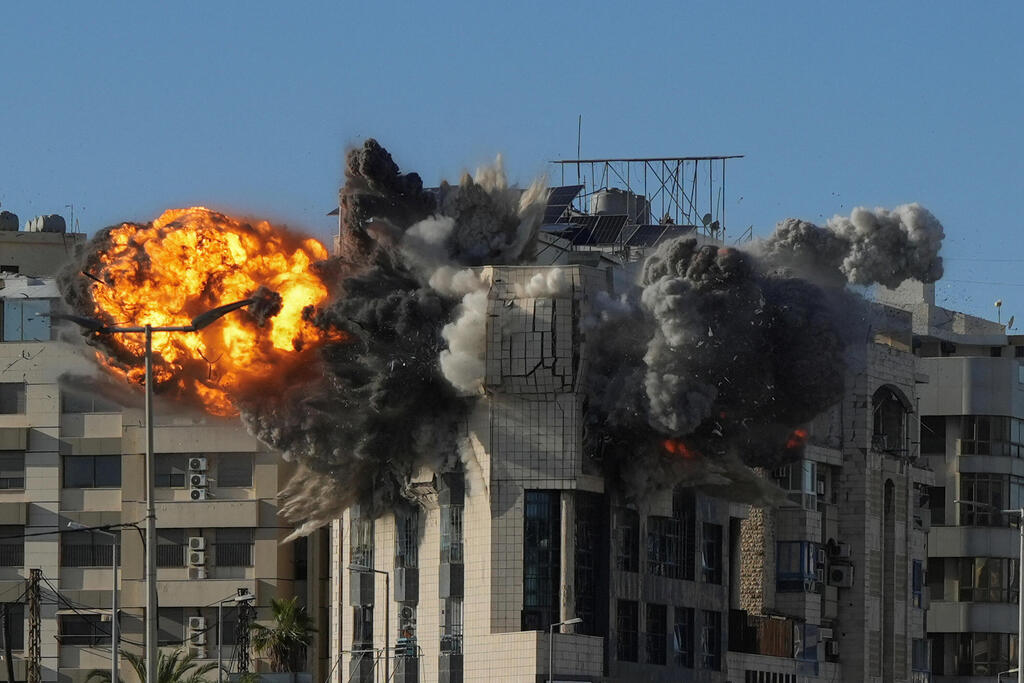
IDF strikes in Beirut
(Photo: REUTERS/Mohammad Yassine)
He also addressed the possibility of a ceasefire, saying that even if fighting with Iran ends, Israel will not accept any external pressure to halt operations in Lebanon.
“If and when we decide the time has come, it will be an independent decision,” he said.
On the ground in Lebanon, Netanyahu said forces are working to establish a broad buffer zone and reduce threats from anti-tank fire on communities, while seeking to minimize casualties by relying on heavy engineering equipment and firepower rather than house-to-house combat.
Netanyahu also criticized domestic political opponents and media figures, accusing them of undermining public morale during wartime.
“There is an enormous industry of pessimism,” he said. “It harms the morale of the people and strengthens the enemy.”
He said it is important to present both the achievements and the remaining challenges, adding that the public and soldiers understand the situation.